






How to choose the right aircon for Durban conditions
Durban heat, humidity and salt air all affect how an aircon performs, so the first step is matching the system to the room and the job it must do. A small bedroom, open-plan lounge, shop floor or server room all need different cooling capacity and different air flow. If a unit is too small it will run constantly and still struggle, if it is too large it may cool too quickly without removing enough moisture.
When you compare options, think about room size in square metres, ceiling height, glazing, afternoon sun and how many people use the space. Homes near the coast often need extra attention to corrosion resistance and drainage, while businesses in Durban Central or industrial areas may need better controls and heavier-duty components. The right choice is not only about price, it is about running cost, comfort and how often you want maintenance done.
Sizing advice that saves time and money
Correct sizing is one of the simplest ways to avoid call-outs later. A unit that is undersized will work hard every day and the compressor can wear out sooner. A unit that is oversized may cycle on and off too often, which affects comfort and can lead to higher power use. For Durban homes, especially in South Durban and inland parts of greater eThekwini, it helps to factor in the afternoon heat load before making a final call.
- Measure the room length and width in metres
- Note the ceiling height and whether the room is open plan
- Check for strong sun through west facing windows
- Think about load-shedding and how quickly you want the room cooled again
- Allow for extra heat from kitchens, appliances or people moving through the space
If you are unsure, use the guide to narrow the options and then ask for a site based assessment. That saves guesswork and helps avoid installing a unit that looks right on paper but does not suit the room.
Installation planning for homes, shops and offices
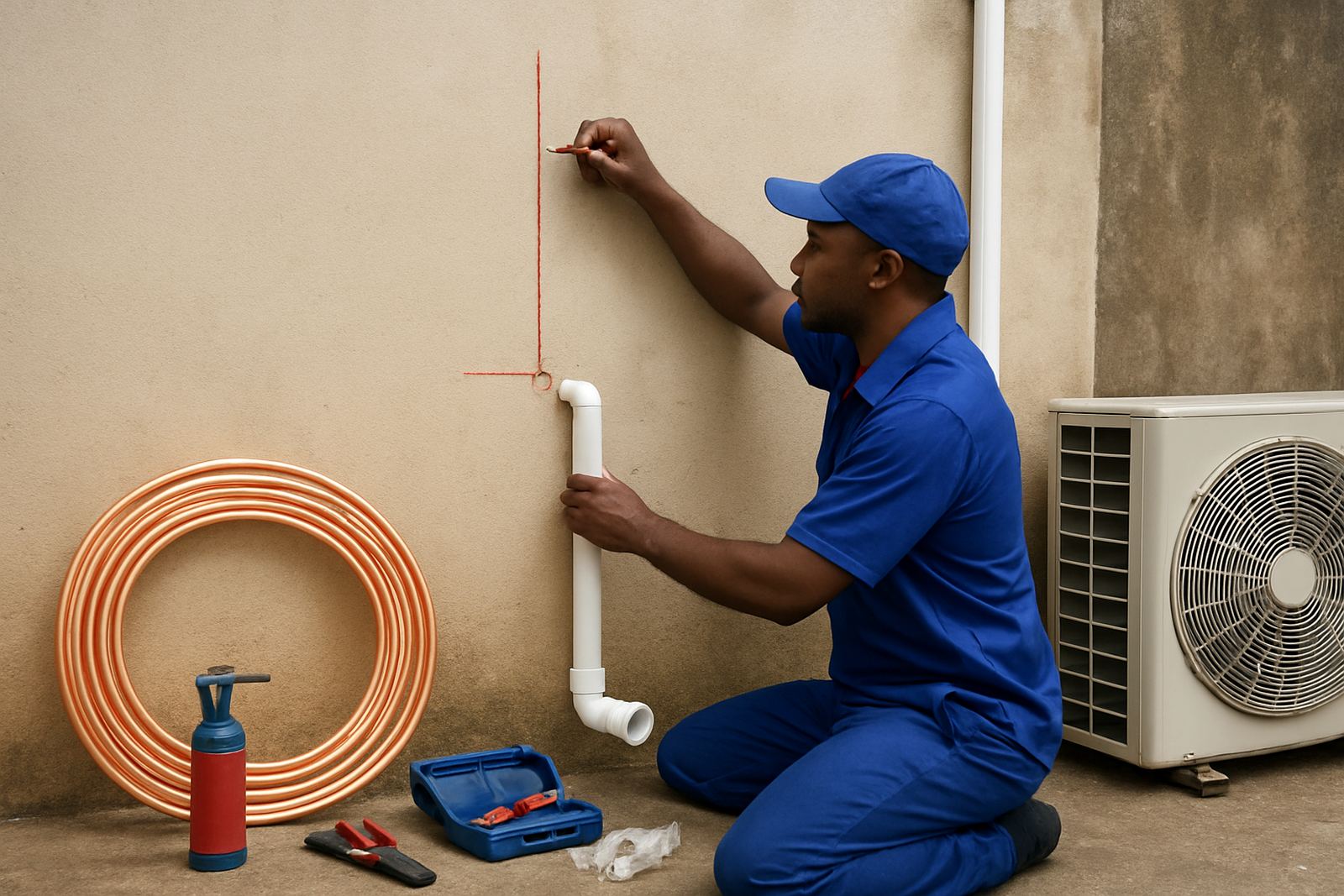
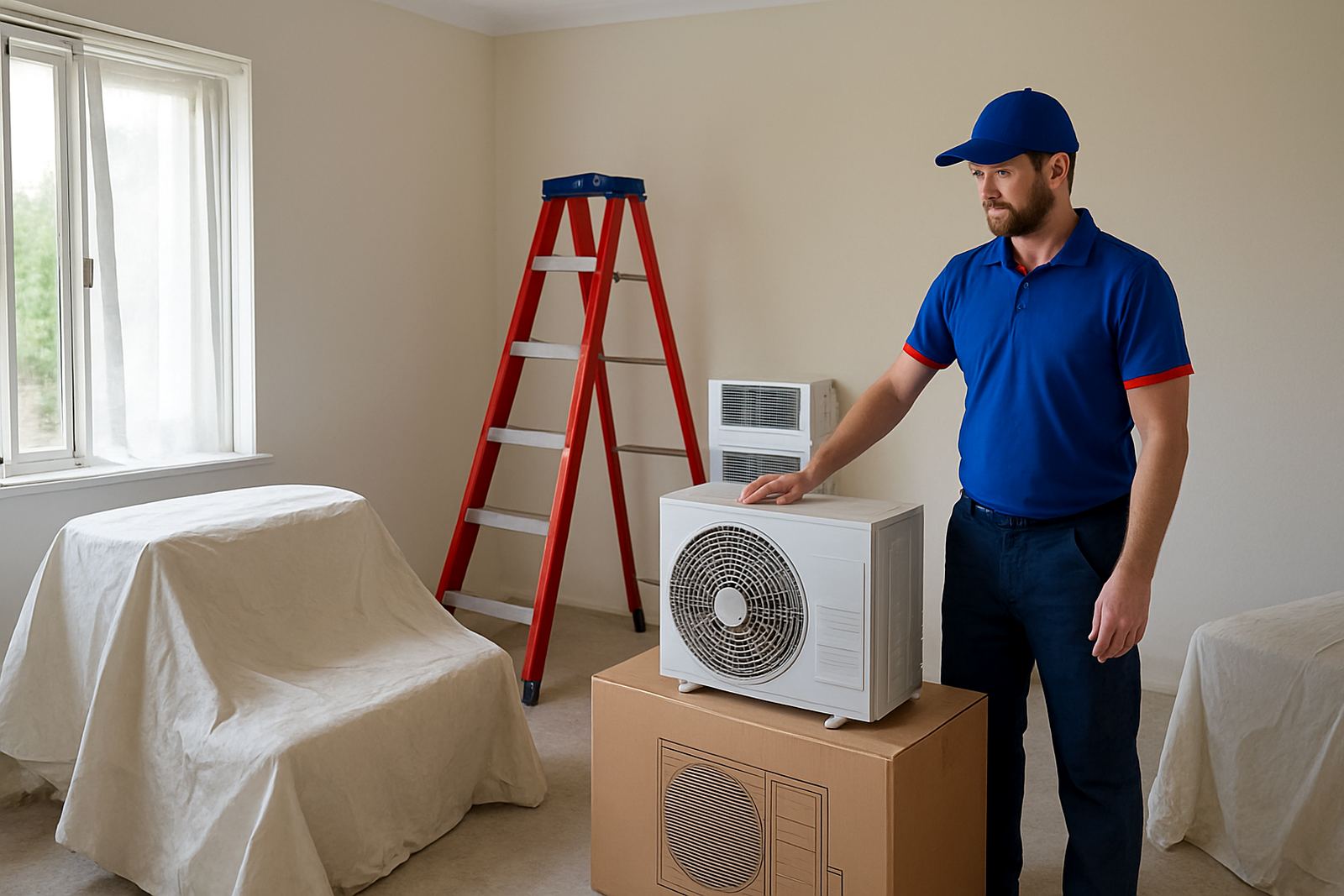
A good installation starts before any drilling begins. Indoor and outdoor unit positions should allow for proper air movement, easy access for cleaning and safe routing of the pipe work. In coastal areas around Clairwood and Durban Central, it also helps to place outdoor units where they are less exposed to sea air and standing water. Proper drainage matters too, because blocked condensate lines can cause water marks, smells and ceiling damage.
For businesses, planning should also cover operating hours, noise, electrical supply and where the unit can be serviced without disrupting customers. A neat install is not just about appearance it also makes future fault finding quicker. If the site has existing electrical issues or frequent tripping, that should be checked before a new system is connected.
Keeping the system healthy through the year
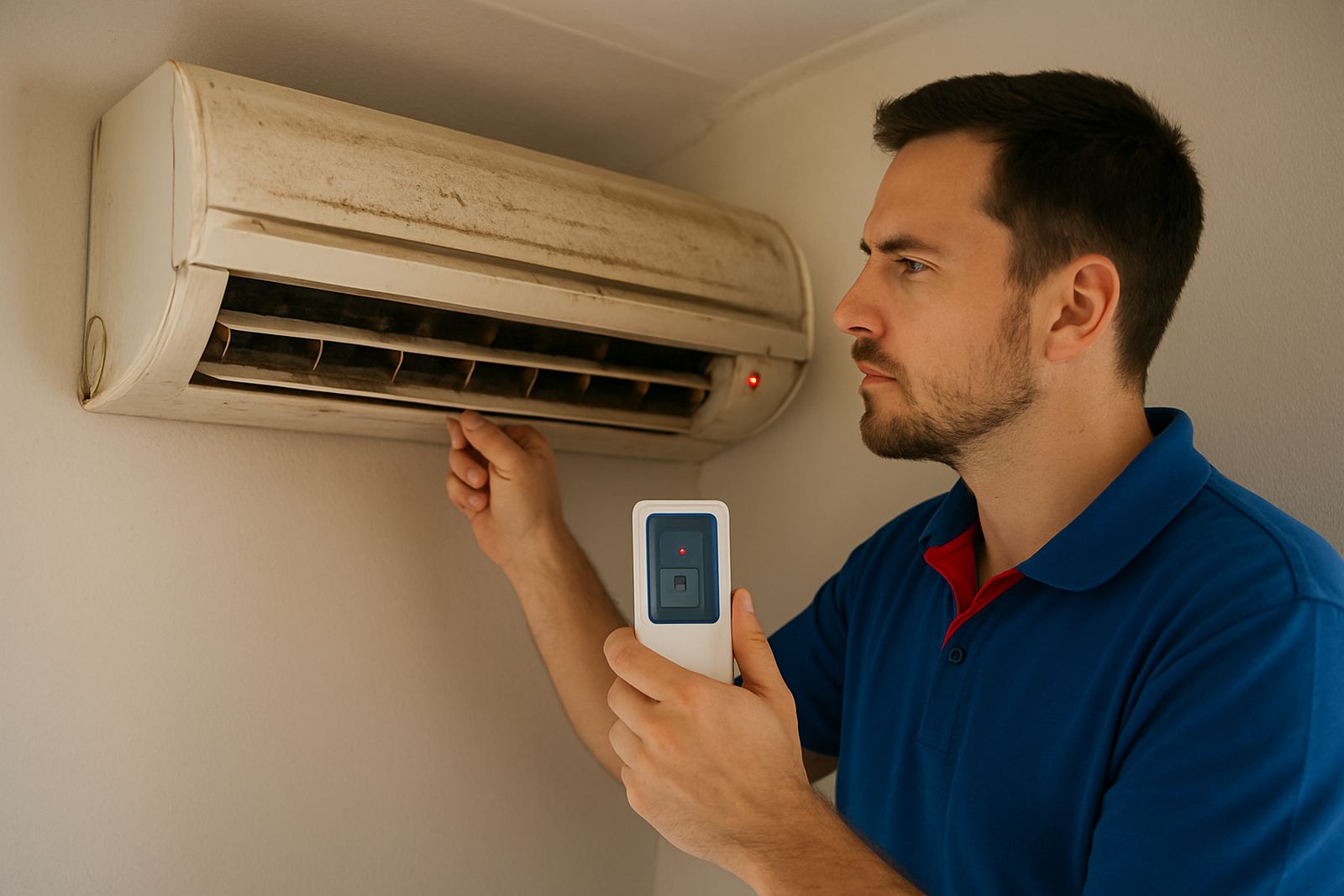
Routine upkeep reduces breakdowns and keeps airflow steady. Filters, coils, drains and electrical connections all need attention, especially in humid Durban conditions where dust and moisture can build up faster than many clients expect. Planned maintenance is useful for homes, but it is even more important for offices, retail spaces and light industrial sites that run aircon for long hours.
- Clean or replace filters on a regular schedule
- Check for weak airflow or unusual smells
- Inspect drain lines for slow flow or blockage
- Listen for rattles, clicking or changes in fan noise
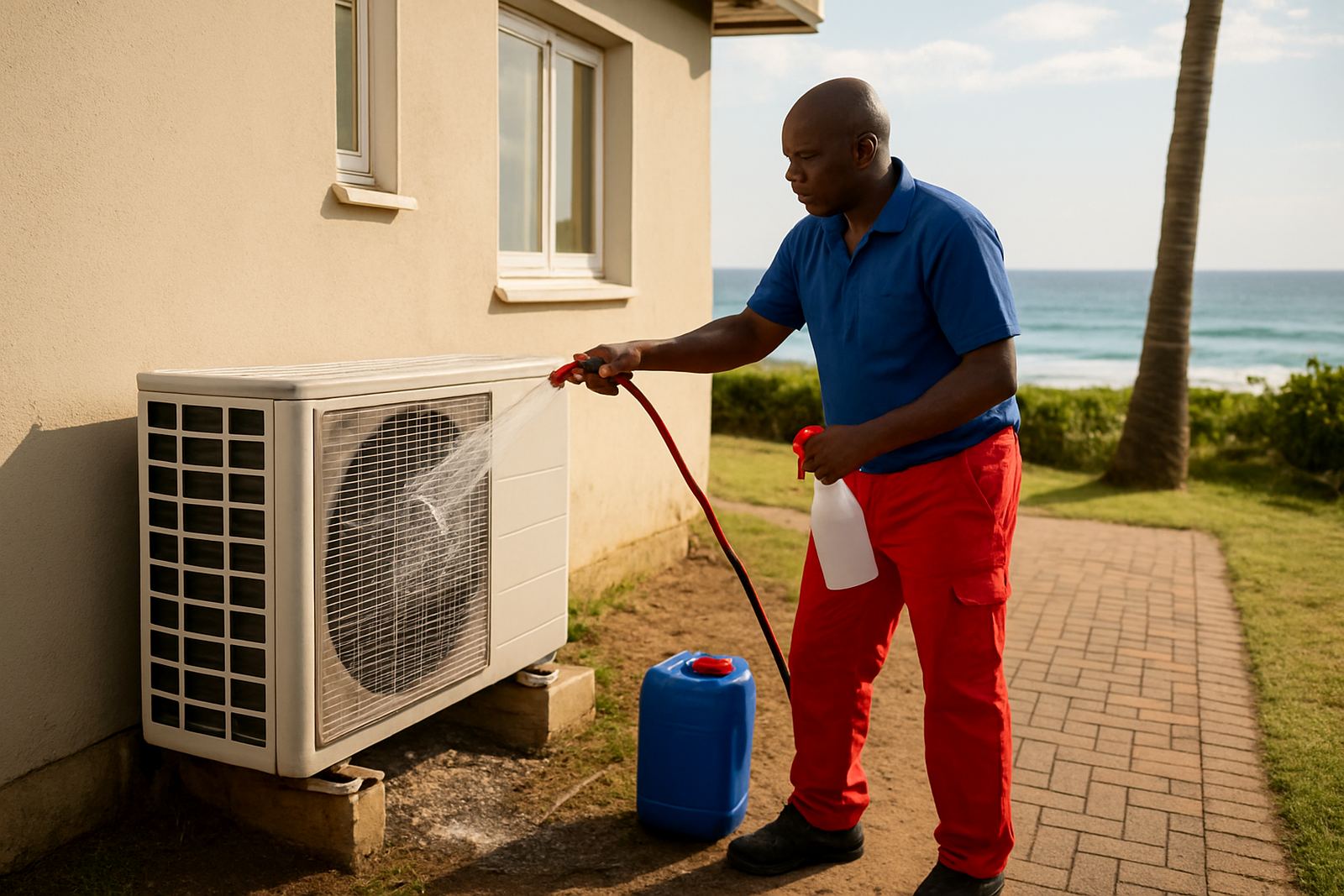
- Keep the outdoor unit clear of leaves, litter and salt build up
Simple care can prevent a small issue becoming a compressor or control fault. A dirty system also has to work harder, so the same room may feel warmer even when the unit is running.
Common faults and what they usually point to
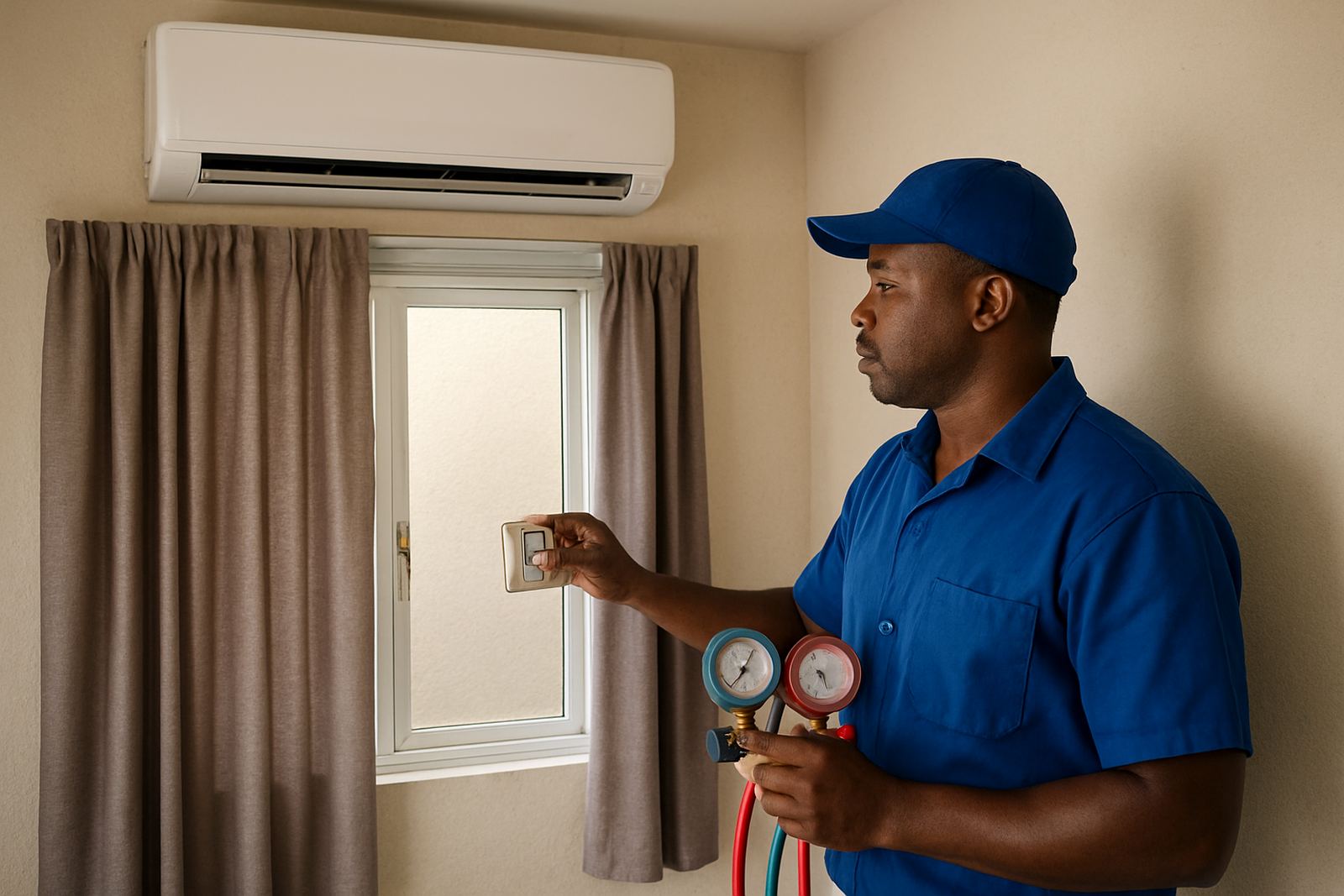
Many aircon problems start with small symptoms. Weak cooling can point to a gas leak, dirty filters, a failing fan motor or a control problem. Water dripping indoors often comes down to a blocked drain or poor fall on the pipe run. If the unit trips the supply, there may be an electrical fault, a bad capacitor or a compressor issue. Sometimes the symptom is simple, other times it needs proper testing with the right tools.
It helps to note what the unit is doing before a technician arrives. Is the indoor fan running, is the outdoor unit starting, does the fault happen after a power cut or during peak heat? Clear information saves time and gets the diagnosis closer on the first visit.
Using aircon better during load-shedding and power cuts
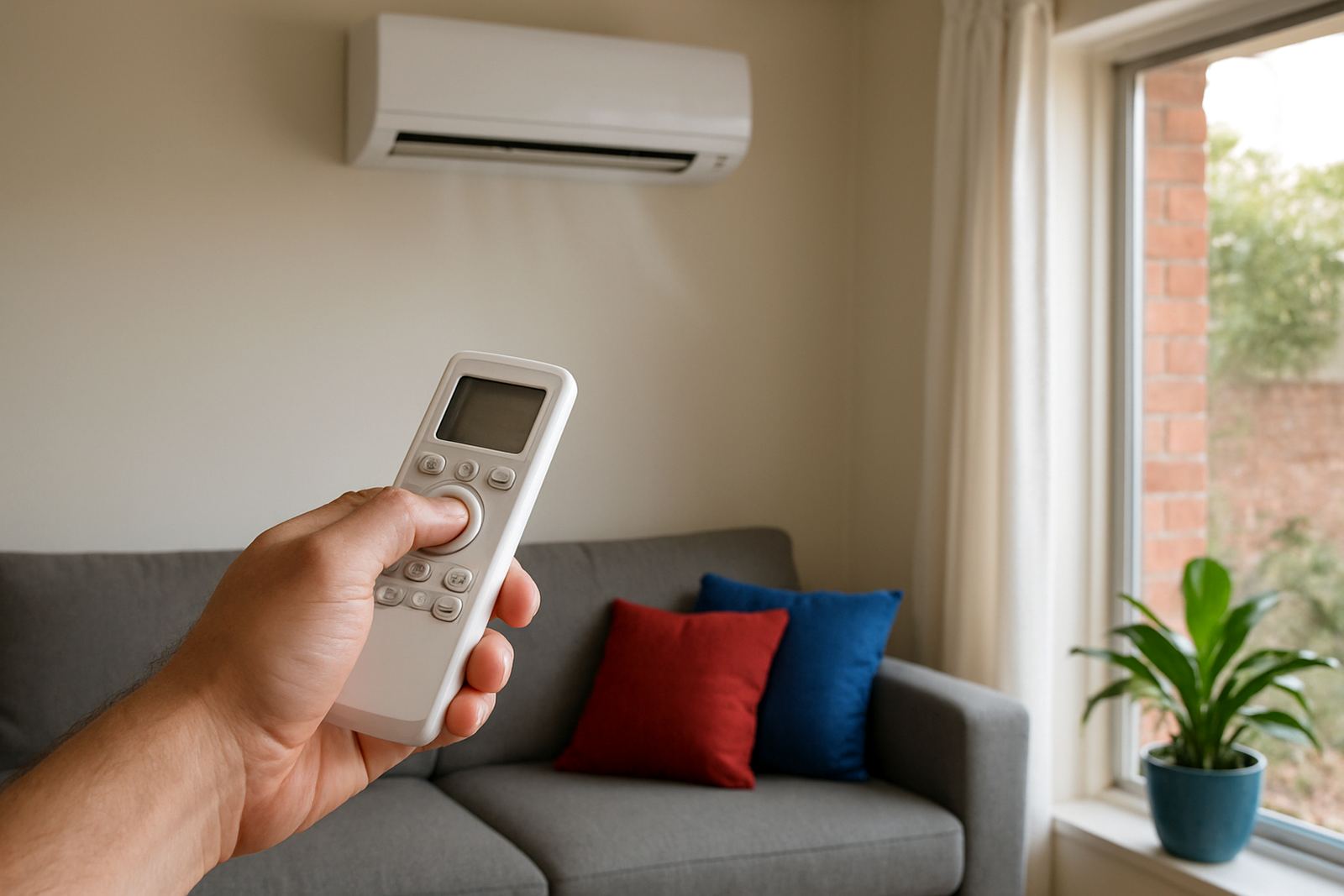
Load-shedding changes how a system should be used. After power returns, avoid switching the unit on and off too quickly. Give the system a few minutes to stabilise, especially if several appliances come back on at once. Where possible, use set temperatures that are sensible rather than very low, because extreme settings make the compressor work harder when power is already under pressure.
For clients with backup power or inverter supply, the aircon should be checked against the available load before relying on it. Not every unit is suitable for every backup setup, and poor matching can lead to nuisance trips. A practical guide can help you plan ahead instead of finding out during the first hot evening after a blackout.
- Restart units only after power has settled
- Keep remote settings simple and consistent
- Plan backup loads before adding aircon to a system
- Protect electronics from repeated surges where possible