Start with the room’s real size, not a rough guess
The first step is to measure the room properly. Take the length and width in metres, then multiply them to get the floor area. For example, a 4 m by 5 m room gives you 20 m2. That number is useful, but it is only the starting point because two rooms with the same size can need very different cooling.
In Durban and the rest of eThekwini, humidity, sun exposure and airflow all matter. A west-facing room in Clairwood will heat up much faster than a shaded room in Durban Central. Ceilings higher than normal, big windows, and open plan layouts all increase the load on the unit. If the room sits above a ceiling void, under a roof, or near a kitchen, add more capacity allowance. If it is a small bedroom with good shade, the load may be lower.
Use the room type to judge the heat load
Not every room needs the same cooling level. A bedroom usually needs less capacity than a lounge full of people, and a home office with computers and printers can run warmer than expected. Kitchens, salons, retail spaces, and small offices all create their own heat gains. The aim is to match the unit to how the room is used, not only its size.
- Bedrooms: usually lower heat load, especially if shaded and closed during the day.
- Lounges and family rooms: medium to high load if they face afternoon sun or stay busy.
- Home offices: allow extra capacity for computers, monitors and call-out traffic.
- Kitchens and prep areas: high load because of appliances, heat and moisture.
- Commercial rooms: factor in people movement, doors opening often, and lighting.
If a room is occupied by more than two or three people for long periods, the sensible capacity can go up quickly. That is why an aircon that looks fine on paper may still struggle in daily use.
Check the Durban factors that change capacity
Local conditions make a real difference. Coastal humidity in South Durban and West Durban can make a room feel warmer and cause the unit to work harder to remove moisture. Salt in the air can also affect outdoor components over time, so correct installation and regular maintenance matter. In load-shedding areas, systems that are switched on and off often may also run less efficiently if they are under-sized or poorly maintained.
Look at these factors before choosing a size:
- Sunlight on the walls and windows during the hottest part of the day.
- Number and size of windows, especially if they are single glass.
- Ceiling height and roof exposure.
- Open doors, passages, or stairways that let cold air escape.
- Heat from appliances, lighting, servers, or cooking equipment.
- Humidity, coastal air, and how often the space is occupied.
In practice, a room that feels just “warm” in winter can need a much larger unit in January. That is normal for Durban conditions and should be planned for before installation.
Match capacity to the room before you buy
Once you know the room size and heat load, match that to the unit capacity. A unit that is too small will run almost nonstop, cool slowly, and still leave the room sticky. A unit that is too large can short cycle, waste power, and leave the room cold but damp. The right match gives steadier cooling, better comfort, and lower strain on parts like the compressor, fan motor and capacitors.
A simple check is to ask: does the room cool evenly within a sensible time, or does it take ages and never quite reach the set temperature? If the answer is no, the capacity may be wrong. Also consider whether the room is meant for sleeping, working or customer traffic. A bedroom can usually run differently to a shop front or boardroom.
- Small, shaded bedroom: lower capacity may be enough.
- Medium lounge or office: check sunlight, window size and occupancy.
- Large open plan room: split the load or move to a higher capacity unit.
- Commercial space: allow for people, equipment and door openings.
Use this quick room-size checklist before installation
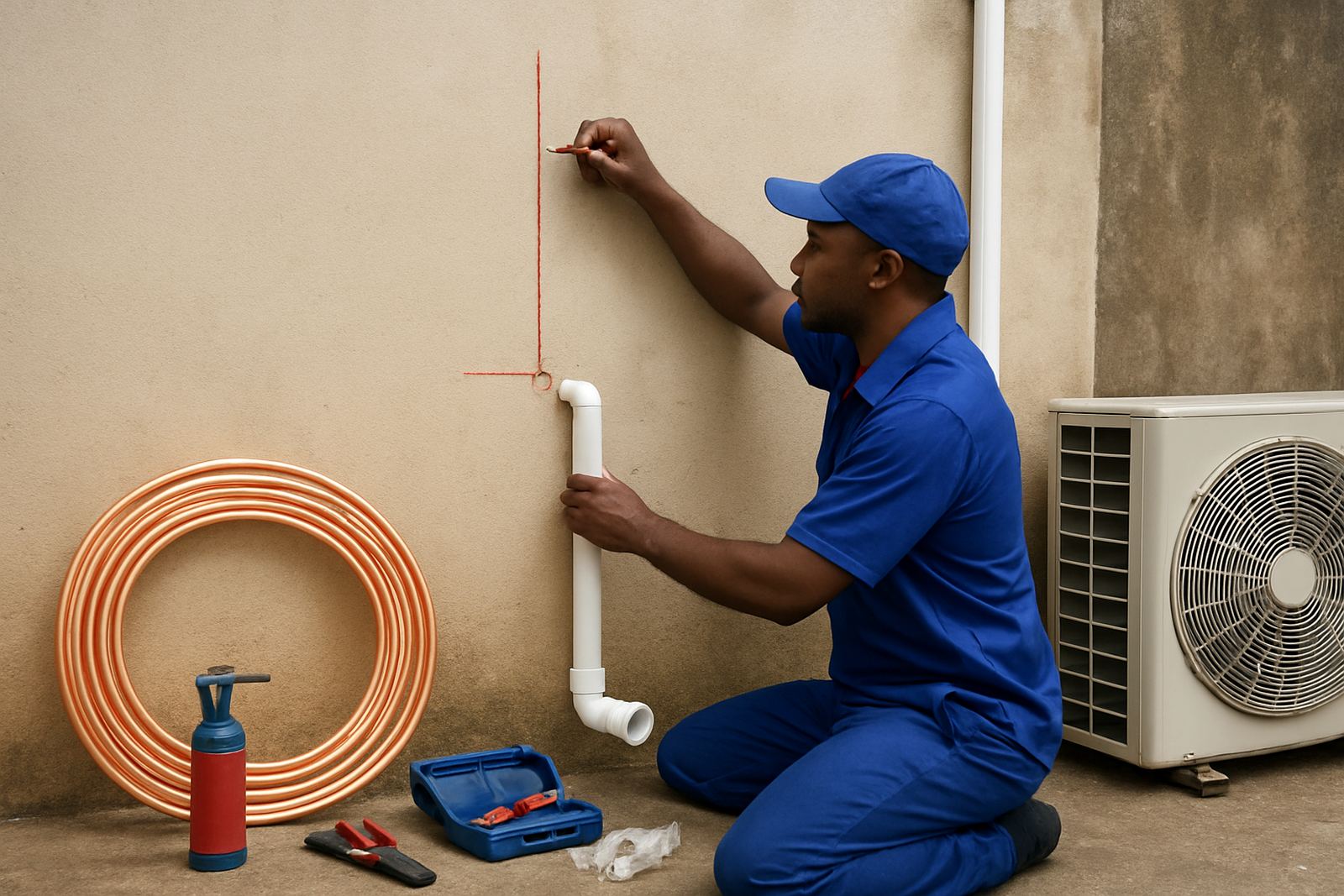
A quick checklist can save time and reduce call-backs. Before any supply or installation, measure carefully and write down the facts. If the room is being upgraded from an old unit, note whether the current system was under-sized, leaking gas, or running with repeated faults. A badly performing old unit can hide the true size requirement.
- Room length, width and ceiling height
- North, west, or south facing walls
- Window size and shading
- Number of people in the room daily
- Heat from appliances or electronics
- Openings to passages, kitchens, or outside
- Any history of breakdowns, leaks, or poor cooling
If you are not sure, take photos and notes of the room layout. That helps with selecting the right system and avoiding guesswork. It is better to confirm the room load now than to discover later that the unit is not coping.
When the room size is right but the cooling still fails
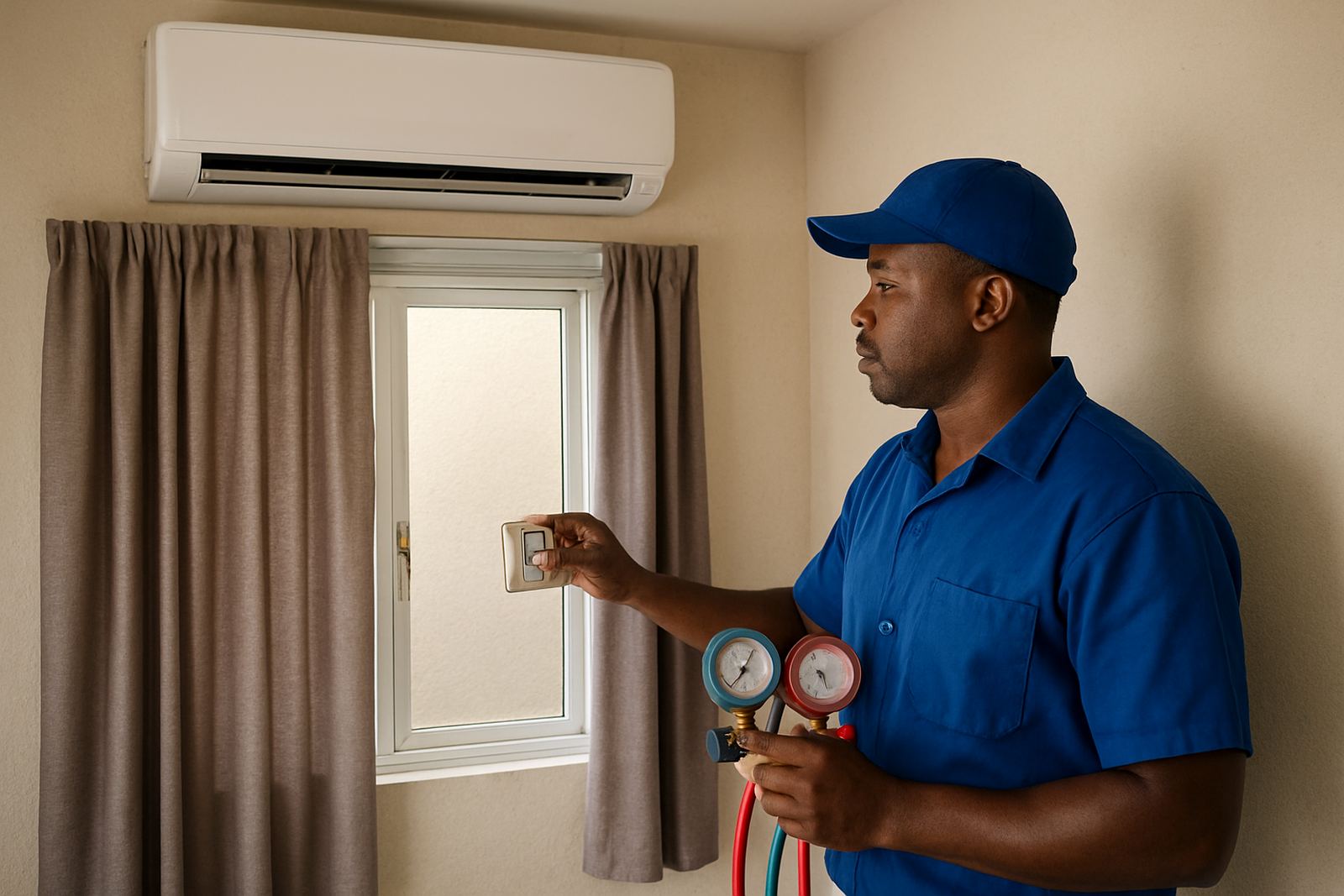
If the aircon is correctly sized but still not cooling properly, the problem may be elsewhere. Dirty filters, blocked drains, low gas, a faulty capacitor, or a weak fan motor can all reduce performance. In humid coastal areas, deep clean service and planned maintenance become even more important because dust and moisture build up faster. A unit that is the right size can still underperform if it has a leak or a compressor fault.
For homes and businesses across Clairwood, Durban Central, South Durban, North Durban and greater eThekwini, it helps to keep a regular service schedule. That includes fault finding, regas and leak checks, drain blockage clearing, controls repair and breakdown call-outs. If the room is getting warmer over time, do not assume the system has become too small. First check whether the unit has lost efficiency through wear, blockage, or poor maintenance.
Get the capacity right for your space
The best result comes from matching the unit to both the room size and the heat load. That means looking at the floor area, ceiling height, sunlight, occupancy, and local Durban conditions before you choose. A proper assessment gives better comfort, lower running costs and fewer repairs later on. It also helps the system cope when the weather turns sticky and the room is full.
If you are planning a new install, replacing an old unit, or checking whether your current aircon is the right size, get the measurements ready and work through the checklist first. That makes the decision clearer and avoids wasting money on a unit that is too small or too large for the space.