Start With Safety Before You Open the Unit
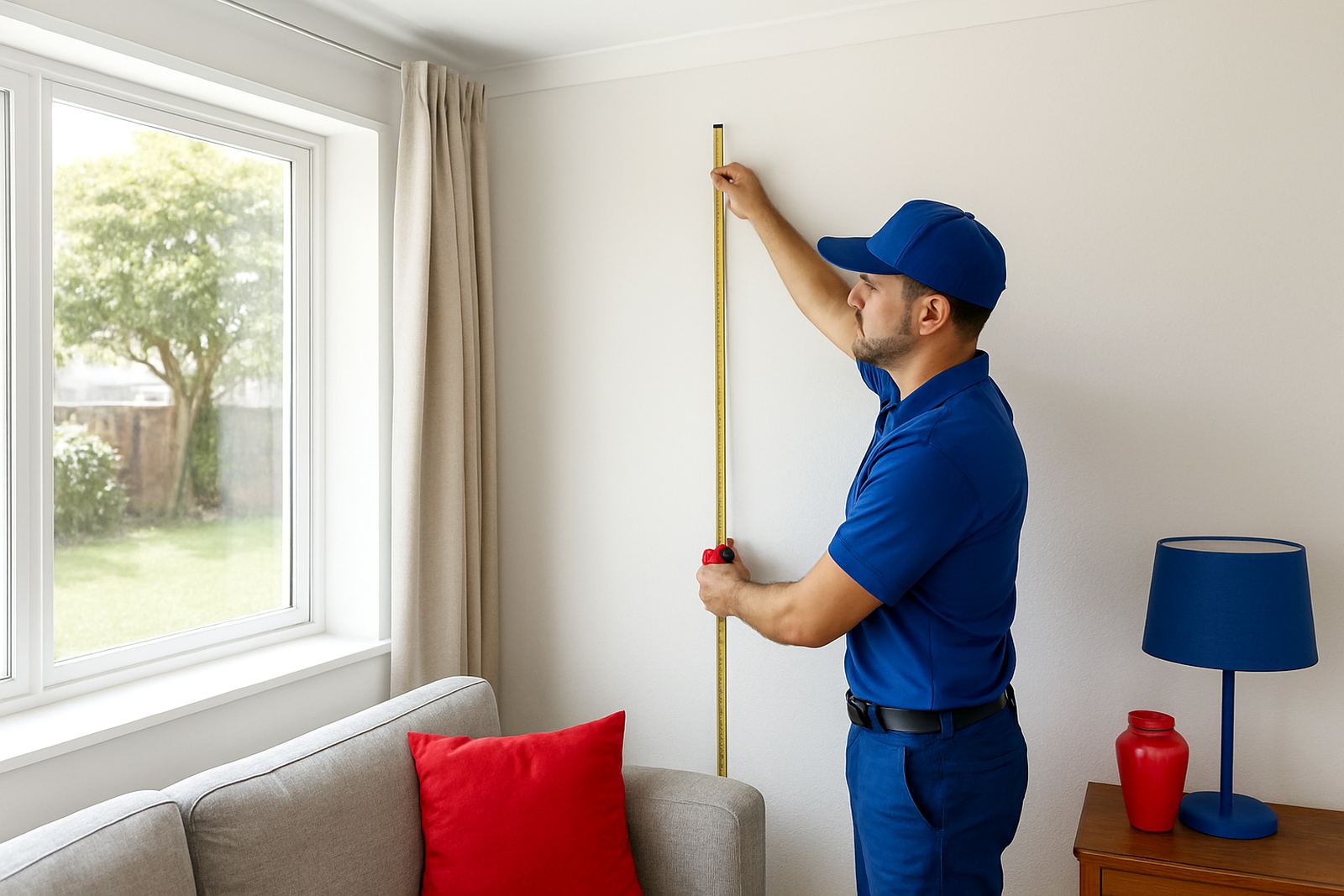
Before you touch the indoor unit, switch the aircon off at the remote and then at the isolator or mains if you can reach it safely. In Durban homes, especially near the coast, moisture and dust can build up quickly, so it helps to treat the unit gently and keep water well away from the electrical parts.
Make sure your hands are dry, keep a dry cloth nearby, and have a soft brush, lukewarm water and a clean towel ready. If the cover feels stuck, do not force it. Some wall-mounted units open from the bottom edge, while others lift from the side tabs. If you are unsure, stop and arrange a call-out rather than breaking the clips.
- Switch off the aircon fully before opening the cover.
- Keep children and pets away while you work.
- Do not spray cleaner directly into the unit.
- Never touch wiring, circuit boards or fan parts.
How to Remove Basic Indoor Filters Without Damaging Them
Most domestic split units have one or two plastic mesh filters behind the front cover. These are the ones you can clean at home. Open the front panel slowly and look for small handles or tabs on the filters. Slide each filter out straight and keep track of which side faces up, because it usually goes back the same way.
If the filter has a light grey dust layer, that is normal cleaning work. If it is torn, warped or has oily dirt that wont wash off, it may need replacement or deeper servicing. A filter that keeps falling back into the frame can also mean the clips are worn. On older units in South Durban and Clairwood, we often see this after years of regular use and salty air.
- Pull filters out by the handles, not the mesh.
- Take note of dust build-up before washing, it can point to airflow issues.
- Lay filters flat on a towel so they do not bend.
- Check for cracks, broken tabs or excess grime.
Wash Dust and Lint Away the Right Way
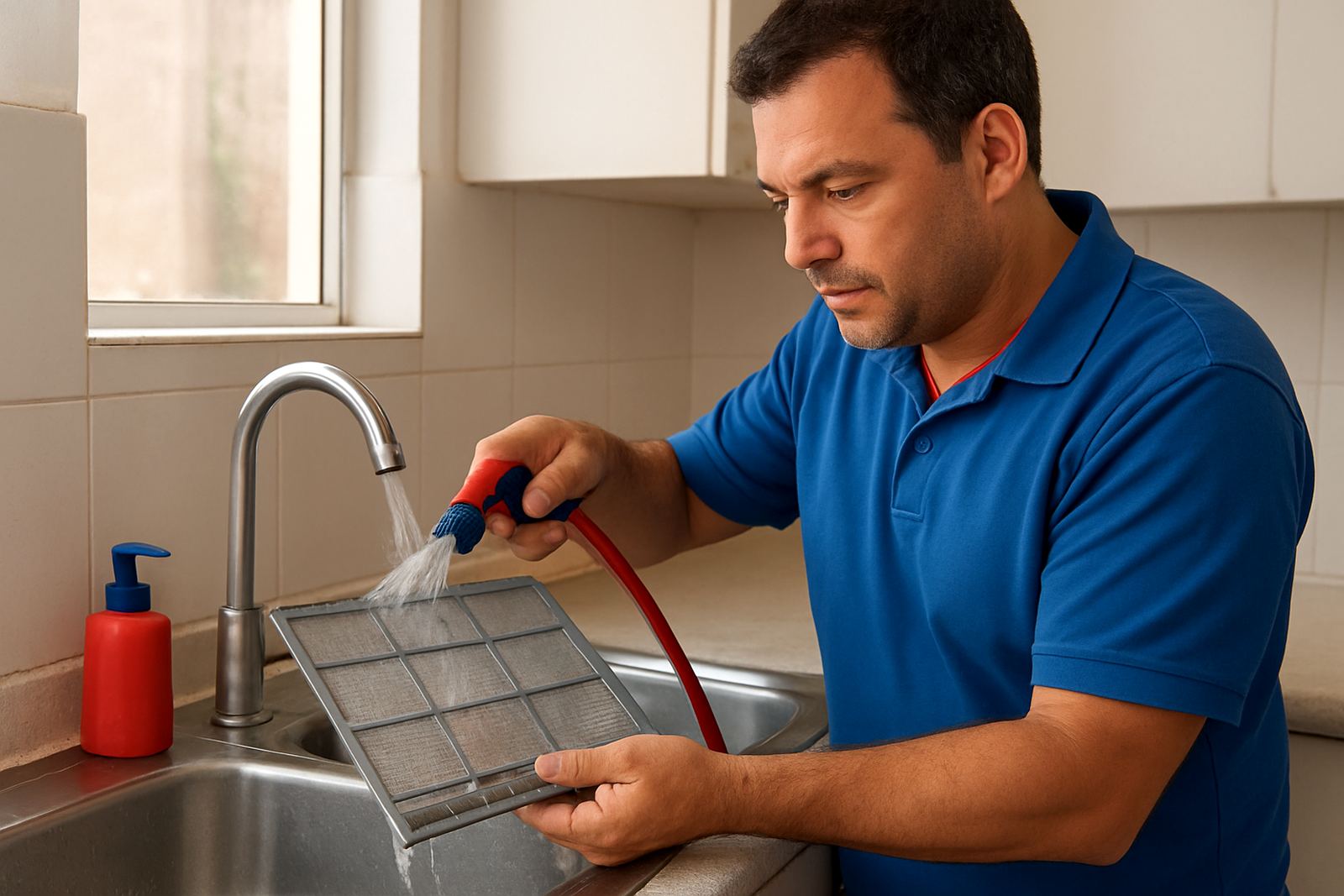
Take the filters outside or to a utility area and tap them gently to remove loose dust. Then use a soft brush or vacuum with a brush attachment to clear the fine lint from both sides. If the filters are washable, rinse them under lukewarm running water until the dirt lifts away. A little mild soap is fine if there is sticky grime, but avoid strong chemicals, bleach or hot water.
For homes in coastal areas like Durban Central and the southern suburbs, salt and humidity can leave a sticky film on the mesh. In that case, rinse a bit longer and check that the mesh is clear before drying. Shake off excess water and leave the filters to air dry fully in the shade. Do not put them back while still wet, because that can lead to mould or a musty smell.
- Use lukewarm water only.
- Dry in shade, not in direct sun or on a heater.
- Do not scrub hard with a wire brush or rough cloth.
- If the filter is paper based or labelled non-washable, only vacuum it.
Clean the Surrounding Cover and Check the Airflow Path
While the filters are drying, wipe the front cover and the visible plastic surfaces with a dry or lightly damp cloth. Do not push water inside the unit. You can also look at the return air opening and the louvre area for dust build-up, because a clean filter alone wont help much if the rest of the airflow path is blocked.
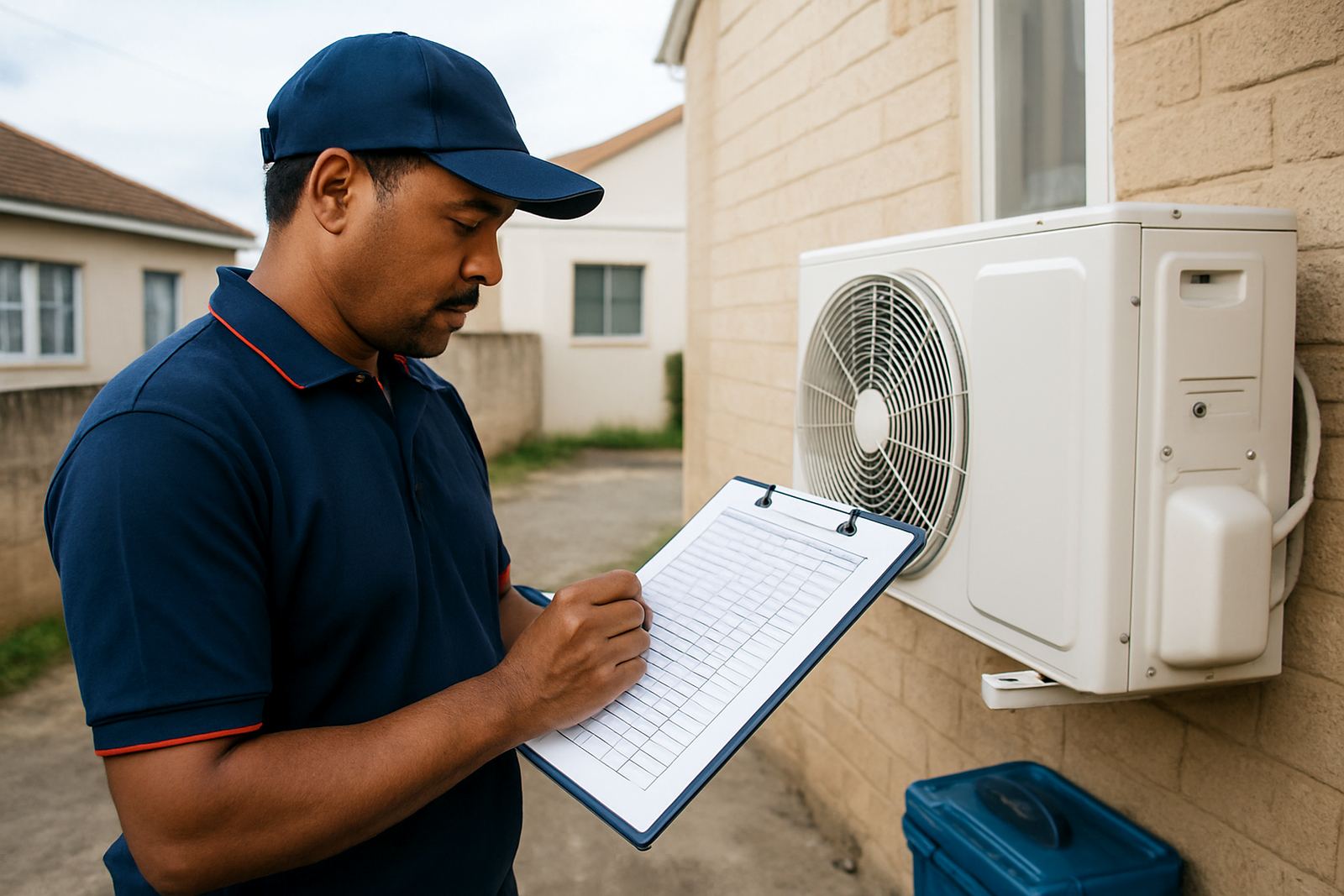
Use this time to notice any signs of trouble. If there is water staining, a blocked drip line, a rattling noise or ice on the pipes, the problem is probably bigger than a dirty filter. In that case, a deeper fault finding visit may be needed. Our team in Clairwood handles breakdown call-outs, drain blockages, deep clean service and planned maintenance across greater eThekwini, from West Durban to North Durban.
- Wipe only the accessible plastic parts.
- Look for water marks, mould smell or ice.
- Check that the room airflow path is not blocked by curtains or furniture.
- Do not poke into the coil fins or fan area.
How Often Should You Clean Home Filters in Durban?
As a simple rule, check the filters every 2 to 4 weeks if the aircon runs daily. In a dusty house, near a main road, or where windows are open often, you may need to clean them more often. In summer, when the unit runs longer and the humidity rises, many owners notice reduced airflow within a few weeks if the filters are left alone.
Weekly checks are worth it during heavy use, load-shedding recovery periods, or if someone in the home has allergies. If the unit serves a salon, small office or rental room, the cleaning cycle may need to be tighter again. Clean filters help the system cycle better and can reduce strain on the compressor and fan motor over time.
- Every 2 to 4 weeks for regular home use.
- More often for coastal homes, pets or high dust.
- After renovation work or sanding, clean straight away.
- Book maintenance if performance drops even after cleaning.
When to Stop and Call a Technician Instead
Some filter jobs are simple, but not every aircon issue is a filter issue. If the unit is still blowing weakly after cleaning, making a buzzing sound, tripping the power, leaking water, or cycling on and off too quickly, it is time for proper repair. The fault may be in the controls, capacitor, contactor, fan motor or gas circuit.
At Aircon Depot in Clairwood, Durban, we supply, install and repair domestic and commercial air-conditioning, plus spares and gas. If you need leak checks, regas, compressor replacement or a breakdown call-out in Clairwood, Durban Central, South Durban, North Durban, West Durban or the greater eThekwini area, our team can help. A clean filter is good routine care, but it is only one part of keeping the system working well.
- Do not keep resetting a unit that trips repeatedly.
- Stop if the indoor fan is noisy or the smell is burnt.
- Book help if the filter area is clean but airflow is still poor.
- Ask for planned maintenance if the unit serves a busy home or small business.
Quick Home Filter Checklist You Can Keep Handy
Use this short checklist each time you clean the filters. It keeps the job simple and helps you spot problems before they grow. A few minutes now can save you a service visit later and keep the room cooler through Durban heat, damp weather and those awkward load-shedding catch-up periods.
- Aircon switched off at the unit and the mains if safe.
- Front cover opened gently, no broken clips.
- Filters removed straight out and checked for tears.
- Dust removed with brush or vacuum.
- Filters rinsed if washable, then dried fully.
- Cover wiped and area left dry.
- Unit tested after reassembly for normal airflow.
If you are ever unsure, it is better to pause than to damage the indoor unit. Clean filters at home are useful, but safe handling matters just as much.