When cooling starts to slip
If a unit used to cool a room in minutes and now takes much longer, that is worth noting. Weak airflow, warm air from a set to cool, or uneven temperatures from one room to the next can point to dirty filters, a failing fan motor, low refrigerant or a compressor that is starting to struggle.
In Durban heat and humidity, people often turn the temperature lower and lower when the real issue is a unit that is not moving air properly. If you find yourself changing settings more often just to stay comfortable, the system needs attention soon.
- Air feels cool at the start, then turns weak or warm
- One room cools better than another with the same set point
- The unit runs longer than usual but the room still feels stuffy
- Power bills rise without any change in use
Noises, smells and vibration are early warnings
An aircon should not rattle, bang, hum loudly or vibrate enough to make the wall or ceiling shake. New sounds often mean a loose mount, worn bearings, an unbalanced fan or parts inside the unit that need checking before they cause more damage.
Smells matter too. A musty smell can point to dirt build-up, blocked drainage or mould in the indoor unit. A hot electrical smell is more serious and should not be ignored. If the unit trips the supply or starts and stops by itself, switch it off and arrange a technician to inspect it.
- Rattling, squealing, clicking or buzzing after start-up
- Musty, damp or burnt smells from the indoor unit
- Vibration that was not there before
- Breaker trips, short cycling or random shut-offs
These signs often start small, then get worse quickly if the system keeps running.
Leaks, drips and moisture where there should be none
Water around the indoor unit is a clear service sign. A blocked drain, cracked pipe, dirty tray or frozen coil can all cause dripping. In homes and shops across Clairwood and greater eThekwini, this is one of the most common call-outs because the damp air makes drainage problems show up faster.
Look for stains on the wall, damp ceilings, puddles under the unit or water marks on nearby furniture. Outside, check for heavy water coming from an unusual spot, or ice on the pipes when the unit should be running normally. A small leak today can turn into ceiling damage or electrical risk if it is left too long.
- Water dripping from the indoor unit or casing
- Brown marks, damp patches or peeling paint nearby
- Ice on pipes or the indoor coil
- Condensate not running away as expected
Simple checks you can do before calling
Before booking service, do a few basic checks. These are safe, quick and can help you explain the fault clearly. If the problem remains after these steps, it is time for a professional fault finding visit.
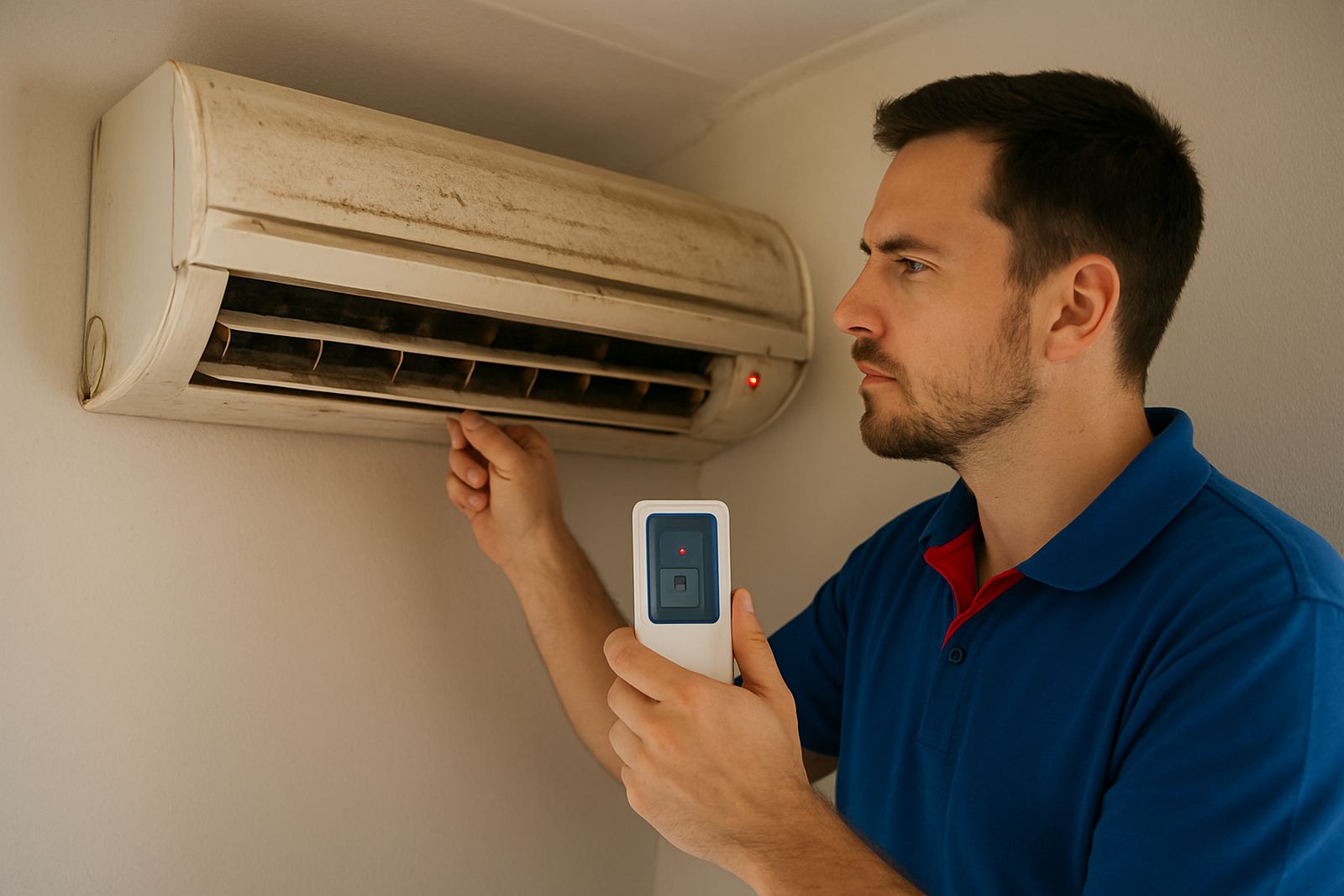
Start with the remote or controller settings. Make sure the unit is set to cool, not fan or dry. Check that the temperature is not set too close to room temperature. Then inspect the air filter. A clogged filter cuts airflow and can make the unit look faulty when it only needs a clean.
- Confirm power at the isolator and circuit breaker
- Check batteries in the remote and the correct mode setting
- Look for blocked filters, dusty grilles or closed vents
- Make sure doors and windows are shut during operation
If the unit still struggles after these checks, do not keep resetting it. Repeated resets can hide an electrical fault or make compressor problems worse.
Service signs by season and business use
Service signs are easier to miss when a unit is used every day. In offices, salons, shops and light commercial spaces, people often get used to poor cooling slowly. By the time someone complains, the system may already have been running with low gas, blocked drains or worn capacitors for weeks.
In summer, watch for long running times, sudden loss of cooling and extra dripping. In winter or cooler months, the warning signs may be less obvious, but you can still spot dirty coils, short cycling and noisy operation. Planned maintenance helps because it picks up small faults before the busy season puts the unit under strain.
- Weekly filter checks in homes and high use premises
- Monthly drain and drip tray inspections
- Regular checks on outdoor unit clearance and airflow
- Service before peak heat or before a business’s busy period
When to book a technician without waiting
Some issues should not be left for later. If the unit trips power, gives off a burnt smell, leaks water near electrical fittings, or stops cooling altogether, book a breakdown call-out. If cooling has faded gradually, a regas and leak check may be needed, but only after a proper inspection confirms the cause.
For properties in coastal areas and busy commercial spaces, regular deep clean service and planned maintenance can reduce repeat faults. If a compressor, fan motor, capacitor, contactor or control part has failed, the earlier it is found the more options you usually have. Waiting often leads to more wear on the rest of the system.
Aircon Depot works from Clairwood in Durban and services South Durban, Durban Central, North Durban, West Durban and the wider eThekwini area. If you are seeing any of these signs, email depot@aircondepot.co.za and arrange help before the fault grows.