Why coastal air-con needs extra attention
In Durban, especially close to Clairwood, South Durban and the harbour side, air-conditioners sit in air that carries fine salt and constant humidity. That mix can settle on the outdoor coil, fan blades, fixing brackets and control boards. Over time it can start light corrosion, block airflow and make the system draw more power than it should.
Homes and small businesses often notice the signs first in summer. The unit cools, but not as quickly. The fan sounds different. Water drips where it should not. In some cases the outdoor unit looks clean enough from a distance, yet the coil fins are already stained or the drain line is slow. That is why coastal units need checks a bit more often than inland systems.
If a system is running near the sea or in an area with heavy traffic dust and sea mist, plan for extra care every few months. Waiting for a failure usually means a bigger repair, and sometimes a longer downtime during the hottest weeks.
Simple monthly checks you can do yourself
Start with the easy things. Switch the unit off before cleaning and make sure power is isolated at the breaker if you are reaching near panels. Then check the filters, the room around the indoor unit and the area around the outdoor unit. A clean path for air is one of the cheapest ways to keep the system healthy.
- Wash or vacuum the filters every 2 to 4 weeks in dusty or humid conditions.
- Keep furniture, curtains and boxes clear of indoor airflow paths.
- Check that the outdoor unit has at least 300 mm of clear space at the back and sides, more if possible.
- Look for leaves, plastic and grass cuttings around the condenser base.
- Make sure the drain pipe is not dripping onto walls, paving or electrical fittings.
On split systems, a weak smell or a slow start can point to dirty filters, a blocked drain or a control fault. Catching it early saves time later. If you see frost, oily marks or repeated tripping, stop there and book a technician instead of running the unit hard.
Protecting outdoor units from salt spray
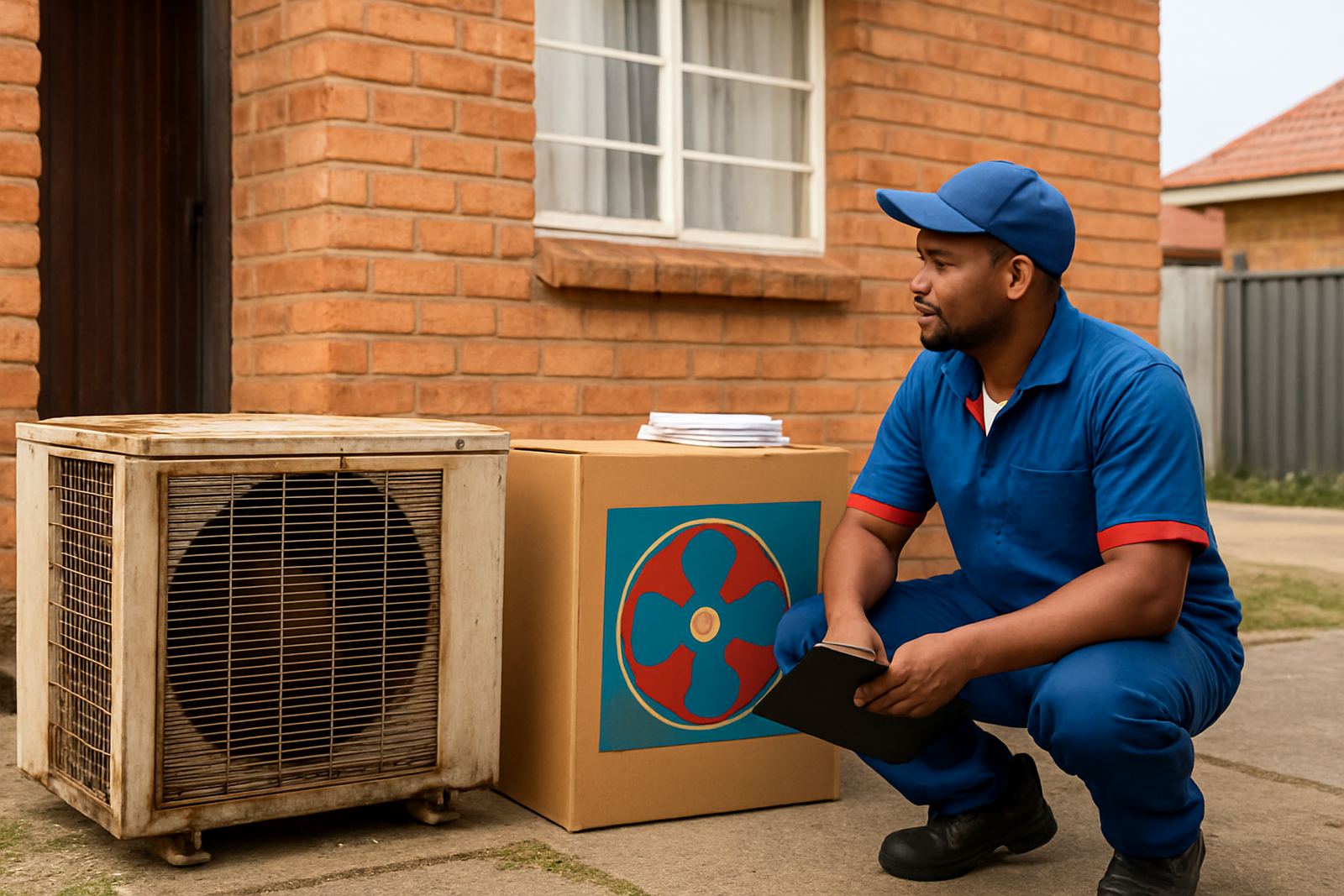
The outdoor unit takes the hardest hit in coastal areas. Salt deposits stick to the casing and coil, then moisture keeps them active. You may not see the damage straight away, but after months of exposure the fins can start to pit and the casing screws can rust. That is why the outdoor position matters just as much as servicing.
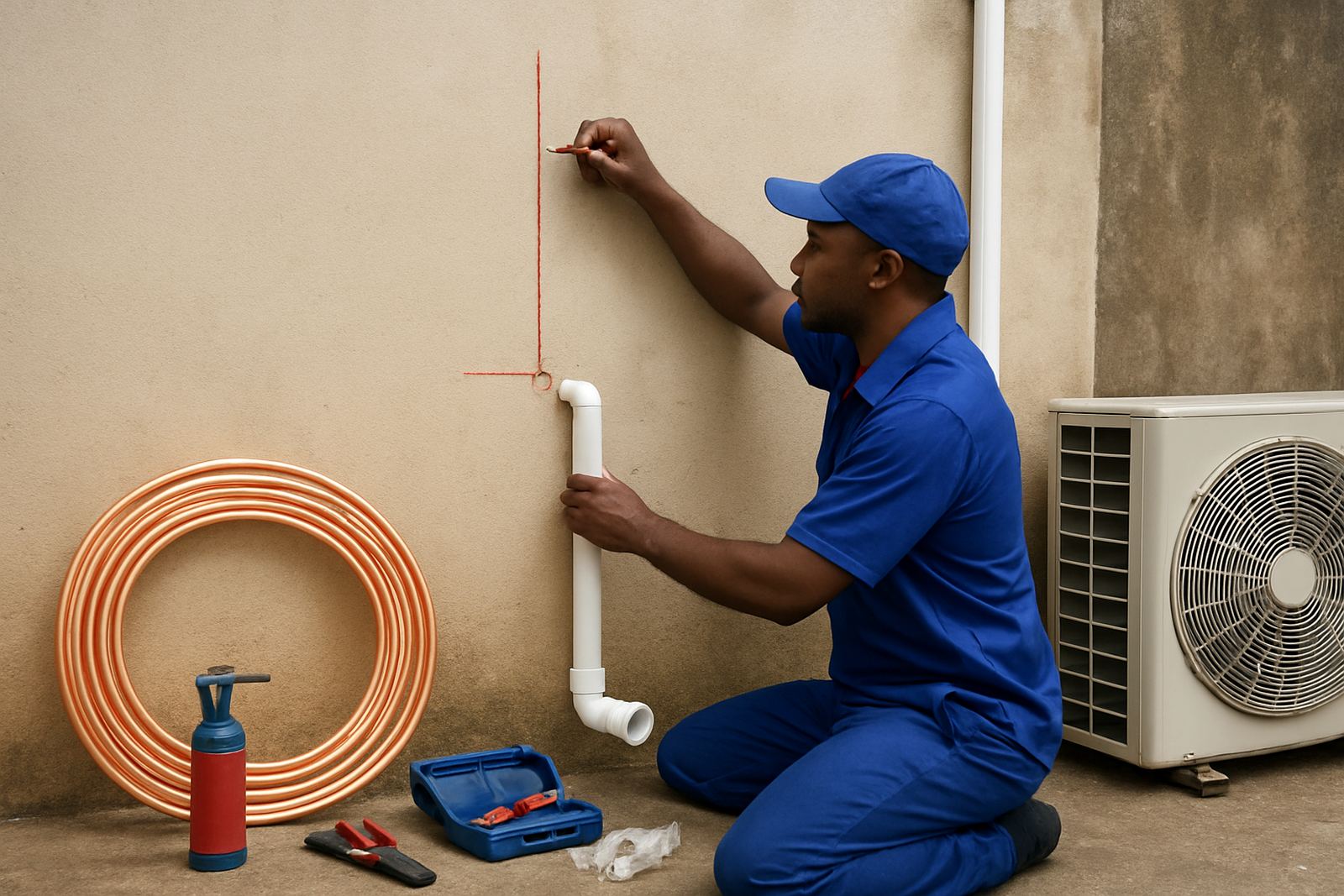
Where possible, mount the unit above flood splash and away from direct sea spray, open parking bays and hose-down areas. If the system is on a roof or wall bracket, check that the fixings are still sound and that the bracket is not pulling away from the wall. In the coastal belt, a loose bracket is not something to leave for later, it can become a safety issue quickly.
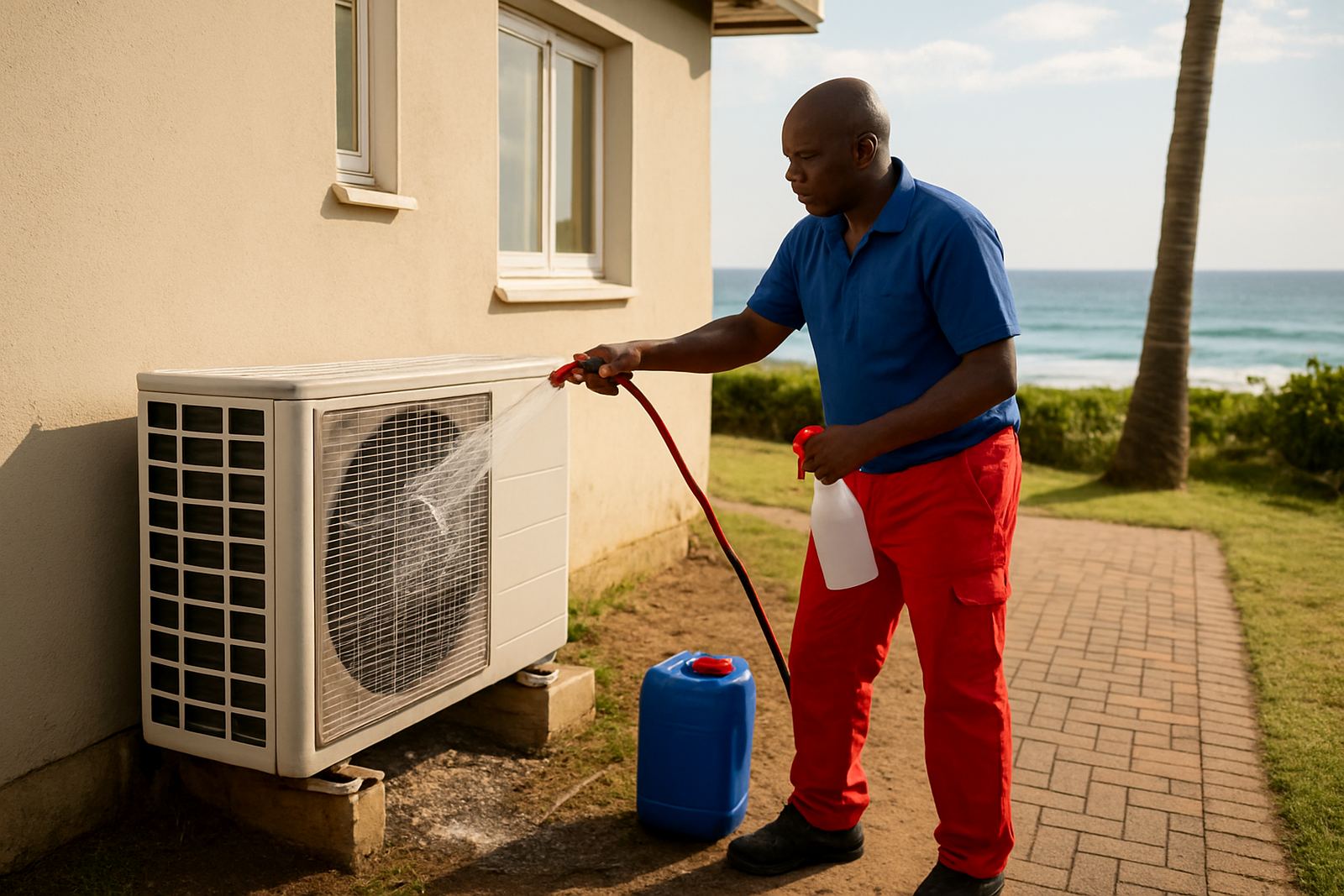
A light fresh-water rinse of the outdoor casing can help, but only when done carefully and never with a hard jet into the fins or electrics. If the coil is already clogged with salt film, a proper deep clean is better. Coastal cleaning should be gentle and thorough, not just a quick spray and go.
Drainage, mould and indoor air quality
High humidity does more than make the room feel sticky. It creates ideal conditions for drain blockages, slime in the tray and mould around ceilings or walls where the condensate line is struggling. In Durban homes and shops, this is one of the most common reasons for water damage around an aircon.
Check for slow dripping at the drain outlet, water marks on the wall below the indoor unit and gurgling sounds after switch-off. A blocked drain may start as a small nuisance, then overflow during a long hot day. It can also drip onto plug points, counters or stock. That is not just a maintenance matter, it can become a safety risk.
- Flush the drain line during planned maintenance.
- Check the drain slope so water does not sit in the pipe.
- Inspect the indoor tray for slime or dust build-up.
- Clean the surrounding wall and ceiling area if there are moisture marks.
If the unit keeps blocking after a basic clean, there may be a deeper fault in the pipe run or a problem with the tray level. In older buildings around Durban Central and South Durban, pipe routes are sometimes the issue rather than the machine itself.
What to book with a technician
Some checks need proper tools and experience. A technician can test gas pressure, inspect for leaks, clean the coil properly, test capacitors and contactors, and verify that the fan motor is pulling the right amperage. These tasks matter because coastal wear often starts in one area and spreads.
Book professional attention if the unit is short-cycling, not cooling evenly, icing up, tripping the board, or making a grinding noise. On commercial systems, watch for uneven temperatures between rooms, repeated resets after load-shedding and higher electricity use without a change in usage. Those are common signs that the system needs fault finding, not just another filter wash.
We also recommend planned maintenance before summer starts. That gives time to catch worn parts, tighten terminals and deal with corrosion before the heat arrives. A small note here, a system that gets attention on schedule usually lasts longer and gives fewer surprises.
Coastal care checklist for homes and businesses
Use this as a simple routine through the year, especially if the unit sits near open windows, balconies, workshop doors or a salty road breeze. Keep a record of each check so you can see patterns before they become breakdowns.
- Clean filters every 2 to 4 weeks.
- Inspect the outdoor unit after heavy wind or rain.
- Look for rust on brackets, screws and casing panels.
- Check that the drain is flowing and not staining walls.
- Listen for unusual noise from the fan or compressor.
- Book a deep clean and service at least once a year, more often for busy sites.
- After a power cut or load-shedding event, confirm the system restarts normally.
If you manage a shop, office, rental unit or restaurant, keep spares and gas support in mind as well. Having the right parts on hand can reduce downtime, especially when a motor, capacitor or control part fails at short notice.