What this remote control does
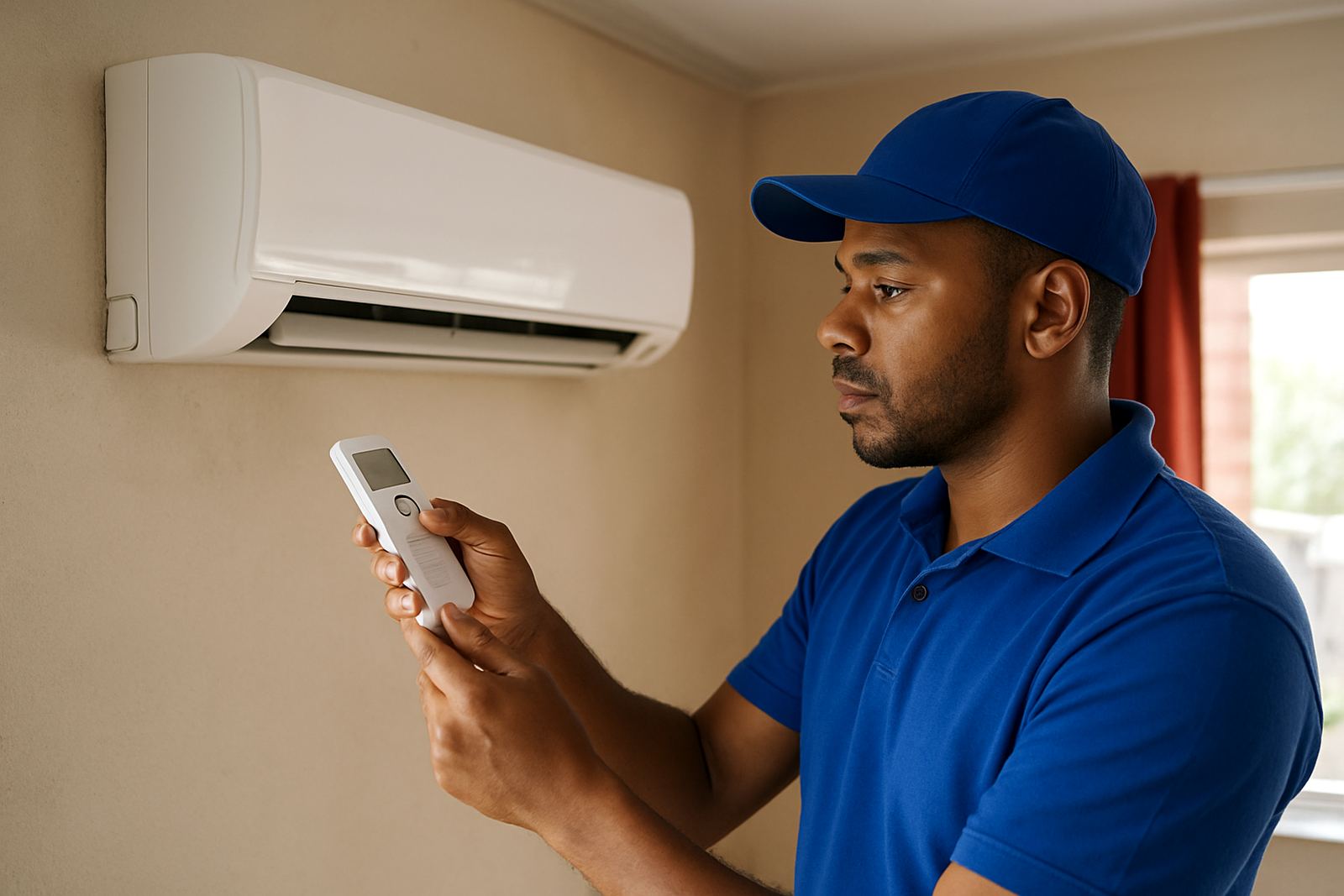
This aircon remote control is a replacement handheld controller for compatible split system and room units. It lets the user switch the unit on and off, change temperature, set fan speed, choose operating mode and adjust timer functions without going to the indoor unit every time. In a Durban home or office, that matters when the unit is mounted high on the wall or when power cuts mean the last settings need to be checked again after load-shedding.
It is a practical spare for a lost, damaged or non-working remote. Many calls we see in Clairwood, South Durban and Durban Central turn out to be a remote issue rather than a full breakdown, so it is worth checking the controller before booking major repairs.
Sizes, styles and common options
Replacement remotes come in a few simple forms, mostly depending on the aircon make and the functions on the unit. Some are basic controllers with the standard cooling and heating settings, while others include extra buttons for sleep mode, swing, timer, turbo or energy saver options. The outer shape can vary a bit, but the main concern is compatiblity with the indoor unit and its receiver board.
- Standard handheld remote for domestic split units
- Remote with display for temperature and timer read-out
- Model-specific replacement controller for certain room units
- Universal style remote for selected compatible systems
- Battery-operated units, usually with a small LCD screen
If you are replacing a lost controller, it helps to bring the old remote, the indoor unit details or a photo of the unit label. That makes matching easier and avoids buying a controller that looks right but will not communicate with the board.
Where it suits best in Durban homes and workplaces
This product suits bedrooms, lounges, small shops, practice rooms, reception areas and office spaces where the air conditioner is used daily. It is especially useful in rentals, short-stay units and shared workplaces where remotes go missing, buttons wear out or batteries are removed and not replaced. In humid coastal areas such as Clairwood, Durban Central and the broader eThekwini coast, small electronics can also fail sooner if they are left in damp storage or exposed to salty air.
For commercial spaces, a spare remote on site can save time during trading hours. If a controller stops responding during a hot afternoon, the team can often sort the setting issue in minutes rather than waiting for a technician. That said, if the indoor unit still does not respond after new batteries and a check of the settings, there may be a receiver or control fault that needs proper fault finding.
Installation, pairing and power needs
Most replacement remotes do not need hard installation. They run on batteries, usually AAA or AA depending on the model, and they communicate with the indoor unit by infrared signal. Some units need simple setup steps such as selecting the correct code or confirming the model type before they will work properly. If the controller has a factory setting process, the booklet or a quick supplier check will usually guide it.
The remote itself does not need refrigerant gas or pipe work, and it does not connect to mains power. It does however depend on the indoor unit having power, a working receiver and a healthy control board. After load-shedding, some aircons may need the mode reset or a short wait before the remote response comes back. If the display on the unit is blank, first check the isolator, plug point or breaker before assuming the remote is faulty.
- Fit fresh batteries before testing
- Point the remote directly at the indoor unit receiver
- Check that the unit is powered on at the isolator or circuit breaker
- Confirm the temperature setting is within the unit’s operating range
- Keep the receiver window clean and free of dust
Care, cleaning and when servicing is needed
Keep the remote dry and away from kitchen steam, direct sun and damp counters. A soft dry cloth is enough for regular cleaning. If the buttons stick, the battery cover is loose or the screen fades in and out, the remote may need new batteries or a replacement sooner rather than later. Do not spray cleaner directly onto the controller, because liquid can seep inside and corrode the contacts.
For the air conditioner itself, a remote control cannot fix problems such as drain blockages, dirty filters, low gas or a faulty fan motor. If the unit still blows warm air, trips the breaker, leaks water or ignores commands from a known working controller, then proper aircon servicing is needed. Our team in Durban handles fault finding, regas and leak checks, compressor replacement, capacitors and contactors, deep clean service and planned maintenance for domestic and commercial units.
What to check before you order
To avoid getting the wrong controller, check the indoor unit make, model number and any code on the old remote. If the remote is lost, a clear photo of the indoor unit label helps a lot. Some controllers can handle several functions, while others only work with specific boards, so guessing from appearance alone is not always enough.
- Indoor unit model and serial details
- Whether the old remote was original or a replacement
- Battery size required by the controller
- Functions you need, such as timer, swing or heat mode
- Condition of the indoor receiver and display panel
It also helps to think about where the unit is used. For a rental flat in West Durban, a basic replacement may be enough. For a small office in Durban Central, you may want a controller with timer and temperature hold functions so the settings are easier to manage during the day.
Key facts
| Product type | Replacement handheld aircon remote control |
|---|---|
| Use | Temperature, mode, fan speed, timer and swing control |
| Power | Battery operated, typically AAA or AA depending on model |
| Compatibility | For selected domestic and light commercial room units |
| Display | LCD screen on many models, model dependent |
| Typical fitment | Split system indoor units with infrared receiver |