What a proper vacuum does before start-up
When a new system is piped up, there is always air inside the lines and often a bit of moisture too. A vacuum pump draws that out before the technician opens the refrigerant circuit. That matters because air does not belong in the system, and neither does water vapour.
Once the system is sealed, the refrigerant should be the only substance moving through the pipework. If air remains inside, it adds pressure that should not be there. If moisture remains, it can mix with refrigerant oil and form acids over time. Those acids attack windings, bearings and valves, and that is where the trouble starts.
Why moisture is such a problem in Durban
Durban humidity makes this step even more important. On the coast, pipe ends, flares and indoor units can pick up moisture while the work is being done, especially on hot days with sea air around. Even a new install can carry hidden moisture if the pipework is not handled properly.
We see this often in Clairwood, South Durban and along the greater eThekwini coast. A system may cool for a few days then start tripping, icing up or losing output. The real issue is sometimes not the compressor at all, but the damage that began before commissioning. One missed step can shorten the life of the unit by years, and that is not a small thing when the customer has paid for a full installation.
- Moisture can freeze at the expansion point and restrict flow.
- It can mix with oil and form acid.
- It can cause copper corrosion inside the pipework.
- It can lead to repeated call-outs and higher running costs.
Signs a system was not evacuated properly
Not every fault shows up straight away. Some problems take time, which is why poor evacuation is often missed during the first week or two. Still, there are warning signs that a vacuum step may have been rushed or skipped.
- Poor cooling even when the gas charge looks correct.
- Hissing or unstable pressures during operation.
- Ice forming on the indoor coil or suction line.
- Compressor overheating or tripping on protection.
- Unusual noise from the system after start-up.
If you have a new install in a shop, office or home and it is underperforming, the cause may be deeper than a simple control fault. A proper fault finding inspection should check pressures, pipework condition, electrical loads and the history of the installation. Sometimes the fix is a regas and leak check, but sometimes the real answer is to correct the installation standard first.
How technicians check for a proper vacuum
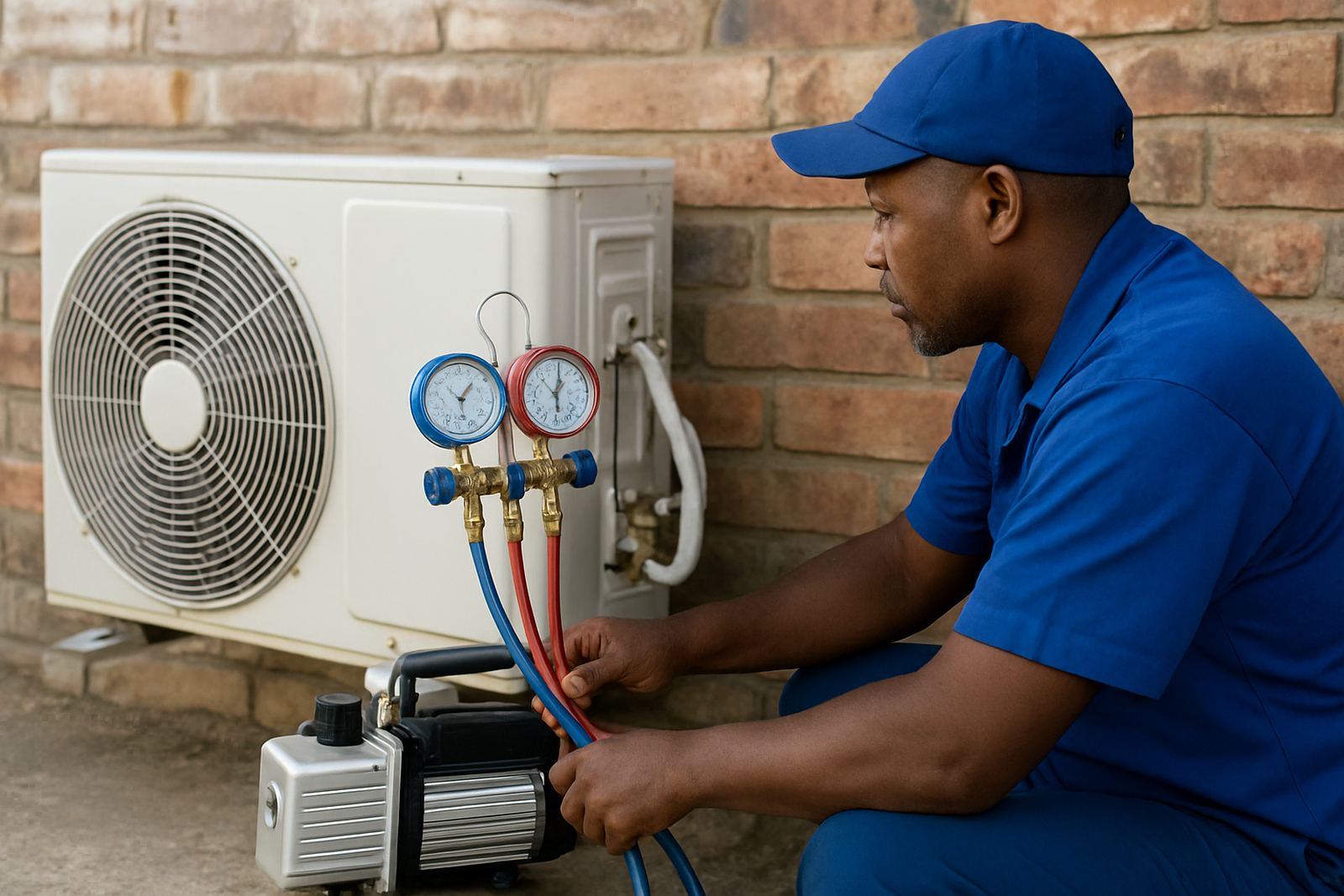
A good evacuation is measured, not guessed. The technician connects a vacuum pump and gauges, pulls the system down, and watches whether the pressure holds. If the reading rises too fast after the pump is isolated, that suggests moisture, a leak, or both. Then the system must be tested again before charging.
In practical terms, the job should not be rushed between other call-outs or squeezed in before lunch. On larger commercial systems, the vacuum process may take longer because the pipe runs are longer and the amount of trapped air is greater. On some sites in Durban Central or West Durban, we also have to work around building access, generator use and load-shedding windows, so planning matters. A careful technician will set the job up properly rather than trying to force it through.
- Check pipe joints, flare nuts and brazed points first.
- Use the correct pump size for the system volume.
- Hold the vacuum and confirm stability.
- Only then charge refrigerant to the correct level.
A local example from a Durban installation
We were called to a small commercial site near Clairwood where a split system had been installed months earlier. The unit was running, but the office never got properly cool and the compressor was drawing more current than expected. The customer had already paid for a gas top-up elsewhere, yet the issue kept coming back.
After checking the system, the problem was traced to poor evacuation during the original install. There was moisture in the lines, and the refrigerant had not stabilised. We corrected the pipework, replaced damaged components, carried out a deep clean service and pulled the system down properly before recommissioning it. The difference was clear. The unit cooled better, started cleaner and the cycling became normal. That kind of job shows why a vacuum is not just a technical preference, its part of protecting the full investment.
Why this step saves money over the long term
Skipping evacuation can look like a time saver on the day, but it usually costs more later. Repeat breakdowns, compressor replacement, and extra labour all add up. A system that has been commissioned properly tends to run more steadily, use less power and need fewer emergency call-outs.
For homes, that means fewer surprises during summer heat. For businesses, it means less downtime, fewer staff complaints and better control over stock rooms, offices and customer areas. Planned maintenance can catch small issues early, but it cannot undo bad commissioning. That is why we treat the vacuum step as part of the installation, not an optional extra.
If you are fitting new air-conditioning in Durban or anywhere across eThekwini, ask the installer how they evacuate the system, how they test the vacuum hold and what they do if the reading does not stabilise. A clear answer is a good sign. A vague answer usually is not.