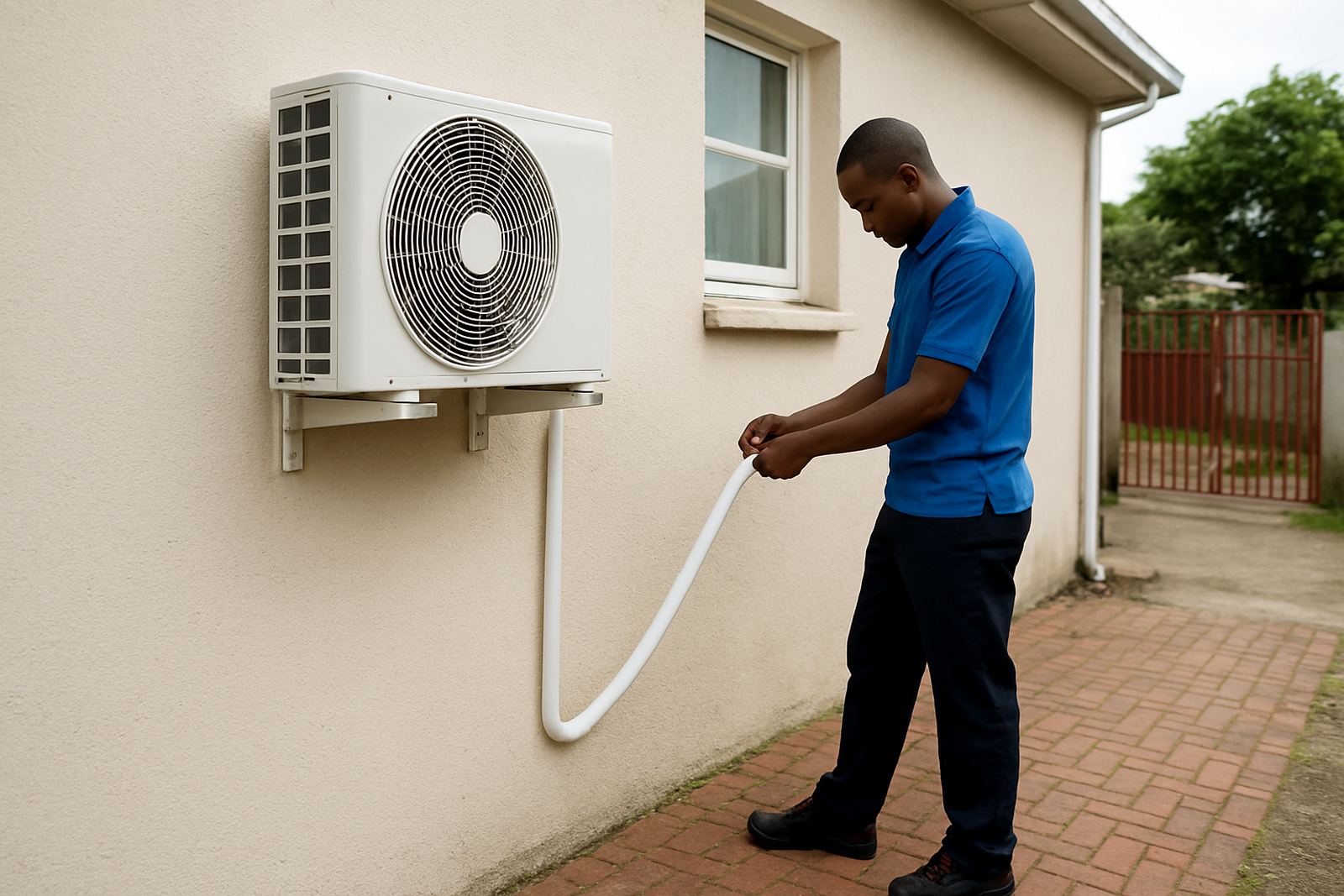
When a portable unit makes sense in Durban homes
A portable aircon can help when you need cooling in one room only, or when you are renting and cannot put holes through walls without permission. It also suits spaces where the need is temporary, like a spare room, a small office used for a few months, or a room that only needs extra cooling during the hottest part of summer.
For some Clairwood households, a movable unit is a practical short-term choice while they save for a fixed installation. It can be wheeled from a bedroom to a living area, and that flexibility is useful when load-shedding patterns change your routine. If your family sleeps in one room during outages, one unit can sometimes cover the most important space first.
That said, portable units work best when the room is fairly small, doors can stay closed, and the user is fine with a hose to the window or opening. They are not usually the answer for large open-plan areas, shops with frequent foot traffic, or offices where people sit through long meetings.
Where fixed installation gives better value
A fixed aircon makes more sense when the room is used every day and comfort matters for long periods. In Durban's humidity, a properly sized fixed unit does more than cool air. It also removes moisture, which helps with sticky rooms, mould-prone corners and that heavy feeling you get in summer.
For homes in Durban Central, North Durban and South Durban, we often see the difference in how a fixed system handles heat after midday. A wall-mounted unit, correctly positioned and installed, gives even airflow and better temperature control than a portable unit that struggles against warm air leaking back into the room.
Permanent installation also tends to look neater and use space better. There is no floor unit to move around, no drain bottle to empty every few hours, and no hose across a walkway. For business premises, that matters because safety and presentation count.
- Better cooling across larger rooms
- Less noise near the people using the space
- Improved humidity control in coastal conditions
- Cleaner use of floor space in homes and shops
- More suitable for daily operation over many years
The real cost is more than the purchase price
When people compare portable and fixed aircon, they often look only at the price on the day of purchase. That leaves out running cost, maintenance, and how long the unit will last before repairs become frequent. A cheaper unit can turn into the dearer option if it runs harder, cools poorly or keeps failing under Durban conditions.
Portable units usually work their parts harder because they are compact and need to shift heat out through a hose. That can mean more noise and more strain on the compressor. Fixed systems, when installed correctly, usually run more efficiently for the same space, which matters when electricity bills are already under pressure.
There is also the question of servicing. A fixed system can be cleaned, checked for leaks, regassed when needed, and kept in good condition with planned maintenance. A portable unit is often treated as throwaway kit, which may suit some users but not everyone.
- Ask how much the unit will cost to run each month
- Check whether filters and drains can be cleaned easily
- Confirm if the room size matches the unit's capacity
- Think about repair access and spare parts before you buy
Noise, drainage and other things people only notice later
A common complaint with portable aircons is noise. Because the compressor sits in the room, you hear more humming and fan movement close to where you sleep or work. That may not matter in a garage office or short-term rental, but it becomes tiring in a bedroom or consulting room.
Drainage is another point people miss. In humid Durban weather, an air conditioner removes a lot of moisture. Portable units may need regular emptying or a drain arrangement that suits the room. If the drain blocks, spills can happen. With a fixed system, we often find the issue is not the unit itself but a blocked drain line or a dirty indoor coil that needs a proper clean.
Fixed systems also let us deal better with controls, fan motor repairs, capacitor faults and contactor problems if something goes wrong. That matters for owners who want a unit that can be kept in service instead of replaced every few seasons.
A local example from Clairwood and South Durban
We often get calls from families in Clairwood and nearby South Durban who want to cool one front room before summer gets too harsh. If the room is small, the occupant is renting, and the need is temporary, a portable unit can be a fair starting point. It gives relief without the need for a major installation.
But if the same home has a main bedroom used every night, or a lounge where the whole family sits in the afternoon, a fixed system usually makes more sense. In those cases, the upfront work pays back through steadier cooling and fewer headaches. In one typical case, a household starts with a movable unit in the lounge, then later adds a fixed unit to the bedroom after seeing how much better the sleep improves. It saves trying to force one machine to do every job.
Commercial spaces are similar. A small office in Durban Central may use one portable unit for a temporary partitioned room. A salon, takeaway, or clinic normally needs a fixed installation because people stay there for hours and expect the temperature to hold steady.
How to choose the right option before you spend
Before you buy, match the aircon to the room and the way you actually live or work. If the unit will move from room to room, portability matters more. If it will cool the same area every day, a fixed unit usually gives better long-term value. The best choice often comes down to floor space, wall access, power points and whether you can manage a drain hose or need a cleaner finish.
Here is a simple way to think about it:
- Choose portable if the room is temporary, rented, or used only now and then
- Choose fixed if the room is used daily and comfort must stay stable
- Choose fixed if noise is a concern in bedrooms, offices or treatment rooms
- Choose portable if you need one unit that can move with changing needs
- Choose fixed if you want better efficiency and easier long-term servicing
If you are unsure, it is better to have the room assessed before spending money. A unit that is too small will run flat out and still leave the room hot. One that is too large can cycle badly and waste power. The right advice at the start saves a lot of call-outs later.