Why one office feels fine and the next bay feels like a furnace
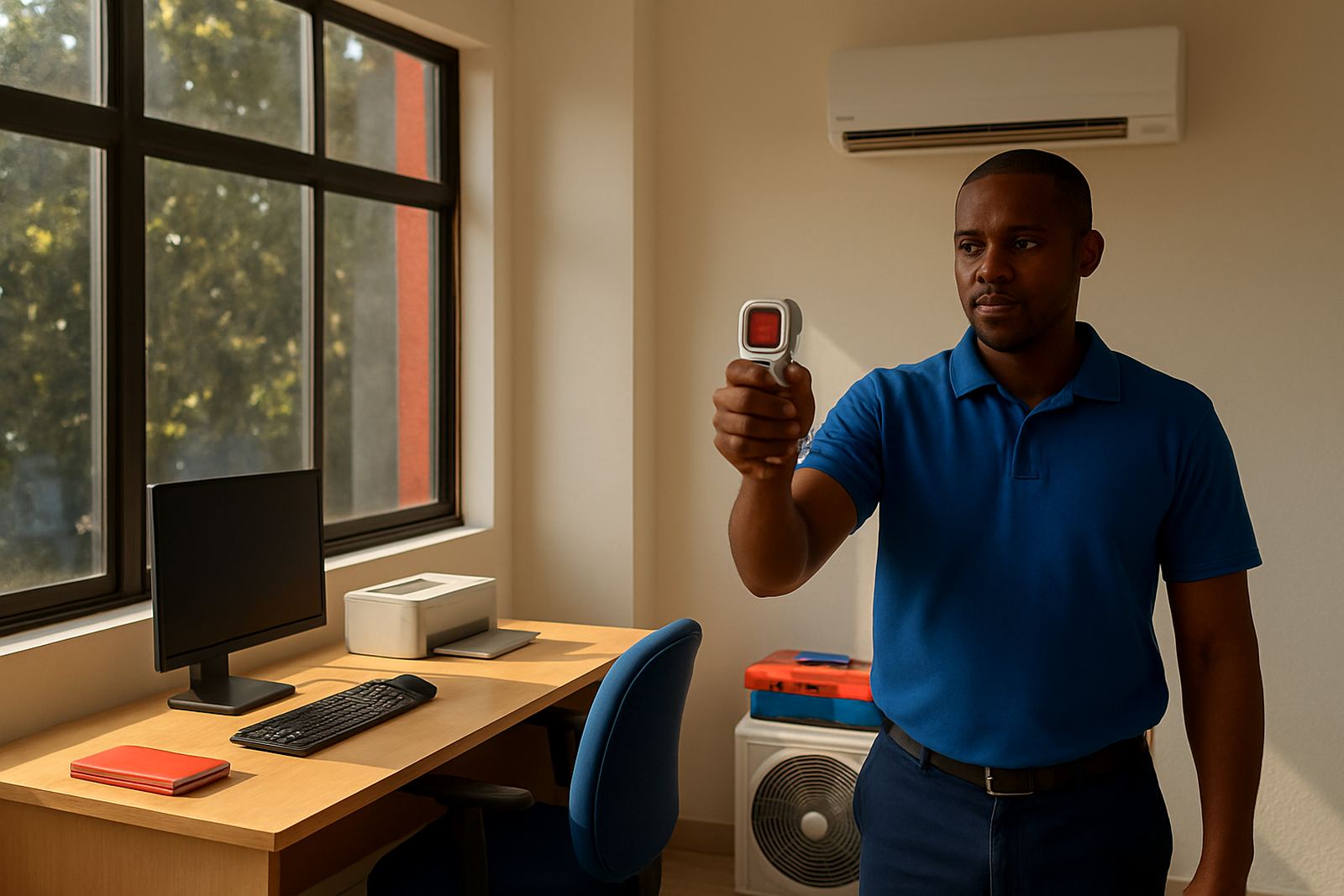
In many Durban offices the aircon is not really failing, it is fighting uneven heat gains. A room on the glass side of the building may pick up direct sun from late morning, while a back office with no airflow can stay stuffy because the cool air never reaches it properly. Add people, computers, printers and lighting, and you can have hot spots even when the thermostat says the room should be cool.
We see this often in Clairwood, Durban Central and the busy commercial areas around South Durban. A receptionist near the window might complain of glare and heat, while a store room or meeting room near the middle of the building feels heavy and still. The cause is usually a mix of solar heat, blocked air paths, and a system that was sized for an open-plan layout but is now trying to cool partitions, cupboards and extra staff. That changes the load a lot.
Windows, sun load and coastal humidity make the problem worse
Durban offices get strong sun for much of the year and coastal humidity makes it harder for aircon to remove heat quickly. When warm moist air sits against a window, the glass becomes a heat source. If blinds are open for most of the day, the unit has to keep pulling that extra heat out of the room, and the area nearest the glass often stays a few degrees warmer than the rest.
Simple changes can help straight away:
- Keep blinds or reflective screens closed on the sun side during peak hours.
- Check that furniture is not pressed tight against the wall under windows.
- Use lighter coloured window coverings where possible.
- Seal gaps around older window frames and doors.
- Make sure air from the indoor unit can move across the room, not straight into a barrier.
In a coastal city, damp air can also make cooling feel weaker than it should. The unit may be cooling, but the room still feels sticky because humidity is high and drainage is poor.
Heat from equipment and plug points creates hidden hot spots
Printers, servers, photocopiers, fridges and charging stations all give off heat. Put them together in one corner and that corner becomes a small heat island. It is common in offices where spare equipment is kept in a tight space or where the copy room has no dedicated extraction. Even a few laptops and monitors running all day can raise the temperature in a compact room more than people expect.
When the aircon senses the average temperature, it may switch off too early while the equipment area keeps warming up. Then staff in that zone feel the heat first. If the room also has low ceiling space or closed cupboards, the warm air has nowhere to go. Over time the unit can run longer and harder, which pushes up electricity use and wear on components.
- Keep heat-making equipment in a ventilated area.
- Leave a gap behind printers and fridges for air movement.
- Do not place indoor sensors close to machines or direct sunlight.
- Check that server rooms have their own cooling plan.
Crowded corners, blocked returns and bad airflow paths
A lot of office hot spots are airflow problems, not cooling capacity problems. If the supply air blows straight down the centre passage but the return grille is blocked by a cabinet or storage box, the cooled air cannot cycle properly. Corners with high occupancy, such as reception areas, small boardrooms and shared workrooms, can get warm fast because bodies release heat and there is less space for air movement.
In older buildings around the Durban CBD we often find one office with a perfectly working unit and another room nearby that feels warm because the doors stay closed and the internal layout changed over the years. A system installed for six people may now be serving ten, plus added equipment. That is enough to create uneven temperatures without any major breakdown.
Signs that airflow, not just temperature setting, is the issue include:
- Cold air close to the unit but not at the far side of the room.
- One corner always warmer than the rest.
- Doors needing to stay open to get any circulation.
- Dust building up around vents and grilles.
What a proper fault check should look at
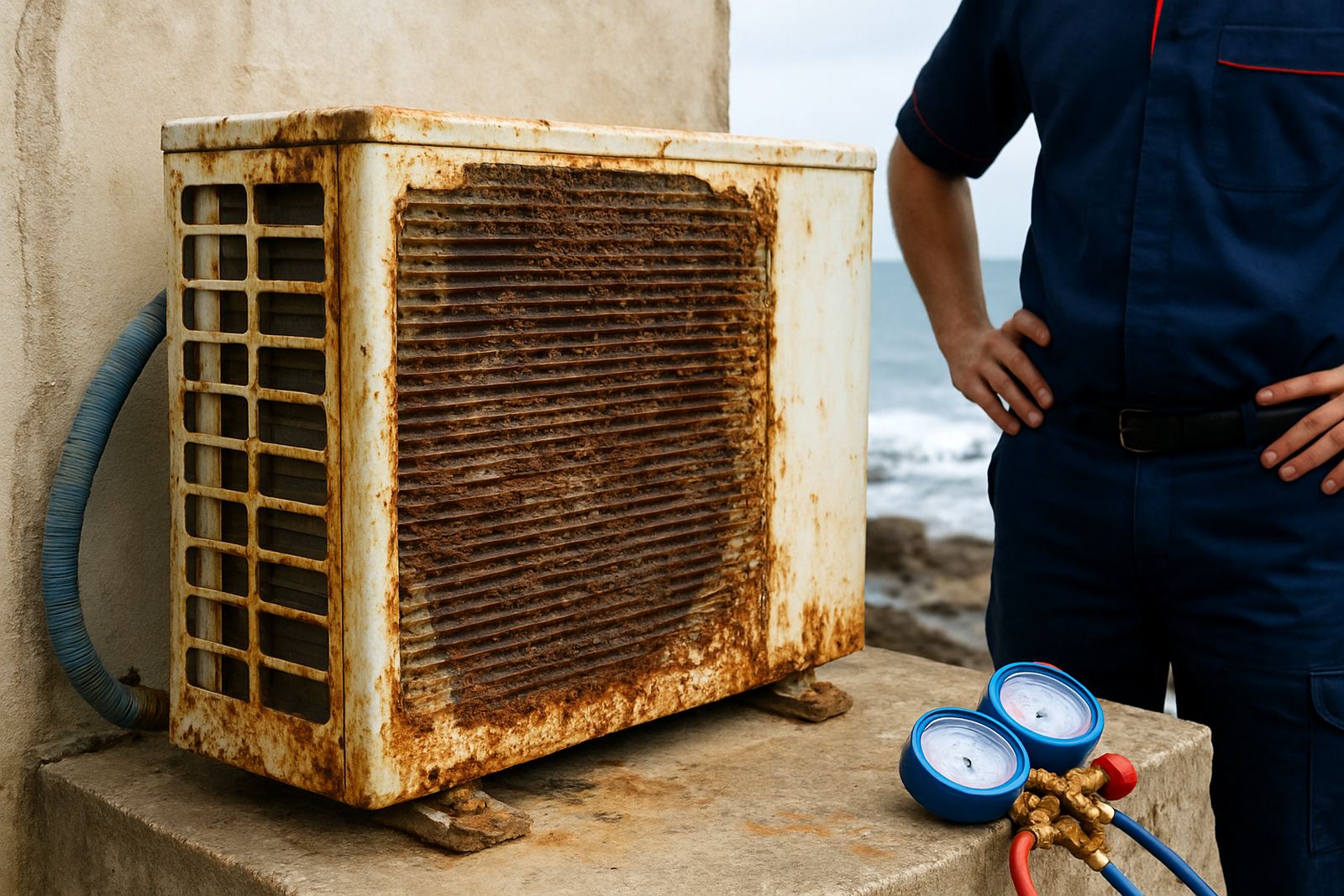
When staff report hot spots, the answer should not be to simply lower the thermostat and hope for the best. A proper fault check looks at the whole room and the system together. That includes refrigerant pressure, fan speed, blocked filters, dirty coils, drain blockage, thermostat placement and whether the installation still matches the current layout of the office.
Our team in Clairwood handles fault finding, regas and leak check work, compressor replacement, fan motor repair, capacitors and contactors, drain blockages, deep clean service, planned maintenance, controls repair and breakdown call-outs across greater eThekwini. In many cases the issue is a mix of small faults, not one big failure. A weak fan motor, dirty indoor coil and low gas charge can all add up to a room that never quite cools down properly.
If the unit is older, it may also be cycling badly during load-shedding recovery, when power returns and the system starts up again under strain. That can show up as uneven cooling later in the day.
A Durban office example that shows how the fix works
In one South Durban office, staff on the window side kept asking for the aircon to be turned colder, while the back section was already chilly. The unit had not failed. The problem was direct afternoon sun on the glass, a blocked return path caused by archive boxes, and a copier sitting too close to the same corner. Once the blinds were kept down from midday, the boxes were moved, and the filters and indoor coil were cleaned, the room temperature evened out.
A short maintenance list for offices like this is practical and cost effective:
- Check blinds, seals and window film on the sun side.
- Keep the air return and supply paths clear.
- Move equipment that gives off heat.
- Clean filters and indoor coils on schedule.
- Test sensors and controls after any layout change.
That kind of work is especially useful in humid months because the system is already working harder to pull moisture out of the air.
When uneven cooling means you should call in help
If one part of the office is always hot, if some rooms smell damp after the unit runs, or if the same complaint keeps coming back after settings are changed, it is time for proper inspection. Offices in Durban do better with planned maintenance than with last-minute call-outs, because filters, drains and electrical parts can drift out of spec before a full breakdown starts.
Aircon Depot works from Clairwood across Durban Central, South Durban, North Durban, West Durban and the wider eThekwini area. We help businesses sort out hot spots before staff start moving fans from one room to another or leaving windows open just to cope. A good system should cool the whole work area, not only the space under the nearest vent.
If your office has one corner that is always too warm, the cause is usually there in plain sight. The trick is knowing whether it is sun, airflow, equipment or a hidden fault that needs proper repair.