Start With the Room, Not Just the Square Metres
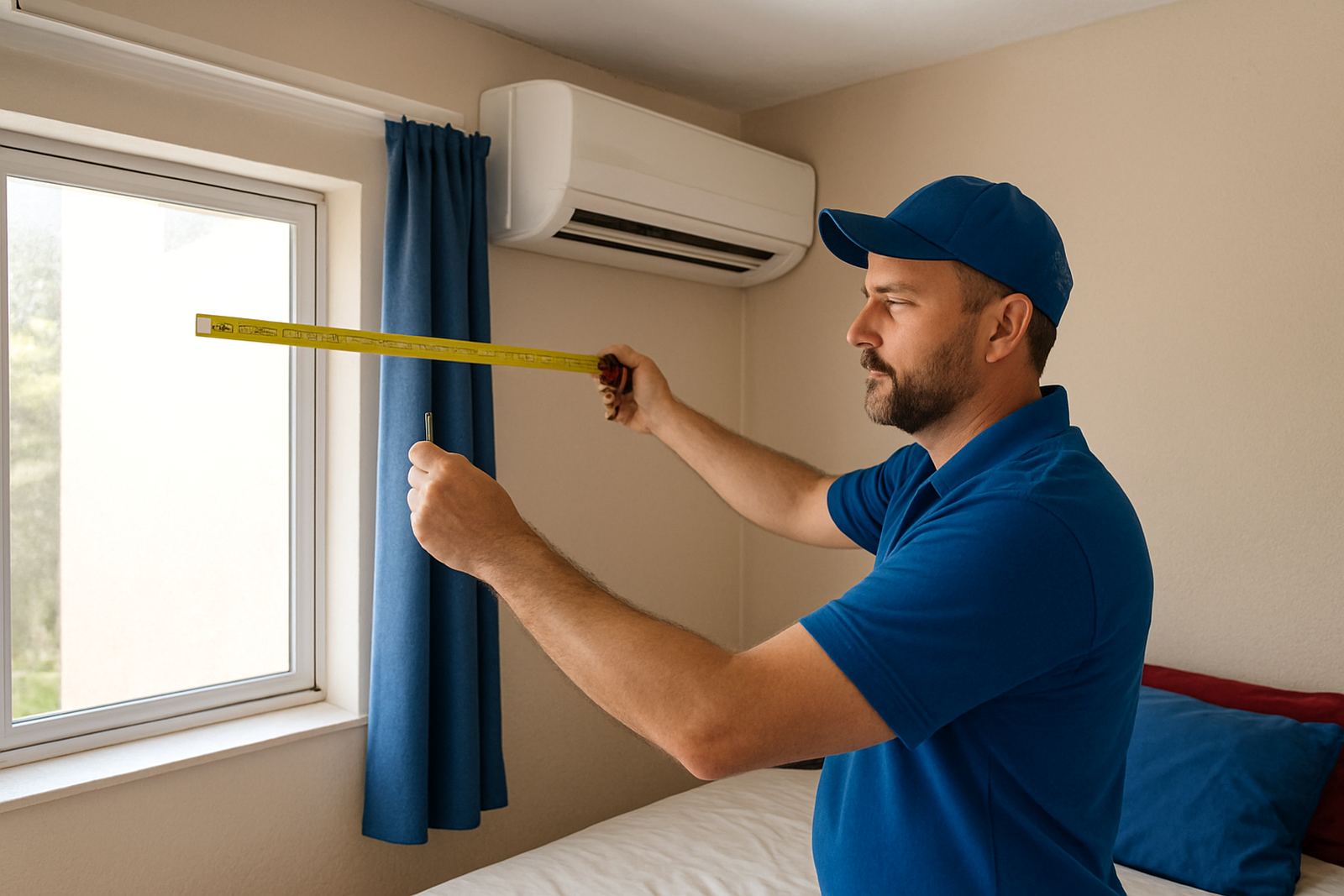
For a compact bedroom, the first step is measuring the room properly. Length times width gives you the floor area, but that is only the starting point. A 3 m by 3 m room is 9 square metres, yet two rooms of the same size can need very different cooling if one faces afternoon sun and the other stays shaded.
In Durban, we also see the effect of warm coastal air and higher humidity. A small room can feel sticky long after the sun has gone down, so a unit that is only just big enough may cool slowly and run too long. That can lead to poor comfort and higher running cost. If the room is very compact, the aim is usually steady cooling and good dehumidification, not blasting cold air for a short time.
As a rough guide, a neat sleeping room of 9 to 12 square metres often falls into the smaller split unit range, but the final choice should follow the actual room conditions not a quick guess.
Heat Load in a Small Bedroom Adds Up Fast
A bedroom may be small, but it can still hold a surprising amount of heat. People often forget that the room itself is not the only load on the air conditioner. The bed, carpets, curtains, electronics and even the ceiling space above all add to the cooling demand.
- Direct sun through a west-facing window can raise the room temperature in the late afternoon.
- Thin ceilings, especially under a roof, let heat move into the room quickly.
- Dark curtains and heavy furniture can trap warmth for longer.
- Two people sleeping in the room add more heat than one.
- A laptop, TV or charger left on overnight can make a small room warmer than expected.
In a Clairwood flat or a small bedroom in Durban Central, these details matter more than many homeowners realise. The room may measure 10 square metres, but if it faces the sun and sits under an uninsulated roof, the load can be closer to a much larger room.
What Split Unit Size Usually Suits a Compact Bedroom?
For many small bedrooms, the common starting point is a unit in the lower capacity range, usually around 9 000 BTU for compact rooms and around 12 000 BTU where the room is a bit larger or warmer than average. That said, the right size depends on how the room behaves during the day and night.
If the room is very small and well shaded, oversizing can be just as troublesome as undersizing. A unit that is too large may cool the air quickly and switch off before it removes enough moisture. That leaves the room cold but clammy, which is not ideal for sleeping. In Durban humidity, this happens more often than people think.
If the room is on the top floor, has a sliding door, or picks up heat from an attached bathroom or passage, a slightly larger unit may be the better choice. The point is to match the unit to the actual room and not only to the number on the tape measure.
A proper site visit will check the room size, ceiling height, insulation, window area and electrical supply before any recommendation is made. It sounds simple enough, but it saves a lot of call-backs later.
The Details That Change the Final Recommendation
Small rooms can be tricky because tiny changes make a big difference. A bedroom in South Durban with one small window may need a different setup from a bedroom of the same size in West Durban with large glass and afternoon sun. The final recommendation should take the whole room into account.
- Ceiling height: A room with a higher ceiling has more air to cool, even if the floor space is small.
- Window size: Larger windows let in more heat, especially if the glass gets direct sun.
- Insulation: Good roof insulation can reduce the cooling load by a fair amount.
- Usage: A bedroom used only for sleeping has a lower load than one used as a study during the day.
- Occupancy: One sleeper is different from two people sharing, and that affects the size choice.
These are the sorts of details a technician should check before quoting. A quick measure can give a rough figure, but a room assessment gives a better result and usually a quieter, more comfortable room too.
Why Good Installation Matters as Much as Size
Even the correct-sized unit will underperform if the installation is poor. In a small bedroom there is often less tolerance for mistakes. Bad pipe routing, weak drainage, poor positioning or a noisy indoor unit can turn a good cooling choice into a daily irritation.
The indoor unit should sit where it can throw air across the room without blowing straight onto the bed. The outdoor unit should be placed where it gets enough air flow and where the brackets or stand can handle the weight safely. On the coast, we also keep an eye on corrosion and drainage because salty air and moisture can shorten the life of fittings if they are not chosen properly.
In eThekwini, load-shedding and voltage dips also matter. A bedroom aircon should be installed with the right protection and electrical supply, especially if the unit will be used through the night. A small room may have a small cooling load, but the installation still needs to be done properly or the system wont perform as it should.
A Durban Example: Small Room, Big Difference
Take a small bedroom in Clairwood, about 3.2 m by 3.0 m, with one person sleeping in it. The room faces east, has decent curtains and is under a concrete slab ceiling. That room may do well with a smaller split unit, provided the electrical supply is sound and the indoor unit is mounted correctly.
Now change one thing. If the same bedroom sits under a warm roof, gets afternoon sun through a larger window, and is shared by two people, the cooling load rises quickly. In that case, a slightly larger unit may be the better option, even though the room still feels compact. The difference is not academic, it is the difference between a room that settles down at bedtime and one that keeps cycling all night.
That is why a good sizing decision always starts with the room, the home and the way the space is used. A careful assessment beats guesswork every time.
A Simple Checklist Before You Buy
If you are sizing an aircon for a small bedroom, it helps to work through the basics before you decide. A little preparation can prevent overbuying or ending up with a unit that struggles to keep up.
- Measure the room length, width and ceiling height.
- Check which direction the room faces.
- Note how much sun the windows receive in the afternoon.
- Look at insulation in the roof or ceiling space.
- Count how many people sleep in the room.
- Think about noise, drainage and where the outdoor unit can go.
- Confirm that the electrical supply is suitable for the chosen unit.
If you are not sure, it is worth getting advice before the install goes ahead. A small bedroom can be easy to cool, but only when the unit is sized properly and fitted with care.