Why refrigerant gas work must be controlled on site
Gas in an air-conditioning system is part of the full cooling circuit, so adding it without checking the cause can hide a fault rather than fix it. In Clairwood, South Durban and the rest of eThekwini, we often see units losing performance because of small leaks at flares, valves or corroded pipework, not because the system simply needs more gas.
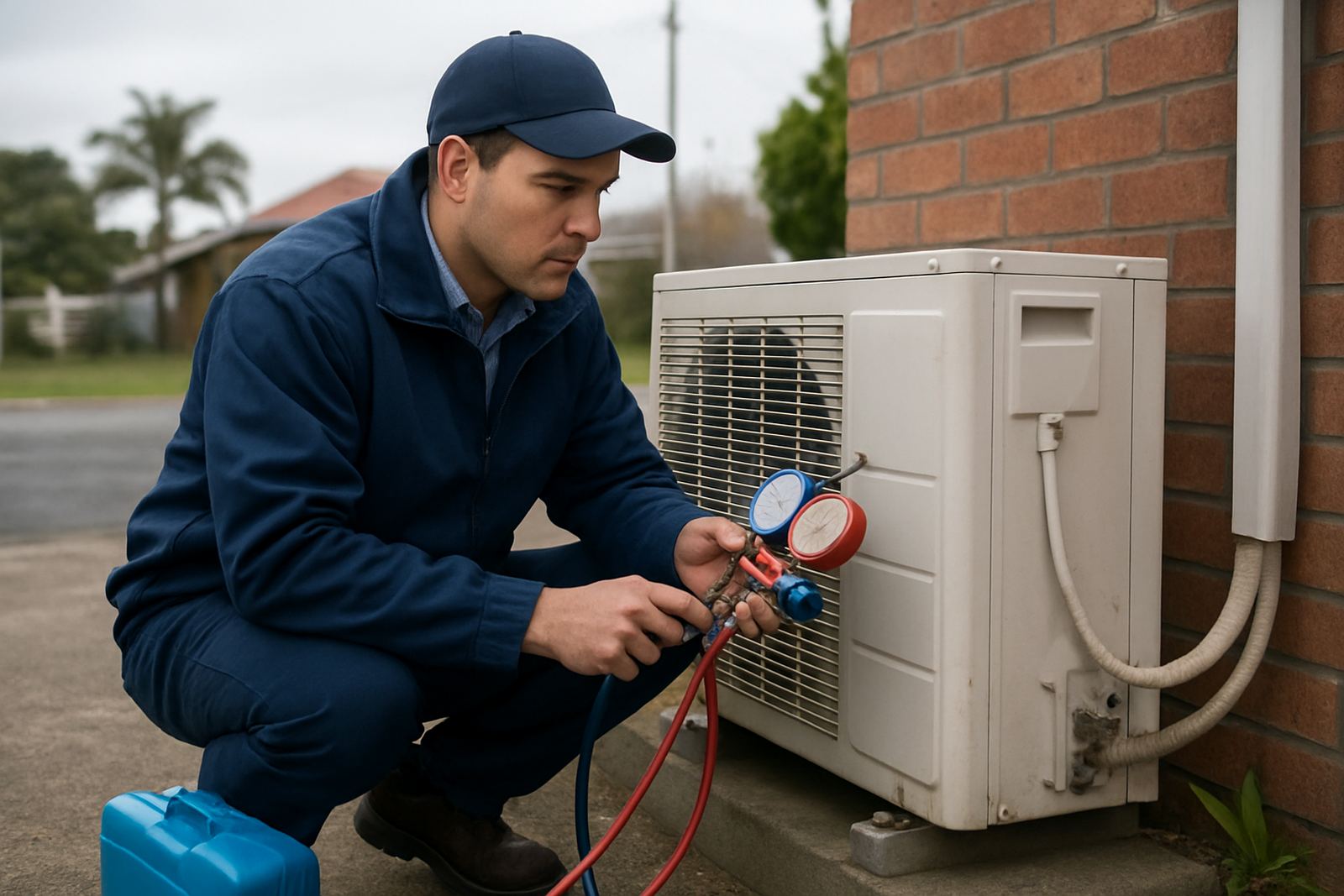
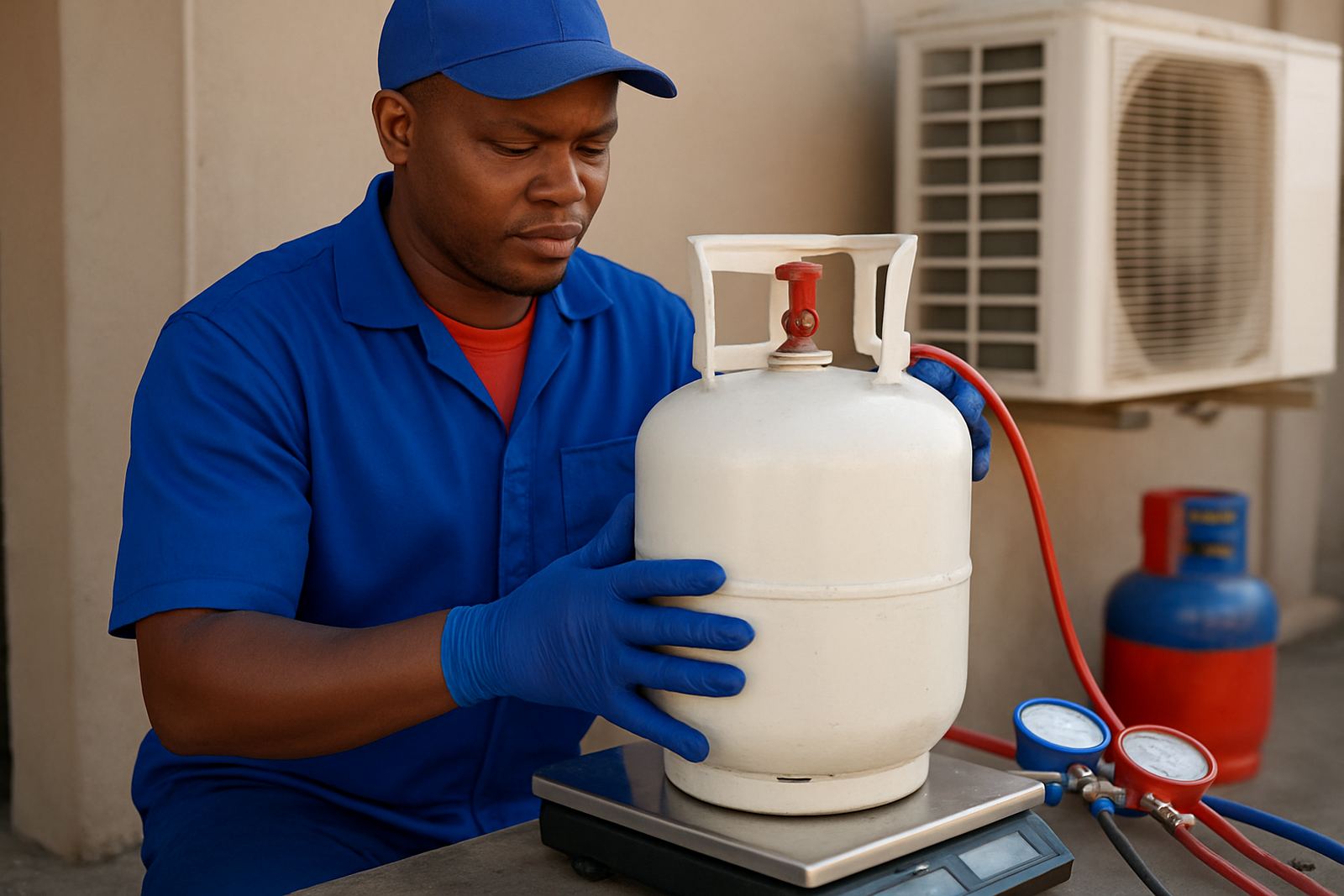
Safe handling starts with knowing exactly what is in the system, what pressure it should run at and how much gas is being removed or added. A technician should use proper recovery and charging equipment, then record the amount by weight. That matters on domestic split units, shop units and larger commercial systems alike.
On a humid Durban day, a system can look like it is working when it is actually struggling. The indoor coil may be dirty, the drain may be blocked and the gas charge may already be low. If the issue is not traced properly, the compressor can run hot, draw too much current and fail early.
What proper leak checks and weighing should include
Any service call for regas should begin with a leak check. That means checking the joints, coils, service valves and any repaired sections, not just looking for a quick answer. A safe job is measured, tested and then confirmed on site with a running check.
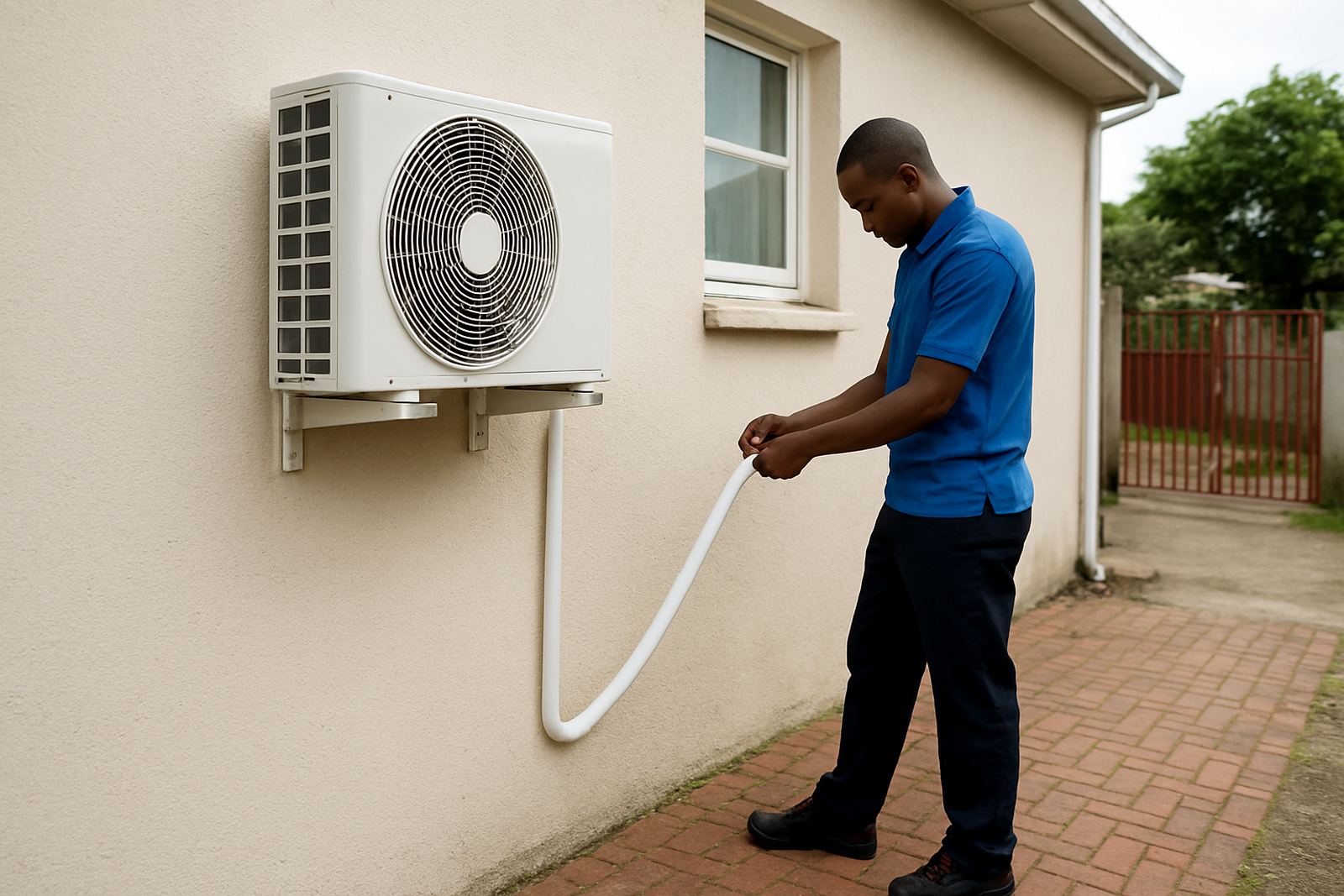
- Inspect visible pipe runs for oil stain, corrosion or rubbing points
- Use suitable test equipment to check for leaks before charging
- Recover remaining gas into approved cylinders, never vent to air
- Weigh in the correct charge for the unit size and pipe length
- Confirm suction, discharge and current draw after startup
- Record the work done for future maintenance and fault finding
That process saves money because it avoids repeat call-outs. It also protects compressors, which are costly to replace and often damaged by chronic undercharge or overcharge. A rushed top-up can look cheaper on the day, but it usually costs more later.
Common Durban conditions that affect gas safety
Durban weather is hard on aircon systems. Salt air in coastal areas, heavy summer rain, dust around service yards and constant temperature swings all put strain on pipework, fittings and electrical parts. Even a well installed unit can develop a leak over time if the installation was not protected properly.
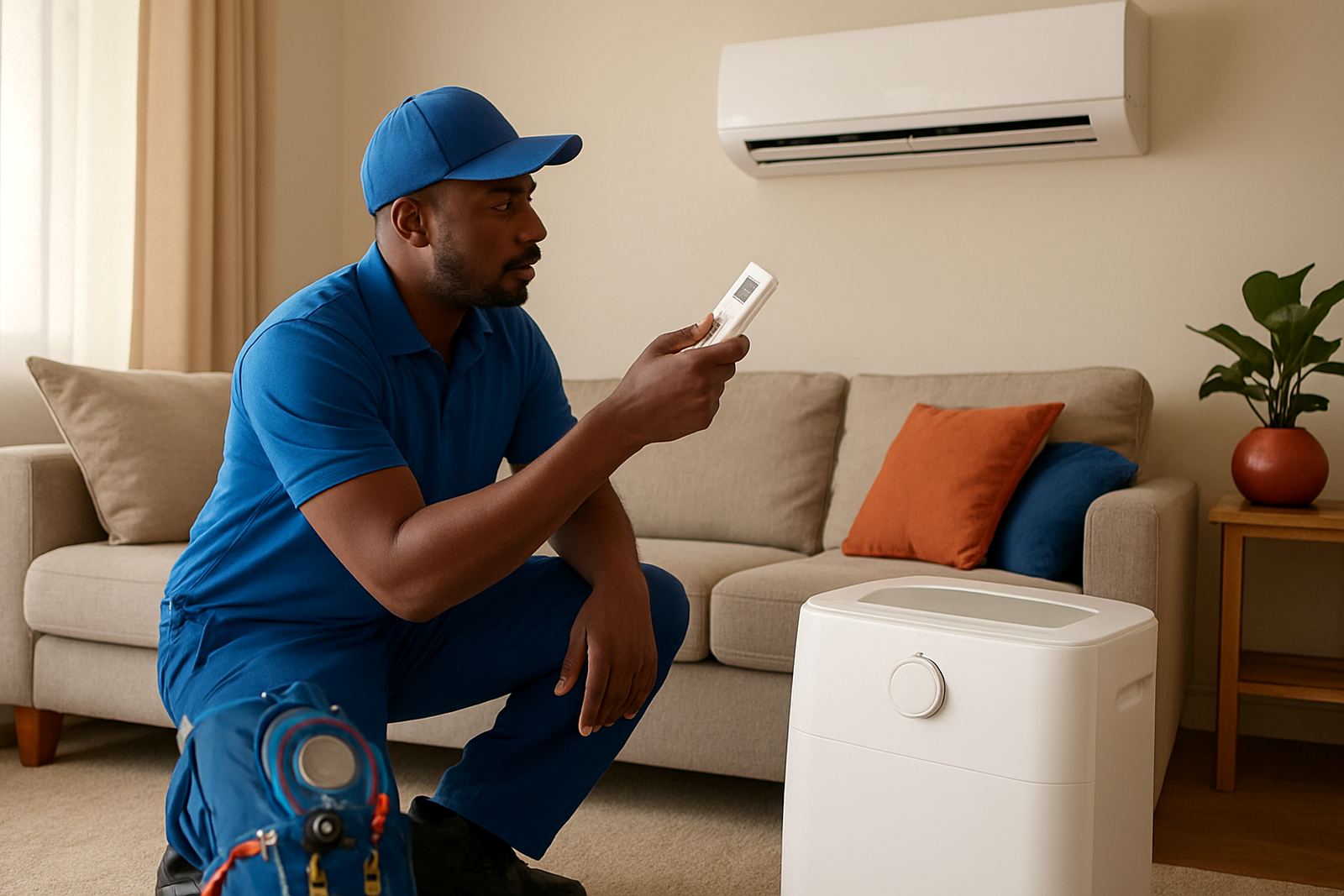
Load-shedding also creates extra risk. Units that stop and start repeatedly may show uneven pressures, while weak capacitors or contactors can make a compressor start badly. That is why gas work should never be treated as a separate job from the rest of the system. A tech should check the electrical side, the drain, the fan motor and the controls before signing off the gas side.
In commercial spaces, poor maintenance can affect stock, staff comfort and refrigeration around the same time. If a kitchen, office or retail floor is warm, people often ask for gas first. But if the cause is a blocked drain, dirty coil or failed fan, charging the system just masks the fault.
A local example from Clairwood and South Durban
A small warehouse in Clairwood called for repeated gas top-ups on a ceiling unit. The system had been serviced by hand before, but the charge was never weighed and the leak source was not found. During our inspection, we found a slow leak on a joint near the pipe run and an indoor coil packed with dust from nearby activity.
We recovered the remaining gas, repaired the joint, cleaned the coil and carried out a proper pressure and running test. Once the correct charge was put back in, the unit cooled properly and the compressor current dropped to normal. The owner had been paying for repeat visits for months, when the real fix was one careful inspection and a clean re-charge.
That is common in South Durban, especially where units run long hours and the air carries grime. The job may seem simple from the outside, but safe handling depends on doing each step in order, without shortcuts.
How businesses should manage gas repairs and maintenance
For shops, offices, factories and body corporates, refrigerant work should be part of planned maintenance rather than an emergency only decision. A regular schedule helps catch low gas, blocked drains and electrical wear before they become a breakdown. It also helps manage costs because parts can be ordered before the unit stops completely.
- Keep service records for every unit and note the gas type and charge
- Inspect systems before peak summer use, not after the first failure
- Arrange cleaning where coils are exposed to dust, grease or salt air
- Check for tripping, noisy starting or poor airflow during routine visits
- Use trained technicians who can handle recovery, leak detection and charging safely
Businesses in Durban Central and greater eThekwini often run equipment for long hours. That means a small leak or weak electrical part can become a bigger outage by the end of the week. A proper maintenance plan keeps that risk down and makes fault finding faster when a call-out is needed.
When to call for help instead of trying a quick top-up
If a unit is icing up, losing cooling, tripping on startup or blowing warm air after a recent service, it needs more than gas alone. It may have a leak, a blocked drain, a failing fan motor or a control fault. A safe technician will test first, then decide whether the problem needs regas, a part replacement or a deeper repair.
For homes in North Durban and apartments in West Durban, the same rule applies. If the system needs gas more than once in a short period, there is a fault somewhere. Repeated topping up wastes refrigerant, puts the compressor at risk and can lead to a bigger breakdown later.
Safe gas handling is really about respect for the system. The right tools, proper weighing and a clean site process make the difference between a short fix and a lasting repair. If the work is done properly, the unit runs better, uses less power and gives fewer surprises when the weather turns hot.
What a proper gas job should leave behind
Once the work is done, the area should be tidy, the readings should make sense and the customer should know what was found. The technician should explain whether the unit was repaired, regassed or flagged for further work. That simple handover helps owners make informed decisions, especially where several units are on one site.
In practical terms, a good gas job should leave the system cooling correctly, draining properly and starting without strain. If those basics are in place, the refrigerant work was likely done well. If not, the fault needs another look before the compressor or electrics take damage.