Why a home office heats up faster than the spare room
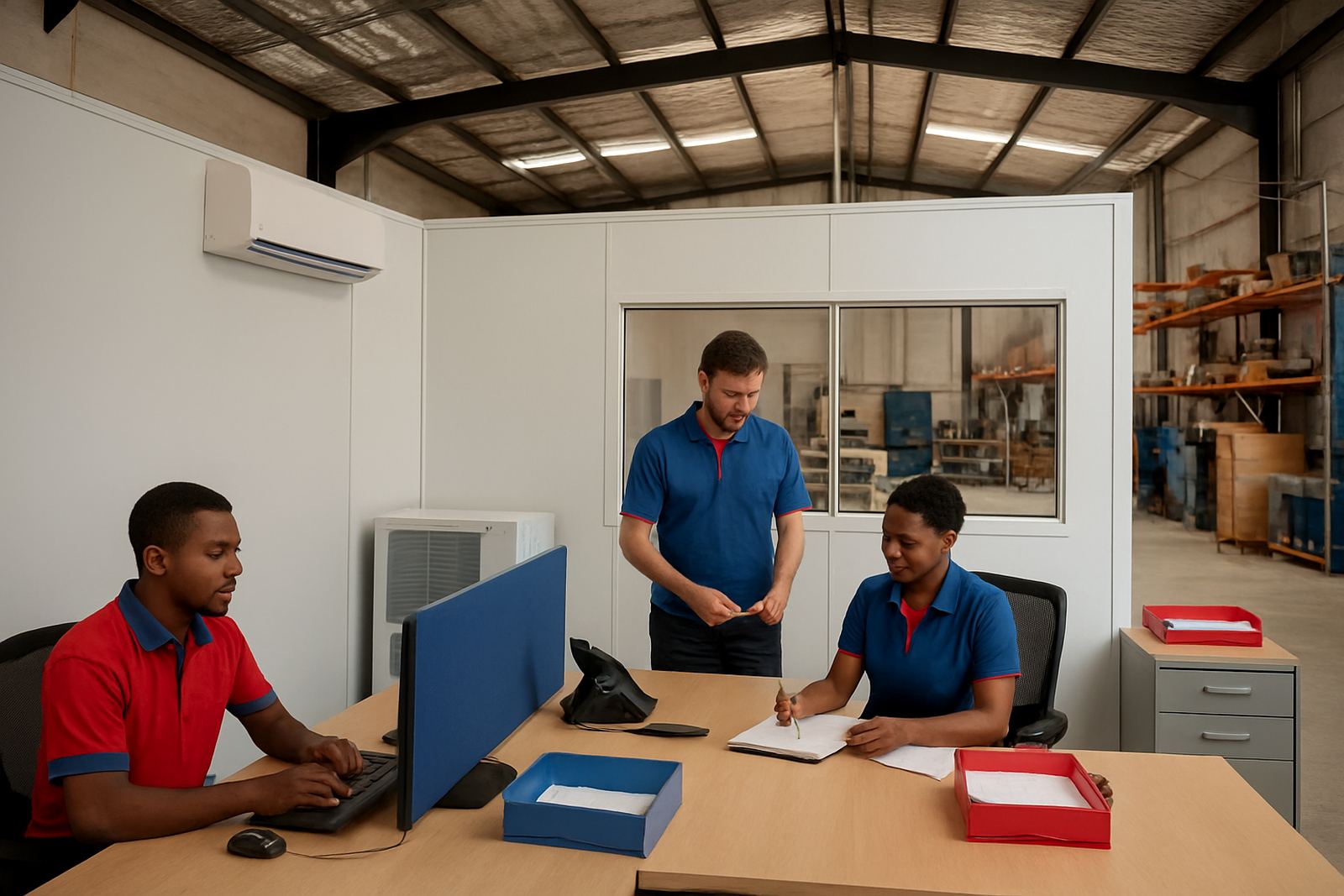
A home office is not just a bedroom with a chair in it. Once you add a computer, printer, router, lighting and maybe a second screen, the room starts producing its own heat. In Durban, that heat builds quickly on warm mornings and stays around when the humidity climbs.
People often notice the problem only after they start working full time from home. The room feels fine at 7 am, then by 10 am it is stuffy, the fan is on full speed, and concentration drops. If the office is on the west side of the house, or gets afternoon sun, the temperature rise can be even more noticeable.
Start with the room size and the real heat load
Cooling a home office properly means looking at metres, not guesswork. A compact room with one person, one laptop and limited sun exposure needs far less cooling than a larger study with two workstations, a filing unit and heavy glass doors. Equipment load matters because every device releases heat while it runs.
For a small office, the correct unit size depends on the floor area, ceiling height, window size and how many hours the room is in use each day. A badly sized unit can cool the air but still leave the room uncomfortable, especially if the system cycles on and off too often. That leads to uneven temperatures and higher power use, which is not ideal when load-shedding already puts pressure on the household.
- Count the people using the room daily.
- List the equipment left on for long periods.
- Check if the room gets morning, midday or afternoon sun.
- Note whether doors stay open to the rest of the house.
Daylight is useful until it becomes a heat source
Natural light helps with comfort and focus, but large windows can turn a small office into a hot box by late morning. In many Durban homes, the same room that feels bright and productive also takes in strong heat through glass, curtains that trap warmth, and poor cross-ventilation. A north or west facing office usually needs more careful planning than a shaded inland room.
Simple changes can make a real difference before you size the air-conditioning:
- Use blinds or curtains that block direct sun in peak hours.
- Keep the door closed while the unit is running.
- Move printers, UPS units and other warm equipment away from the window.
- Seal gaps around doors and older window frames.
These steps do not replace cooling, but they reduce the strain on the unit. That means quicker pull-down time and less chance of the room getting hot again by mid afternoon.
Which cooling approach suits a work-from-home setup
For most home offices, a wall-mounted split system is the practical choice because it cools quietly and does not take up floor space. That matters when the room also needs shelves, filing, charging points and a clear path for moving around. In a small workspace, noise is another issue. A unit that rattles or blows too hard can make calls and focused work harder.
Portable units can help in short-term situations, but they are usually less efficient and more awkward in a proper office setup. They also need correct venting, which many households do not have. If you work long hours, it is better to use equipment that suits the room from the start rather than trying to force a temporary fix into daily use.
Other points worth checking:
- Timer settings for early starts and after-hours work.
- Air direction so the cold air does not blow straight onto the chair.
- Filter access for easy cleaning every few weeks.
- Backup planning if the office must still function during outages.
Humidity in Durban changes the comfort story
In Durban, it is not only about temperature. Humidity makes a room feel heavier, even when the thermometer does not look too bad. A home office near the coast can feel clammy after a storm or on a still summer afternoon. That is one reason people say they are uncomfortable even when the fan is running.
An air-conditioning system removes some moisture from the air while it cools, which helps the room feel easier to work in. That said, a unit that is too large may cool the room too quickly without running long enough to manage humidity properly. So the aim is not to buy the biggest machine, but the one that matches the space and usage pattern. A good installer will ask where the room is, how much glass it has and when you are usually at the computer.
What maintenance keeps a home office cooler for longer
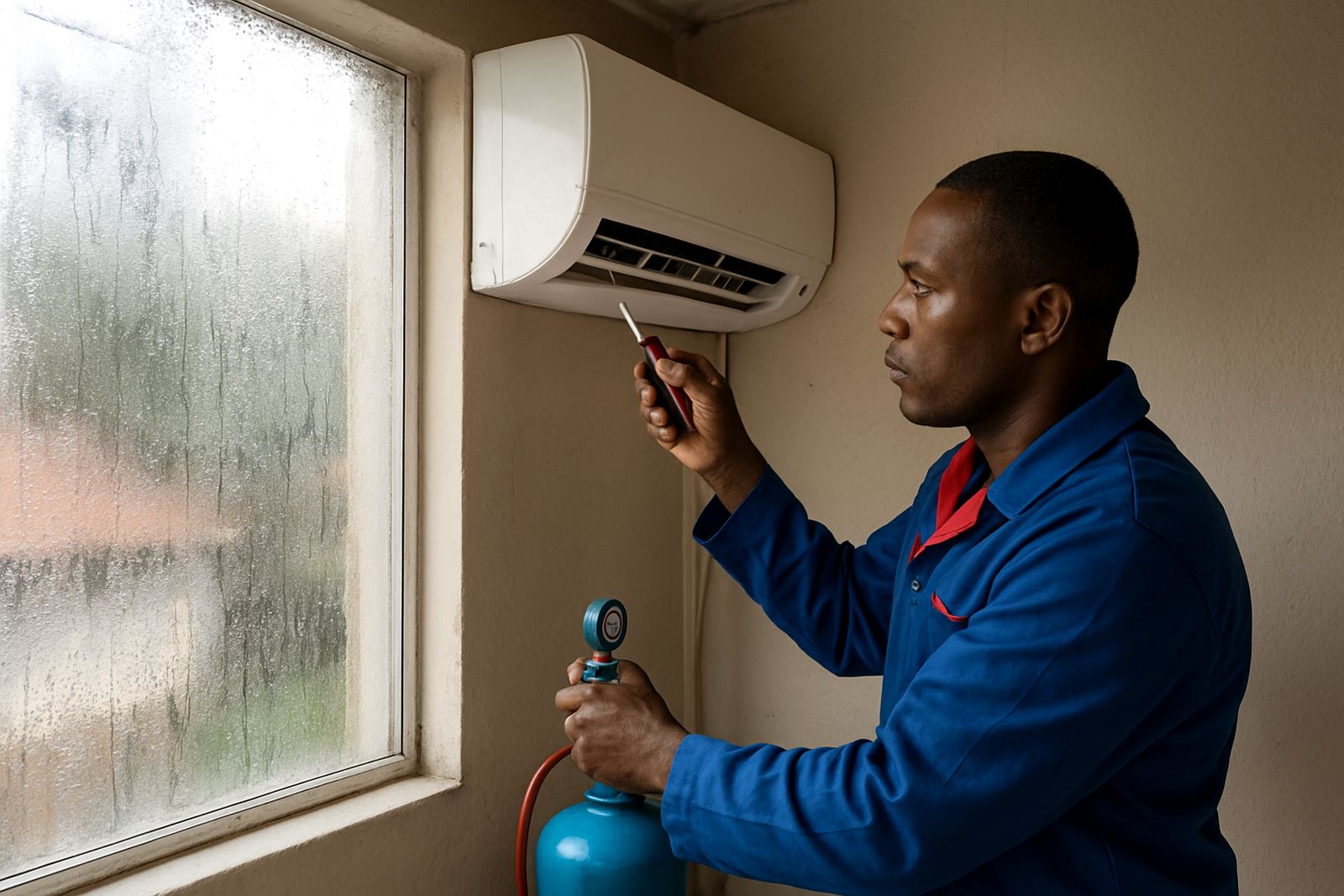
A home office system works best when it is cleaned and checked before it starts giving trouble. Dust build-up, blocked drains and weak capacitors can all affect performance. In coastal areas, corrosion and salty air can shorten the life of exposed parts if they are left unchecked. A unit that has not been serviced often starts by cooling slower, then begins tripping, dripping or making odd noises.
Regular maintenance helps avoid the usual frustrations, especially when your workday cannot stop for a breakdown. Common issues we see in Durban homes include:
- Drain blockages that cause water to drip inside.
- Dirty indoor coils that reduce cooling output.
- Fan motor wear that affects airflow.
- Low gas from a leak that makes the unit struggle.
- Faulty controls that make the temperature hard to manage.
Planning ahead is better than waiting until the first hot week of the season. It saves time and often saves money too, because a small fault is easier to sort out than a full failure.
A local Durban example that makes the difference clear
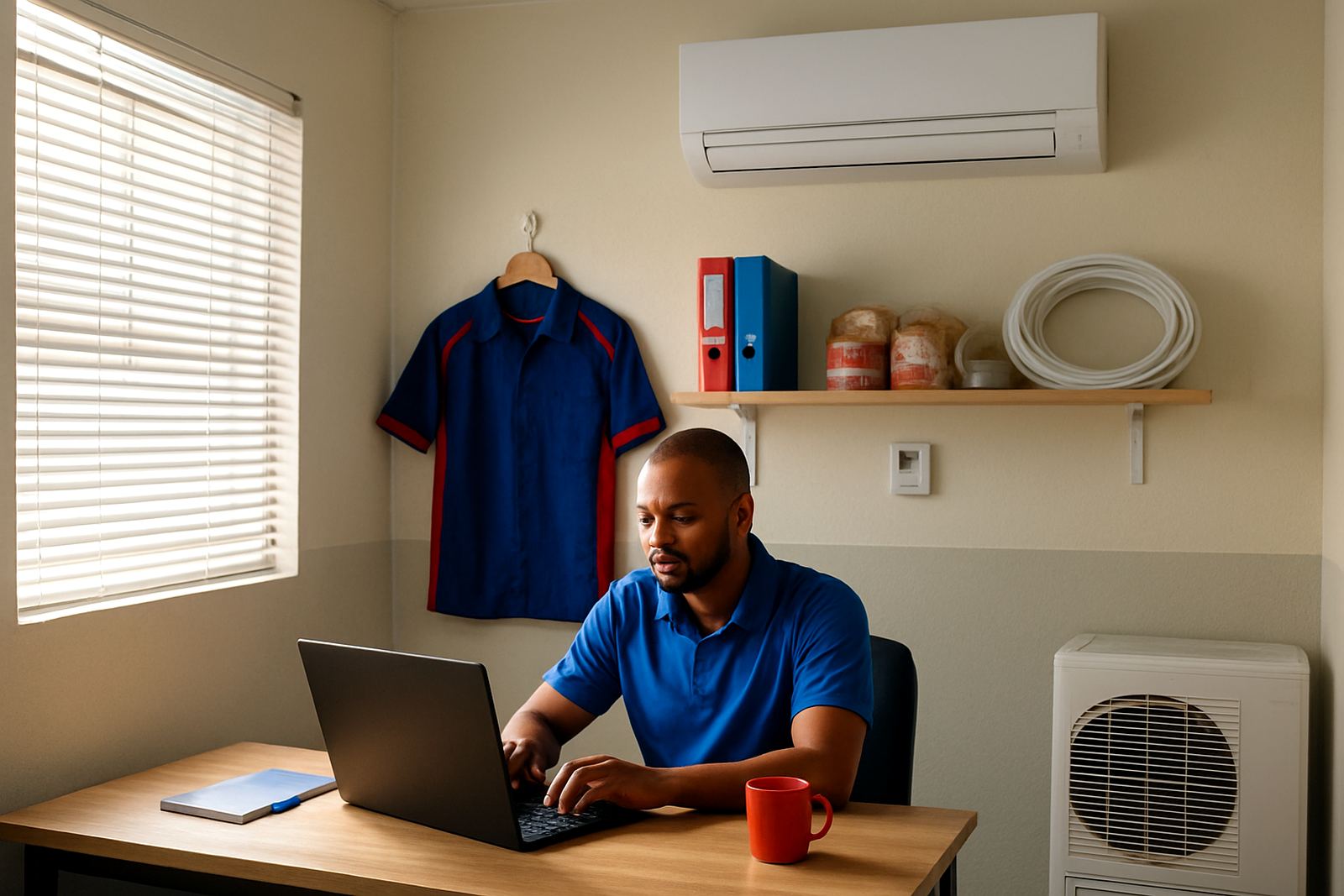
Take a small study in Clairwood used for remote admin work and online meetings. The room has one laptop, one monitor, a printer and a large window that gets afternoon sun. Before cooling was sorted out, the room was fine for an hour, then the heat and glare made concentration drop. The owner tried a standing fan first, but by 2 pm the room was still uncomfortable.
After checking the room layout, the equipment load and the sunlight exposure, a properly sized unit was installed with the indoor unit positioned for better airflow. The curtains were changed to cut direct sun and the door now stays closed during working hours. The result was not just cooler air. The room stayed usable through the hottest part of the day, and the equipment no longer had to run at full tilt just to keep up.
That is the point of home office cooling. It should suit the way the room is actually used, not a generic idea of what a study looks like.
When to ask for help with your office cooling
If the room is getting hot too quickly, the unit is cycling badly or you are not sure which size is right, it is worth getting proper advice before buying or replacing anything. A quick check can prevent a poor fit, which is a common reason small offices never feel quite right. We work across Clairwood, Durban Central, South Durban, North Durban, West Durban and greater eThekwini, and we understand the mix of coastal humidity, hot afternoons and power interruptions that affect local homes.
Aircon Depot handles supply, installation, repairs, regas and leak checks, compressor replacement, fan motor repair, capacitors and contactors, drain blockages, deep cleaning, planned maintenance, controls repair and breakdown call-outs. If your office needs cooling that can keep up with daily work, it helps to start with the room and the routine, then match the system to that reality.
For practical help, contact depot@aircondepot.co.za.