Why Durban air feels hotter than the number on the wall
In Clairwood, Durban Central and across the coast, the same 27 degrees can feel very different from a dry inland day. That is because humid air already holds a lot of moisture, so sweat does not evaporate as easily off the skin. The body then stays warmer for longer, and people start turning the aircon down when the real issue is moisture control.
This is why many Durban customers say a room is “cold but not comfortable”. The unit may be lowering temperature, but if it is not removing enough moisture, the space still feels heavy. In homes, offices and small shops, that can lead to complaints about stuffiness, mould around windows, and a system that seems to cycle on and off without settling the room.
How humidity changes sizing and room comfort
Correct sizing in Durban is not only about square metres. Ceiling height, glass area, direct sun, appliance heat and how often doors open all matter. A small salon in Durban North with large front windows may need more cooling than a bigger office with shaded walls and fewer people inside. The same applies to a restaurant in South Durban where the kitchen heat pours into the dining area.
A system that is too small will struggle to pull down both heat and moisture. One that is too large may cool the air too quickly and switch off before it has dried the room properly. That can leave a clammy feel, especially on rainy summer days when the humidity is already high.
- Measure the space properly, including ceiling height.
- Check window size, sun exposure and insulation.
- Allow for people, computers and equipment that add heat.
- Do not ignore humidity, especially near the coast.
What coastal moisture does to aircon performance
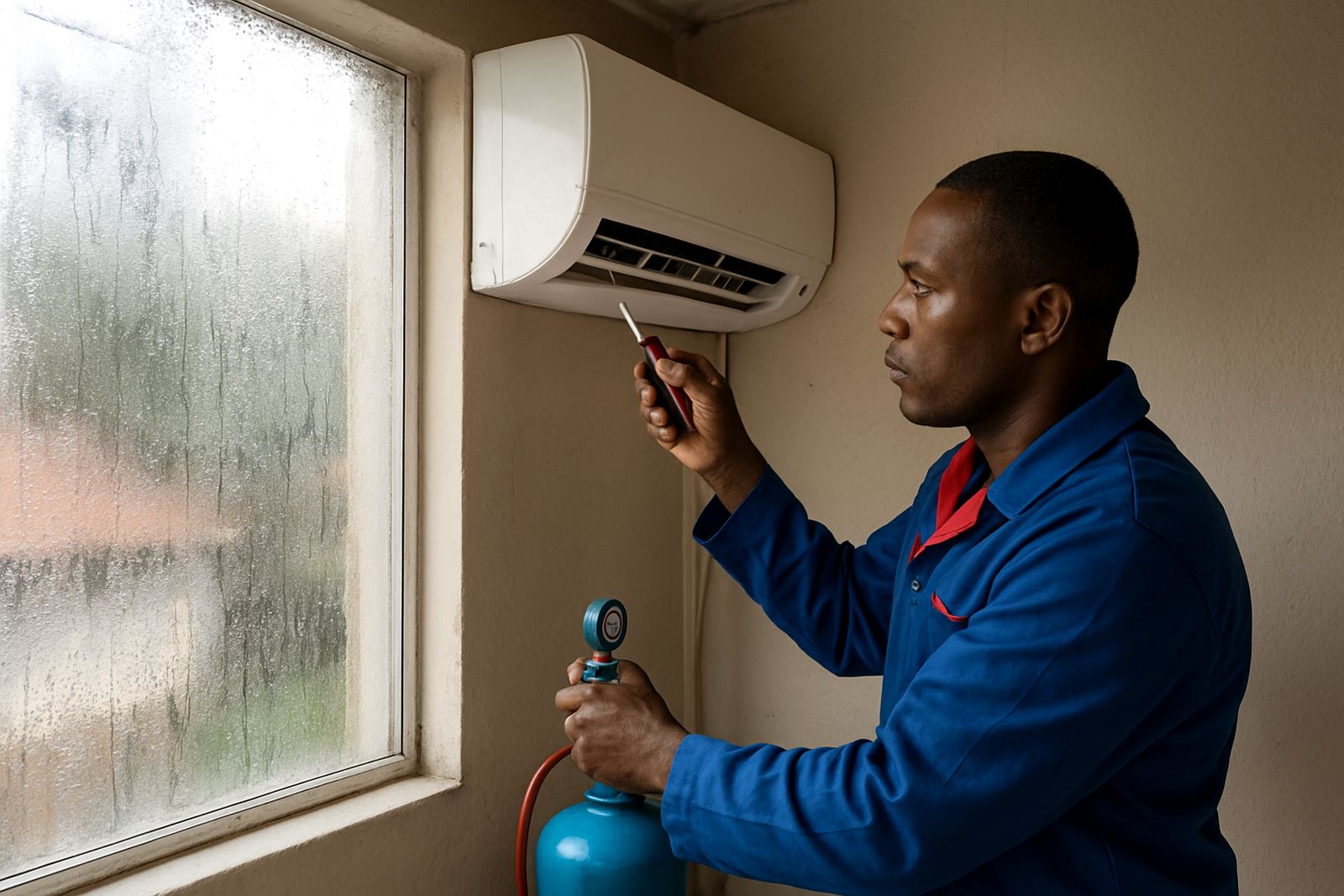
High humidity puts pressure on key parts of an air-conditioning system. Condensate drains fill quicker, filters clog faster with damp dust, and coils can get dirty sooner. In some homes near the harbour or in older buildings around Durban Central, the indoor unit starts dripping because the drain line is partly blocked or the slope is wrong.
Moist coastal air can also expose weak points in the installation. Poorly insulated pipework sweats, electrical connections corrode, and fan motors work harder if the unit has been neglected. If the system is not serviced regularly, you may notice bad smells, reduced airflow, or a unit that trips just when the weather gets sticky. A quick regas without finding the leak will not solve that problem.
A local example from Clairwood to West Durban
Consider a family in Clairwood living in a brick home with afternoon sun on one side and windows open for sea breeze on the other. They might think the answer is a bigger unit in the lounge. But after a proper site check, the real issue could be poor air distribution, a blocked drain and an older unit that is short cycling because the room cools too fast near the indoor head.
In that case, a better solution may be a correctly sized system, a cleaner installation point, and scheduled maintenance before summer. In a busy shop in West Durban, the right answer may be two smaller units instead of one large one, so the cooling is spread more evenly when doors keep opening. Different buildings need different answers, even along the same coastline.
- Homes with afternoon sun often need better shading and airflow.
- Retail spaces need allowance for constant door opening.
- Upper floors can trap heat and moisture more than ground floors.
- Older buildings may need drain and control checks before replacement.
Signs your system is not coping with humidity
If a room feels cold on one side and wet on the other, the system may be undersized, badly positioned, or overdue for a service. Some people lower the thermostat again and again, but that only increases running costs. In Durban’s coastal climate, the better answer is to find out why the unit is not handling moisture properly.
Watch for these common signs: the air feels sticky even after long running time, there is water dripping from the indoor unit, the filter gets dirty quickly, or the compressor seems to run non-stop. You may also notice the unit making a soft hissing sound if there is a leak, or the fan pushing less air than before. Those are all signs worth checking early before a small fault becomes a breakdown.
What good maintenance should include in eThekwini
Regular maintenance is the practical way to keep cooling working in humid weather. In Greater eThekwini, especially near the coast, systems should be cleaned and checked before the hottest months and again after periods of heavy use. That is true for domestic units in apartments as much as for commercial systems in offices, clinics and warehouses.
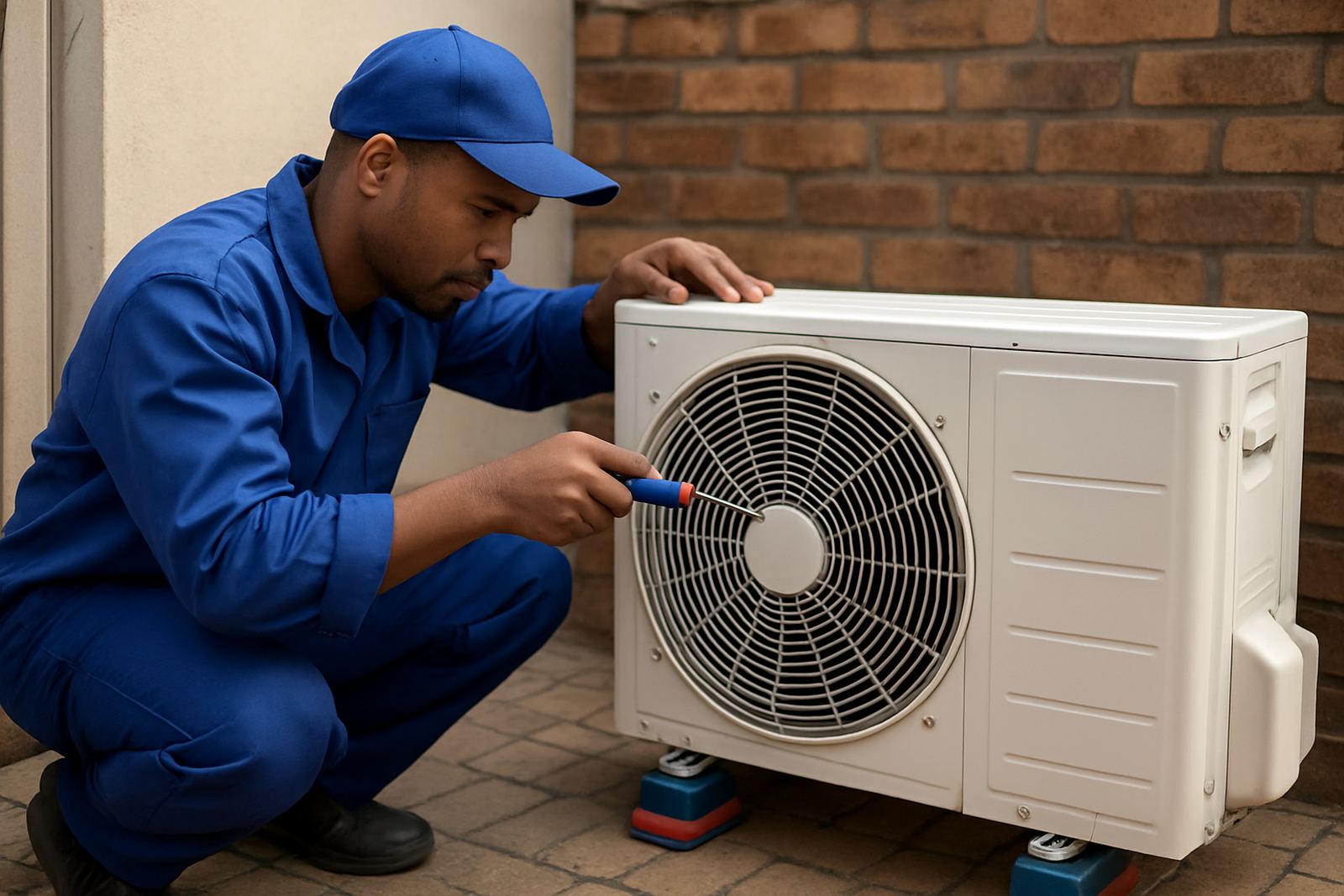
A proper service should look at the full picture, not only the gas charge. The technician should check airflow, drain flow, electrical parts and the condition of the coils. If a unit has been repaired more than once, it may need a closer look at the compressor, the contactors or the controls. Waiting until the room is unbearable usually costs more in the end.
- Clean filters and indoor coils regularly.
- Check drain lines for blockages and slow flow.
- Test capacitors, contactors and fan motors.
- Inspect for leaks before adding gas.
- Plan maintenance before peak summer and school holidays.
Choosing cooling that suits Durban, not just the brochure
Durban humidity changes the job the aircon has to do. It is not only about reaching a set temperature, it is about making the room feel dry enough to live and work in properly. That is why sizing, installation quality and maintenance matter so much in a coastal city. A unit that performs well in dry weather may struggle here if it was chosen too small or fitted without proper drainage and airflow.
For homes and businesses in Clairwood, Durban Central, South Durban, North Durban and West Durban, the smartest approach is to match the unit to the room and keep it in shape through the season. When the weather turns sticky, the right system should take the edge off the air, not add to the discomfort.