Rattling usually starts with something loose
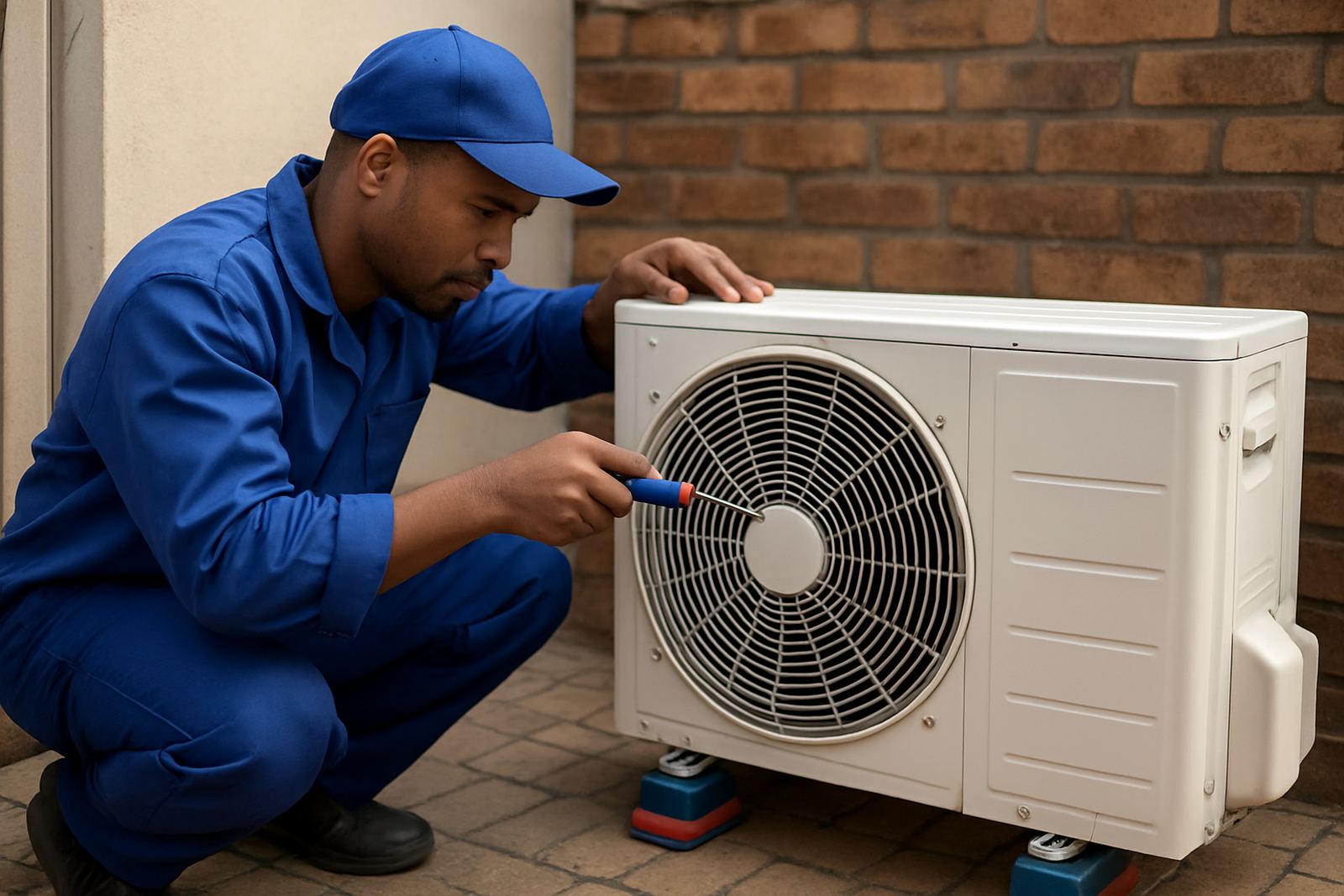
When an aircon starts rattling, the first suspect is often a loose panel, screw, bracket or fan blade. On wall units, a cover that is not seated properly can shake when the compressor starts up. On larger commercial units, the same sound can come from ducting, a support frame or even a return grille that has worked loose over time.
In Clairwood and the wider eThekwini area, we see this more often after heavy rain, transport vibration, or when a unit has been serviced in a hurry and a fastener was left behind. A small rattle can seem harmless, but if a fan blade is hitting a casing or a motor mount has shifted, the noise will get louder and the wear gets worse.
- Check for loose front covers and filter trays
- Look for screws, clips or brackets that are missing
- Listen if the rattle changes when the fan speed changes
Buzzing points to electrical trouble or a stressed component
A steady buzz is often linked to the electrical side of the system. Capacitors, contactors, relays and control boards can all make a unit hum or buzz when they are failing. In some cases the sound is coming from a compressor that is struggling to start, which means the system may trip, run hot or draw too much power.
In Durban homes with load-shedding, we often find aircons that have taken a knock from power fluctuations. A unit may still switch on, but the buzz tells you the parts are under strain. If the noise is loudest at start-up, it may be a capacitor issue. If it stays on all the time, the contactor, wiring or fan motor needs checking. Dont keep resetting a unit that buzzes and trips, because that can turn a small repair into a bigger one.
- Buzzing at start-up can mean a weak capacitor
- Buzzing with a hot smell can point to wiring or a motor fault
- Intermittent buzzing may come from a contactor chattering in and out
Vibration often means the installation or mounting needs attention
Some aircons are noisy because they were not mounted squarely in the first place. If the indoor unit is not level, water may not drain correctly and the casing can vibrate. If the outdoor unit stands on worn rubber feet, sits on a weak bracket, or rests on a surface that carries vibration into a wall, the sound can travel through the building and make the whole room hum.
This is common in South Durban units close to busy roads and factory yards, where regular movement and vibration are part of the day. It can also happen in coastal areas where corrosion weakens fixings and brackets. Salt air in Durban does not forgive bad mounting, and a unit that starts shaking now often ends up with drain blockages or copper pipe fatigue later.
- Check whether the outdoor unit is level and firmly fixed
- Look for cracked rubber mounts or rusted brackets
- Confirm that pipes are not touching the wall or each other
Fan motor noise can sound like a grind, whistle or thump
A tired fan motor usually gives notice before it fails. You may hear a grinding sound from worn bearings, a whistle from air being pulled through a dirty coil, or a thump as the fan blade catches on a bent guard. In commercial spaces, a failing fan motor may still move air for a while but it draws more power and gives poor cooling. That means higher bills and more downtime.
We see this often in units that have not had a proper deep clean service. Dust, grease and coastal grime build up on the coil and blade, and the motor has to work harder. If the sound changes after cleaning, that is a clue. If it does not, the motor itself may need repair or replacement. A noisy motor should not be left until it stops completely, because a failed motor can also damage the capacitor and control components.
Drain blockages and water movement can create odd sounds too
Not every strange noise comes from a mechanical fault. Sometimes a blocked drain line causes gurgling, trickling or a slurping sound inside the unit. When water cannot leave the tray properly it may back up, overflow, or drip where it should not. That can lead to ceiling stains, damp walls and corrosion around the indoor unit.
In humid Durban weather, drain issues can appear quickly, especially where dust and mould collect. A blocked drain may not sound serious at first, but it can cause the unit to smell musty and the fan to pick up moisture. If you hear water after switch-off, or the noise changes when the unit defrosts, a drain check should be part of the fault finding. This is one of those jobs where a small blockage can hide a bigger cleaning issue.
- Gurgling can mean the drain line is partly blocked
- Water noise after switch-off can point to poor drainage slope
- Repeated overflow may damage plaster, ceilings and electrics
When the noise only happens under load, the compressor may be under strain
A compressor that is beginning to fail can make a hard buzz, a knock or a deep vibration when the system starts. It may also struggle to cool properly, run longer than normal, or trip the supply under pressure. On some commercial systems, the noise only appears when the unit has been running for a while and the compressor gets hot.
This is where proper diagnosis matters. A compressor problem can look like a capacitor fault, a gas leak, or a controls issue if you are only listening from the outside. Our team at AIRCON DEPOT in Clairwood often checks the gas charge, electrical load and operating pressure before recommending a repair. That way the customer is not paying for parts that dont solve the actual fault.
If the unit is older and the compressor is noisy, it may still be worth repairing, especially where a full replacement would mean more cost and downtime. For shops, offices and small factories in greater eThekwini, planned maintenance usually costs less than emergency breakdown call-outs and lost trading time.
What to do before the noise gets worse
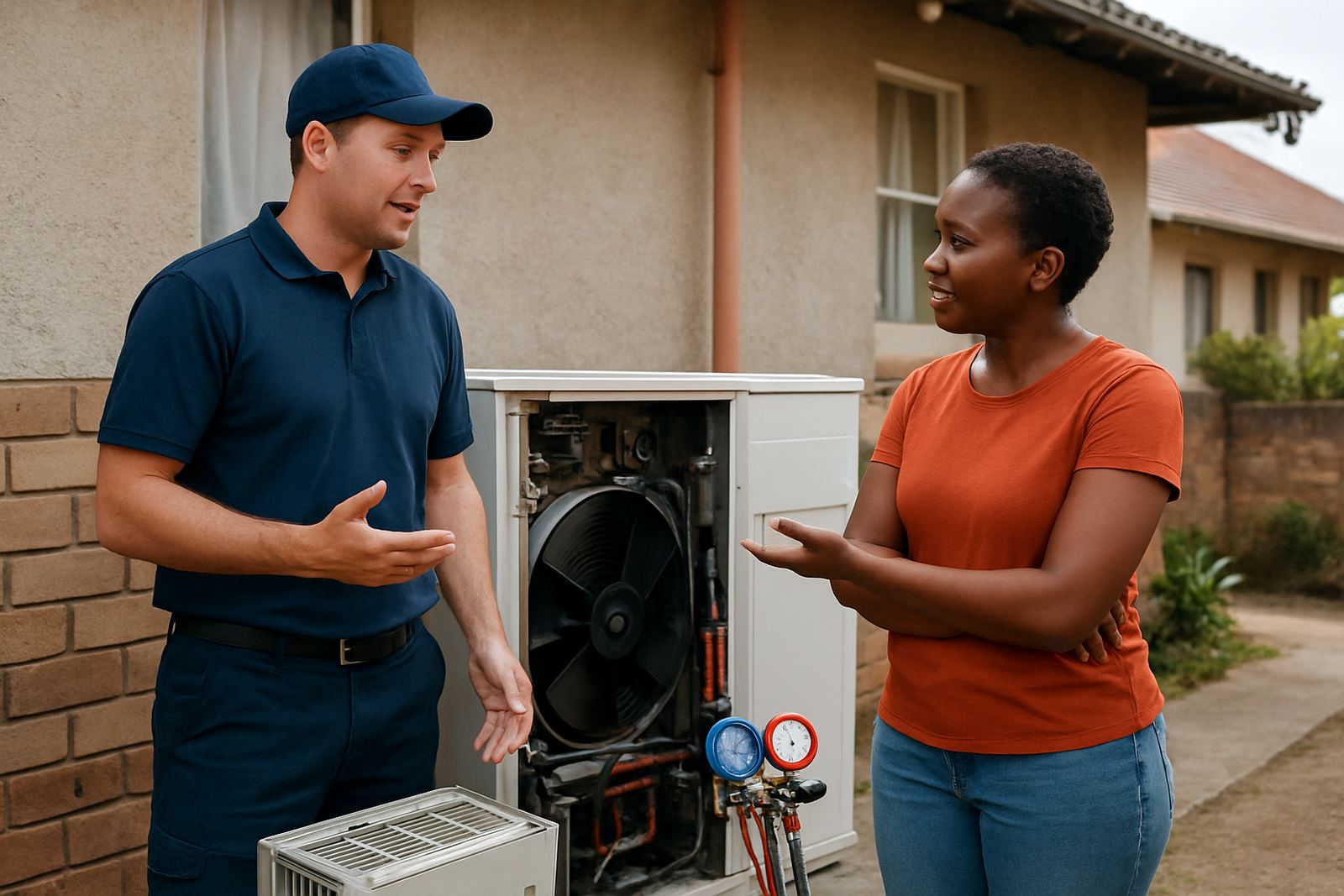
When an aircon starts making a new sound, switch it off if the noise is severe, then note when it happens and where it seems to come from. Is it the indoor unit, outdoor unit, or both? Does it happen only at start-up, after ten minutes, or when the fan speed changes? Those details help the technician find the issue faster.
For domestic and commercial units alike, a proper inspection should cover the filters, coils, drain line, electrical parts, mounting, controls and refrigerant side. In many cases, a fault found early can be handled with a capacitor change, fan motor repair, drain clearing or regas and leak check. Left alone, the same noise can become a breakdown.
- Do not keep running a unit that is shaking badly
- Do not ignore buzzing after a power cut or trip
- Arrange a fault find before the noise turns into a full failure