Why dirty outdoor coils cause real trouble
The outdoor coil releases heat from the system. If it is covered with grime, sand, leaves or lint, heat cannot move out properly and the refrigerant stays under more pressure than it should. That makes the compressor work harder and the whole unit runs longer to reach the set temperature.
In Durban, this happens fast. Homes in Clairwood, South Durban and along the coastal side of the metro often deal with salt build-up, road dust and moisture all at once. A coil that looks only a bit dull can already be losing performance. People usually notice the signs before they see the dirt, such as warm air from the indoor unit, longer run times, or a unit that trips after a while.
Clean coils are not only about colder air. They also help keep running costs under control, reduce strain on major parts and lower the chance of breakdowns during a heat wave or in summer school holiday traffic when everyone is relying on their units at the same time.
What builds up on Durban outdoor units
Outdoor coils sit where they collect whatever the weather throws at them. In an urban area like Durban Central or along busy routes in West Durban, the fins can trap dust from roads and construction. In garden areas, grass clippings, seeds and insect nests can block the coil face. Close to the coast, salty moisture settles on the metal and speeds up corrosion if it is never washed off.
- Dust and fine sand from roads and yards
- Salt residue from coastal air and sea mist
- Leaves, twigs and grass clippings
- Cooking grease on outdoor restaurant and take-away units
- Lint and fibres from laundry areas
- Spider webs, insects and small nesting debris
Once the coil face starts to close up, the fan has to pull harder to move air through it. That extra effort can also expose weak capacitors or fan motor issues that were already sitting in the background. The dirty coil then becomes part of a bigger fault, not just a cleaning job.
Signs the coil needs attention now
You do not have to wait for the unit to stop cooling before acting. Most outdoor coil problems show up in small ways first. The room may cool slowly, or the unit may blow cold for a while then struggle later in the day. On some systems the outdoor fan runs louder than normal because it is moving air through a blocked coil face.
Watch for these warning signs:
- Cooling takes longer than usual
- The outdoor unit sounds strained or runs almost continuously
- Electricity use climbs with no change in usage habits
- The unit trips or shuts down after running for a while
- The outdoor coil looks grey, furry or packed with dirt
- Water drips in odd places because airflow is poor
If the coil is clean but the system still struggles, the issue may be deeper. Low gas, a failing compressor, blocked drainage or control faults can show similar symptoms. That is why a proper check is better than just hosing the unit and hoping for the best.
How a proper coil clean should be done
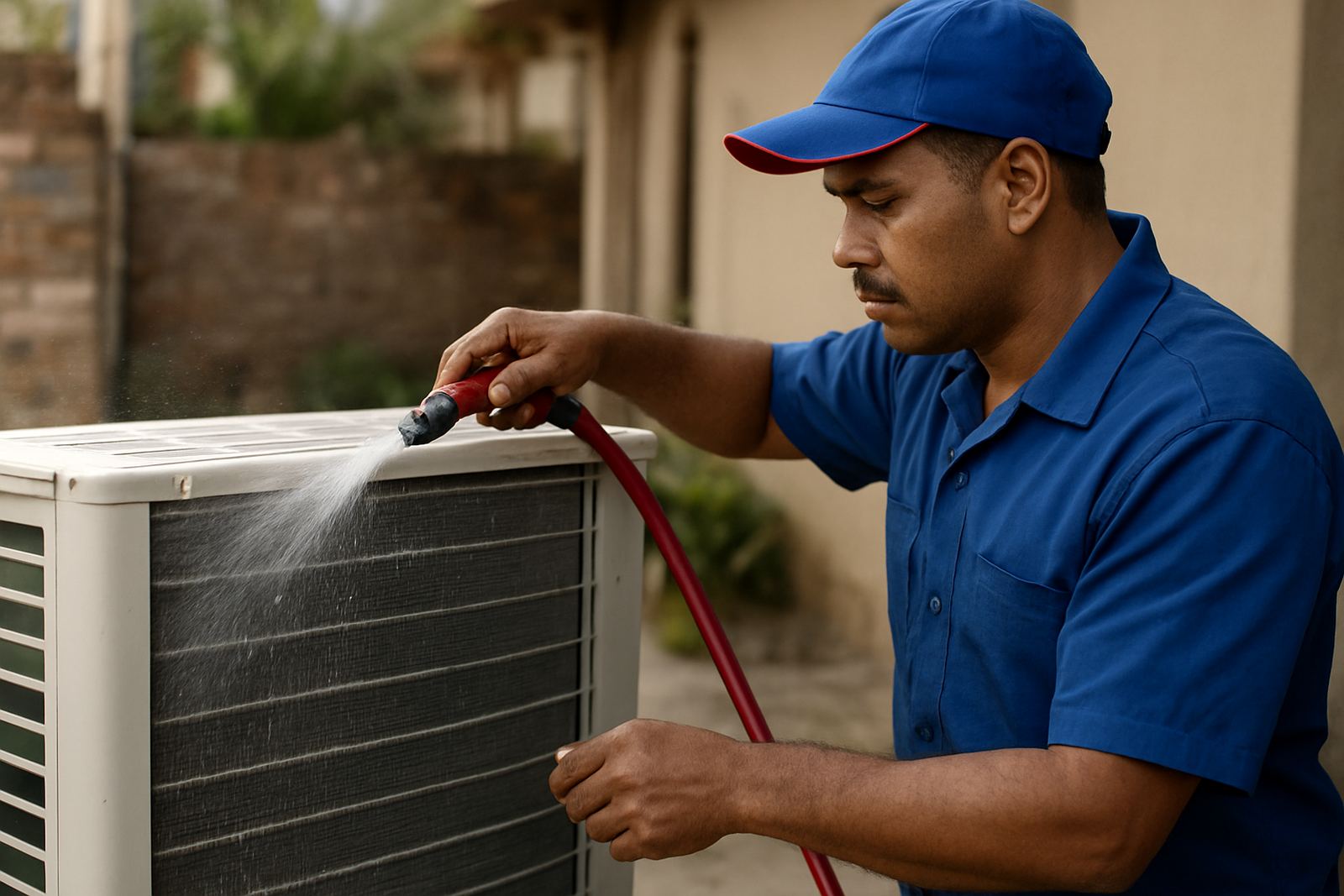
A proper clean starts with switching off power and inspecting the unit for damage. A technician will check the fins, fan blades, electrical compartment and surrounding area before washing anything. The idea is to remove dirt without bending the fins or forcing water into sensitive parts. On older units, care matters because tired fins and brittle wiring can be damaged easily.
For most domestic systems, the process includes brushing loose debris away, applying the correct coil cleaner, rinsing carefully and checking airflow once the unit is back on. Commercial units often need more time because the coil size is bigger and the build-up heavier. A shop in South Durban with cooking vapours, for example, may need a deeper service than a bedroom unit in a quiet street.
Avoid using high pressure too close to the fins. It can flatten them and make the airflow worse than before. The aim is to clear the passages, not blast the coil apart. If the fins are already bent, they may need straightening so air can pass through properly again.
Why cleaning the coil helps the rest of the system
Outdoor coil cleaning is not a stand-alone job, it affects the full cooling cycle. When heat rejection improves, the compressor runs under less pressure and the system reaches temperature more cleanly. That can help protect the motor, contactors and even the capacitor because the unit is not working as hard for as long. In many cases it also helps a system that seems weak after a period of heavy use or load-shedding cycling.
There is another benefit that gets overlooked. A clean coil often makes it easier to spot other faults early. If the unit cools well after cleaning, you know grime was a major part of the issue. If it still underperforms, the technician can move straight to leak checks, regas work or compressor testing without guessing.
- Lower operating pressure on the refrigerant circuit
- Better cooling at the same thermostat setting
- Less strain on moving and electrical parts
- Improved reliability during hot spells and power cuts
- Cleaner inspection points for planned maintenance
For businesses in eThekwini, that means fewer interruptions and fewer emergency call-outs when the weather turns sticky and customers are already uncomfortable.
A local example from Clairwood
A small office in Clairwood called for help after two wall units started taking far longer to cool the space. The indoor filters had been washed, but the outdoor units at the back of the building were sitting close to a wall and collecting dust from the yard and road. The coils were heavily coated and the fan area had bits of leaf matter stuck through the grille. One unit was also starting to trip on hot afternoons.
After a proper clean, airflow improved right away and both systems started cycling normally again. The team could see that the compressor load had dropped because the outdoor section was no longer fighting against clogged fins. No big part had failed, the units had simply been pushed too hard by dirty coils. That is often the story in Durban: a basic maintenance issue that grows into an expensive breakdown if it is left too long.
In a coastal city, regular coil cleaning is part of sensible ownership. If a unit is used every day, especially in a shop, office or family home with pets and open windows, do not leave it for years between services. The earlier the dirt comes off, the less wear the system carries into summer.
When to book service and what to ask for
If the unit is cooling poorly, running loudly or showing signs of strain, book a technician instead of trying to guess. A proper service should cover the outdoor coil, airflow, drainage and a check of the electrical parts that support the fan and compressor. If the system has been neglected, ask for a full fault finding visit rather than only a quick wash.
At Aircon Depot in Clairwood, we work on domestic and commercial systems across Durban Central, South Durban, North Durban, West Durban and greater eThekwini. We handle coil cleaning as part of practical maintenance, and can also check for regas needs, leak issues, blocked drains, failed capacitors, contactor problems and fan motor faults. If the unit has been working hard through load-shedding or humid weather, a proper check can save a lot of trouble later.
For owners, the best habit is simple: keep the outdoor area clear, make sure the unit can breathe, and get the coil checked before the heat hits. A clean coil is one of the easiest ways to protect cooling performance and keep running costs from creeping up.