Why Durban storms punish aircon systems
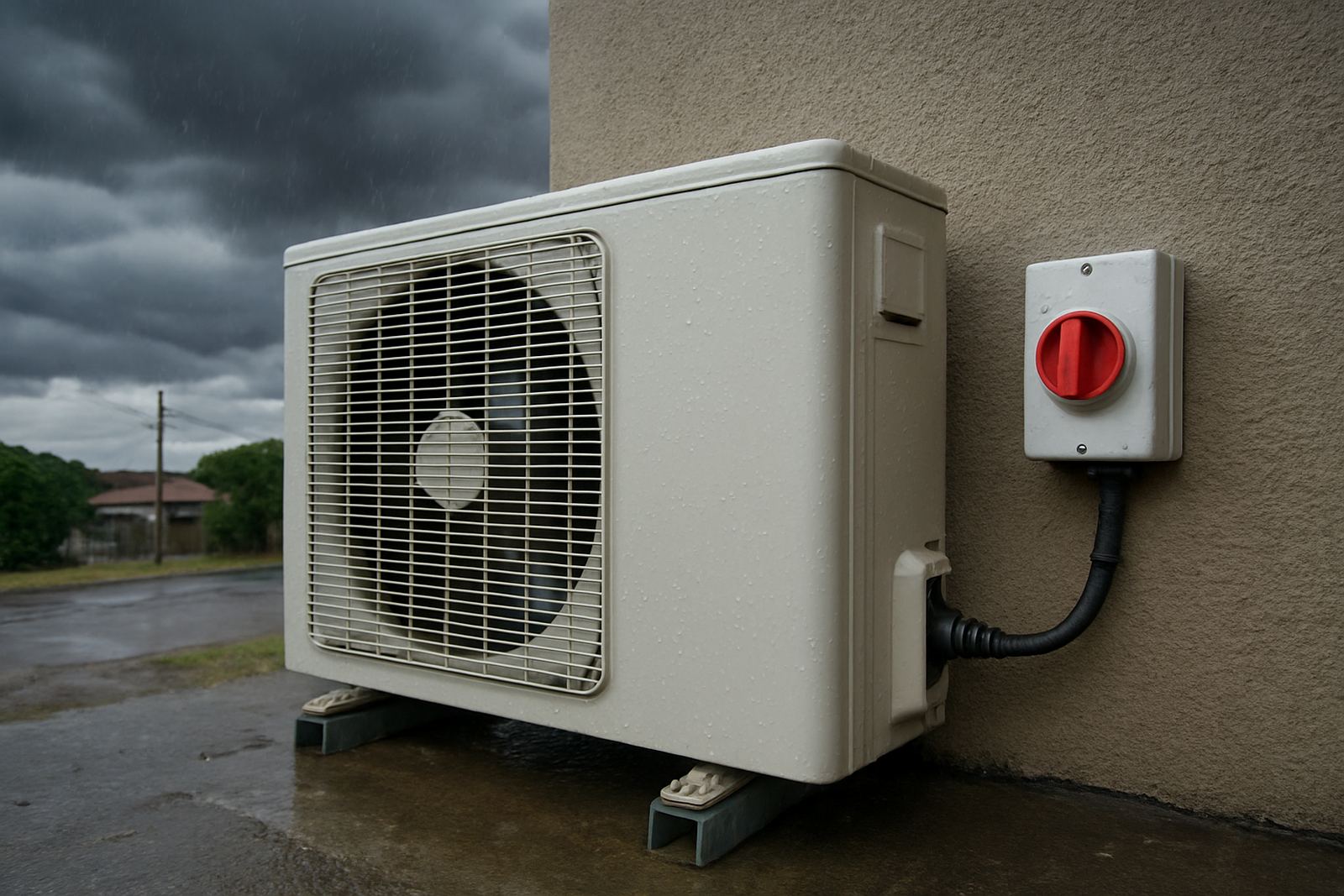
In Clairwood and across eThekwini, summer storms often arrive with heavy rain, lightning and fast voltage swings on the supply. Domestic and commercial air-conditioning units are not built to absorb that kind of shock for long.
The parts most at risk are the electronic control board, capacitors, contactors and indoor display panels. Sometimes the unit still looks fine from the outside, but it will not start, or it starts and trips the breaker after a few seconds.
- Lightning does not need a direct hit to cause trouble
- Weak or missing surge protection makes damage more likely
- Older units with worn wiring usually suffer first
What a surge can damage inside the unit
After a storm, the fault is often more than a simple power cut. A surge can burn a track on the board, weaken a capacitor, damage a fan motor winding, or upset the controls so the unit keeps resetting.
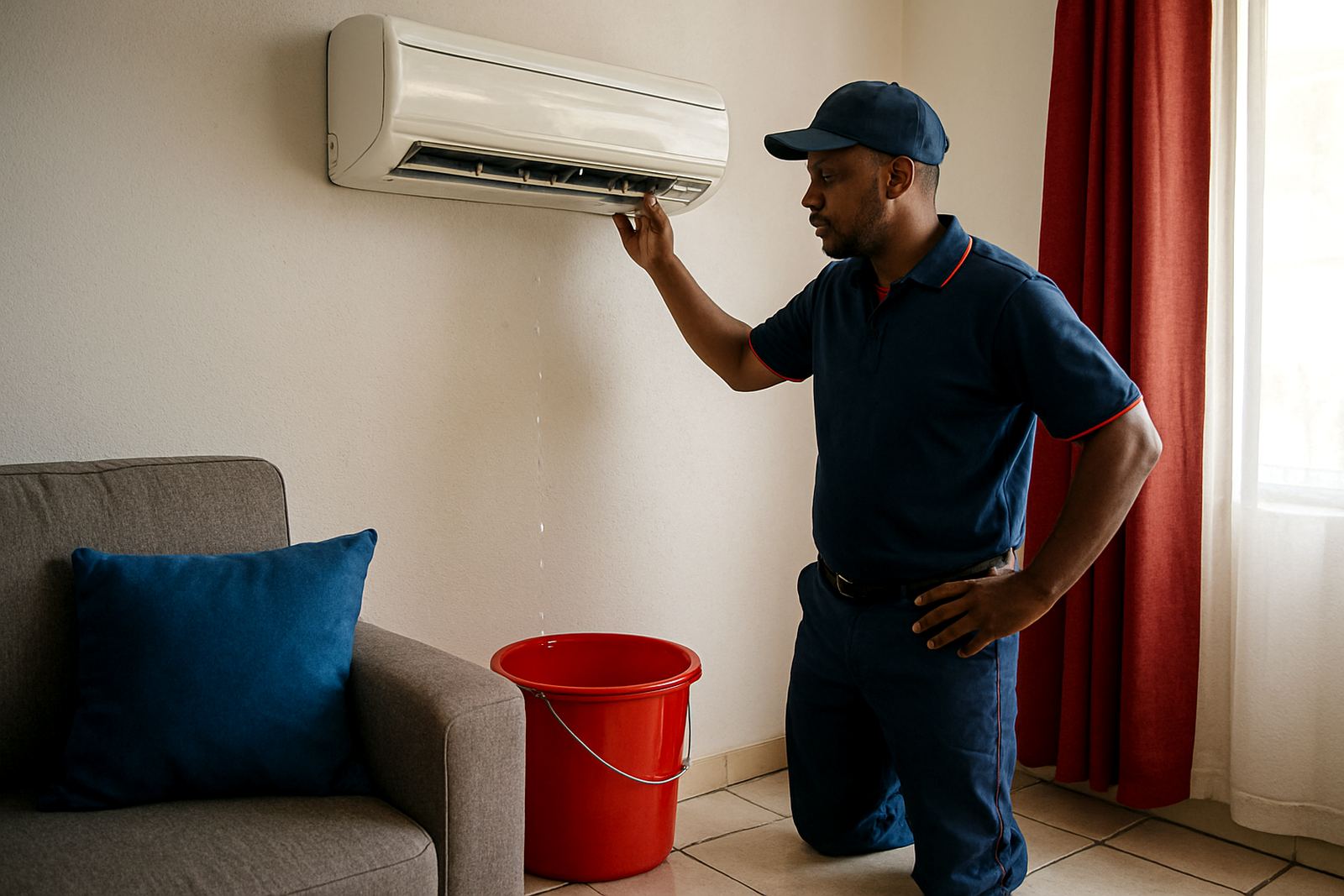
We also see drain issues after storms, because sudden shutdowns and restart cycles can leave moisture sitting in the tray. In coastal areas like Durban Central and South Durban, that extra humidity can speed up corrosion on terminals and connectors.
- Control boards and display panels
- Capacitors and contactors
- Fan motors and compressor start circuits
- Wiring terminals, sensors and indoor switches
Warning signs after a storm that you should not ignore
If an aircon unit behaves oddly after a storm, switch it off and check it properly before trying again. Repeated restarts can turn a small fault into a bigger one.
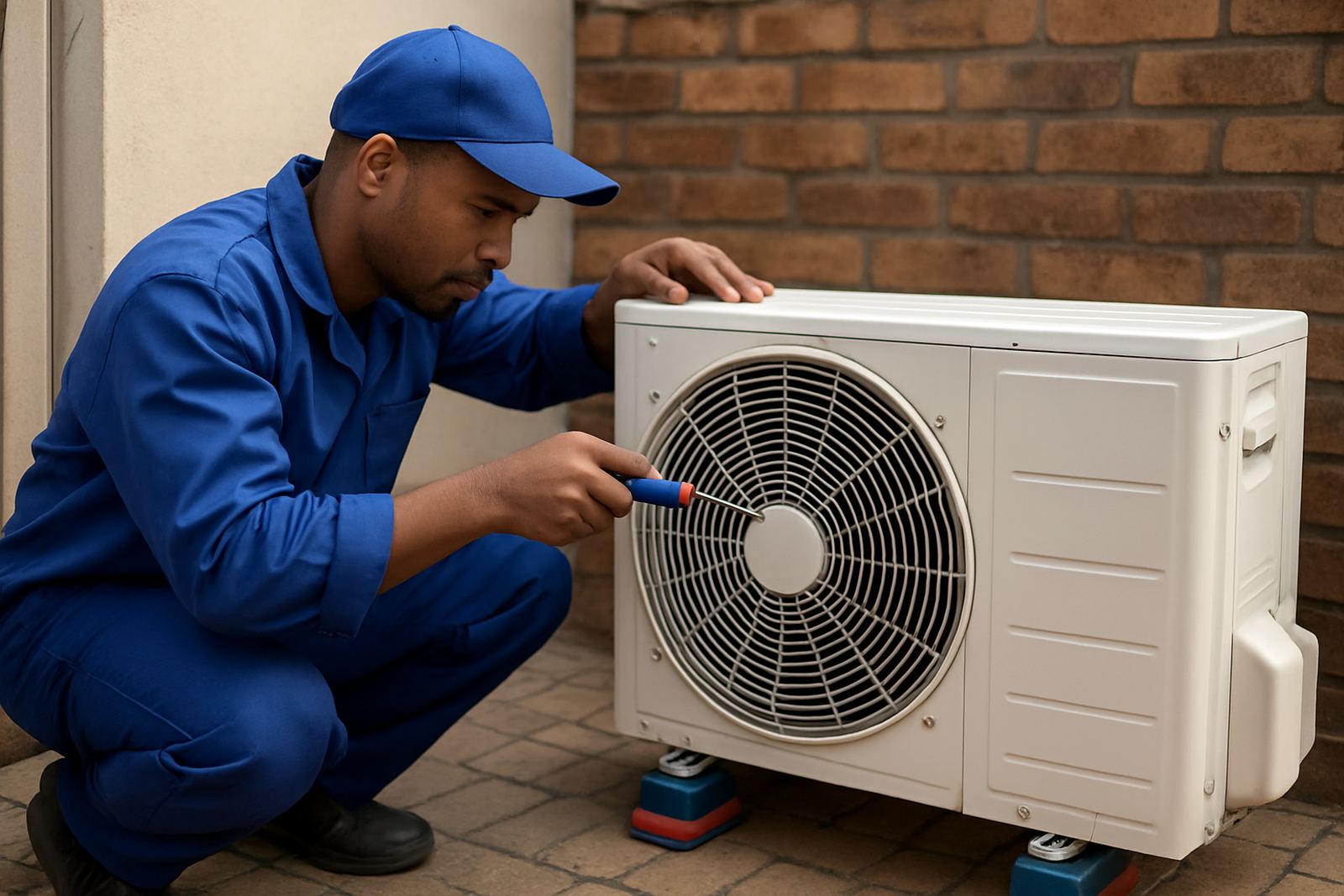
Common signs include a unit that is completely dead, a breaker that trips when the aircon starts, flashing error lights, strange clicking from the outdoor unit, or a smell of burnt plastic. A unit that runs but does not cool may have board or compressor control damage.
- No power at the indoor unit after lightning
- Breaker trips only when the aircon is switched on
- Fan runs but cooling is weak or absent
- Burn marks or a hot smell near the isolator
Practical protection that works before the next storm
The best time to protect an aircon is before the first loud thunderclap. Good protection starts at the electrical point, then continues with proper maintenance and clean installation work.
In homes, flats and shops, ask for the supply to the unit to be checked by a qualified technician. In many cases, a surge protection device at the distribution board helps, but it must be matched to the installation. The outdoor unit should also have sound earthing and tidy cable terminations, with no exposed joins.
- Fit suitable surge protection at the board
- Check earth continuity and cable condition
- Keep outdoor units off the ground where flooding is possible
- Book planned maintenance before peak storm season
A local example from Clairwood after a summer storm
After a heavy storm in Clairwood, we were called to a small office where three split units had stopped working the same night. The breaker was still on, but two units would not start and one kept clicking before cutting out. The issue was not the compressors. The storm had damaged the controls and one contactor, while moisture had collected in a drain line on another unit.
That kind of call is common around Durban when lightning is close and the supply has a spike. A fast fault finding visit saved the client from replacing the whole system. In the end only the damaged parts were changed, and the units were back in service the next day.
When to call for repair, spares and gas support
If your aircon fails after a storm, do not keep cycling the unit on and off. A proper inspection can confirm whether the problem is electrical, mechanical or refrigerant related. In some cases the compressor is safe, but the board, capacitor or contactor has failed and needs replacement.
At Aircon Depot in Clairwood, Durban, we handle storm related breakdowns for domestic and commercial systems across greater eThekwini. Our team carries out fault finding, regas and leak checks, compressor replacement, fan motor repair, controls repair, drain blockage clearing and deep clean service. We also supply spares and gas, which helps when a unit needs parts quickly and the client needs a practical fix, not a guess.
- Fault finding after lightning or tripping
- Board, capacitor and contactor replacement
- Breakdown call-outs across Durban and surrounding areas
- Planned maintenance for homes, shops and offices
If a storm has left your unit silent, tripping or blowing warm air, it is worth getting it checked soon. The longer a damaged component sits in the circuit, the more secondary faults can follow.