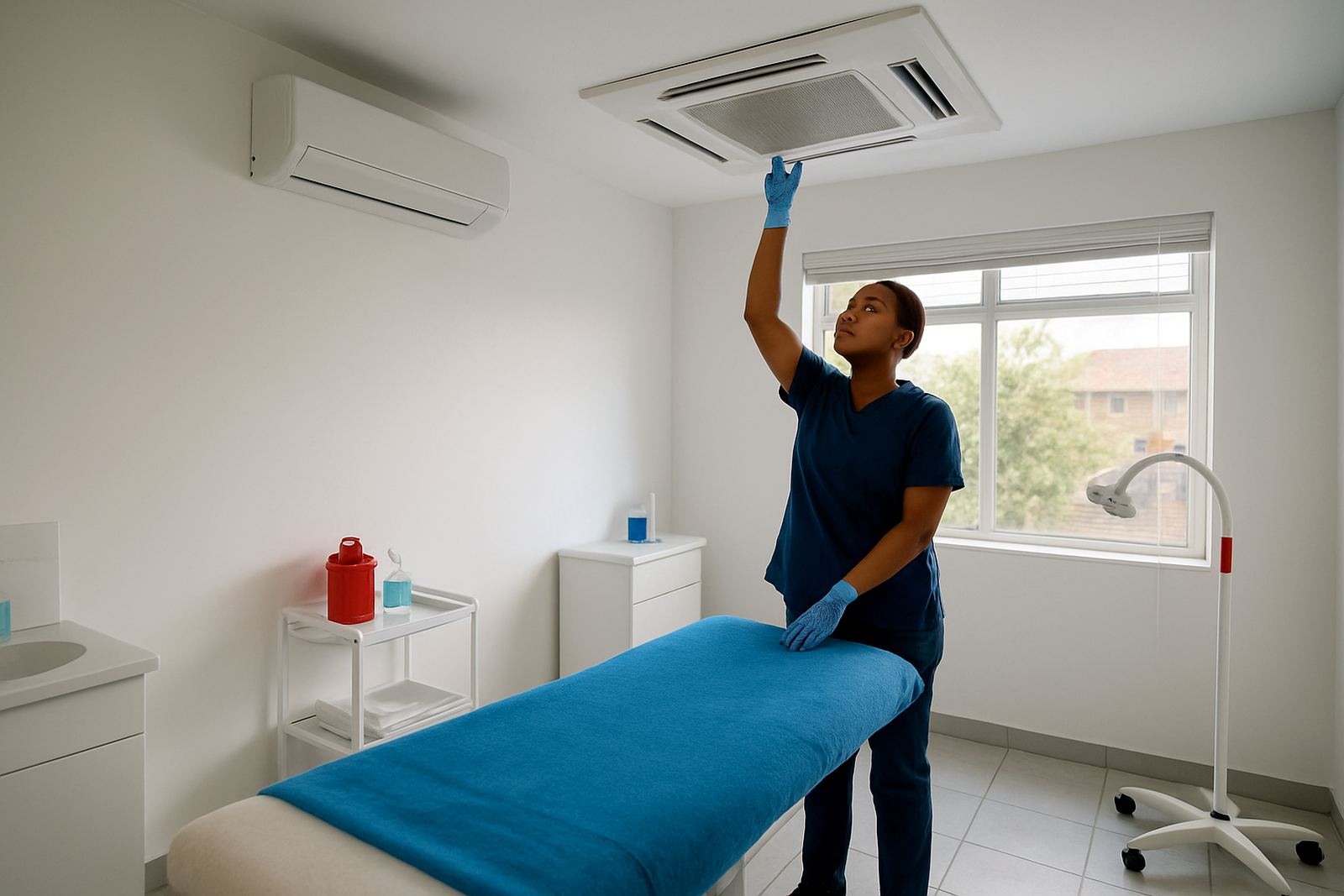
Why clinic air quality matters more than most people think
In a healthcare space, air is part of the working environment. Patients sit longer, staff move between rooms all day, and even a small fault in a cooling system can make waiting areas stuffy, treatment rooms uncomfortable and records or medicines harder to manage. When airflow is poor, dust builds up faster, odours linger and damp patches can form around ceilings and wall units.
That matters in Durban, where warm coastal air brings extra moisture into buildings. If a clinic in Clairwood or Durban Central is running with blocked filters, dirty drains or weak fan motors, the system has to work harder and often uses more power too. The result is uneven temperatures, more complaints from patients and avoidable call-outs.
Good air quality is not only about temperature. It is also about how air moves through the room, how often filters are checked, and whether the equipment is matched to the size and use of the space. A small consultation room needs different treatment from a busy reception area or a minor procedure room.
Start with the room layout before you touch the unit
Before an air-conditioner is repaired or replaced, the room layout should be checked. A unit can only do so much if it blows directly onto a bed, chair or counter. In clinic spaces, the goal is steady circulation without draughts that make patients uncomfortable or upset dust in the room.
Simple layout choices can improve air movement straight away.
- Keep high cabinets and screens away from return air paths.
- Do not block wall units with curtains, posters or storage boxes.
- Leave space around doors so air can move between reception and treatment areas.
- Separate hot equipment, such as printers or sterilising gear, from cooling zones where possible.
- In waiting areas, avoid seating that sits directly under the discharge point.
If a room has been converted over time, the original cooling size may no longer be enough. A small consulting room that later becomes a pharmacy store or nurse station may need a different setup altogether. That is where a site check helps. It is better to measure the actual use of the room than guess from the old plan.
The maintenance items that protect air quality day after day
Most clinic air problems start with small things. A dirty filter reduces airflow. A blocked drain causes dripping or mould smell. Low gas levels can make a system cycle badly and leave rooms too warm. Over time, fan motors and capacitors also wear down, especially in systems that run for long hours during Durban summer.
For healthcare spaces, planned maintenance should be more regular than a normal office. Dust, hand sanitiser vapour and constant foot traffic all add to the load on the system. A proper service should include fault finding, leak checks, coil cleaning, drain blockage removal and a check on controls and thermostats. If the unit is already struggling, a deep clean can bring back proper airflow and remove the damp smell that often shows up first in coastal towns.
- Check and clean filters every month in busy rooms.
- Inspect drain lines before the rainy season.
- Test thermostats and controls during every service visit.
- Look for noisy fans, weak airflow or short cycling.
- Keep a record of call-outs so repeat faults can be tracked.
We often see clinics where the issue was not the whole system, only a blocked drain or tired contactor. Catching that early saves time and prevents a room from being shut for longer than needed.
Humidity, mould and the Durban factor
Durban’s coastal humidity changes how air-conditioning behaves. Even when the temperature looks fine on paper, moisture can make a room feel sticky and uncomfortable. If a clinic is close to the harbour, inland in South Durban or along the coastal strip, the equipment needs to cope with damp air for much of the year. That means more attention to drainage, insulation and the condition of internal panels.
Mould can start in hidden places. It may begin behind a wall unit, inside a ceiling void, or around a drain that never clears fully. Once a clinic smells musty, patients notice it straight away and staff end up opening doors or windows, which can undo the work of the cooling system. In a healthcare setting that is not ideal, especially when paperwork, medicine storage and patient comfort all depend on stable indoor conditions.
Practical steps help:
- Keep condensate lines clear and properly sloped.
- Check for water stains after heavy rain.
- Make sure ceiling boards around units are dry and intact.
- Use extraction where moisture builds up in toilets or wash areas.
When the sea air is heavy and the rooms are full, a clinic needs more than cold air. It needs dry, moving air that stays clean through the day.
What to do when the power goes off mid-shift
Load-shedding creates a different set of problems. Some clinics have backup supply for lights and critical equipment, but the air-conditioning may still drop out for an hour or more. When power returns, a system can struggle to restart if the controls, contactors or compressor have taken strain. In some cases the unit trips repeatedly and a room gets hotter each time the power comes back on.
That is why clinics should plan for restart, not only for outage. Staff should know which rooms need priority cooling and which units should come back on in stages. If the equipment is fitted with a control panel or timer, it should be checked after an outage to make sure the settings have not been lost.
A practical load-shedding plan can include the following:
- Keep critical room temperatures monitored with a simple log.
- Switch non-essential units off before power returns.
- Check for tripped breakers or blown capacitors after an outage.
- Have a technician inspect systems that make unusual noise on restart.
In a busy practice, a small fault after power restoration can turn into a full breakdown by the next day. Quick checks save a lot of trouble.
A Durban example from a working clinic
Take a medium-sized clinic in Clairwood serving walk-in patients, a doctor’s room, a treatment room and a small dispensary. The staff began noticing that the waiting area felt warm by mid-morning, while the consultation rooms were cold near the unit and hot at the far side. There was also a damp smell near one wall after rain. The first thought was that the system was too small, but the real issues were dirty filters, a blocked drain and furniture placed too close to the return path.
After a proper site check, the units were cleaned, the drains cleared and one worn capacitor replaced. The reception seating was moved a little, and the team was shown a simple cleaning schedule. The room temperatures evened out, the smell disappeared and the practice stopped getting complaints from patients waiting longer than expected. Nothing dramatic changed, just the basics done properly and on time.
That kind of fix is common across Durban Central, South Durban and the wider eThekwini area. Clinics do not always need new equipment. Often they need someone to inspect the system properly, identify the real fault and keep to a routine maintainence plan so the problem does not come back.
How to keep clinic air quality steady through the year
Good clinic air quality comes from routine, not luck. The system should suit the room, the rooms should suit the work, and someone should be checking both before a minor issue becomes a complaint. In healthcare spaces, that discipline matters because air affects comfort, hygiene and the way people experience the building.
For clinics in greater eThekwini, the best approach is usually a mix of scheduled servicing, prompt breakdown response and sensible room planning. If a unit is making noise, leaking, smelling damp or struggling after a power cut, it should not be left for later. These signs usually point to a fault that will only get worse in heat and humidity.
With the right checks in place, a clinic can keep airflow clean, rooms comfortable and equipment running reliably through Durban’s summer heat, winter damp and the stop-start pressure of load-shedding.