Why an indoor unit starts dripping water
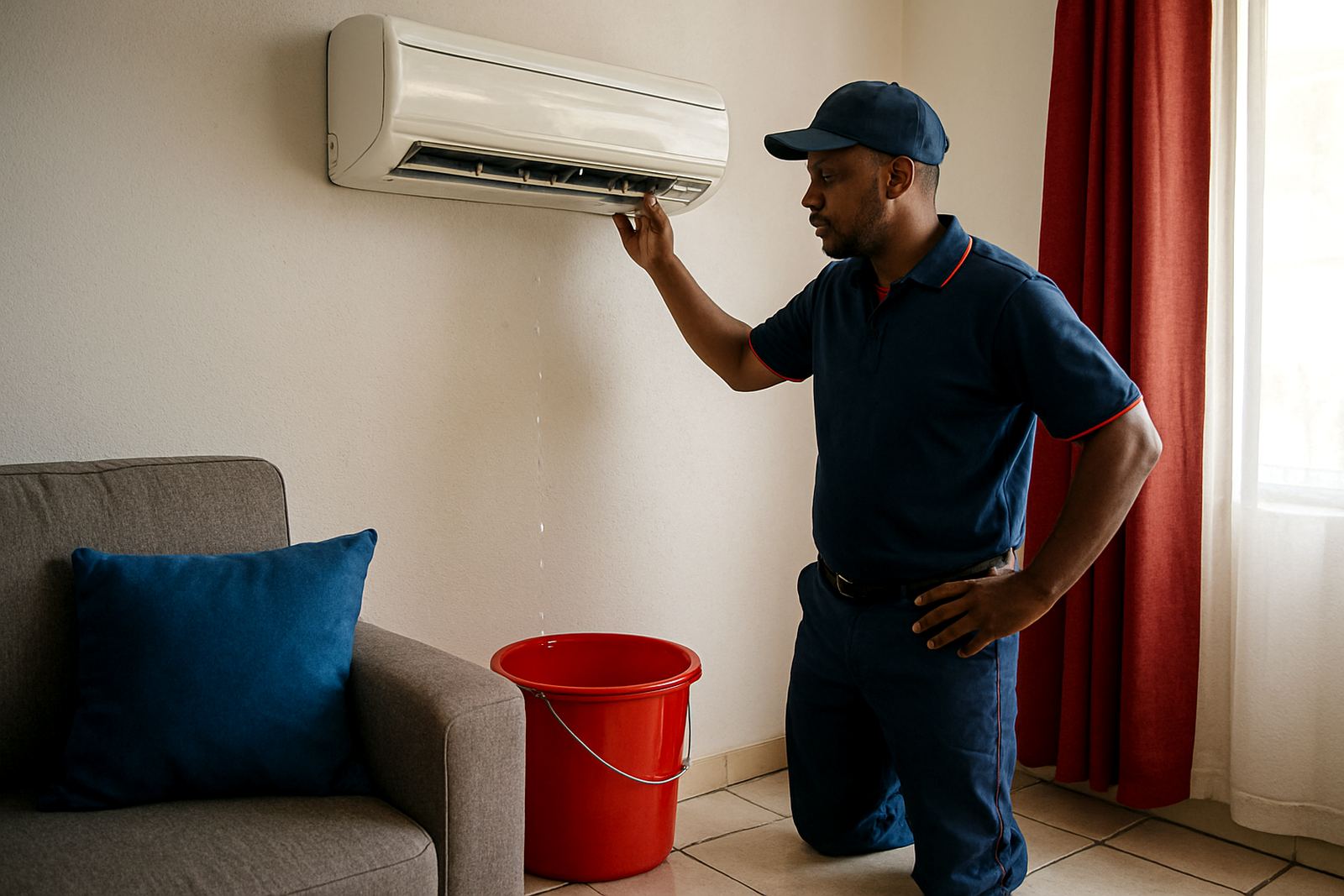
An indoor unit makes water as part of normal cooling. Moist air passes over a cold coil, the moisture condenses, then the water should travel through the drain tray and pipe to the outside. When that flow is interrupted, the water has to go somewhere else and it often ends up on the wall, floor, or ceiling below.
In many Clairwood and Durban homes, the first sign is a small drip after the unit has been running for a while. Sometimes people only notice it when the weather turns sticky or the room is being cooled hard for long periods. The leak may look minor, but the same fault can damage plaster, skirting and electrical fittings if it is left too long.
The most common causes we see in Durban homes and shops
Most dripping indoor units come down to a handful of practical faults. Some are quick to fix, others need a technician to inspect the full system. Coastal humidity, dust from busy roads and long run times during load-shedding all play a part.
- Blocked drain line: Sludge, dust or algae build up in the pipe and stop water from leaving the unit.
- Dirty filters or coil: Airflow drops and ice can form on the evaporator coil, then melt and overflow the tray.
- Unit not level: If the indoor unit slopes the wrong way, water can miss the drain outlet.
- Cracked drain tray: Older units can split, especially after years of heat and vibration.
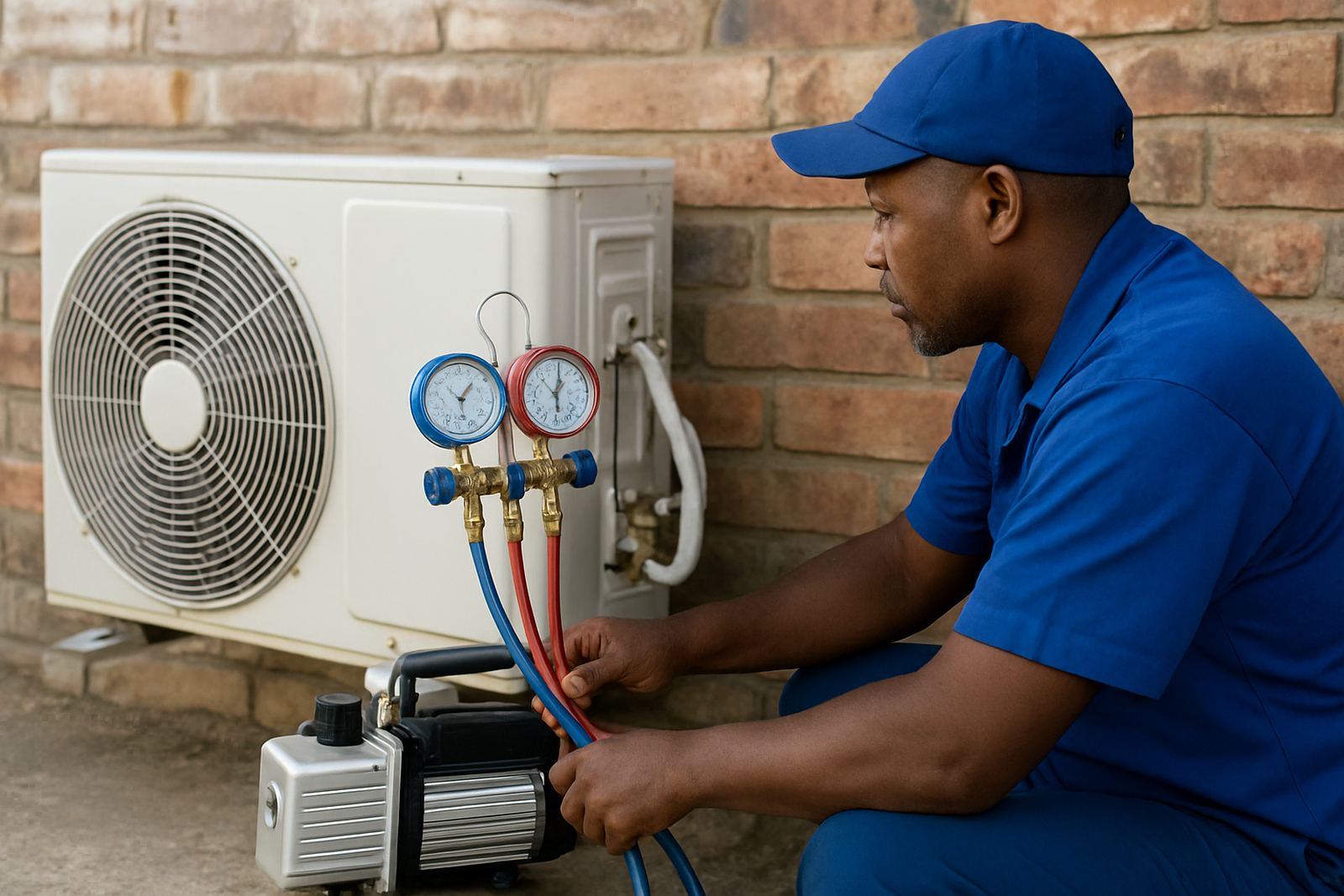
- Low refrigerant gas: Low gas can cause icing on the coil, which later melts and spills water.
- Loose or damaged pipework: A drain hose that has slipped, kinked or been crushed behind a wall can leak inside the room.
There are also less obvious causes such as failed sensors, a blocked blower wheel, or a poor installation where the drain was never set correctly from the start.
Signs the leak is coming from the aircon and not the roof
In Durban, a ceiling stain can come from a roof leak, but if the stain appears directly under the indoor unit or only when the aircon is on, the aircon is a strong suspect. A dripping unit often leaves clues before the first big puddle forms.
- Water drips from the front cover or along one side of the unit
- The room smells damp or musty after cooling for a few hours
- The unit sounds different, with gurgling or weak airflow
- Ice forms on the pipes or on the indoor coil
- The ceiling below the unit becomes marked after long cooling periods
If the water only appears during heavy rain, the issue may be unrelated. But if it happens on dry days too, and especially after the unit has run for a while, it is worth checking the drain and the system pressure. It is easy to guess wrong and keep chasing the wrong problem.
What you can safely check before calling for help
A homeowner or site manager can do a few basic checks without opening the unit. These steps may save time and help the technician come prepared. If the unit is leaking near plug points or ceiling wiring, switch it off immediately and do not use it until it has been inspected.
- Check whether the filters are dirty and need cleaning
- Look for visible water dripping from the front or corners of the unit
- Confirm that the drain pipe outside is not blocked or buried
- Listen for unusual hissing, rattling or fan noise
- Note whether the leak starts only after 20 to 40 minutes of running
Do not poke wire, compressed air or chemicals into the drain pipe. That often pushes the blockage deeper or damages the hose. On split units and ceiling systems, a poor DIY fix can cause a bigger leak and more expensive repairs later on.
When a dripping indoor unit needs a technician
Book a repair when the leak keeps coming back after cleaning the filters, when the room does not cool properly, or when you can see ice on the indoor coil. Those signs usually point to a deeper issue such as a blocked drain, low gas, a fan problem or a fault in the controls. If water has reached a ceiling board, light fitting or power point, it should be treated as urgent.
For offices, shops and rental properties, a dripping unit can also become a maintenance issue. Constant moisture stains ceilings, damages stock and creates complaints from tenants or staff. In coastal parts of greater eThekwini, damp air can make mould grow faster than many people expect, so the right response is not to wait and see.
Aircon Depot handles fault finding, drain blockages, regas and leak checks, deep cleaning, compressor replacement, fan motor repair, capacitor and contactor faults, and planned maintenance for domestic and commercial units. We work from Clairwood across Durban Central, South Durban, North Durban, West Durban and the wider eThekwini area.
A local example from Clairwood
A small warehouse in Clairwood called us after water started dripping from an indoor unit above a packing area. The staff had wiped the floor a few times and assumed the problem was from the roof because the drip got worse on hot afternoons. On inspection, the drain line was partly blocked, the filters were clogged, and the unit had started icing because airflow was poor. Once the drain was cleared and the filters were cleaned, the leak stopped and the room cooled properly again.
That kind of case is common in Durban. A leak can look like one fault, but it may be the result of two or three smaller issues working together. The quicker it is checked, the cheaper it usually is to sort out. In many cases there is no major part failure, just a system that needs proper attention.
How to prevent repeat leaks
Regular maintenance is the best way to avoid a dripping indoor unit. In humid areas, filters collect dirt faster and drain lines can grow slime if they are left too long without cleaning. A unit that is serviced once or twice a year is less likely to surprise you with water on the wall.
- Clean filters every few weeks in heavy use periods
- Have the drain line checked during routine servicing
- Keep the outdoor drain outlet clear of dust and leaves
- Do not set the temperature too low for long periods unless needed
- Book a deep clean if the unit has been running for years without attention
If your indoor unit is dripping, the safest plan is to switch it off, check the basics, then arrange a proper inspection. What starts as a small leak can turn into a bigger repair if the cause is left in place.