Why one unit can struggle in a connected room
An open-plan lounge, kitchen and dining area can look simple on a floor plan, but it is often the hardest space to cool. Without doors to contain the cooled air, you are trying to manage a bigger volume of air, plus heat from ovens, kettles, fridges, sunlight and people moving through the space.
In Durban, humidity makes it worse. A room can feel sticky even when the thermostat says the temperature is not that high. That means the aircon has to remove moisture as well as heat, and if the unit is too small it will run for long periods without ever getting comfortable. You end up with one cold corner and the rest of the room still warm.
Many people think the answer is simply a bigger unit, but open-plan cooling needs more thought than that. Airflow direction, ceiling height, window size and whether the space opens onto a passage or verandah all matter. A badly placed machine can cool the wall opposite it and ignore the area where everyone sits.
Start with the room, not the machine
The best way to approach an open-plan room is to work from the actual layout. A 60 m2 living area with standard ceilings behaves very differently from the same size room with a vaulted roof, dark tiles and sliding doors onto the west side. Sun exposure alone can add a surprising amount of load in the afternoon.
Before installation, a technician should look at the following points:
- floor area and ceiling height
- number and size of windows, especially north and west facing glass
- how many people use the space at peak times
- whether the kitchen is part of the same air volume
- insulation in the roof and walls
- where furniture blocks airflow
In some homes, a single split unit is enough if it is positioned correctly and the room is well shaded. In others, especially where the room bends around a staircase or extends into a passage, two smaller units can perform better than one larger machine. That often gives more even cooling and better control.
Airflow matters more than cold air blasts
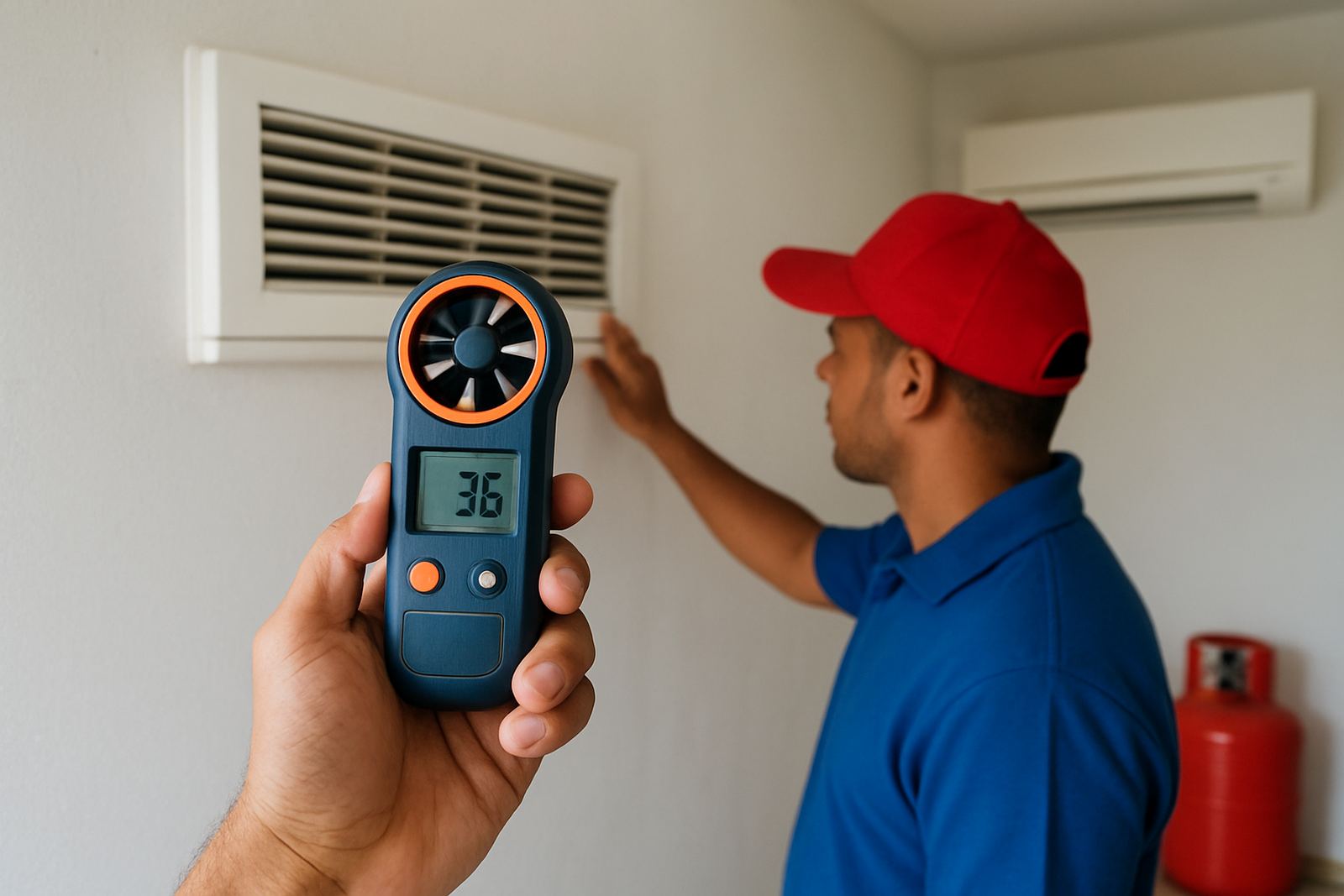
Open-plan spaces fail when the cool air cannot reach the far side of the room. You need to think about circulation, not just power. The indoor unit should not blow straight into a curtain, a cupboard top or a bulkhead that traps the air before it spreads. That is a common mistake and it wastes electricity.
A ceiling fan can help in the right room, because it moves the cooled air back down where people are sitting. It does not replace aircon, but it can make the whole space feel more even and allow a slightly higher set point. That helps in summer when the unit is working hard for hours at a time.
When we inspect open-plan installations in Clairwood and Durban Central, we often find the issue is not the machine itself. The problem is a poor position, blocked return airflow or dirty filters. Once those are sorted the room starts to behave properly, and the unit stops short-cycling every few minutes.
Choosing capacity without overspending
Getting the size right is where many homeowners and business owners go wrong. Too small, and the aircon runs flat out with little comfort. Too large, and the room can cool too quickly without removing enough moisture, leaving a clammy feel behind. In Durban's coastal humidity, that is not a small issue.
Open-plan rooms often need a site visit rather than a rough guess. A technician will consider the total load, then recommend either one correctly sized unit or a split approach. In some cases, two machines placed at different ends of the room are the better option, especially where one side of the room gets full afternoon sun.
For shops, offices and reception areas in greater eThekwini, planning also needs to take foot traffic and door opening into account. A room that faces a busy entrance or loads of comings and goings may need extra allowance because the conditioned air escapes every time the door opens.
- Do not size only by square metres
- Account for glass, sun and occupancy
- Check whether the kitchen adds heat
- Allow for humidity in coastal areas
- Consider two units in long or L-shaped rooms
What maintenance keeps large spaces comfortable
An open-plan room usually shows aircon problems faster than a small bedroom. Filters clog sooner, drain blockages appear more often and weak airflow becomes obvious because the entire space feels uneven. In homes close to the coast, salty air can also build up on coils and metal parts if the system is not cleaned properly.
Regular maintenance should include a deep clean, refrigerant leak checks, drain inspection, fan motor review and electrical testing of capacitors and contactors where needed. That is especially important if the unit has been running through load-shedding and then restarting repeatedly. Sudden power interruptions can expose weak parts that were already near failure.
For businesses, planned maintenance is cheaper than breakdown call-outs during a heatwave. A shop or office with an open floor area cannot simply close one door and carry on. If the aircon fails in a large shared space, staff and customers feel it straight away. It is worth keeping a service record and a regular check-up schedule.
A Durban example from a mixed-use living space
A common local example is a ground-floor home in South Durban with a kitchen, dining area and lounge all connected in one long room. The owners first installed one wall unit near the lounge seating area, but the kitchen end stayed warm and the unit ran almost all day. Afternoon sun through the sliding doors made the problem worse, and the room never quite settled down.
After a proper inspection, the fix was not simply a bigger machine. The solution was to improve airflow, reposition the unit slightly higher, clear a blocked return path and fit a second unit on the far side of the space. The result was more even cooling and less strain on both machines. Electricity use also became easier to manage because the units were not fighting the room every hour.
That is the lesson with open-plan cooling. The best answer is the one that matches the way people actually use the space. A room where children play, meals are cooked and visitors sit down needs a different plan from a closed bedroom or small office.
When to call in a technician
If your open-plan room never reaches the set temperature, if the air feels damp, or if one part of the room is cold while another stays hot, the installation may need a review. The same applies if the unit trips after a power cut, makes unusual noise or takes too long to start cooling after load-shedding.
At Aircon Depot in Clairwood, we handle fault finding, regas and leak checks, compressor replacement, fan motor repair, capacitor and contactor faults, drain blockages, deep cleaning, controls repair and breakdown call-outs across Durban and greater eThekwini. For large connected rooms, the main value is in getting the diagnosis right the first time rather than guessing and replacing parts that were never the cause.
If you are planning a new installation or struggling with an open-plan room that never feels right, it helps to have someone look at the whole space, not just the wall where the unit hangs. Small choices about position and capacity can make a bigger difference than people expect.