What a filter does before the air reaches the room
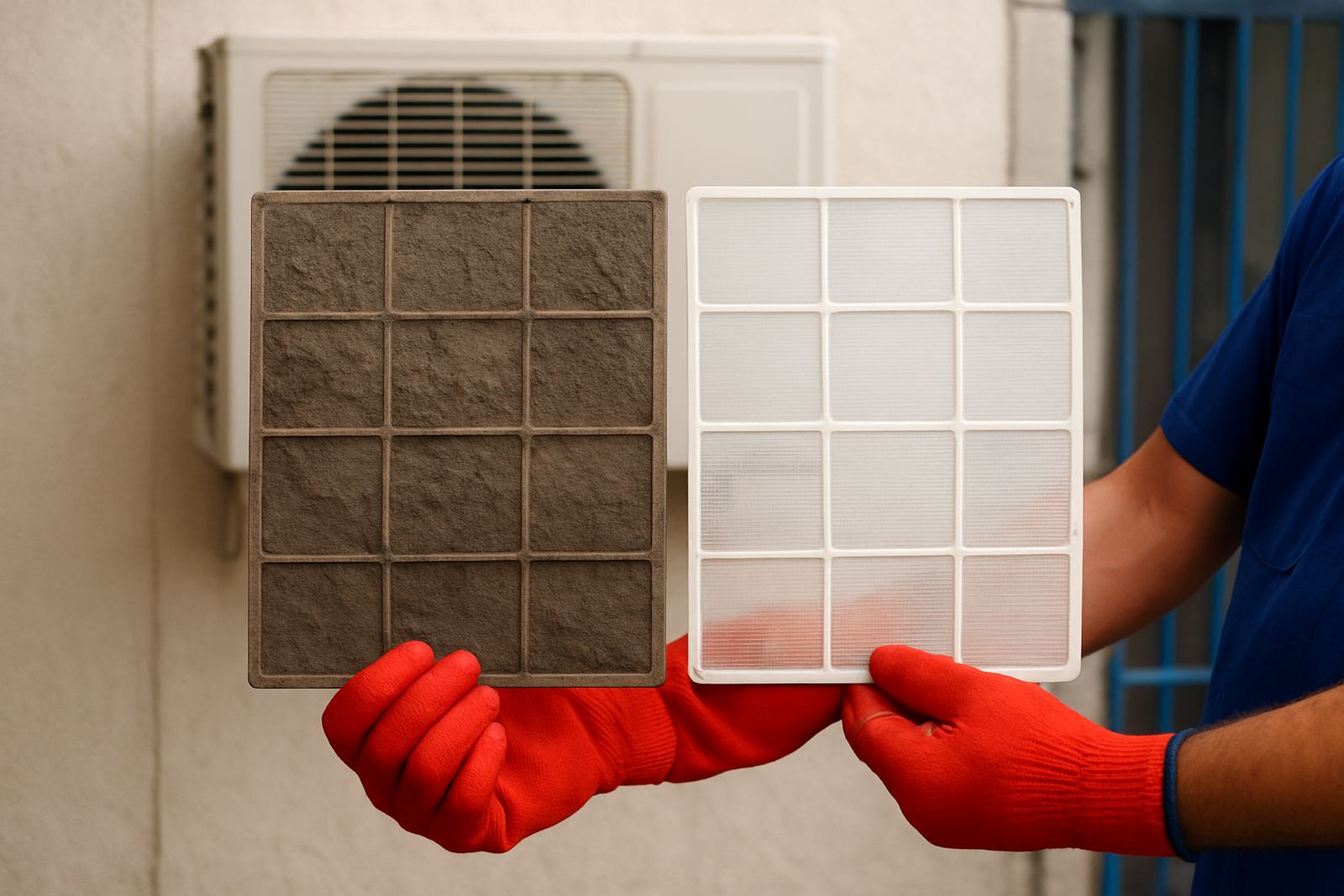
The filter is the first stop for the air that your unit pulls in. It catches dust, lint, pet hair, pollen and bits of debris before they move through the indoor coil and back into the room. When that filter stays clean, air moves freely and the unit can do its job without straining.
In Clairwood, Durban Central and the busier parts of South Durban, we often see filters blocked by a mix of dust and fine coastal grime. In homes near busy roads or light industrial areas, the build-up can happen quicker than people expect, especially when windows are open during load-shedding and the unit is off for a while.
- Cleaner air reaches the room faster.
- The fan does not need to work as hard.
- The indoor coil stays cleaner for longer.
- The unit usually sounds quieter and steadier.
How dirty filters choke airflow and weaken cooling
When a filter clogs up, the air path narrows. The fan still runs, but it pushes less air through the system. That means the room cools more slowly and unevenly. You may notice one bedroom in a flat feeling fine while the lounge stays stuffy, or a shop office never quite reaching the set temperature.
A common mistake is turning the temperature down further and further because the room feels warm. That does not fix the blocked airflow. It can make the unit cycle longer, use more electricity and put extra strain on parts like the fan motor and capacitors. Over time, that strain adds up.
If you hear the unit working harder than normal, or the air from the grille feels weaker than it used to, the filter is one of the first things to check.
Hygiene problems start with trapped dust and damp build-up
A dirty filter is not only a comfort issue. It can also affect hygiene. Dust sitting inside a warm, moist aircon can hold odours and help mould grow if the unit is not cleaned properly. In Durban’s humid weather, that risk is higher than in drier inland areas.
We often get calls from households in West Durban and offices closer to the harbour where people complain of a stale or musty smell. In many cases the filter is part of the problem, but the deeper issue is that the filter has allowed dust to pass onto the coil and into the drain area. Once that happens, you may also get drain blockages and water dripping from the indoor unit.
- Musty smells can start from trapped moisture and dust.
- Allergy symptoms may worsen when filters are overdue for cleaning.
- Visible grime on the grille often means the inside needs attention too.
- Regular cleaning helps reduce the chance of mouldy build-up.
Why your power bill can climb when filters are ignored
An aircon with a blocked filter works longer to reach the same comfort level. That means more electricity used for less cooling. On paper the difference may look small for a few days, but across a full summer, especially in a business running units daily, the extra cost can be noticeable.
We have seen this in small offices, salons and retail spaces in North Durban where units are switched on early and left running through the day. Staff then keep lowering the setting because the room feels warm. The machine keeps pulling power, but the blocked filter stops the system from moving enough air.
For a domestic unit, the saving may be less about a huge bill and more about avoiding unnecessary wear. For commercial sites, clean filters can help keep operating costs under control when the weather is hot and the demand is constant.
Simple habits that keep filters from becoming a problem
You do not need complicated maintenance to keep filters in decent shape. A basic routine done on time makes a big difference. For many homes, monthly checking is enough. For shops, clinics and offices, a shorter interval may be better if the unit runs most of the day or the area is dusty.
These habits help:
- Check filters every 2 to 4 weeks during heavy use.
- Clean them before and after the hottest months.
- Replace damaged or warped filters instead of trying to bend them back.
- Keep doors and windows closed when the aircon is running.
- Book a deep clean if the filter keeps getting dirty very quickly.
If the area has fine dust, food grease or salt air, the filter may look worse sooner. That is normal. It is a sign to shorten the service gap, not to wait until the unit starts giving trouble.
A Durban example: when one blocked filter affected the whole system
Not long ago, a small business in Clairwood called about a room that would not cool properly. The staff had already lowered the thermostat and kept the door shut, but the space still felt muggy by mid-afternoon. On inspection, the filter was packed with dust and the airflow was weak enough to make the unit seem underpowered.
Once the filter was cleaned and the indoor section checked, the room cooled quicker and the unit stopped running so long between cycles. We also found early signs of drain blockage caused by dust and moisture sitting in the indoor tray. If that had been left alone, it could have turned into a leak and a call-out after hours.
That is the point people miss. A filter does not only affect one small part. It affects cooling, hygiene, running cost and the chance of a breakdown. A little attention in time saves a lot of discomfort later.