Start with a shutdown plan, not a last-minute sweep
A holiday shutdown works best when one person owns the checklist and dates are set early. If staff are leaving in stages, decide which rooms close first, what must stay on until the last day, and who has the final keys. For a small office in Clairwood or a factory in South Durban, even a half-day delay can leave fridges, servers or stockrooms exposed overnight.
Write down the basics: who switches off equipment, who checks windows and doors, who removes waste, and who confirms the alarm is live. Keep the list short enough that people actually use it. It helps to walk the site with a supervisor and test each item once before the final closure, not on the morning everyone is rushing to leave.
- Set the shutdown date and final walk-through time
- Assign one person per area, including stores, offices and plant rooms
- Record meter readings, alarm codes and emergency contacts
- Leave a copy of the checklist with the manager on duty
Protect air-conditioning before you switch off
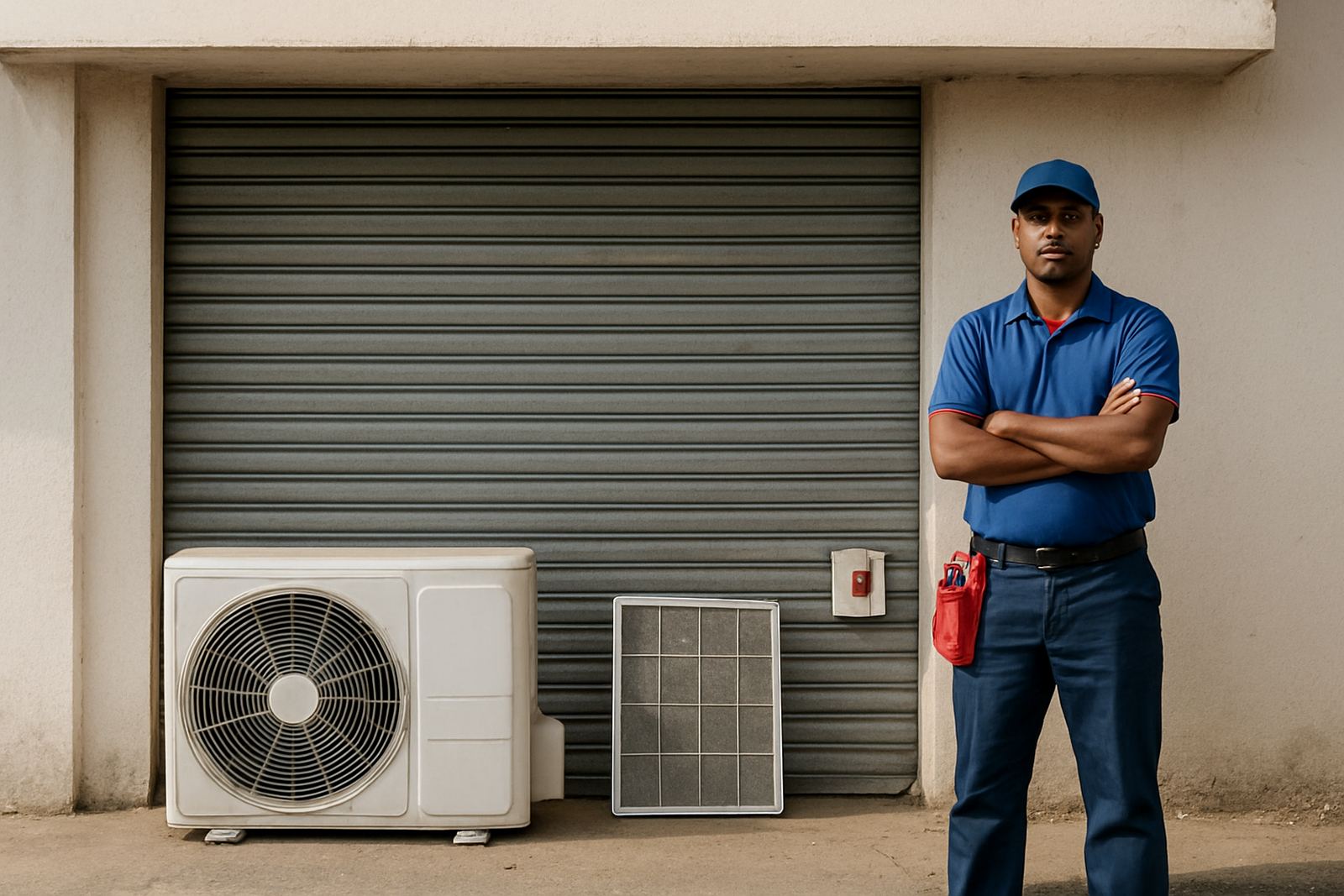
Air-conditioning should not be left dirty and idle for weeks. A blocked drain line, loose capacitor or weak fan motor can turn into a bigger fault when the system is started again after the holidays. In humid coastal air, coils and filters collect grime quickly, so it is worth doing a proper clean before closing up. If you are running split units, cassettes or larger commercial systems, check that every indoor unit is set correctly and that no error lights are showing.
Before shutdown, have the units inspected for leaks, drain blockages and gas issues. If a system has been struggling, fix it now rather than hoping it survives the break. A planned maintenance visit can catch small problems like a noisy contactor or dirty filter that would otherwise greet you with warm air and a call-out bill in January.
- Clean or replace filters
- Check drain pans and condensate lines for blockages
- Inspect for oil stains, water marks or unusual noise
- Confirm the unit is off at the correct isolator where required
Keep power, backups and critical equipment under control
Durban businesses know that load-shedding and holiday interruptions often arrive together. If your site has fridges, security systems, servers or production gear, decide what stays on and what can be safely isolated. Not everything should be turned off at the wall. Some equipment needs a controlled shutdown so you do not lose data or damage a compressor when power returns.
Check that surge protection is working, batteries are charged and backup systems are not overdue for service. If a generator or inverter is available, test the changeover before the holiday period. A quick test can prevent a nasty surprise when the building is empty and there is no one around to notice a failure.
- Identify essential circuits and isolate non-essential loads
- Test backup power and changeover switches
- Unplug small appliances and chargers
- Label any equipment that must remain live for security or stock control
Stop water, pests and leaks from causing holiday damage
One dripping pipe or hidden drain leak can do more damage over two weeks than a full month of normal use. Before closing, check toilets, sinks, staff kitchens and plant rooms for damp patches. If you find a leak, fix it now. In older buildings around Durban Central and Clairwood, it is common for small plumbing issues to show up only when the site goes quiet. That is why a final inspection matters.
Do not leave food scraps, bin bags or loose packaging behind. Warm weather brings pests fast, especially where waste rooms are poorly sealed. Empty bins, clean floors and make sure external doors close properly. If your site has an HVAC drain that discharges near a wall or walkway, confirm it is clear and not pooling water where it shouldnt.
- Inspect taps, toilets and visible pipework for leaks
- Clear bins and remove food waste from kitchens
- Seal gaps around doors, storerooms and service entries
- Check that no water is pooling near electrical equipment
Secure the site and leave a clean handover trail
A holiday shutdown is also a security exercise. Doors, gates, alarm zones and access records should all be checked before the last person leaves. If the site uses subcontractors or cleaning staff, confirm who is allowed in after hours and who is not. The point is to avoid confusion when a cleaner arrives on the wrong day or a supplier tries to deliver to an empty yard.
Leave a clear handover note with emergency contacts, after-hours access instructions and any known faults. If there is a recurring problem such as a tripping breaker, weak door closer or faulty motion sensor, note it before closing. That way nobody has to guess later. A simple, written trail saves time when people return tired after the break.
- Test alarms, locks and perimeter lights
- Confirm access lists and gate keys are up to date
- Write down any open faults before the shutdown
- Share emergency contacts with the person on call
Plan the restart so the first day back is calm
The shutdown is only half the job. The restart matters just as much. If you bring everything back online too quickly, you can overload circuits, miss a gas leak, or discover a blocked drain after people are already at their counters and counters. Build a first-day-back checklist that covers power-up order, air-conditioning start-up, and basic cleaning before staff return to full pace.
For a Durban workshop or office, that restart should include a quick check on cooling performance, compressor noise, thermostat settings and any tripped isolators. If a unit was already weak before the break, arrange a technician to inspect it before trading resumes. A small repair now is easier than a breakdown call-out in the middle of summer.
At Aircon Depot, we often see the same pattern after a long close: units that were tired before shutdown become bigger problems once the site reopens. A proper pre-holiday service and a calm restart routine save time, protect stock and keep staff comfortable when business starts up again.