Why pressure testing comes before gas release
When pipework has been altered, repaired or installed from scratch, the system should be tested with dry nitrogen before any refrigerant goes in. The aim is simple: prove that the copper lines, flare joints, brazed joints and service valves can hold pressure without leaking. If the pipework fails at this stage, the fault is easier and cheaper to sort out than after the unit has been charged and put into service.
In practical terms, a pressure test helps confirm that the piping is sound, the joints are tight and there are no hidden pinhole leaks. It also shows up weak points that may only open under pressure. That matters on Durban jobs where long pipe runs, roof top exposure and salty air can all put extra stress on the install. A proper test is not a box-ticking exercise, it is part of getting the job right first time.
How a nitrogen test is done on site
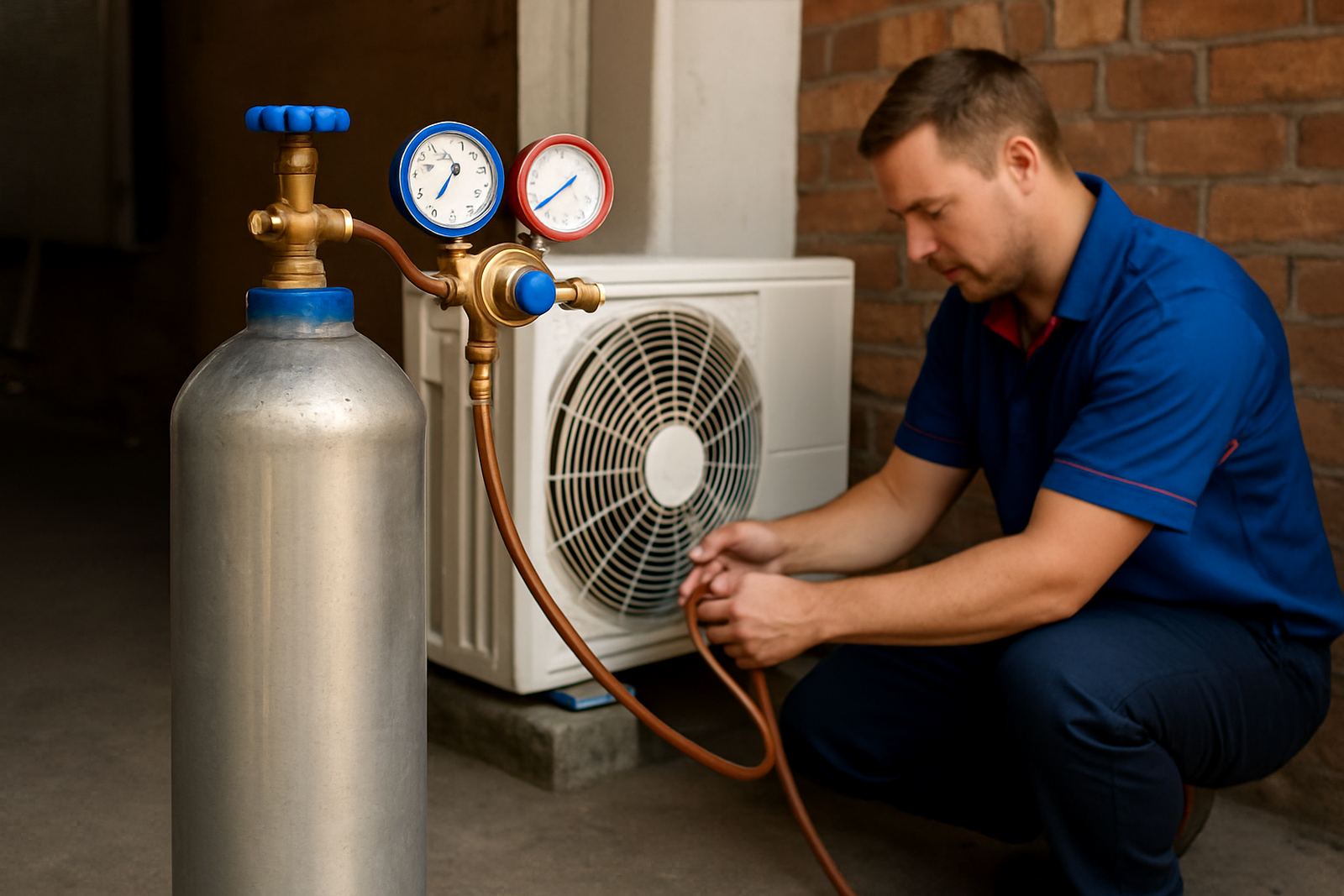
The technician connects a regulated nitrogen cylinder to the system and raises the pressure gradually to the level suited to the equipment and pipework. That pressure is then monitored for a set period. A stable reading points to sound pipework, while a drop in pressure means there is a leak somewhere that must be found and fixed before the job continues.
On a good site the process is neat and controlled. Gauges are checked, valves are watched and the test is left long enough to mean something. For larger commercial systems, the pipework may be tested in sections if the run is long or the building layout is complex. That saves time when you are working on an office block, retail unit or small factory in Clairwood, Durban Central or South Durban.
- Pressure is applied with dry nitrogen, not refrigerant.
- The system is monitored for pressure drop over time.
- Any leak is traced, repaired and retested.
- Only once the pipework holds should refrigerant be released.
What a failed test can tell you
A failed pressure test does not always mean a major problem. Sometimes it is a loose flare nut, a poor brazed joint or a service port cap that was not tightened properly. Other times it is more serious, such as a crushed pipe, a split joint hidden behind trunking, or damage caused during transport and installation. The test gives the technician a clean starting point.
Leaks are often small and hard to spot by eye. In humid Durban weather, moisture, insulation and wall finishes can hide the real source. A system may look fine from the outside while slowly losing gas through a tiny fault. If that fault is missed, the aircon can short cycle, ice up or trip on low pressure. It also puts extra strain on the compressor, and that is where the real cost starts.
Why Durban conditions make this check more important
In coastal areas like Clairwood and the wider eThekwini region, air-conditioning systems work hard. Units run for long hours, especially in summer and in business premises that cannot afford downtime. Salt in the air, high humidity and load-shedding related start-stop cycles can all increase wear on pipe joints and fittings. A proper pressure test gives you confidence before the refrigerant goes in, and that matters when the unit sits on a roof or outside wall exposed to the weather.
For example, on a light commercial install near Durban Central, a line set may run through a ceiling void and out to an external condensing unit. If the pipework has even a slight leak, the system can lose performance quickly. The customer may think the unit is undercharged, but the real issue was never the gas. It was the pipework, and a nitrogen test would have caught it before handover.
- Coastal humidity can hide small leaks and corrosion.
- Longer pipe runs need careful testing and documentation.
- Frequent power cuts can expose weak joints during repeated restarts.
- Outdoor units near the coast need good protection and proper mounting.
When pressure testing should be done
Pressure testing is recommended after new installations, after major repairs that open the refrigeration circuit, and after any pipework modification. It is also useful when a system has a repeat gas loss complaint and the leak has not been found by simpler checks. If a compressor has been replaced, or a condenser coil has been moved, tested or re-piped, the same rule applies: test first, then evacuate and charge.
Our team treats this as part of the fault finding process, not an add-on. That is especially important on commercial call-outs where downtime costs money. A building manager in West Durban does not want the same system back three days later with another fault because the pipework was never properly checked. Taking the time now avoids extra labour, extra gas and unnecessary disruption.
What a proper handover should include
Once the pipework has passed pressure testing, the next steps should still be handled in order. The system should be evacuated properly, checked for moisture and then charged to the correct level. After that, the technician should verify operating pressures, temperatures, airflow and drain performance. Skipping steps leads to poor cooling and repeat call-outs.
Good handover practice also means the customer knows what was tested and what was repaired. If a leak was found and fixed, that should be explained plainly. If the system is on a maintenance schedule, the next service date should be noted so the pipework, filters and drains can be checked before summer. A clear record helps both domestic and commercial clients keep control of their equipment.
- Confirm the system held test pressure before evacuation.
- Check for correct charge and stable operating conditions.
- Inspect insulation, drain fall and service access.
- Record any repairs made to joints, valves or pipe sections.
Aircon Depot’s approach in Clairwood and greater eThekwini
At Aircon Depot in Clairwood, pressure testing is part of a practical, no-fuss way of working. Whether it is a home unit in South Durban, a split system in Durban Central or a small commercial install in North Durban, the goal is the same: confirm the pipework before refrigerant is released and catch problems while they are still easy to fix. That saves time, gas and stress.
We handle supply, installation, repairs, spares and gas support across greater eThekwini, with breakdown call-outs, planned maintenance and fault finding for domestic and commercial systems. If you need a pressure test after a new install, pipework repair or suspected leak, it is better to check it properly than to hope for the best. In this climate, hope is not a plan.
For advice or a service booking, contact depot@aircondepot.co.za.