Why Durban rain exposes aircon problems fast
When the first heavy storms hit Clairwood, South Durban and the coastal suburbs, many aircons start showing faults that were already there. A unit can run fine in dry weather, then leak indoors once the rain is steady and the wind changes direction. That is usually a sign of blocked drain pipes, cracked trays, loose joints, or an outside unit installed in a spot that catches water instead of shedding it.
In eThekwini, humidity and salt air also work against the system. Seals dry out, insulation shifts, and small gaps let rain into areas that should stay dry. If the unit is older, or the installation was rushed, rainy weather often brings the problem to the surface quickly.
One office in Durban Central called after water started dripping through a ceiling tile during a week of storms. The aircon itself was still cooling, but the drain line was partly blocked and the outdoor unit sat in a spot where wind drove rain straight into the casing. It was a simple fix once found, but the ceiling had already been marked.
The three most common leak sources we see
Most rainy season leaks come from a short list of faults. A trained technician should check the whole system, not just wipe away the visible water and hope for the best. In Durban, the issue is often a combination of old sealant, dust in the drain, and poor fall on the pipework.
- Blocked condensate drain lines that back water into the indoor unit
- Cracked or rusted drain trays, especially on older wall units
- Loose pipe insulation or open wall penetrations letting rain in
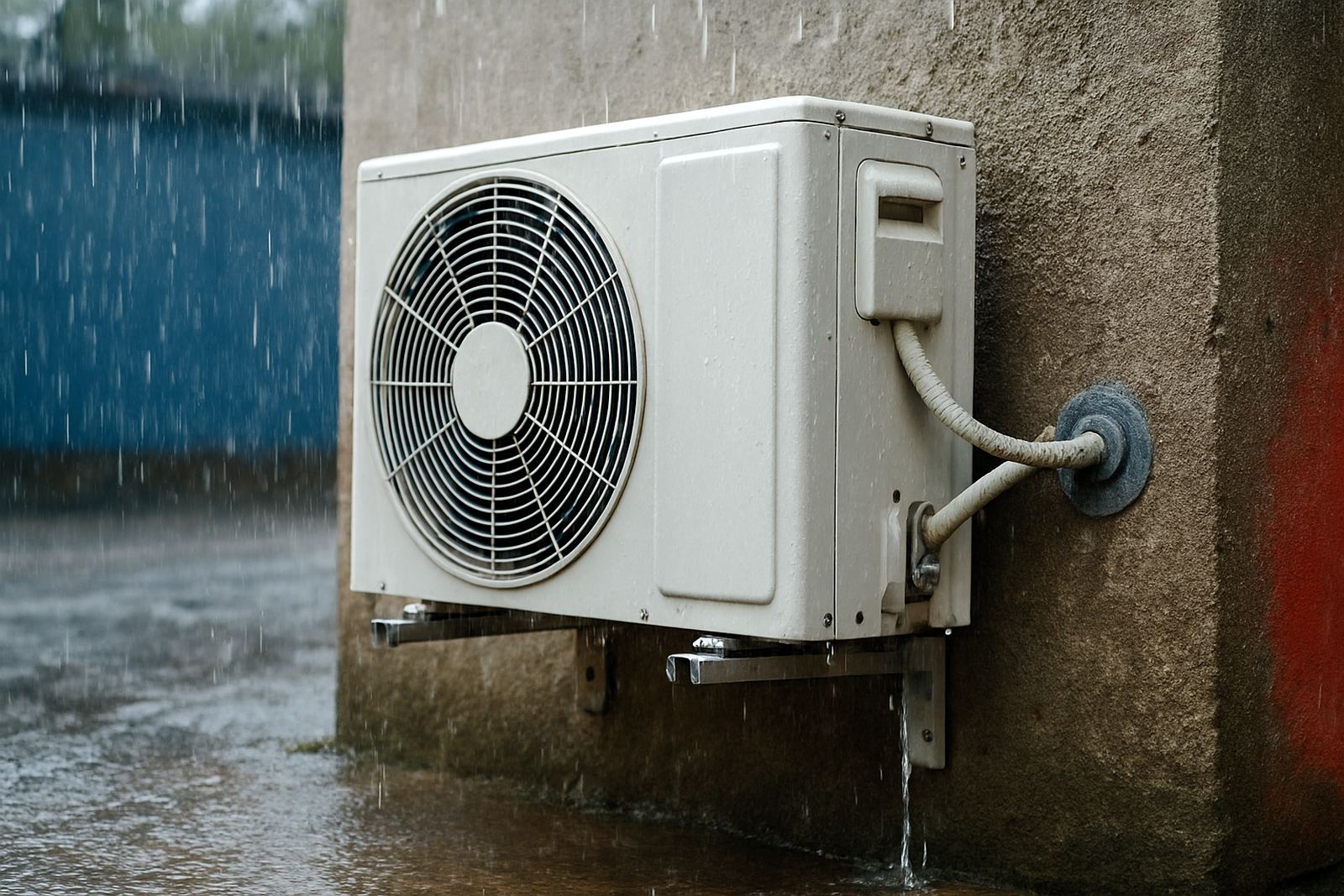
- Outdoor units fitted too low, too close to gutters, or under runoff
- Corroded fittings and damaged seals in coastal or industrial areas
If the leak appears only during storms, do not assume the gas charge is the issue. Low gas can cause icing and water later, but direct rain leaks usually point to drainage or weather exposure. If the unit smells damp, trips, or leaves a water trail after rain, it needs inspection before the next downpour.
What to check before the next storm hits
There are a few practical checks that can prevent damage. Some can be done during a routine maintenance visit, while others should be handled by a technician. The goal is to make sure the system can move water away cleanly, even during long wet spells.
- Make sure the drain pipe has a clear fall and is not crushed behind the wall
- Check that the indoor unit is level, because poor alignment can trap water
- Look for cracked sealant around the wall hole and pipe entry point
- Inspect the outdoor unit for splash back from paving, gutters, or garden beds
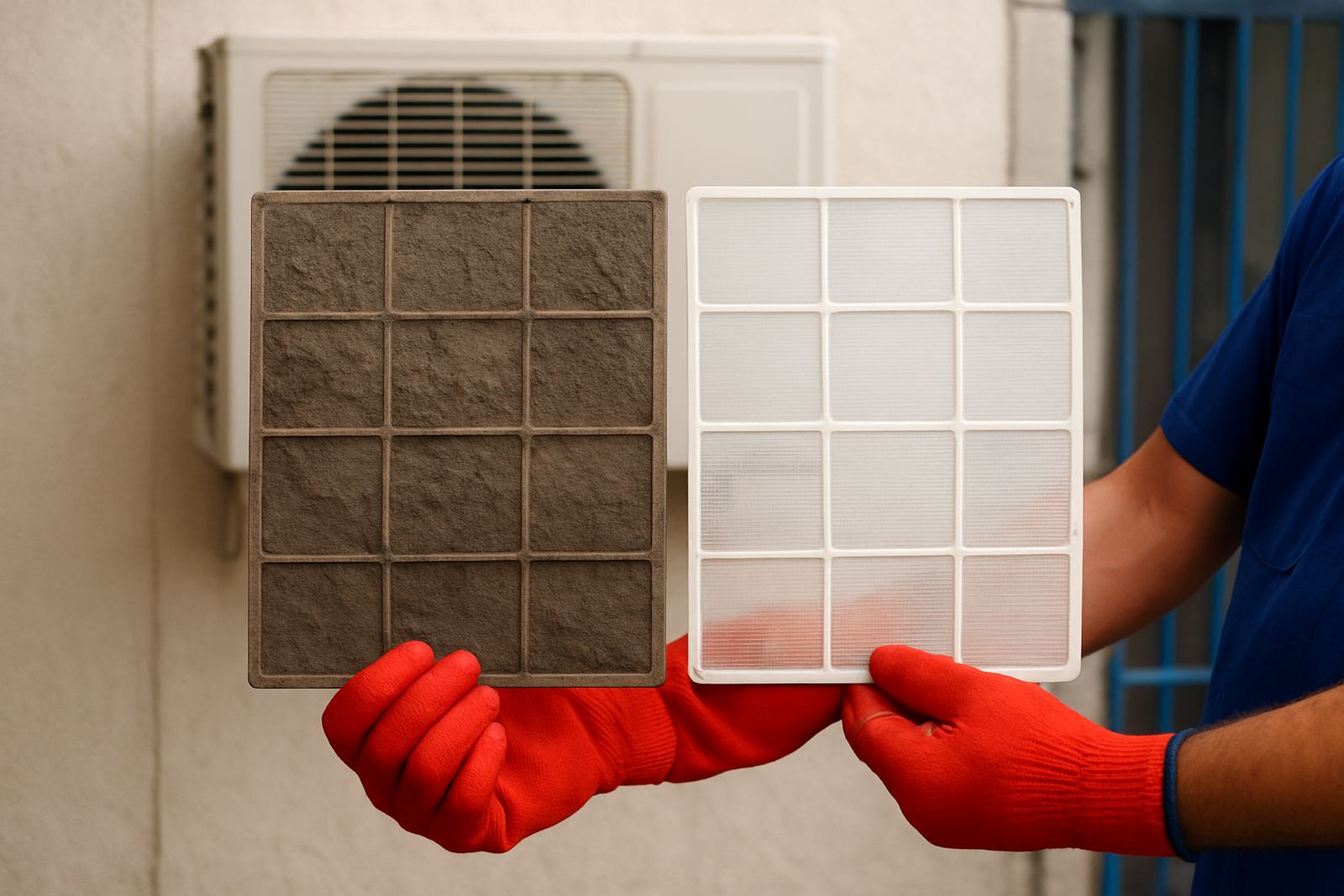
- Clean filters and the drain pan before the rainy season starts
If the aircon is on a balcony, under a tin roof, or next to a boundary wall, water may be channelled toward the unit in ways the original installer did not allow for. That is common in flats, shops, and older homes around Durban Central and West Durban. A small adjustment now can save a soaked ceiling later.
How poor outdoor placement causes rainy season trouble
Outdoor placement matters more than many people think. A condenser sitting in a low courtyard or against a wall can collect rainwater, dirt, leaves, and debris from nearby roofs. When the unit cannot breathe properly, performance drops and moisture lingers inside the casing. Over time that leads to rust, electrical issues, and repeated call-outs.
We often find units installed where the floor floods during a storm, or where the discharge from a gutter lands directly on the top grille. In coastal Durban, that wetting and drying cycle speeds up corrosion. If the unit is exposed to driving rain, shading, and drainage all need to be considered together, not one at a time.
For commercial sites in Clairwood and South Durban, the layout of loading bays and yard drains can also matter. A unit near a passage used by vehicles may get splashed with dirty water, which pushes silt into the coil and drain areas. That can lead to repeated blockages unless the placement is corrected.
When to call for fault finding instead of waiting
Some signs mean the problem is already beyond basic cleaning. If water is reaching the ceiling, dripping from the front panel, or causing a breaker to trip, the unit should be switched off and checked. Continued running can damage the board, fan motor, capacitors, and internal insulation. What starts as a leak can become a full breakdown.
It is worth arranging fault finding if you notice any of these during rainy weather:
- Water marks on the wall below the indoor unit
- Gurgling, hissing, or repeated gushing sounds after rain
- Foul damp smells when the unit starts
- Ice forming on the pipes followed by sudden dripping
- Breakers tripping after storms or high humidity
At that stage, a proper inspection should include drain testing, leak checks, electrical checks, and a look at the outdoor mounting position. That gives a clearer answer than guesswork, and it helps stop repeat failure when the next weather front comes through.
Keeping your aircon ready through the wet months
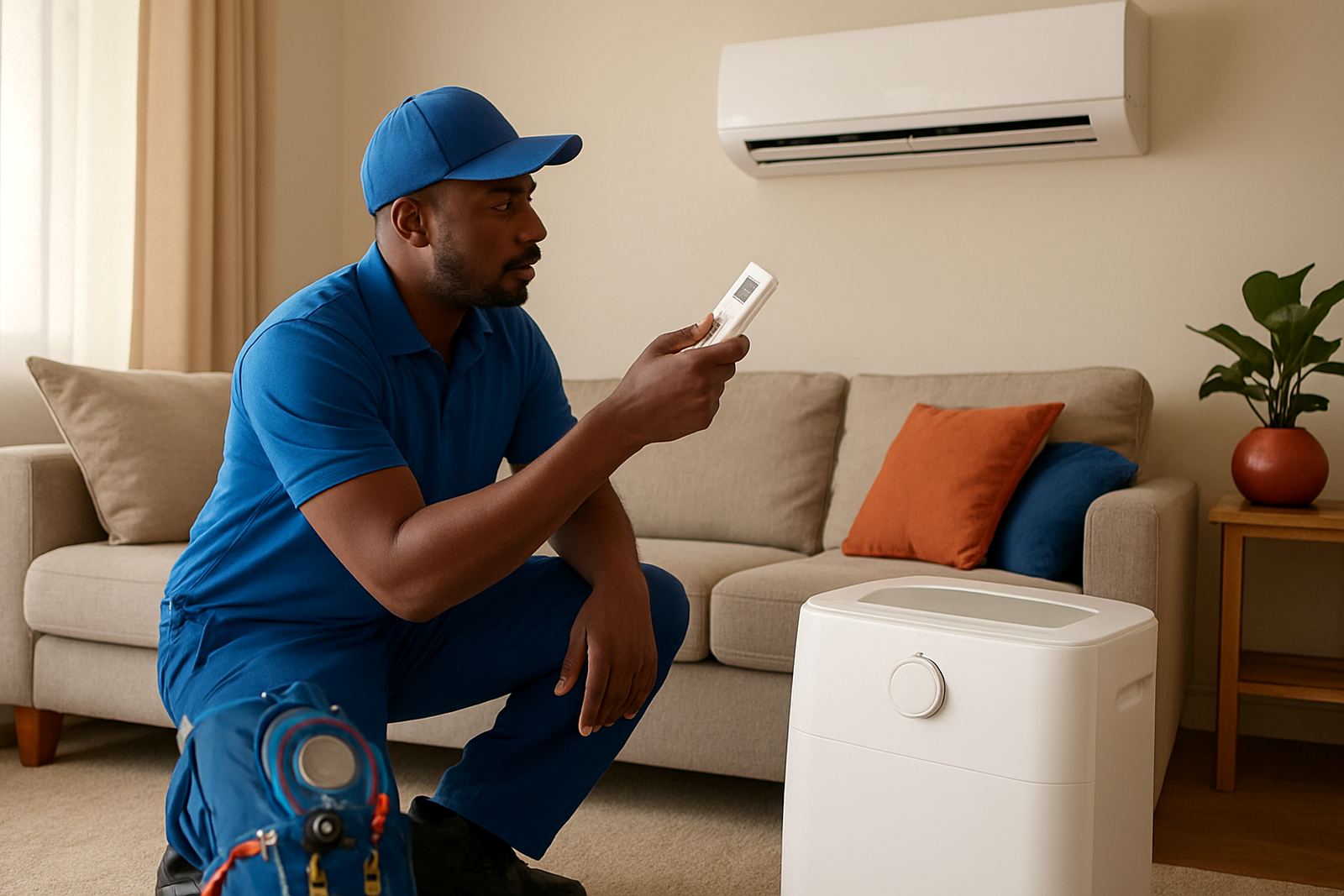
Rainy season preparation does not need to be complicated. A planned maintenance visit before the heaviest weather can clear drains, clean filters, test controls, and check for early corrosion. For homes and businesses in greater eThekwini, that is often the difference between normal operation and a wet patch over the couch or stock room.
Aircon Depot works across Clairwood, Durban Central, South Durban, North Durban and West Durban, with supply, installation, repairs, spares and gas support for domestic and commercial systems. From leak checks and regas work to compressor replacement, fan motor repair, drain blockages and breakdown call-outs, the aim is simple: keep the system safe, dry, and working when the weather turns.
If your unit only leaks when it rains, that is still a real fault. The sooner it is checked, the less chance there is of ceiling damage, electrical trouble, and avoidable downtime.
A local rule of thumb for rainy season
If a Durban aircon is dry in winter but leaks in the first proper storm, do not blame the rain alone. The system is telling you there is already a weak point, and weather has just found it.
That is why rain leaks should be handled as a maintenance matter, not a once-off clean-up. In this climate, water always finds the shortest path, and the shortest path is usually through the fault you can not see yet.