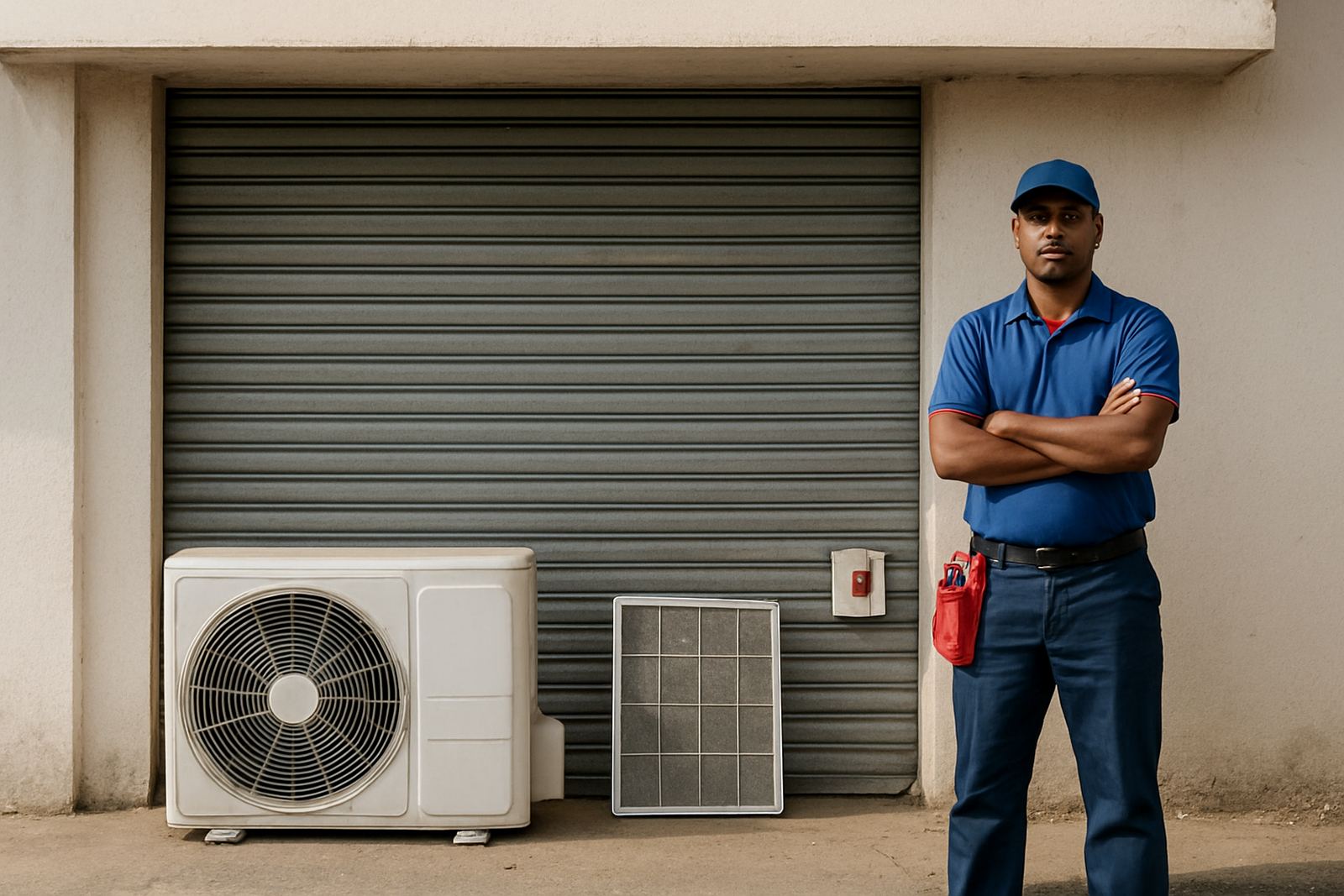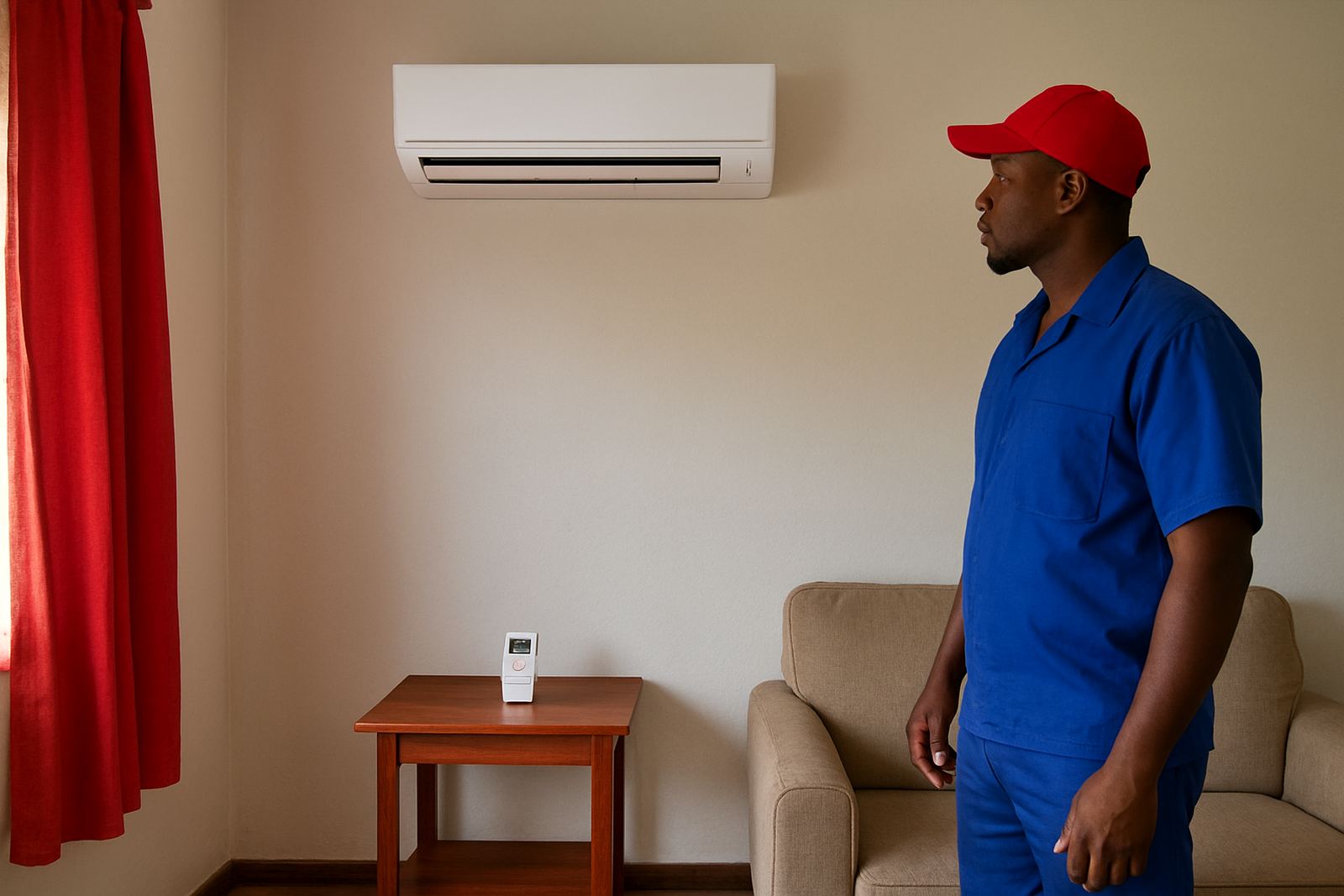
What a standard fixed-speed unit actually does
A standard fixed-speed split unit runs at one compressor speed. It starts, works hard, then stops once the set temperature is reached. After that, it starts again when the room warms up. That cycling is normal and it is the main difference between a basic unit and a variable-speed system.
For many homes in Clairwood, Durban Central and across eThekwini, that is enough. A bedroom, lounge or small office does not always need a complex setup. What matters more is correct sizing, a clean filter, sound piping and a tidy electrical connection. If those are right the unit can do daily work with little fuss.
People often expect an aircon to feel like a fridge. It will not. It works best when the room is closed, the doors are not opening every two minutes, and the unit is matched to the room size and sun exposure.
How it feels in daily use
In day to day use, a fixed-speed system gives steady comfort rather than fine control. You will hear the fan change as the compressor cycles. You may feel small temperature swings, especially in a larger room or one with west-facing windows. That is normal, not a fault.
In Durban humidity, a basic unit also has to pull moisture from the air. When the indoor coil is dirty or the drain line is blocked, the unit works harder and the room can feel sticky even if the temperature is low. That is why a deep clean is not only about appearance, it affects comfort too.
- Expect a short start-up sound each time the compressor kicks in.
- Expect slightly higher running costs than a variable-speed unit if it cycles often.
- Expect better results in a closed room with curtains, shade and clean filters.
- Expect less even temperature control in very large or badly insulated spaces.
What affects running cost in a Durban home
Running cost depends on more than the unit itself. A 9 000 BTU unit in a small bedroom will use far less power than a 24 000 BTU unit cooling a sun-baked living area. The wrong size can cost more than people think. Too small and it runs flat out. Too big and it short cycles, which is hard on parts and not always comfortable.
Load-shedding also changes the picture. After a power cut, some units restart cleanly, but older ones may trip if the voltage is unstable or the capacitor is weak. In areas with frequent power interruptions, we often find that damaged contactors and tired capacitors cause repeat call-outs. A proper check saves time and money.
In South Durban and coastal parts of eThekwini, salt in the air can also shorten the life of outdoor components. The fins corrode, fasteners seize and electrical terminals can oxidise. It is a small thing at first, then one day the unit starts making noise or loses performance.
The basic parts worth knowing before you call for help
You do not need to know every technical detail, but a few parts come up again and again. If one of these fails, the whole system can struggle.
- Filters: catch dust and must be cleaned often.
- Indoor fan motor: moves air through the room.
- Outdoor compressor: does the heavy lifting for cooling.
- Capacitors and contactors: help the unit start and switch safely.
- Drain line: removes water formed during cooling.
- Gas circuit: carries refrigerant through the system.
When a customer says the unit is blowing warm air, leaking water or making a clicking sound, one of these parts is often involved. We start with fault finding, then check whether it needs a simple repair, a regas and leak check, or a replacement part. Sometimes the issue is only a drain blockage. Other times the compressor is past its best and needs proper attention.
What maintenance keeps a simple system going
Fixed-speed units are fairly straightforward, but they still need regular care. Dust build-up, blocked drains and worn electrical parts are the usual causes of trouble. A planned maintenance visit is cheaper than waiting for a breakdown on a hot afternoon or during a long weekend.
For homes and small offices, a sensible routine is to clean filters every few weeks and book a proper service at least once a year. In busy spaces, near kitchens or in dusty streets, service may be needed more often. Coastal humidity and city pollution both make the job harder, so there is no one schedule for every property.
- Wash or vacuum filters before they clog.
- Keep the outdoor unit clear of weeds, sand and stored items.
- Check that the drain is flowing properly after heavy use.
- Watch for unusual noise, bad smell or water marks on the wall.
If the unit starts tripping the breaker, freezing up or cycling every few minutes, do not leave it running for days. That can turn a small fault into a compressor problem, and that is where repair costs jump quickly.
When repair makes sense and when replacement is wiser
Not every weak unit needs replacing. A fan motor repair, capacitor change, controls repair or drain clearing can bring a system back to life for a fair cost. If the unit is otherwise solid and the refrigerant system is sound, repair usually makes sense.
Replacement starts to make more sense when the compressor is failing, the coil is badly corroded, or the unit has repeated gas leaks and electrical faults. In older units, the parts may still be available but the cost of chasing one issue after another can exceed the value of the machine. That is when straight advice matters most.
For landlords and business owners in greater eThekwini, we also look at downtime. A shop in Durban Central or an office in North Durban may lose more from a hot room than from the repair bill itself. In those cases, a clear diagnosis and quick breakdown call-out matter more than guesswork.
At Aircon Depot in Clairwood, we handle supply, installation, repairs, spares and gas from one base, so the next step is easier to plan. Kavitha Naidoo and the team keep the focus on practical fixes that suit the building, the budget and the local conditions. No fancy talk, just the right unit or repair for the job.