Why pipe routing matters on every install
Copper pipe routing carries the refrigerant between the indoor and outdoor units, so the route needs to suit the building and the equipment, not just the quickest path for the installer. If the pipes are bent too sharply, left unsupported, or exposed to sun and salt air, the system can lose efficiency and the fittings can start giving trouble sooner than they should.
In Clairwood and across eThekwini, we often see pipe runs that were added after the fact, then clipped to walls with no thought for maintenance. A neat route means easier fault finding later, cleaner wall finishes, and less risk of damage from people, trolleys, weather, or rodents. It also keeps service access open when a technician needs to check joints, insulation, drains or electrical connections.
What a proper copper pipe route should include
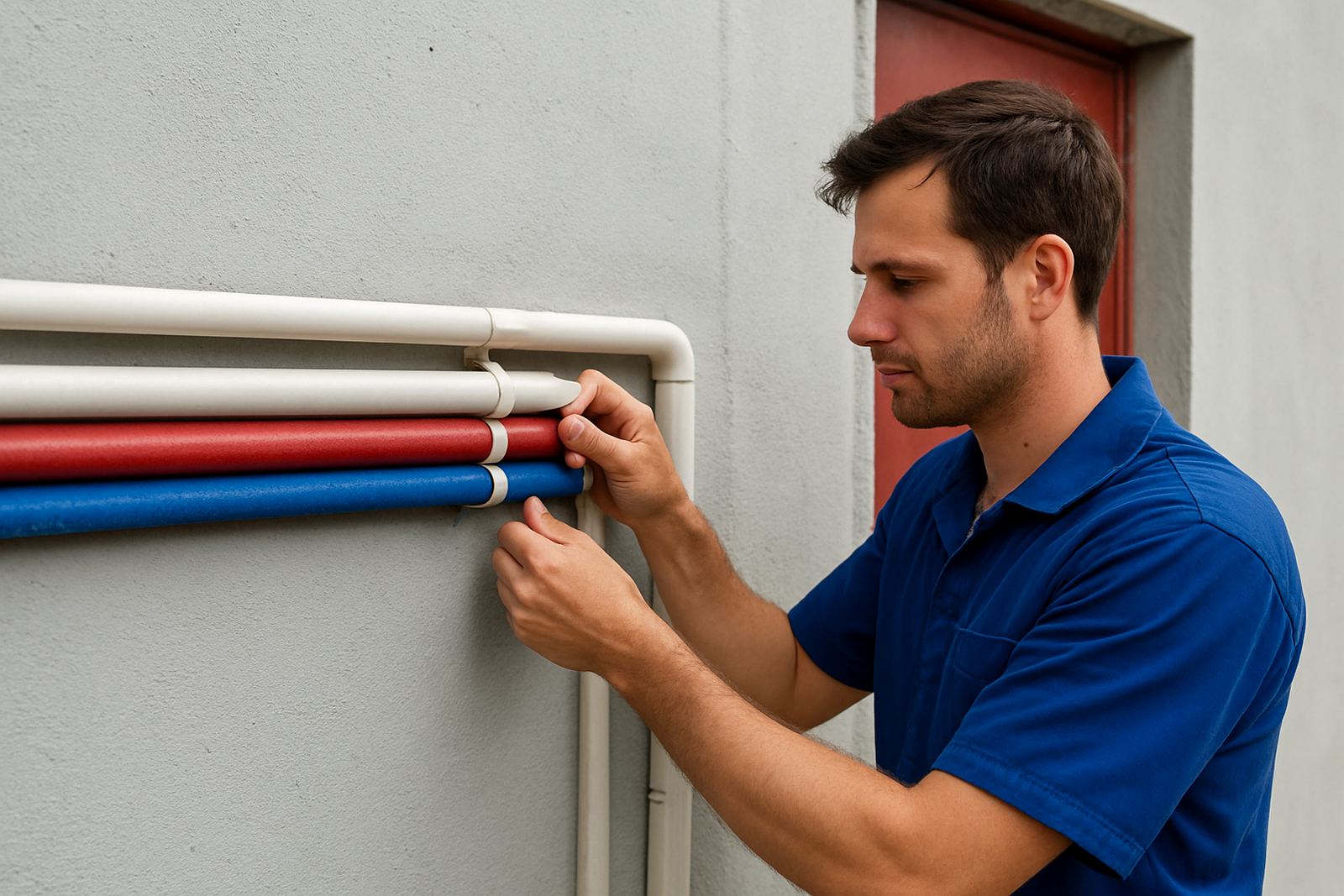
A good route follows the shortest practical line, but it must still allow gentle bends, proper support, and a safe path through walls or ceilings. The pipe should be sized correctly, insulated fully, and kept away from sharp edges and places where it can rub. Where pipes pass through masonry or steel, they need sleeves or protection so the copper does not wear through over time.
- Use smooth bends instead of tight kinks that restrict refrigerant flow.
- Support the pipe at suitable intervals so it does not sag or vibrate.
- Keep insulation continuous, especially in hot roof spaces and coastal air.
- Seal wall penetrations neatly to limit water ingress and insect entry.
- Separate pipework from live electrical cabling where possible.
In commercial sites, neat routing also helps with compliance and future maintenance. If pipework is buried behind ceilings or boxed in without access, even a simple leak check can take much longer and cost more.
Common routing mistakes we find in Durban buildings
Bad routing usually starts with a hurry job. Pipes get bent around corners too tightly, insulation is left open at the joints, or the route is chosen because it is easy to install rather than easy to maintain. In humid areas this can lead to sweating, staining on walls, and hidden corrosion around fixings.
We also find pipework left exposed to direct sun on south Durban sites, where the outdoor unit is mounted on a roof or against a boundary wall. Heat and UV weaken the insulation. On coastal properties, salt in the air can work into damaged protective wrapping and speed up wear, even if the pipes themselves are sound.
- Tight bends that pinch the copper and affect performance.
- Unsupported vertical runs that rattle during operation.
- Poorly wrapped joints that let moisture reach the pipe.
- Routes crossing sharp sheet metal edges without protection.
- Pipework hidden so tightly that no one can service it later.
How we route copper pipework for long-term reliability
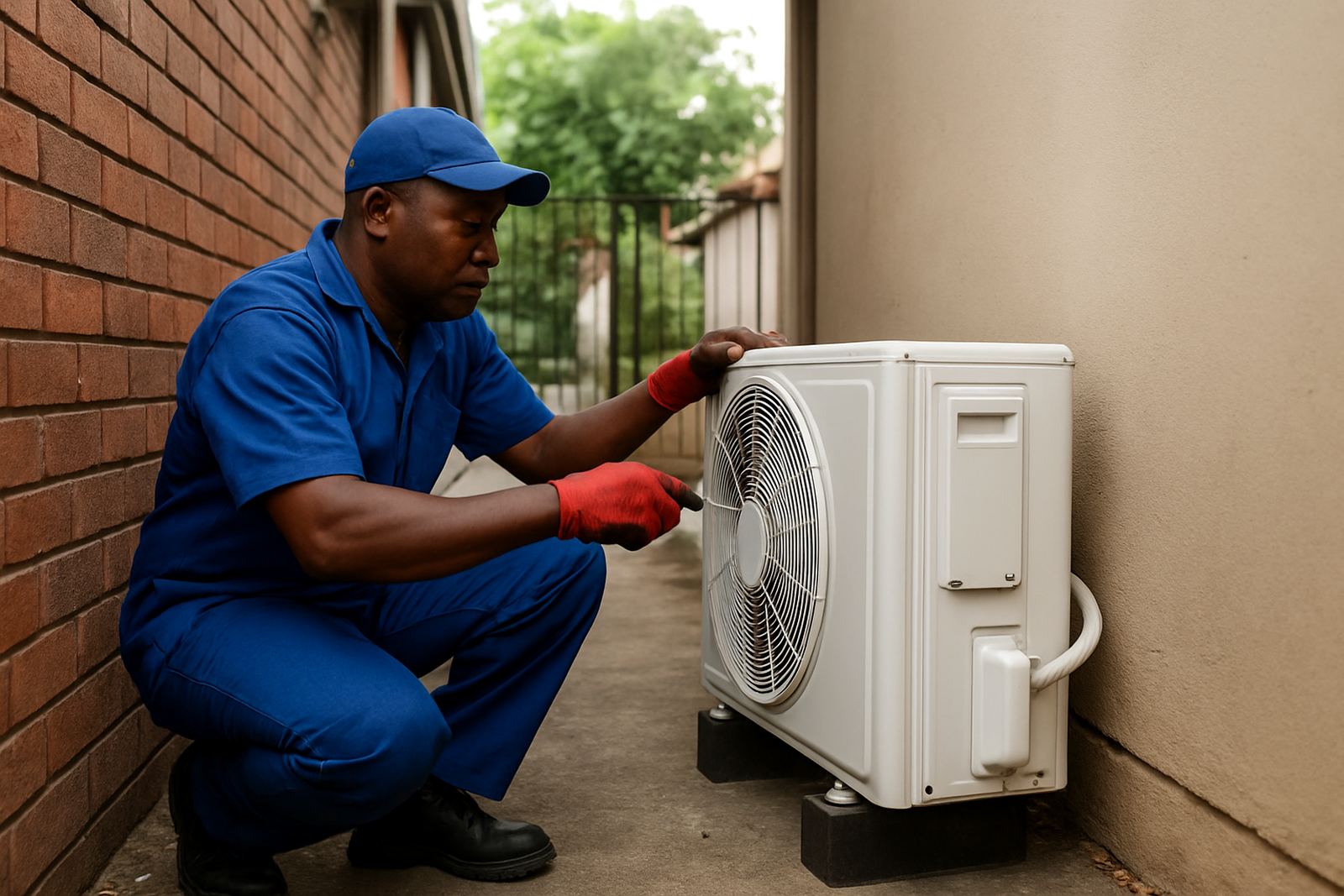
At Aircon Depot, we plan the route around the building layout, the unit size, and the real conditions on site. A small home in West Durban may need a simple route through a ceiling void and out to a balcony. A larger office or shop in Durban Central may need longer runs, better clipping, fire-safe penetrations and clear access for planned maintenance.
We check the fall on drain lines, the space available for pipe insulation, and where the outdoor unit sits relative to sun, rain and salt exposure. If the job needs trunking, conduit, wall chasing or protective covering, we fit it so the finished run stays tidy and serviceable. We also make sure the route is practical for later fault finding, gas checks, compressor replacement or a deep clean service. Thats where good planning pays off.
Our team in Clairwood handles domestic and commercial air-conditioning across greater eThekwini, so we know the difference between a clean-looking route and one that will hold up after a few summers and a few load-shedding cycles.
Local example: a restaurant line set in South Durban
We recently assisted a restaurant in South Durban where the indoor unit was cooling poorly and the wall behind it had started showing damp marks. The copper pipe had been routed through a cramped service area, then bent sharply behind a bulkhead. The insulation was split, the pipe was rubbing on metal, and the drain line had been tied in with no proper access. Not ideal at all.
We rerouted the line set with a cleaner path, protected the copper through the wall, renewed the insulation, and made the joins accessible for future checks. The result was not just a neater finish. The unit became easier to service, the wall no longer sweated, and the client had fewer worries during busy trading hours when the system was working hard.
- Better airflow around the indoor unit.
- Less vibration and pipe noise.
- Cleaner maintenance access for technicians.
- Reduced risk of repeat water damage.
When to inspect or reroute existing pipework
If an air-conditioner is leaking, losing gas, making unusual noises, or struggling in the heat, the pipe route should be checked as part of the fault finding. Sometimes the problem is not the machine itself, but the way the pipework was installed years ago. A loose clip, a damaged insulated section, or a hidden kink can cause ongoing trouble.
You should also inspect pipework after building alterations, ceiling repairs, roof leaks, or new partitions. In shops, offices and flats around Durban Central and North Durban, we often see old lines disturbed during renovations. Once a pipe is pinched or bent too far, it may work for a while and then fail later when the system is under load.
Where pipework is badly exposed, corroded or impossible to service, rerouting may be the smarter option. It can save money over repeated repairs and help the system last longer in a coastal climate.
Practical finish that supports the whole system
Copper pipe routing may seem like a small part of an air-conditioning job, but it affects appearance, performance and maintenance for years to come. A well-planned run protects the pipe, supports the refrigerant circuit, and makes future work quicker and cleaner. That matters in homes, rental units, shops and bigger commercial sites alike.
If you need help with new pipe routing, pipe repairs, regas and leak checks, or a full breakdown call-out in Clairwood, Durban or the wider eThekwini area, Aircon Depot can assist. We work from our base in Clairwood and handle installations, spares, gas and repairs with practical site experience, not guesswork.
- Neat routing improves the look of the installation.
- Protected pipework lasts longer in humid and coastal conditions.
- Accessible runs make servicing quicker and more affordable.
- Good planning reduces avoidable call-backs.