What low gas usually looks like in a working unit
Most people notice a change in comfort before they notice the fault. The room takes longer to cool, the air from the vents feels less cold, and the unit may run almost non stop without reaching the set temperature. On a mild day this can be easy to ignore, but in Clairwood, Durban Central or South Durban, a weak system is hard to miss once the afternoon heat sets in.
Low refrigerant does not always mean the gas simply disappeared. In most cases there is a leak somewhere in the pipework, coil, flare joints or service valves. That is why a regas on its own is only part of the fix. The leak has to be found and sorted too, otherwise the problem comes back and the compressor keeps working harder than it should.
If the unit is older, has had recent vibration, or sits near salty coastal air, the chance of a leak can be higher. We see this often in homes and small shops around greater eThekwini where units run most days and take a lot of punishment from weather, dust and power interruptions.
Clear signs you should not ignore
A refrigerant issue often shows up through a few common warning signs. Some are obvious, others are easy to dismiss until the system stops cooling properly.
- Warm or only slightly cool air from the vents while the unit is running
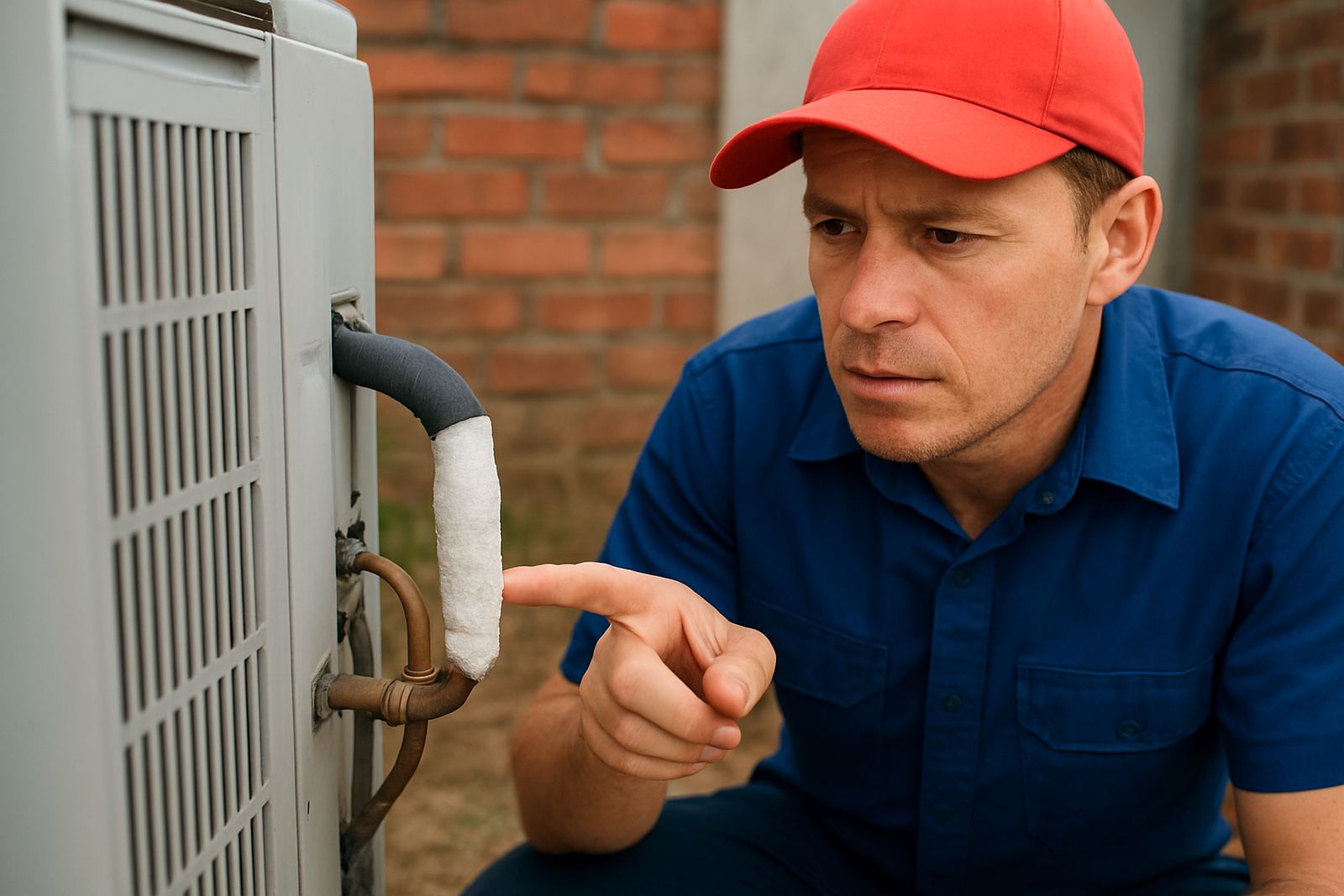
- Ice forming on the indoor coil or on the smaller copper pipe outside
- Water dripping indoors because the coil is freezing and thawing
- Long running times with poor temperature drop in the room
- Hissing, bubbling or faint gas like sounds near the pipework
- Higher than normal electricity use because the unit is working longer
One sign does not confirm a low gas problem on its own. A dirty filter, blocked drain, faulty fan motor or capacitor can create similar symptoms. That is why proper fault finding matters. A good technician will check pressures, airflow, electrics and the overall condition of the system before recommending a regas or repair.
Why icing is such a useful clue
Icing is one of the most telling signs that something is wrong with refrigerant flow or airflow. If the indoor coil drops too cold, moisture in the air freezes on the coil and starts building up as frost. You may first notice reduced airflow, then white ice on the evaporator, and later water leaking from the casing once the ice starts melting.
This is common in homes where filters have not been cleaned for months, but it can also happen when gas levels are low. In either case, switching the unit off and getting it checked is the safer option. Leaving it to run while iced up can strain the compressor and damage other parts. In some units the drain line clogs as well, so the fault becomes a mix of low gas, blocked drainage and poor airflow.
In humid Durban weather, icing can happen quickly. A family in West Durban might think the unit is just “struggling with the heat”, but in reality the system could be losing refrigerant and wasting power every hour it runs.
What our technicians check before a regas
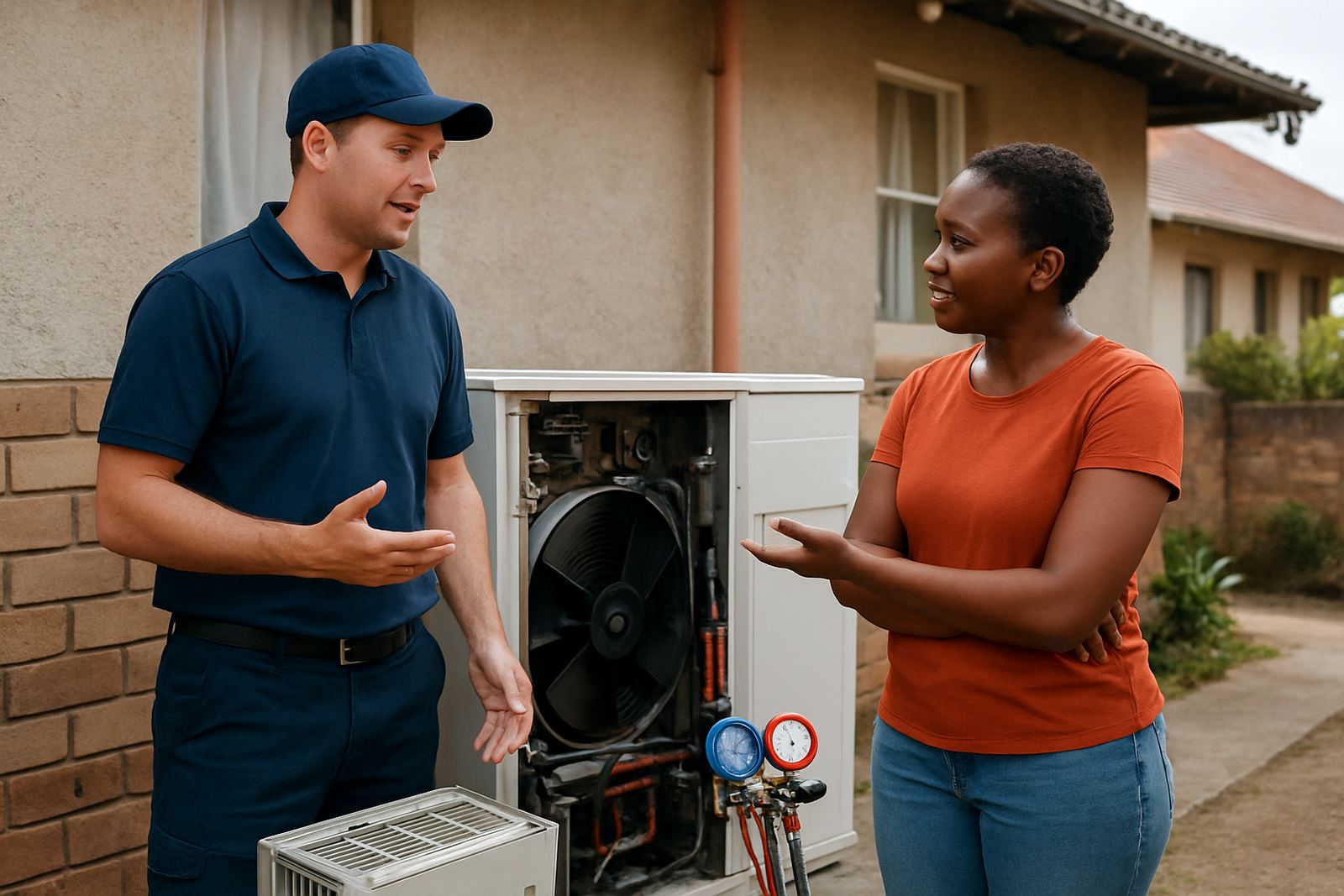
Before any gas is added, the system needs a proper inspection. That includes leak checking, pressure testing, and checking whether the compressor, fans and controls are working as they should. If the unit has a leak, the source must be repaired first. If the fault is electrical, the answer may be a capacitor or contactor replacement instead of refrigerant work.
- Leak check on joints, valves and coils
- Pressure readings matched to the system type
- Indoor and outdoor fan operation
- Drain line condition and signs of blockage
- Compressor load and running current
At Aircon Depot in Clairwood, we handle regas and leak checks alongside general fault finding, compressor replacement, fan motor repair, drain blockages and controls repair. That matters because low gas is often part of a wider fault, not a one issue job.
A Durban example: when a small leak became a bigger problem
We recently dealt with a small office unit in Durban Central that had been cooling poorly for weeks. The staff kept lowering the thermostat, which only made the unit run longer. By the time they called, the indoor coil was icing and the boardroom was still warm by midday.
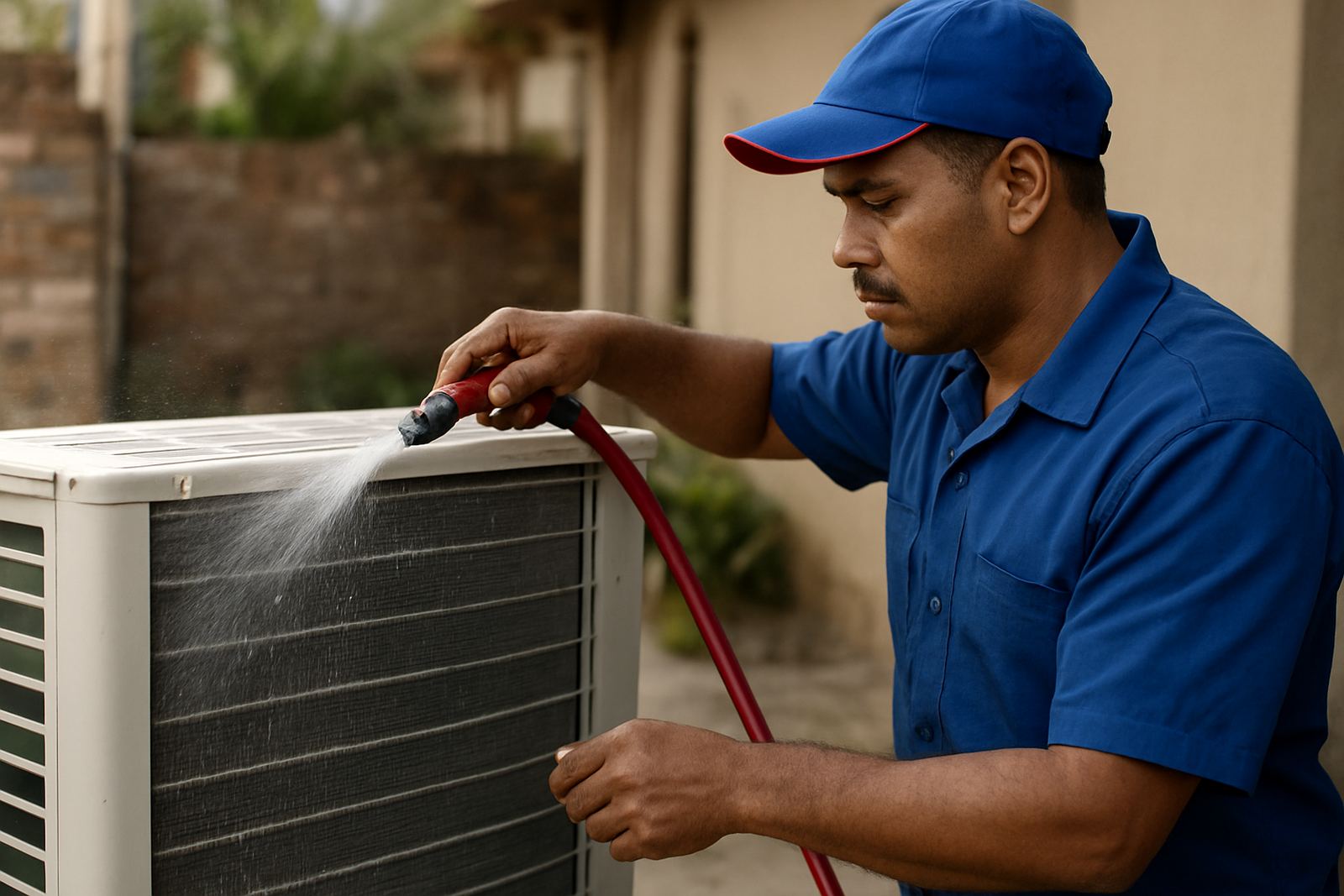
On inspection, the system had a slow refrigerant leak at a joint and a blocked drain line as well. The leak had likely been there for some time, but the symptoms were masked by the unit still “working” in the mornings. After leak repair, a proper regas, drain clearing and a deep clean service, the unit went back to normal. The client also started a planned maintenance schedule so the same issue would not build up again.
That kind of example is common across eThekwini. Units near the coast, in older buildings, or in busy shops and offices are under constant use. Waiting until total failure usually costs more than dealing with the first signs early.
When to call for help and what to do first
If your aircon is no longer cooling properly, do not keep forcing it to run for hours. Turn it off if you see ice, smell something unusual, or hear new noises from the outdoor unit. Check the air filter, make sure the outdoor unit is not blocked, and confirm that the power supply has not tripped. After load shedding, some systems also need a reset before they settle, so a simple restart is not always a fix.
Call for help when the issue repeats, especially if the unit cools badly on hot afternoons, throws water indoors, or the compressor keeps starting and stopping. Low gas can affect domestic split systems, shop units and light commercial equipment alike. The sooner it is checked, the better the chance of saving the compressor and avoiding repeat call-outs.
For service in Clairwood, Durban Central, South Durban, North Durban, West Durban and greater eThekwini, Aircon Depot can help with breakdown call-outs, spares and gas, and practical repairs that get the system back into proper working order.