What a return air filter does in daily use
The return air filter sits on the return side of an air-conditioning system and catches dust before it reaches the indoor coil and fan. In homes, offices, shops and light industrial spaces, that matters because a cleaner coil is easier to cool, cleaner air moves better through the system, and the unit does not need to strain as much to pull air back in.
In Durban conditions, this is especially useful. Coastal humidity, fine dust from open doors, and general daily traffic can load a filter quicker than people expect. When a filter is left too long, airflow drops, the indoor unit can frost up, and the room may take longer to pull down to temperature. A clogged filter also makes the system noisier and can push up power use during long running hours.
Return air filters are used as replaceable filter elements in systems that need regular cleaning or change-out. Some are fitted in a grille, some in a filter frame, and some in an access panel behind the return opening. The main job stays the same: protect the equipment and keep the air path open enough for proper operation.
Sizes and filter types we can supply
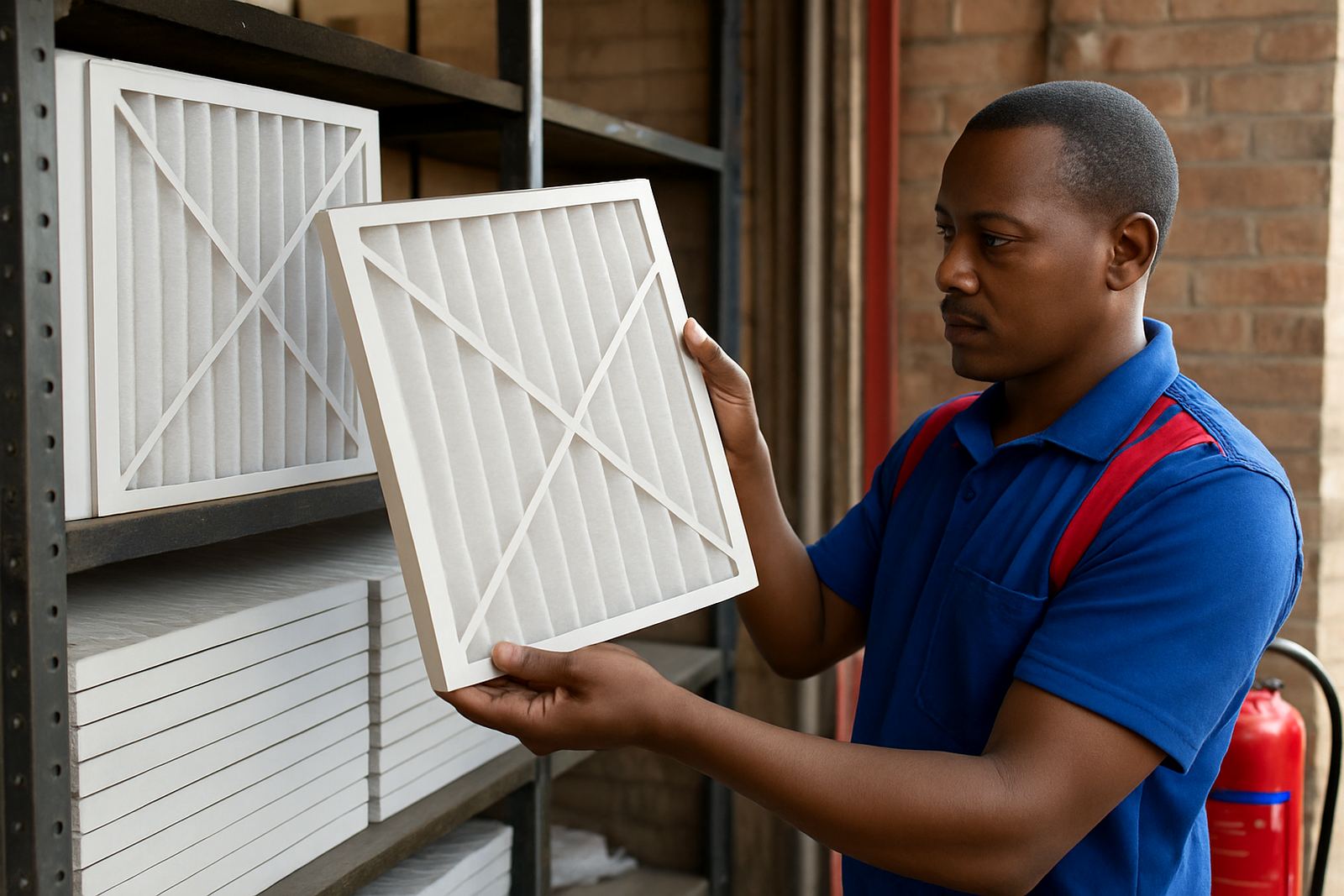
Return air filters are not one-size-fits-all. We supply replacement elements in common rectangular and square sizes, with options for different frame depths and media grades. The correct fit depends on the return grille or filter rack opening, the airflow needed by the unit, and how much dust the space normally carries.
Typical replacement options include washable synthetic mesh filters, pleated disposable filters, and higher dust-holding media for busier commercial spaces. Some systems need a simple coarse filter that can be cleaned often. Others do better with a finer pleated element, especially where the air-conditioning runs for long hours or where the room has more lint, paper dust or airborne dirt.
- Standard sizes for domestic split systems and small offices
- Larger panel filters for ceiling returns and ducted systems
- Custom cut sizes for non-standard openings
- Different frame thicknesses where the filter slot is shallow or deep
- Options for washable or replace-and-dispose use
If you are matching an old filter, it helps to measure the actual opening and not only the old frame. A worn filter can shrink, bow or split at the corners, so we always advise checking both the visible size and the seat inside the grille or holder. That little check avoids repeat trips and poor airflow later.
Where a return air filter suits best
This product suits a wide range of domestic and commercial air-conditioning setups across Clairwood, Durban Central, South Durban, North Durban, West Durban and the greater eThekwini area. It is commonly used in homes with ducted cooling, small offices, retail spaces, clinics, churches, boardrooms and back-of-house areas where a return air path is part of the system design.
It is also useful in spaces that run air-conditioning every day and cannot afford repeated breakdowns from blocked airflow. In coastal suburbs, filter maintenance matters even more because salt in the air and general moisture can stick dust to the media quicker than in drier inland areas. In warehouses and workshop areas, the return filter can help keep larger debris out of the indoor section, but it still needs checking often if doors stay open during the day.
Not every unit uses the same filter arrangement. Some ducted systems need a return air filter fitted at the intake point, while certain packaged or custom installations may use multiple filters across a wider opening. Our team can confirm whether the unit needs one panel, a pair of matching panels, or a deeper frame arrangement for better coverage.
Fitment, airflow and power requirements
A return air filter is not a powered component on its own, but it has a direct effect on how much power the air-conditioning system uses. If the filter is too restrictive or blocked with dust, the fan works harder and the unit may draw more current over time. That can shorten component life, especially where systems run through load-shedding recovery periods or long summer afternoons.
Before ordering or replacing a filter, check that the indoor unit is isolated and safe to work on. The filter itself does not need gas charging, but a poor fit can look like a refrigeration fault because the symptoms overlap: weak cooling, reduced airflow and uneven room temperatures. If a system keeps tripping, is icing up or has a burnt smell, the filter should be checked along with the fan motor, capacitors and controls.
- Measure the visible opening and the frame seat
- Check filter direction if the media has an airflow arrow
- Confirm the frame depth so the panel sits properly
- Look for clips, rails or screws used to hold the filter in place
- Match the filter to the system type, not just the old part
On larger commercial systems, we also look at access space and service clearances. A filter that is difficult to remove will often be left too long, and that leads to repeat call-outs. Making the fit practical helps the equipment stay serviceable, which saves time for the building and for the technician.
Care, cleaning and when to replace it
How often a return air filter needs attention depends on the space. In a home, monthly checks are usually enough, with cleaning or replacement every few months. In offices, shops, salons, restaurants and busy Durban premises, checks may need to happen every 2 to 4 weeks. If the area has pets, road dust, high foot traffic or salty coastal air, the filter can load faster.
A washable filter should be cleaned with care so the mesh does not tear or deform. A disposable filter should be replaced before the media becomes grey, saggy or caked with dust. Once a filter starts collapsing, it no longer seals or performs properly. It is better to change it early than to let the indoor coil collect dirt, because coil cleaning costs more and takes the unit out of service for longer.
Signs that the filter needs attention include reduced air from the supply vents, more noise from the indoor unit, dust returning quickly after cleaning, and a room that feels colder near the unit but not across the space. In some cases, people think the gas is low when the actual issue is a blocked return. That is why proper servicing should include both the filter and the rest of the air path.
What to check when ordering a replacement
To avoid delays, have the following details ready when ordering a return air filter from Aircon Depot in Clairwood, Durban. The more exact the information, the easier it is to supply the right replacement element for your system.
- Overall length and width of the filter or opening
- Frame depth or thickness in millimetres
- Whether the filter is washable or disposable
- Type of unit and where the filter sits in the system
- Any visible clips, rails, slots or screw positions
- Whether the space is domestic, commercial or light industrial
If you are not sure, send a photo of the old filter and the opening it came from. A clear photo helps us check the shape, the direction of fit and any special edge detail. We can also advise if the existing filter should be replaced with the same style or if a different grade would work better for the space.
Aircon Depot supplies and fits return air filters alongside broader servicing support, including fault finding, planned maintenance, deep cleaning, breakdown call-out and compressor related repairs. For Durban properties, that means one practical point of contact for the filter, the unit and the ongoing upkeep. Small item, big effect, especially when the weather turns hot and the system has to keep going every day.
Key facts
| Product type | Replacement return air filter element |
|---|---|
| Use | Supports airflow and helps keep dust out of the indoor unit |
| Common sizes | Standard rectangular and square sizes, plus custom cut options |
| Material options | Washable synthetic mesh or pleated disposable media |
| Fitment | Return grille, filter frame, ducted return or access panel |
| Area served | Clairwood, Durban and greater eThekwini |