What a ducted aircon system does in a Durban property
A ducted system places the main indoor unit above the ceiling, in a roof space or in a service area, then moves cooled air through insulated ducting to the rooms that need it. You get one central system for multiple areas, with zoning possible on some setups so you can cool bedrooms at night and the lounge or office during the day.
In Durban and the coastal suburbs, this layout works well where salt air, humidity and regular summer heat make a single wall unit in each room impractical. It also suits homes with clean interior lines, medical suites, boardrooms, lodges and retail spaces that need a tidy finish without visible equipment on every wall.
We supply, install and repair ducted aircon systems for Clairwood, Durban Central, South Durban, North Durban, West Durban and the greater eThekwini area. Our team looks at ceiling space, access for servicing, drain routing and the electrical supply before recommending a system, because a ducted setup needs proper planning from the start.
Sizes, capacities and common configuration options
Ducted systems are selected by cooling load, not by room count alone. A small flat may need about 12,000 to 18,000 BTU, a family home often lands between 24,000 and 36,000 BTU, while larger homes, offices and commercial interiors may need 48,000 BTU and above. The right size depends on glass area, ceiling height, insulation, orientation and how many people use the space.
Common options include single-zone systems for one open area, multi-zone systems with motorised dampers, and constant-airflow layouts for simpler buildings. You can choose side discharge or top discharge outdoor units depending on the available yard or roof space, and in many installs the indoor unit is matched with linear, slot or round ceiling grilles depending on the finish you want.
- Cooling capacity matched to the floor area and heat gain
- Short or long duct runs, depending on ceiling layout
- Single-zone or zoned control for separate rooms
- Standard or higher static pressure fans for longer duct runs
- Ceiling grilles sized for airflow and appearance
If a quote is based on only the square metres, be careful. Two rooms of the same size can need very different systems if one faces afternoon sun and the other is shaded. We check the full picture before recommending equipment, so the system is not overworked or underpowered.
Where ducted cooling works best
Ducted aircon is a strong choice for properties where appearance matters and airflow must be even across more than one room. In homes, it suits open-plan lounges, passageways, bedrooms off one corridor, and upper floors that heat up quickly in summer. In offices, it helps maintain a steady temperature across work areas, reception, meeting rooms and private offices without lots of separate units running all day.
It is also useful in larger interiors such as guest houses, churches, salons, medical rooms, schools, and retail spaces with customers moving from one area to the next. If the building already has a ceiling void or roof space, installation is usually simpler. If the structure is tight, we assess whether boxed-in bulkheads or compact ducting will be needed to make the job practical.
For coastal properties, we also consider corrosion risk and drainage. Durban humidity means condensate removal must be done properly and electrical components need a clean, dry mounting position. If a system is installed in a poor position, the first sign is often water marks, rust at fixings or reduced airflow from dusty ducts.
Installation, power supply and gas requirements
A ducted system needs correct refrigerant charging, a sound electrical supply and enough space for the indoor unit, ducts and return air path. Most installations need a dedicated isolator, correctly sized circuit protection and cable run planning that complies with site requirements. On larger homes and commercial sites, load-shedding backup planning can be important too, especially where the aircon must restart cleanly after power cuts.
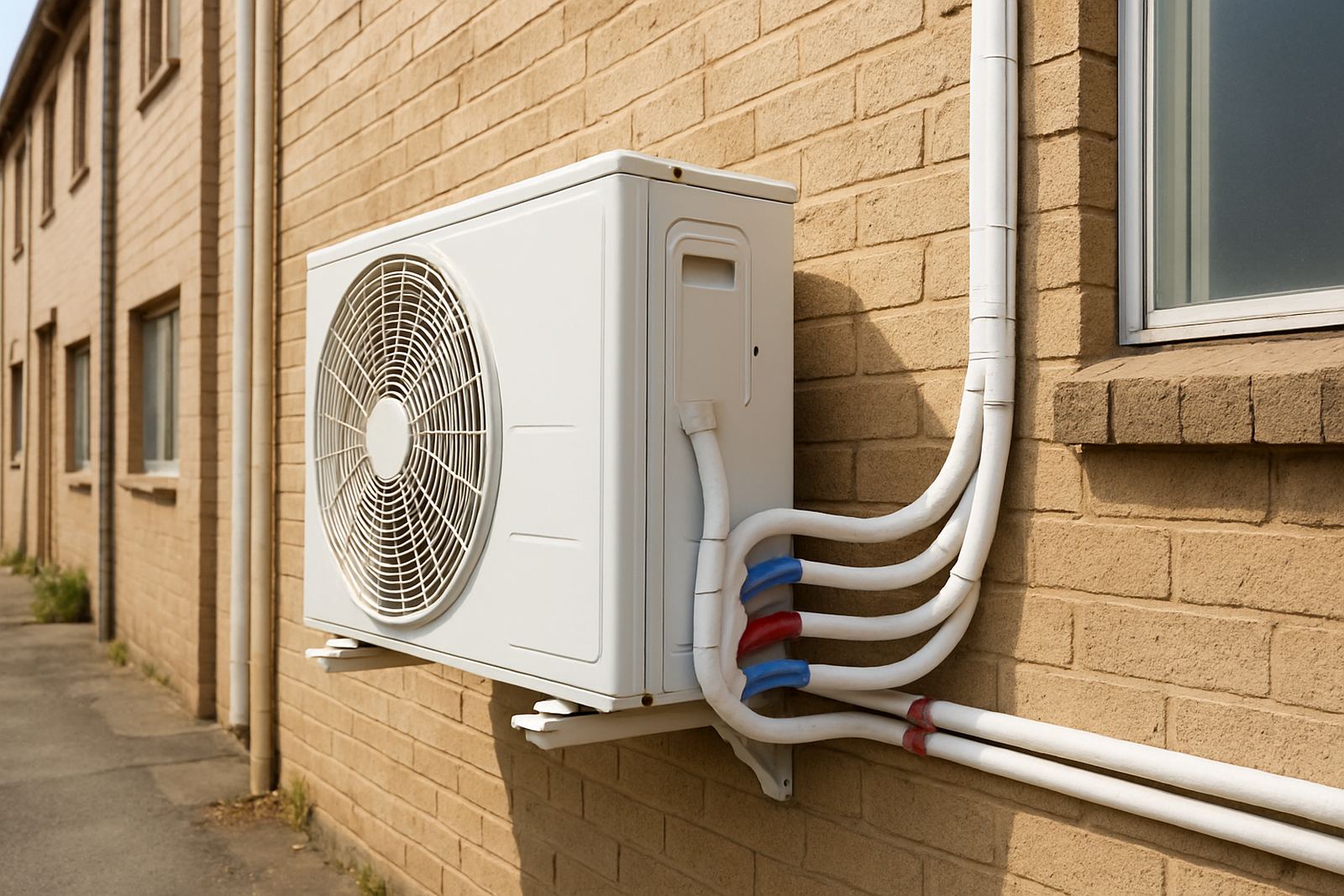
We check where the outdoor unit will sit, how the refrigerant pipes will run, and where the drain will discharge so it does not drip onto paving, walls or a neighbour’s property. The refrigerant charge is set to manufacturer specification after pressure testing and vacuuming, because trapped moisture or low gas levels can damage the compressor over time.
Good installation also means enough access for future service work. If the filter, fan coil, drain pan or access panel is hidden too tightly, routine cleaning becomes difficult and the unit usually suffers later. A neat install is not enough if the system cannot be maintained.
- Dedicated electrical supply and isolator
- Pressure test and vacuum before gas charging
- Insulated refrigerant piping and ducting
- Condensate drain with proper fall
- Access for filter cleaning and servicing
Care, servicing and common repair needs
Like any air-conditioning system, a ducted unit works best when filters are kept clean and the ducting is checked regularly. In Durban’s heat and humidity, dust builds up quickly, and if the return air filter is neglected the system starts to lose airflow. That leads to longer running time, poor cooling and extra wear on the fan motor and compressor.
We handle fault finding, regas and leak checks, compressor replacement, fan motor repair, capacitors and contactors, drain blockages, deep clean service, planned maintenance, controls repair and breakdown call-out. If a unit is tripping, icing up, blowing warm air or making unusual noise, the issue may be as simple as a blocked drain or as serious as a refrigerant leak. It is worth checking early, rather than waiting until the unit stops completely.
For commercial properties, a planned maintenance schedule is usually the best approach. It keeps the ducts cleaner, the coils clearer and the controls reliable. It also helps reduce after-hours callouts, which can be expensive when a shop, office or guest facility cannot cool properly during business times.
What to check before you order a ducted aircon system
Before you order, it helps to confirm the usable ceiling height, roof access, wall positions, power supply and the number of areas you want cooled. Also check whether there is a place for the outdoor unit that allows enough airflow and service access. If the building has noise limits, shared walls or body corporate rules, those should be considered before installation day.
You should also think about how the system will be used. A home that only needs night cooling will have different controls from a business that runs long hours. If you want zoning, ask for it at the quotation stage, because adding dampers and extra controls later can change the layout and cost. It is also wise to ask how the filters will be reached, who will clean them and whether the duct run can be inspected in future.
- Ceiling void depth and access hatch position
- Electrical capacity and backup plan for outages
- Number of rooms or zones to be cooled
- Outdoor unit position and drain route
- Service access for filters, coils and fan parts
If you are unsure what size or layout suits your property, we can inspect the site and advise on the most practical option for Durban conditions. The right ducted system should cool evenly, stay quiet, and remain easy to service for years.
Key facts
| Product type | Concealed ducted air-conditioning system |
|---|---|
| Typical capacity range | 12,000 BTU to 48,000 BTU and above, depending on load |
| Installation style | Ceiling void, roof space or service area mounted indoor unit |
| Air distribution | Insulated ducting with ceiling grilles or diffusers |
| Control options | Manual, remote, wall control or zoned control |
| Service needs | Filter cleaning, drain checks, gas checks and annual maintenance |