What a condensate drain pump does in an aircon system
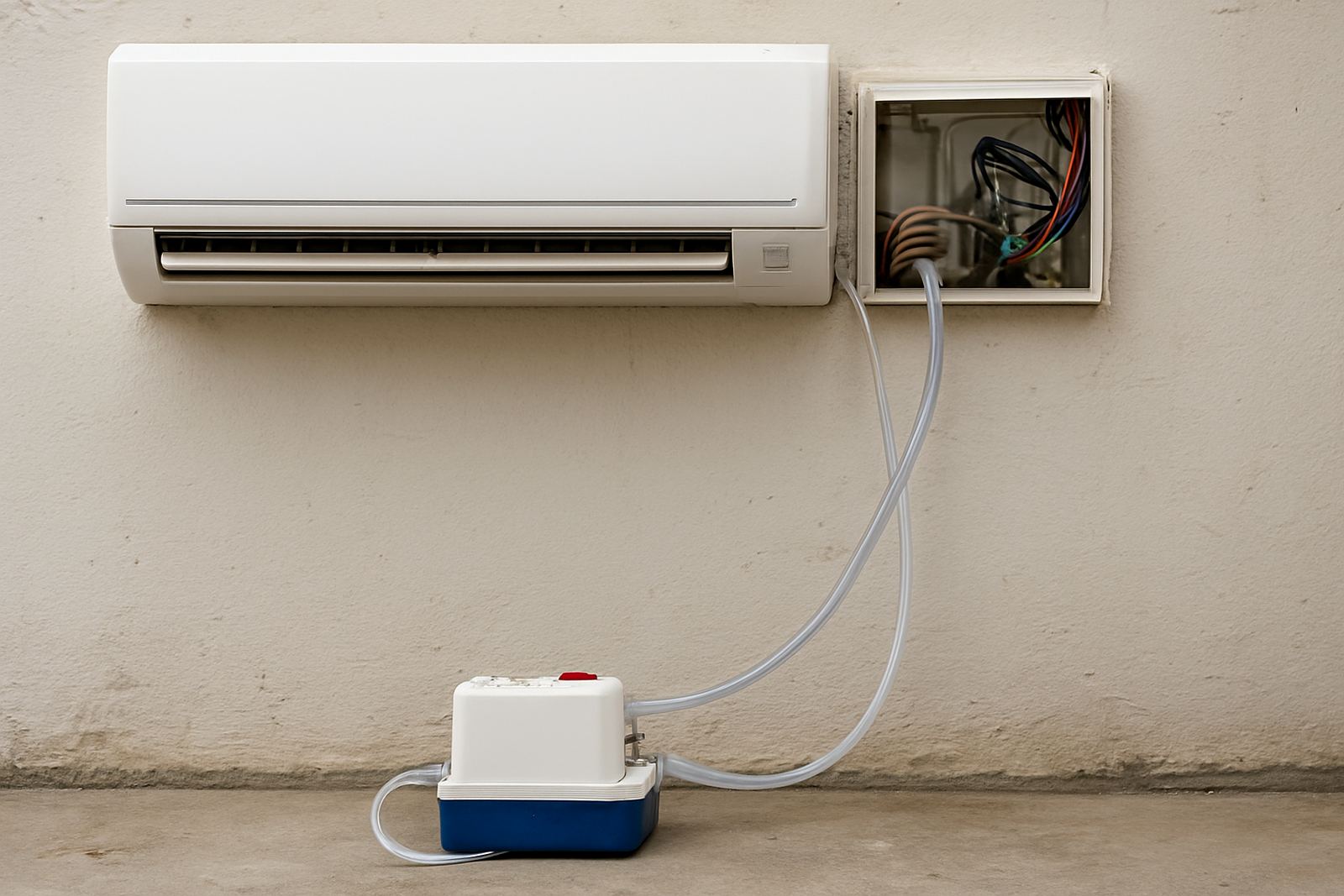
A condensate drain pump is a small pump fitted to an indoor unit or nearby drain tray so the water formed during cooling can be lifted to a suitable drain point. Air-conditioning naturally pulls moisture from the air, and in humid Durban conditions that water can build up quickly. When the drain line cannot run downwards all the way, a pump takes over and carries the condensate away.
These pumps are commonly used with split units, cassette units and concealed ducted systems where the indoor unit is above a ceiling, inside a bulkhead, or on a wall with no direct fall to the outside. Without a proper drain solution you can get dripping, staining, mould growth and water damage to ceilings and walls.
A correctly selected pump is quiet, compact and built to switch on only when the collection tray reaches a set level. That means it does its job in the background with very little attention, which is why it is often the practical answer on retrofit jobs and tenant upgrades.
Pump types, sizes and typical discharge heights
Condensate pumps are not one-size-fits-all. The right option depends on the amount of water your unit produces, where the drain must travel and how much room is available near the indoor unit. We supply and fit pump options for domestic and light commercial use, including compact mini pumps and larger reservoir style units for more demanding runs.
Typical selection points include the lift height, noise level, tank size and the diameter of the discharge pipe. As a guide, many compact pumps handle lift heights around 8 m to 10 m, while some heavier duty units can reach higher subject to the pipe run and water volume. Flow rates usually range from about 10 litres per hour on small systems to 30 litres per hour or more on larger indoor units, but the correct choice depends on the exact load. Sizing must be done properly or the pump can short cycle, run too often, or overflow in peak humidity.
- Mini pumps for wall-mounted units with limited space
- Tank pumps for concealed or cassette installations
- Inline pumps for neat fitment near the drain route
- Alarm and safety cut-out options on selected units
Where it suits best in Durban homes and businesses
In Clairwood, Durban Central, South Durban and the wider eThekwini area, a condensate drain pump is often the answer in older buildings, upper-floor offices and converted rooms where the drain point sits above the indoor unit. It also suits coastal properties where external drain routes are awkward, or where the installation needs to stay neat inside a ceiling void. On some sites there is simply no legal or practical way to route a gravity drain without damaging finishes, and a pump keeps the job tidy.
Common uses include bedrooms, boardrooms, retail shops, salons, restaurants, container offices and small factories. It is especially useful where the indoor unit is far from an external wall, or where the only drain route would run against the natural fall. In load shedding prone areas, many clients also ask for systems that restart cleanly after power returns, so a reliable pump selection matters as much as the aircon unit itself.
- Homes with high ceilings or bulkheads
- Offices with concealed ducting
- Shops and salons with no easy drain fall
- Rental units where water damage must be avoided
Installation details, power supply and drain routing
A condensate pump needs to be installed level, accessible for servicing and connected to a suitable discharge line. The inlet from the indoor unit must allow water to enter freely, and the outlet pipe needs a clean route to a drain point or approved disposal point. On many jobs we also add a non-return arrangement where needed so water does not run back into the tray.
Most pumps are powered from a standard electrical supply linked to the air-conditioning circuit or a nearby isolator, depending on the system layout. The exact voltage and control method must match the unit and the site conditions. A good installation also takes sound into account, because a badly mounted pump can hum against ceiling boards or framing. We check for vibration, secure the pipework and make sure the cable route is protected from heat and moisture.
If the aircon system is a cooling only or heat pump unit, the pump still only handles condensate water. It does not need gas connection or refrigerant work by itself, but it must be fitted before the final commissioning test so the full system can be checked under real operating conditions. If the unit is on a commercial site, compliance with municipal drainage rules and building rules should also be considered before the discharge point is chosen.
Care, cleaning and service checks that prevent call-backs
Like any moving part, a condensate pump needs routine care. In Durban’s humid air and coastal conditions, algae, dust and fine dirt can build up inside the tray and lines. If that happens the float can stick, the pump may run longer than needed or the drain can slow down. Regular servicing helps avoid overflow and damage to ceilings, especially during the summer months when air-conditioning use is heavier.
We normally recommend checking the pump during scheduled maintenance, leak checks and deep clean service visits. A proper service should include the tray, float switch, pump chamber, discharge line and the nearby insulation. If the indoor unit has a blocked drain or poor tilt, that issue must be fixed too because the pump should not be used to mask a bad installation. It is small detail, but it saves a lot of trouble later.
- Clean the tray and pump chamber at service intervals
- Check the float switch moves freely
- Inspect the discharge pipe for kinks or sludge
- Test the pump under live operating conditions
What to check before you order the right pump
Before ordering, gather the indoor unit size, the type of system, the available mounting space and the approximate lift height from the pump to the discharge point. It also helps to know whether the unit is wall-mounted, cassette, concealed ducted or floor standing, because each layout needs a slightly different approach. If the site has a long pipe run, a sharp rise or an awkward ceiling void, say so up front so the correct model can be selected.
Also check the power source, the length of cable required, and whether there is a safe route for maintenance access. A pump that cannot be reached later becomes a service problem. If the drain line must pass through a fire-rated ceiling or common property area, that should be flagged too. On a busy commercial site we will often ask for photos, the unit model details and a quick note of where the nearest waste point is. That saves repeat visits and makes the install cleaner from day one.
If you are unsure, send the photos and the basic measurements and we will help match the pump to the job. The right unit is usually the one that gives enough lift, runs quietly and can be maintained without disturbing the ceiling or the aircon system.
Key facts
| Product | Condensate drain pump for indoor air-conditioning units |
|---|---|
| Use | Moves condensate water where gravity drainage is limited |
| Typical lift height | Around 8 m to 10 m on compact units, higher on selected models |
| Typical flow rate | About 10 to 30 litres per hour depending on model and load |
| Application | Wall-mounted, cassette, concealed and selected floor units |
| Power | Linked to aircon supply or nearby isolator, model dependent |