What refrigerant supply means for your system
Refrigerant is not a one-size-fits-all item. The correct gas depends on the make, model, age and design of the air conditioner, and using the wrong type can damage the compressor or reduce cooling. In Durban, we also see extra strain from humid coastal air, so a system that is slightly undercharged can struggle even more on hot afternoons. If you are unsure what your unit needs, check the data plate on the indoor or outdoor unit before any charging work is done.
For domestic split units, office units, shop units and light industrial systems, we can advise on supply, leak checks and the safe charging process. Where a system is old or has repeated leaks, it is often better to find the cause first rather than just top up gas again. That saves time, money and call-outs later on.
How to tell if a system may need a gas check
Low refrigerant often shows up as weak cooling, ice on the pipes, longer running times or warm air from the vents. Some units also trip on pressure faults or start short cycling. In many cases the problem is not the gas itself but a leak, blocked coil or dirty filter that is forcing the system to work harder. On a commercial site, one faulty unit can throw off comfort across a whole section of the building.
- Air coming out cool at first, then turning lukewarm
- Outdoor unit running but not giving proper cooling
- Ice on copper pipes or the indoor coil
- Hissing, oil marks or a chemical smell near fittings
- Higher than normal electricity use for the same room temperature
If you spot any of these signs, switch the unit off and ask for a fault check. Running a system low on gas can lead to compressor damage and a much bigger repair.
Our charging and leak-check process
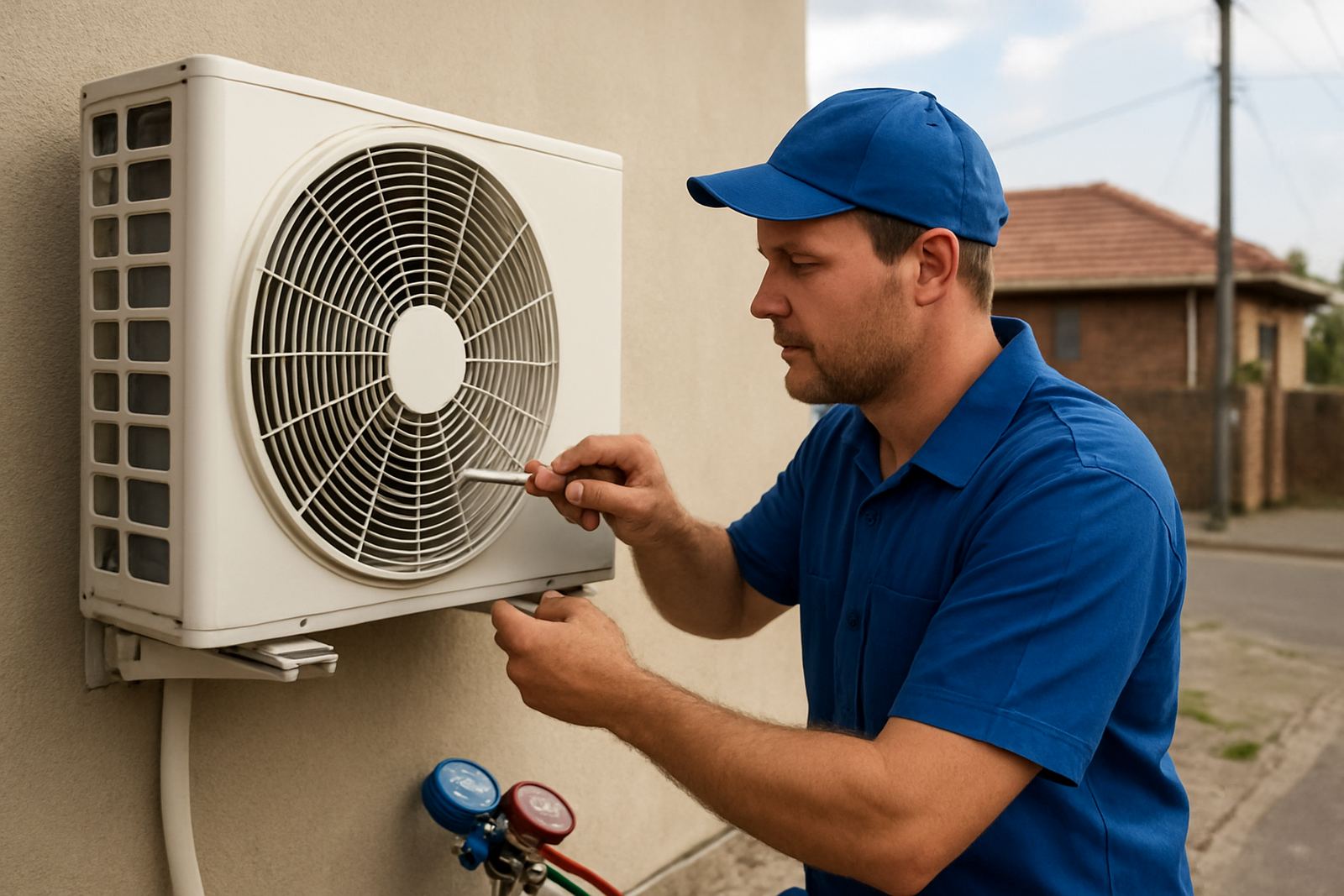
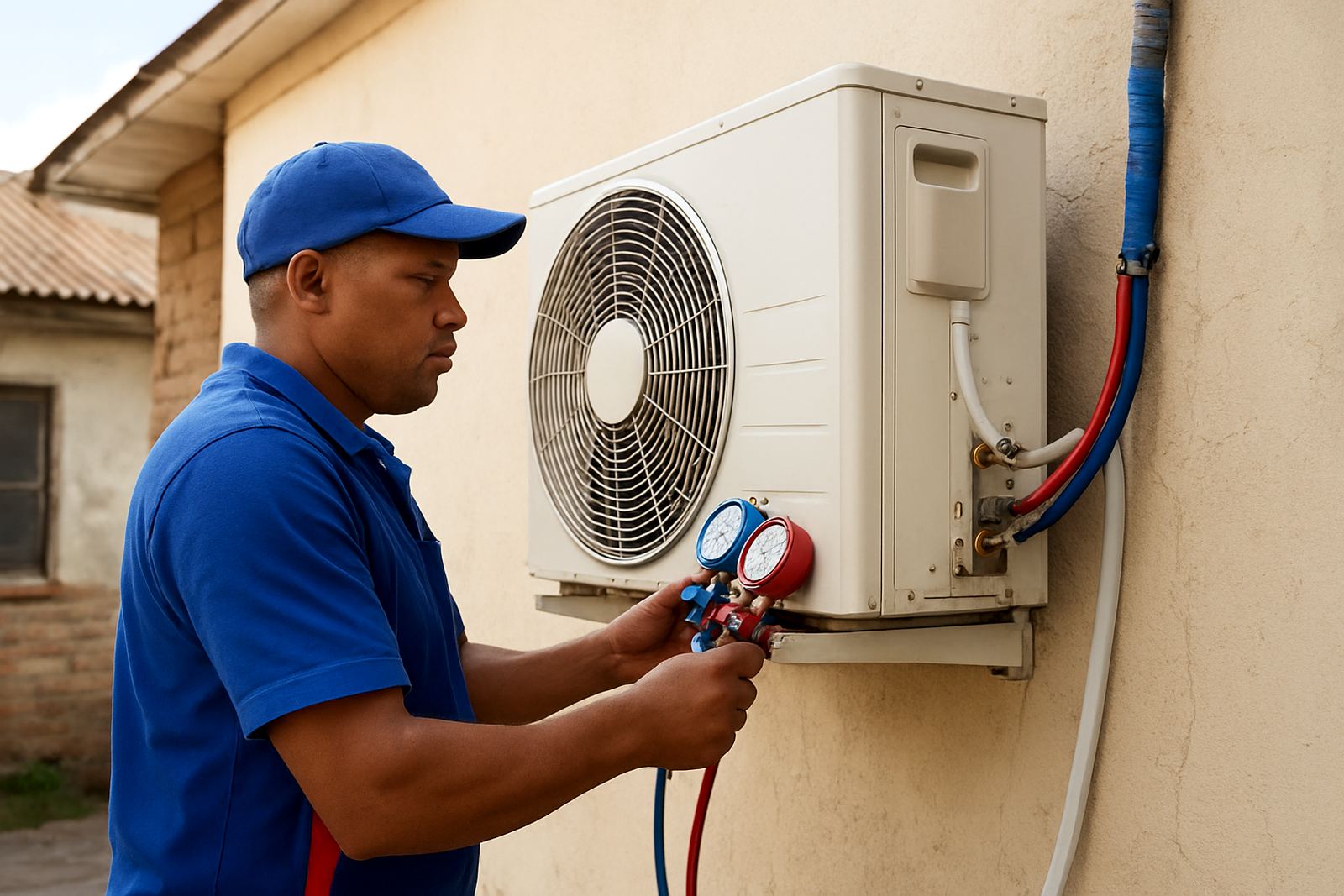
Before any gas is added, we check the system condition, the pipework and the operating pressures. A proper charge starts with a leak test, because charging a leaking system only hides the issue for a short time. Where needed, we isolate the leak, repair the fault and then evacuate the system before recharging to the correct level.
The basic process usually includes:
- Inspecting the unit and confirming the refrigerant type
- Checking pressure readings, temperatures and current draw
- Testing for leaks at valves, joints and service ports
- Repairing any leak or damaged component
- Vacuuming the system before charging
- Confirming cooling performance and final pressure readings
We handle domestic and commercial systems across Clairwood, Durban Central, South Durban and the wider eThekwini area. If access is awkward or the unit is on a roof, we plan the job so the service can be completed safely and with minimal disruption.
Compatible system requirements before you buy gas
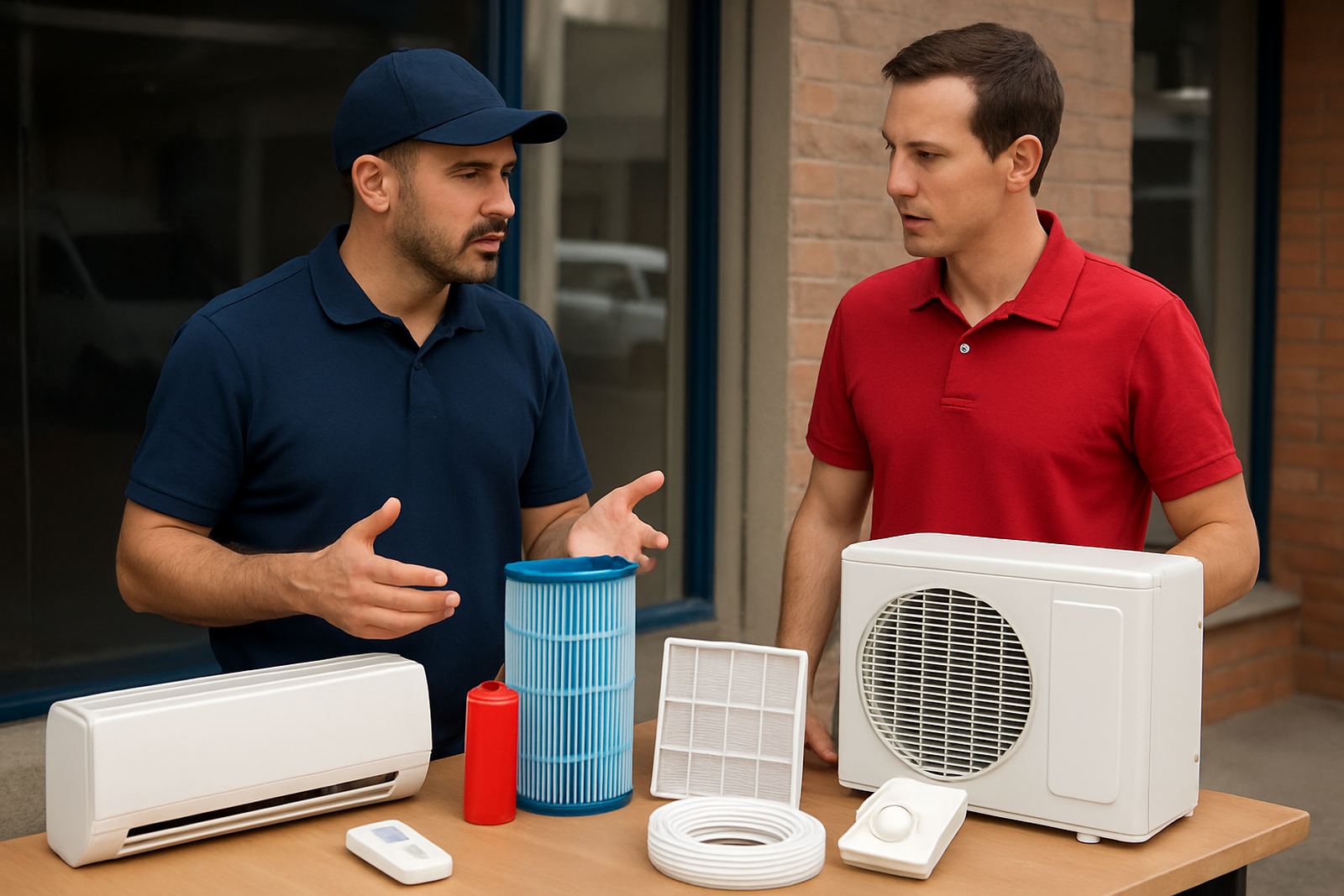
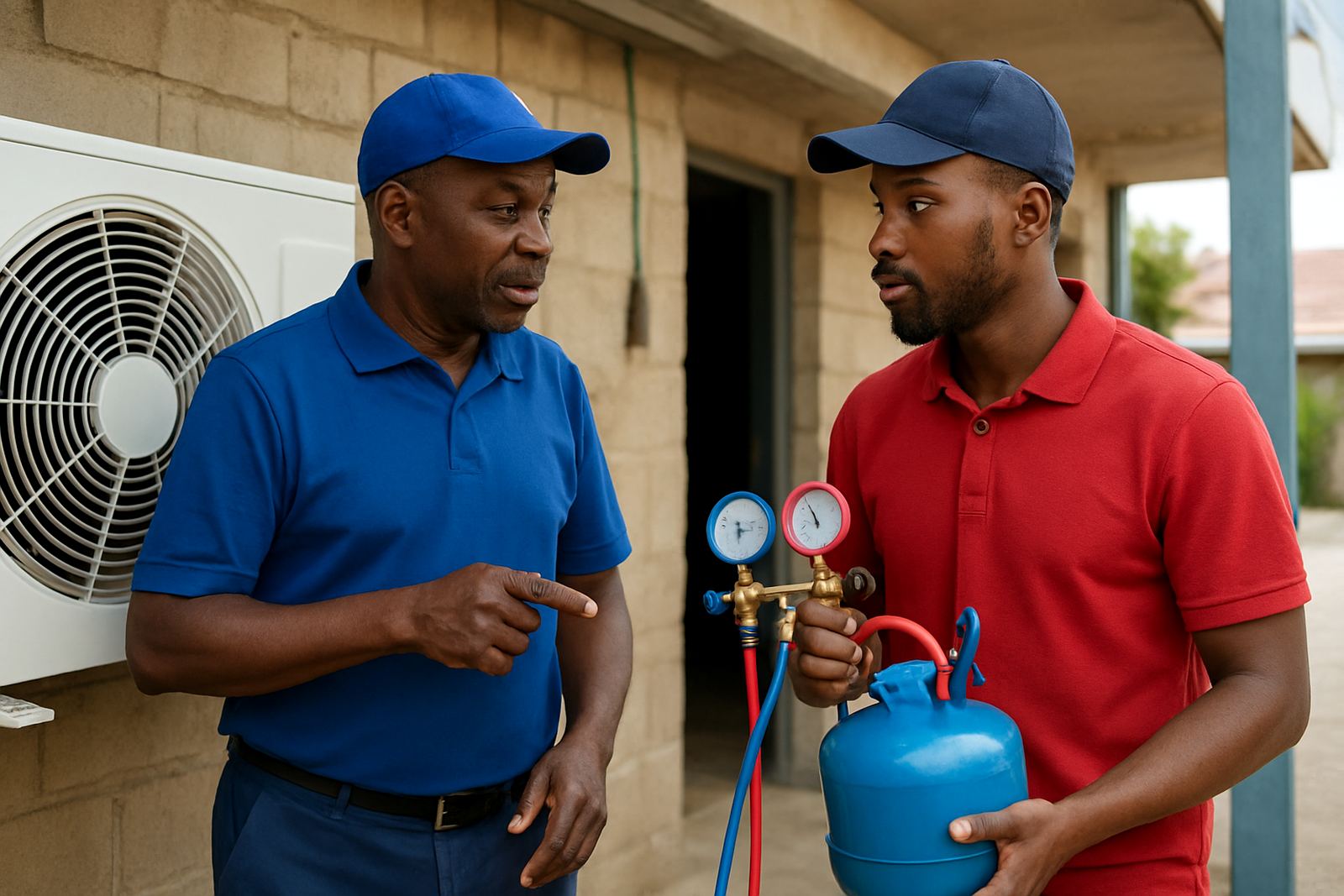
Not every refrigerant works with every system. Compatibility depends on the compressor design, oil type, operating pressures and the unit's age. Older systems may use a different refrigerant than newer inverter units, and some equipment cannot simply be changed over without technical checks. Getting this wrong can cause poor cooling, excess strain and costly breakdowns.
Before ordering gas, have these details ready:
- Model number and serial number from the unit label
- Whether the system is residential, office or commercial
- Any service history, leak repairs or compressor work
- The symptoms you are seeing and how long they have been happening
If you are near the coast, mention that too. Coastal humidity and salty air can affect coils, terminals and pipe joints, so a proper check helps us decide whether the problem is a charge issue, a leak issue or a maintenance issue. We would rather advise clearly than guess, because guesswork in this trade gets expensive fast.
What to do before a technician arrives
You can help speed up the service by making the unit accessible and noting any changes in performance. If the unit has been switched off because it is icing, leave it off until the inspection. Do not keep topping up a system from random cylinders or trying to bleed gas out yourself, since that can make the fault harder to trace.
- Clear access to indoor and outdoor units
- Keep the model details handy
- Note any recent power cuts or load-shedding events
- Tell us if the unit was recently cleaned, moved or repaired
- Let us know about any water leaks, smells or unusual noise
In Durban, power interruptions and voltage swings can also affect controls and contactors, so we check the wider system too, not only the gas side. That helps avoid a second visit for a fault that was actually caused by an electrical issue.
When gas supply is not the full answer
Sometimes a system needs more than refrigerant. A weak fan motor, blocked drain, dirty coil, damaged capacitor or faulty control board can all look like a gas problem at first. If the compressor is overheating or the airflow is poor, a recharge alone will not fix it. We often see this in shops, offices and homes where the unit has not had planned maintenance for a while.
If the same unit has needed gas more than once, ask for a full fault finding service. We can handle compressor replacement, fan motor repair, drain blockages, deep cleaning, controls repair and planned maintenance, so the root cause is dealt with properly. That is the better route for long term reliability, especially in Durban's heat and humidity where systems work hard for most of the year.