Why container offices overheat so quickly in Durban
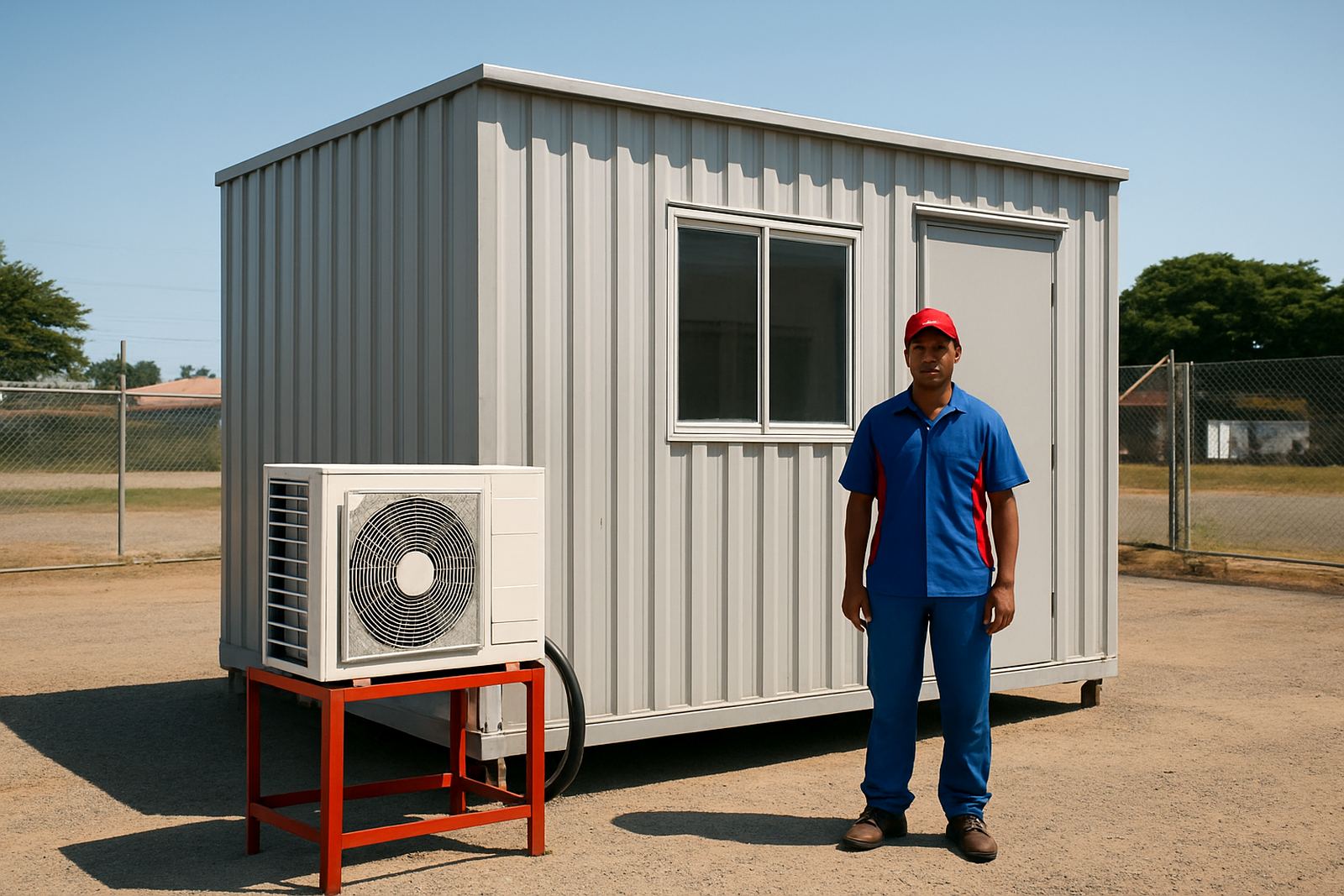
A container office is basically a steel box, and steel takes on heat fast. Once the sun hits the roof and walls, that heat moves straight into the room, then the inside air stays trapped if the space has poor air movement. In Clairwood and along the Durban South side, we see this often in portable offices placed on bare concrete or right against a boundary wall.
Durban humidity makes it worse. A room may not only feel hot, it can feel sticky and heavy because the aircon is trying to cool warm air with too much moisture in it. If the unit is undersized, the result is constant running, rising power bills and staff who keep opening the door for relief, which only lets more warm air in.
Heat build up is not only about comfort. Electronics, paperwork and stored items all suffer when the room sits at 30 degrees or more for hours. In some cases we find dripping units, tripped circuits and blocked drains because the system is working flat out and was never set up for the space it serves.
Insulation and shade are your first line of defence
Before looking at a larger aircon, start with the shell of the office. Roof insulation makes the biggest difference because the roof gets the harshest sun. Wall insulation helps too, especially on west facing sides that take afternoon heat. Even basic foil insulation or board insulation can lower the inside temperature enough to reduce strain on the unit.
External shade is also practical. A simple shade cloth, awning, carport style cover or even positioning near an existing structure can cut down direct sun. If the unit sits in an open yard in South Durban, the roof may bake from early morning to late afternoon. Add shade and you reduce how hard the aircon must work all day.
Keep doors sealed properly, and check that windows close tight. Small gaps let hot air and dust enter. In coastal areas, salty air can also wear on seals and metal fittings quicker than expected, so those parts need a regular look.
- Use roof insulation first if you can only do one upgrade.
- Add wall lining on the sun side of the office.
- Fit proper door seals and close gaps around cable entries.
- Shade the container where possible, even partial shade helps.
Choosing the right unit for a portable office
A common mistake is fitting a unit based only on floor size. A container office with two or three people, computers, printers and a small fridge needs more cooling than an empty room of the same metreage. If the office faces full sun, has thin panels or gets door traffic all day, the load goes up again.
For the right result, the unit must match the heat load, not just the room dimensions. We look at ceiling height, number of occupants, computer equipment, north or west facing exposure, and whether the office is used all day or in short shifts. In many cases a mid sized split unit is enough, but only if the room is sealed and insulated properly.
Oversized units can also cause trouble. They may cool the air too quickly without removing enough moisture, leaving the office cold but clammy. An undersized unit runs without stopping, then wears out faster. The best choice is the one that can pull the room down and hold it there, even during a hot afternoon in Durban Central.
- Count people and equipment, not just square metres.
- Check sun exposure on the roof and west wall.
- Ask whether the office runs all day or only for set hours.
- Make sure the electrical supply can handle the chosen unit safely.
Where the aircon should be placed in a container office
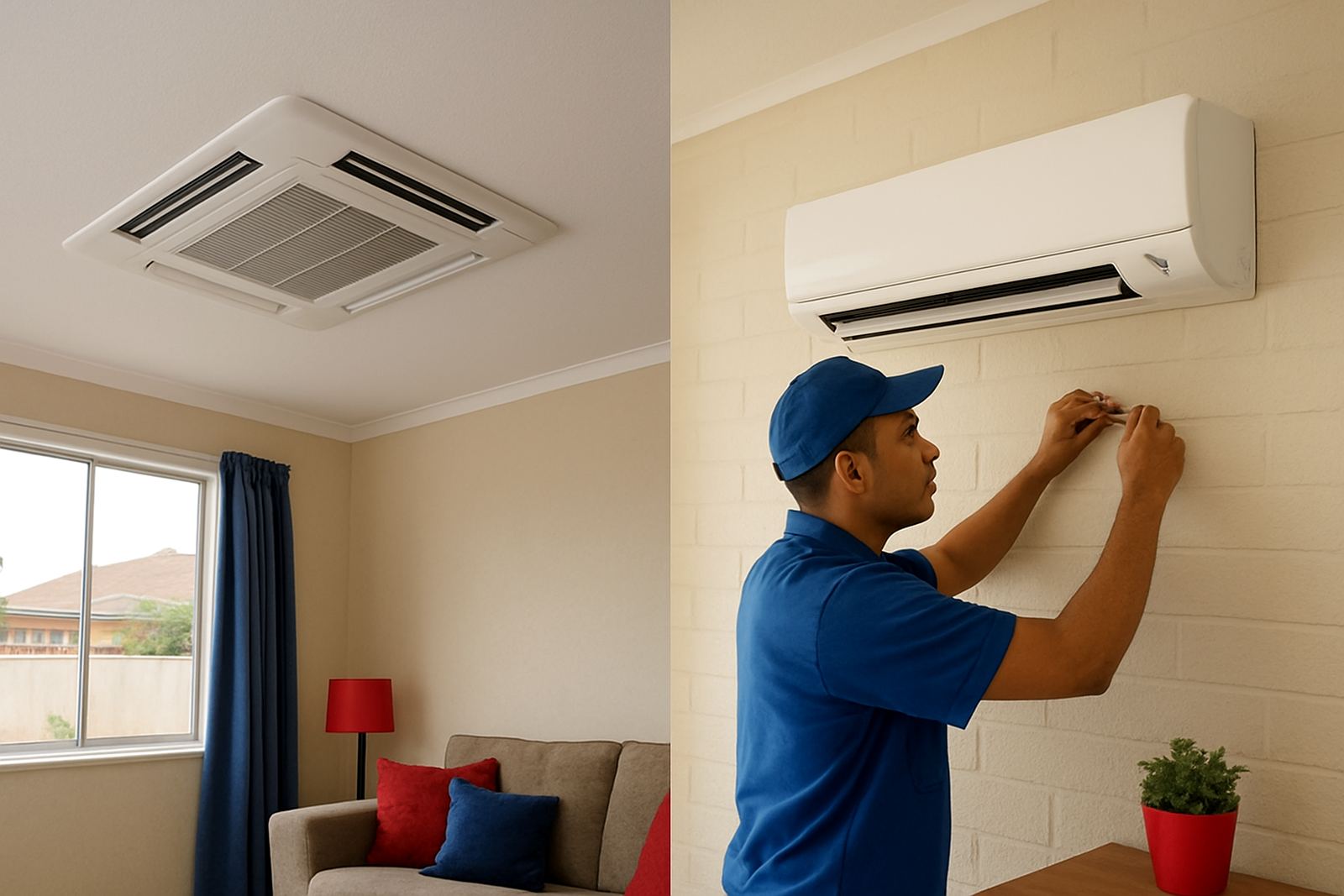
Unit placement matters just as much as the size. Indoors, the aircon should not blow directly onto one person all day, and it should not be blocked by shelves, curtains or stacked files. Air needs to move across the whole room, then return to the unit properly.
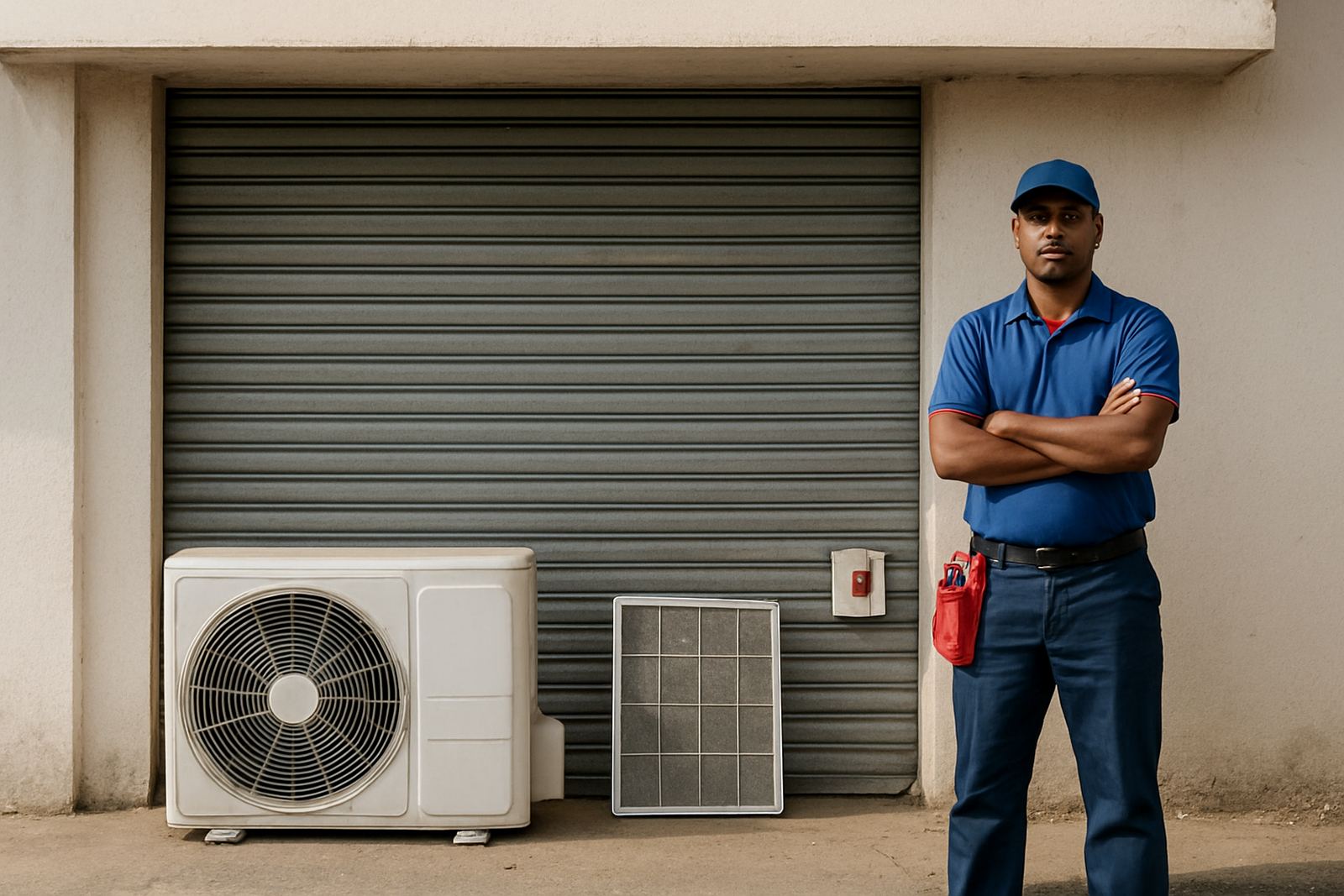
Outside, the condenser needs free airflow. We often find outdoor units squeezed into tight side passages with no room to breathe. In that setup, the unit recycles hot air and loses cooling power. On a hot day in West Durban, that can mean weak performance and higher electricity use within hours.
Keep the outside unit out of direct glare and away from dust where possible. If it sits close to a busy yard, diesel fumes and fine grit will build up on the coils. The same applies near the coast, where corrosion can start sooner than most people expect. A good mounting position and regular cleaning will extend the life of the system.
Maintenance that keeps the office usable through summer
Portable offices are often used by site managers, admin teams and security staff who need a workable space every day. That means the aircon cannot be left until it fails. Filter cleaning, drain checks and coil cleaning should happen before peak summer, and then again during heavy use. If the drain blocks, water backs up and drips inside the office, which can damage flooring and documents.
A planned maintenance visit should also check refrigerant levels, electrical connections, fan motors, contactors and capacitors. Weak airflow, strange noises or warm discharge air are early warning signs. If caught early, the repair is usually simpler and cheaper than waiting for a full breakdown call-out after hours.
- Clean filters regularly in dusty or high traffic areas.
- Check for water leaks around the indoor unit.
- Test the thermostat and controls before summer starts.
- Arrange a service before the first real heat wave, not after.
A practical Durban South example
We often see this in Durban South industrial yards where a container office is set up beside a workshop, delivery lane or storage area. The office may have two staff, one printer and a filing cabinet, yet by 11 in the morning the room feels unbearable because the sun hits the roof hard and the unit is fighting against heat, dust and frequent door opening.
In one Clairwood case, the office had a working aircon but the room was still too hot. The issue was not only the unit. The container had poor roof insulation, the outdoor condenser was mounted where hot air pooled, and the drain line was partly blocked. After insulation improvements, a better mounting position and a full service, the room held a steady temperature through the afternoon. The staff noticed the difference straight away, and the system stopped running flat out all day.
That is the point with container office heat. You do not solve it with a single quick fix. You combine insulation, correct placement, correct sizing and proper maintenance so the room stays workable even when Durban turns humid and still.