
Start with the body corporate
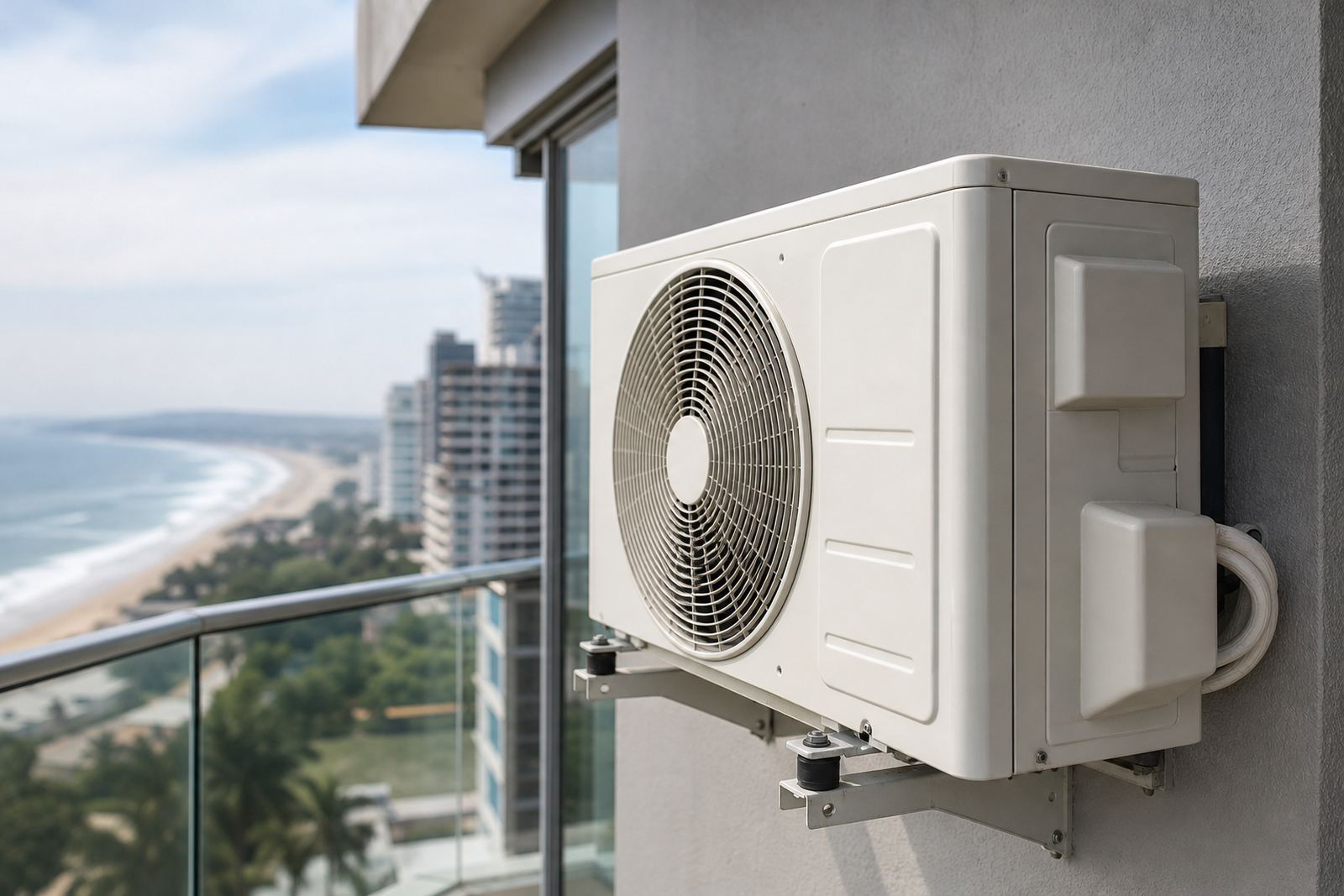
Most sectional title schemes in eThekwini have conduct rules on where outdoor units may go, how pipes are hidden and whether the balcony wall may be drilled. Some ask for units on the floor behind the balustrade so they are not visible from the street. Get written approval first. We are happy to supply a short layout and a photo of a similar install for the trustees.
Give the unit room to breathe
A condenser pushes hot air out of the front and pulls air in from the back and sides. On a narrow balcony it can end up breathing its own exhaust, which raises the head pressure and the power bill on a humid February afternoon.
- Leave at least 300 mm behind the unit and clear space in front
- Do not box it in with a solid cupboard or tight screen
- Keep it out of a corner where hot air pools
- Avoid placing it where it blows into a neighbour's window
Salt air and wind loads
Higher floors on the beachfront take wind-driven salt spray. We fit coastal coated units where possible, use stainless or hot-dip galvanised brackets and fixings, and seal pipe penetrations so water does not track into the wall. A wall bracket on a high floor must be anchored into solid concrete, not plaster or brick facing.
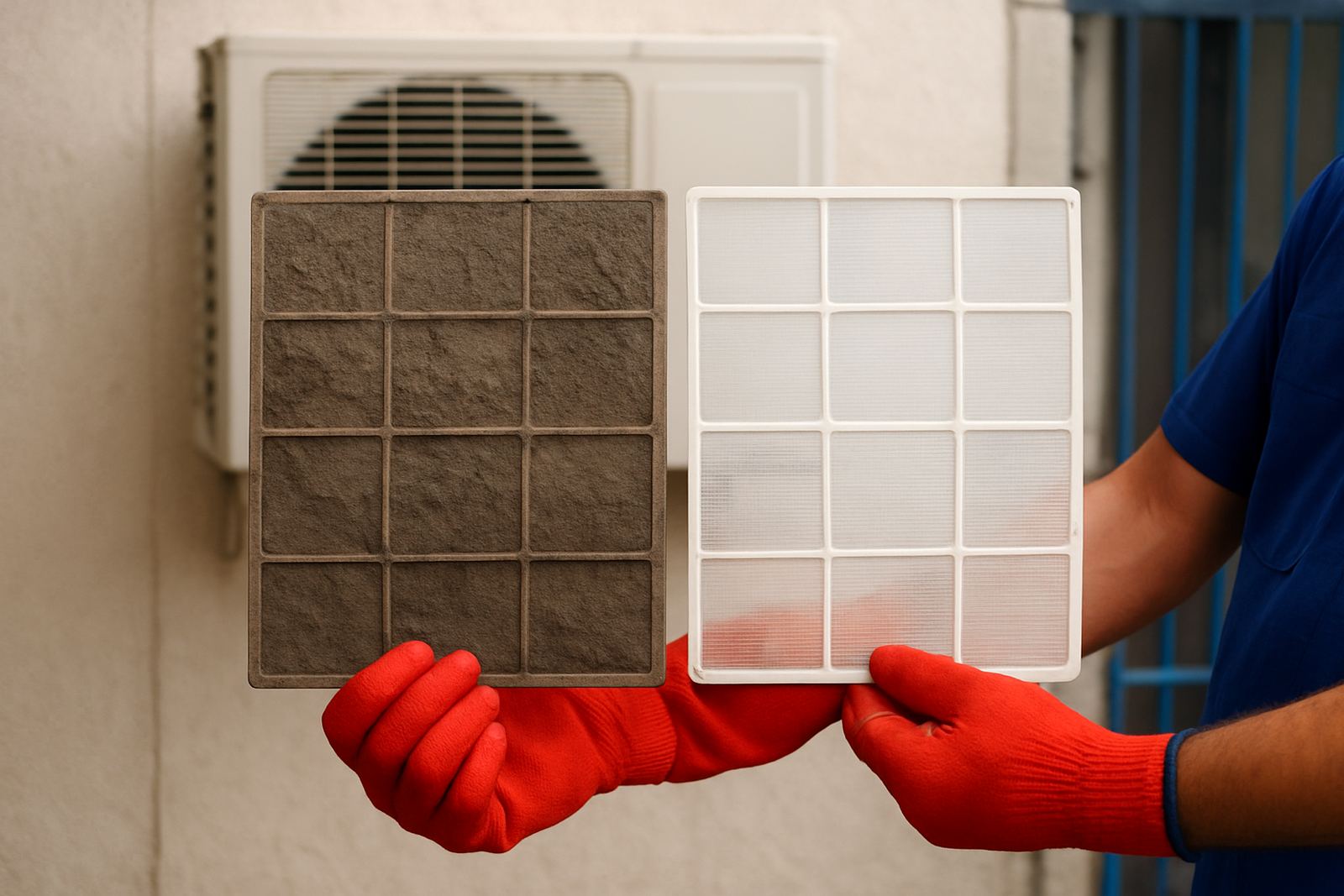
Plan a coil rinse with fresh water every few months, and a full service at least once a year. On salty balconies that simple routine is the difference between a unit that lasts and one that rusts out early.
Drainage and noise
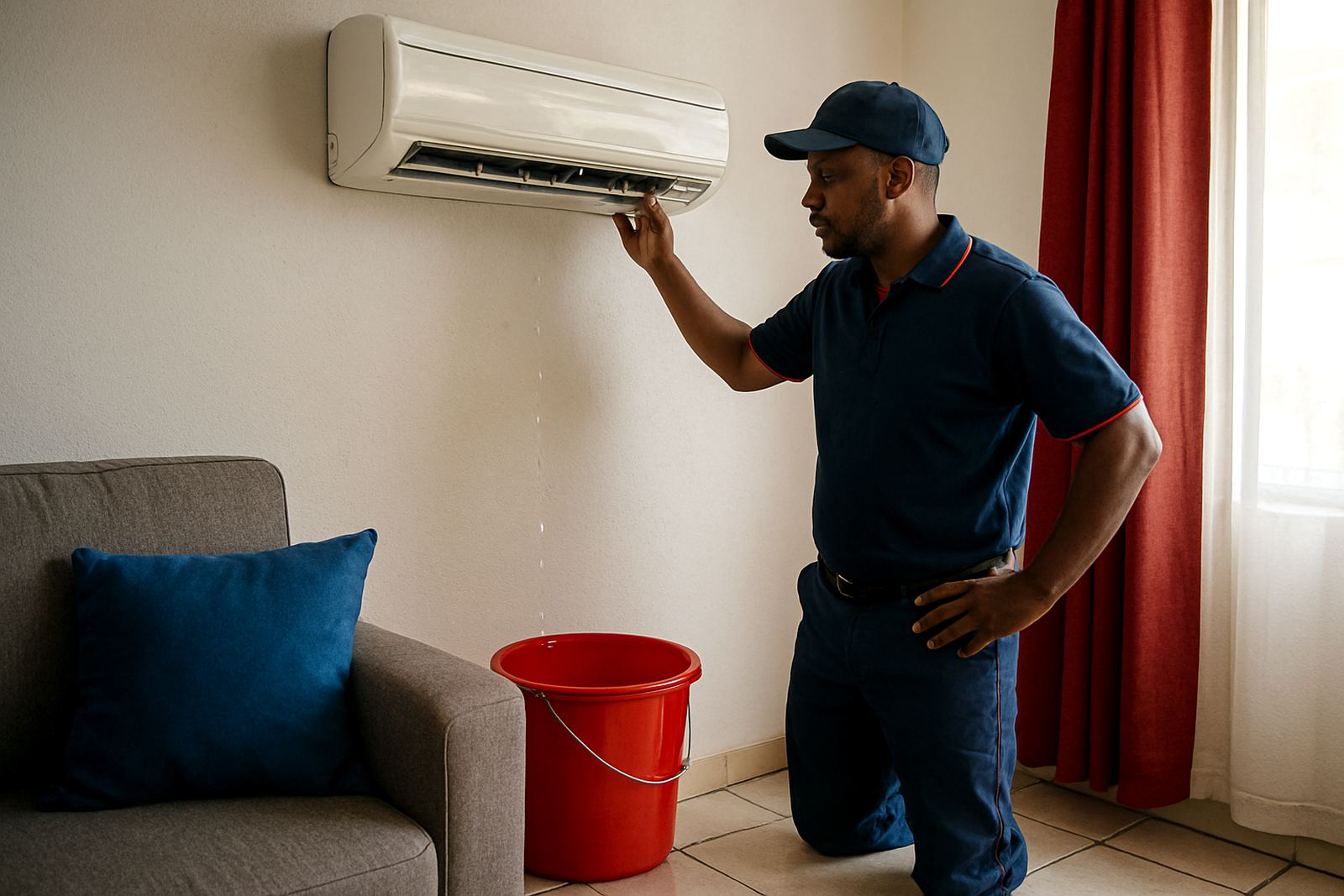
Condensate from the indoor unit should not drip onto the balcony floor or the flat below. We route it to a drain point or a discreet gully. Choose an inverter unit, which runs quieter at night, and fit rubber anti-vibration pads so the hum does not travel through the slab. Send us photos of your balcony and the rule sheet from your body corporate and we will advise on what will pass.