Workshop heat builds fast in Durban
A workshop can move from comfortable to unbearable in a short time. In Durban, the mix of humidity, summer heat and enclosed bays makes the problem worse, especially where compressor rooms, tool stores or admin offices sit behind roller doors and metal roofing. If the space is not planned properly, workers end up opening doors for relief and the cold air disappears straight out.
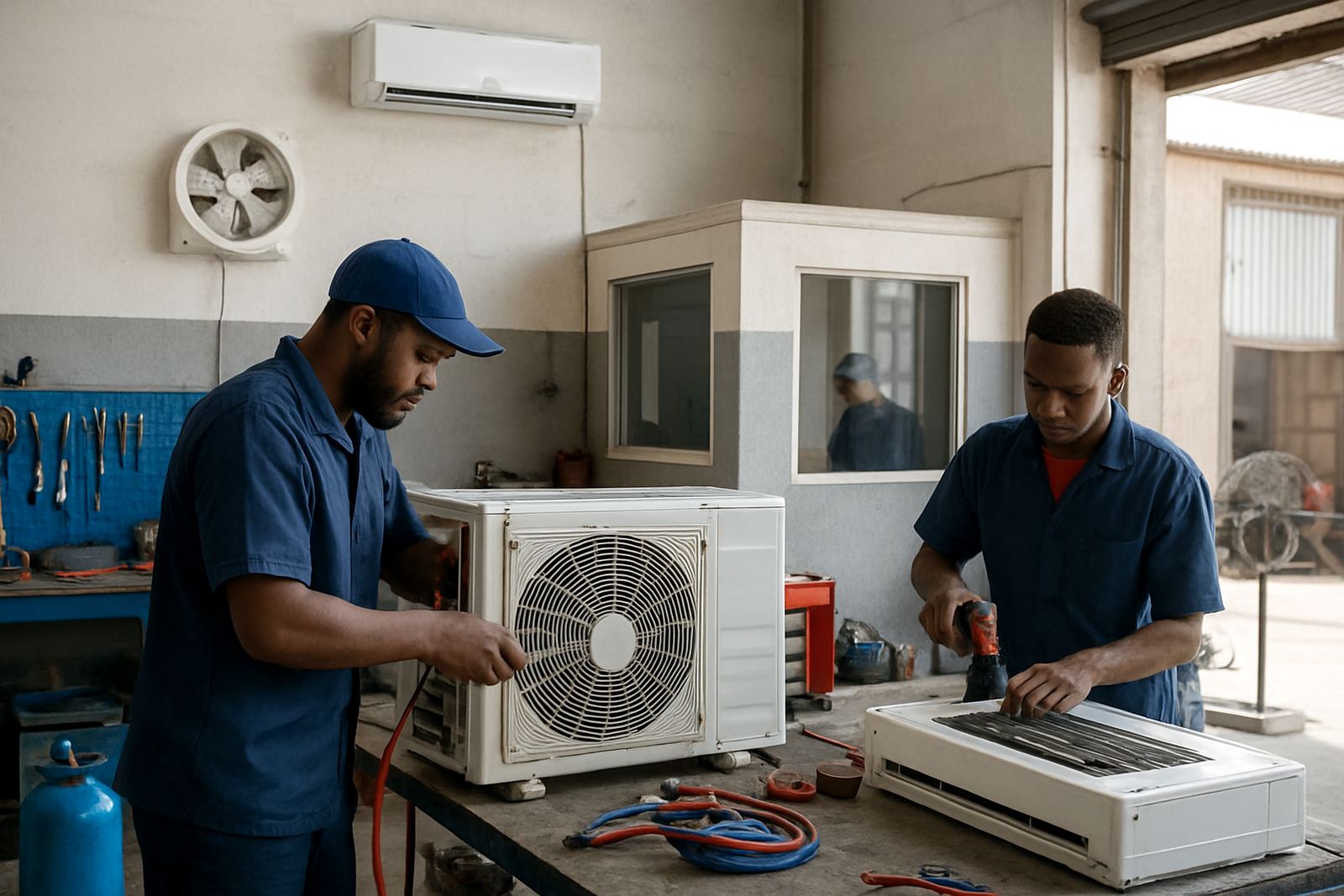
We supply, install and repair air-conditioning for workshop offices, enclosed bays and heat-prone sections across Clairwood, Durban Central and the wider eThekwini area. The goal is simple: keep people cool enough to work, protect equipment from excessive heat and reduce breakdowns caused by dust, vibration and constant use.
For many workshops, the best answer is not one big unit trying to cool the whole building. It is usually a mix of office cooling, spot cooling and ventilated service areas. That way the system is doing real work, not fighting open entrances all day.
Typical equipment for workshop spaces
Every site is different, but most workshop jobs in Durban use a combination of wall-mounted indoor units, ducted systems for offices, and heavier duty outdoor units placed where they can get clear airflow. In some cases, we also fit ceiling cassette units in boardrooms, reception areas or staff rooms. For enclosed bays, we look at the heat load from machines, number of people, bay doors and how often the doors stay open.
A common setup includes:
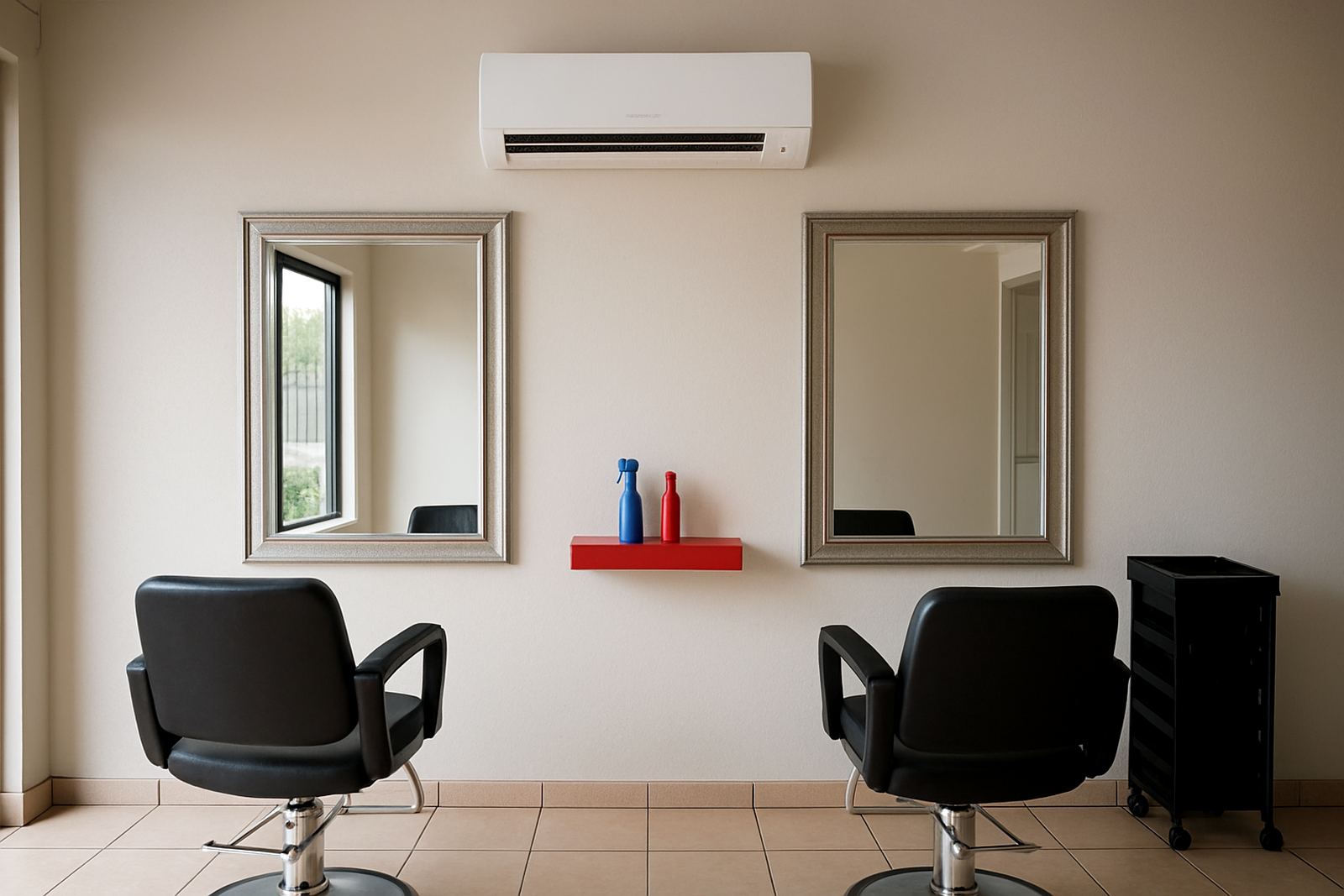
- Split air-conditioners for admin offices and staff rooms
- Ducted units for larger office sections or small meeting rooms
- Commercial wall units for enclosed bays with limited ceiling space
- Extraction or circulation fans where hot air builds up near machinery
- Drain pumps or correct falls for condensate where gravity drainage is difficult
We also check the electrical supply before installation. Workshop sites often have older boards, shared circuits or frequent load-shedding interruptions, so the unit choice must suit the supply and the expected running time.
How we plan the layout around doors, dust and machinery
Good cooling starts with the layout. If a unit blows directly at a roller door or across a high-traffic walkway, the cold air is wasted. If it sits too close to grinding dust or oil mist, filters block quickly and the system starts tripping. We look at the working pattern, not just the floor size.
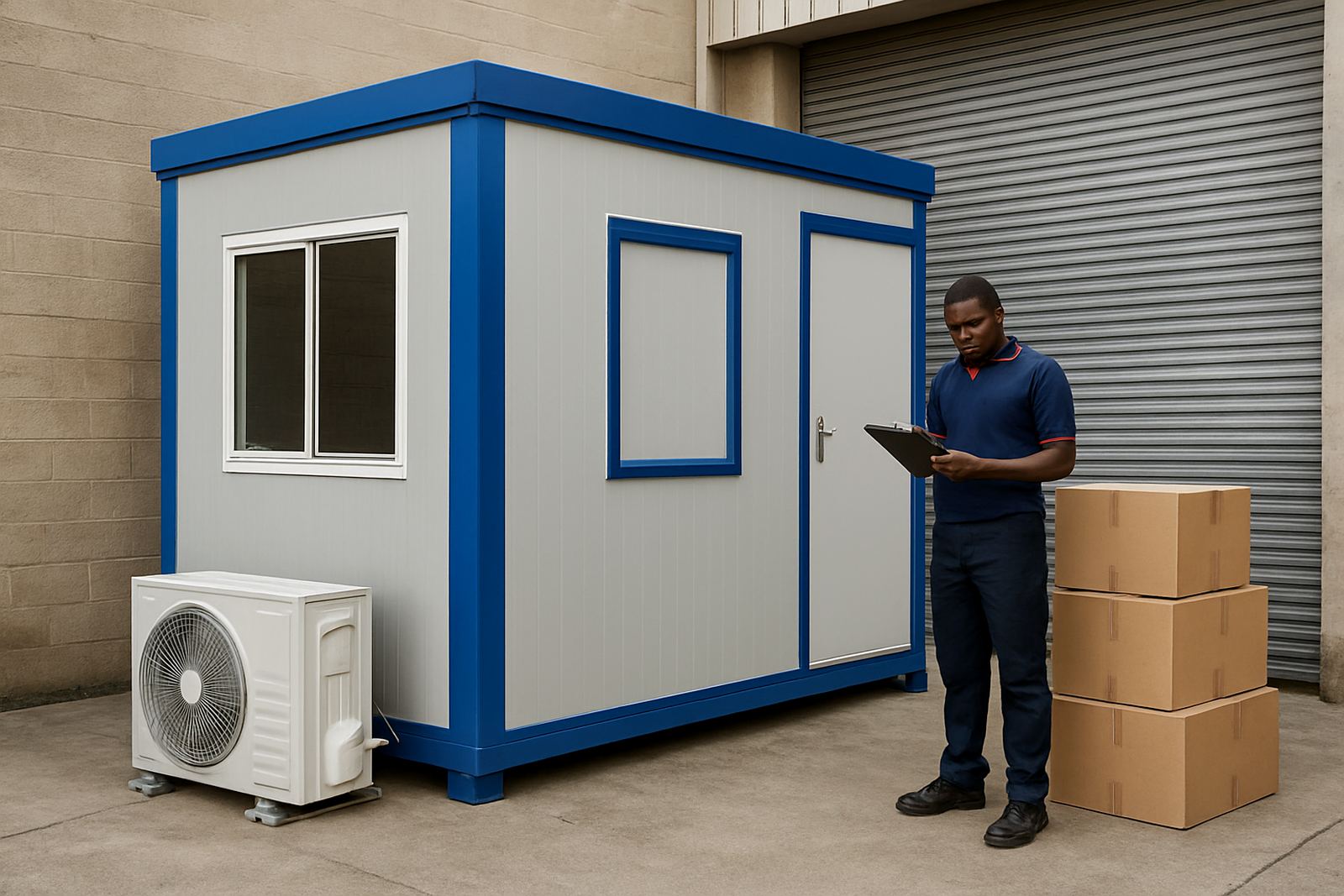
In a workshop office, we usually place the indoor unit away from printers, filing shelves and direct sun. In enclosed bays, we avoid placing the unit where swarf, dust or fumes can be drawn straight into the coil. Outdoor units need clean breathing space, enough clearance for service, and a location that does not flood during heavy rain. Coastal humidity in Durban also means we are careful with corrosion and drainage.
Planning points we often raise on site include:
- Keep indoor units clear of direct machine discharge and dust paths
- Allow safe access for cleaning filters and servicing gas lines
- Use correct trunking and support to reduce vibration and damage
- Check where water will drain so floors do not get slippery
- Plan for maintenance access without moving vehicles or stock every time
When the layout is right, the air feels more even and the system lasts longer. It also means fewer complaints from staff about one side of the workshop being freezing while the other side stays hot.
Common mistakes we see in workshop installations
Many workshop cooling problems come from rushed installation or poor sizing. A unit that is too small will run flat out and still not cool properly. A unit that is too large may short cycle, leave the air sticky, and waste power. Both mistakes cost money, and both can be avoided with a proper site check.
Another common issue is ignoring maintenance. Workshop filters clog faster than in a normal office because of dust, fumes and constant door movement. If nobody cleans them, airflow drops and the compressor works harder. We also see drain blockages, loose contactors, tired capacitors and fan motor faults from systems that have been pushed too hard for too long.
Other avoidable problems include:
- Mounting units where vehicles can knock them
- Running drains with poor slope so water backs up
- Using undersized power cables or weak isolators
- Leaving outdoor units in direct salt air with no upkeep
- Skipping leak checks after repeated gas top-ups
These are the jobs that turn into bigger repairs later. A careful install is usually cheaper than fixing repeated call-outs and spoiled production time.
Repair and maintenance support for busy sites
Workshops need quick response because a failed unit affects staff comfort, admin work and sometimes product quality. We handle fault finding, regas and leak checks, compressor replacement, fan motor repair, capacitors and contactors, drain blockages, deep cleaning, planned maintenance, controls repair and breakdown call-outs.
For sites running daily, we often recommend a maintenance schedule instead of waiting for a fault. That can mean filter cleaning every few weeks, coil cleaning on a planned basis, and regular electrical checks before summer starts. If you are near the coast, the outdoor units need a bit more attention because salt and moisture speed up wear, especiallly on exposed fittings.
Load-shedding also changes how systems behave. Units that stop and start often can show weak capacitors, contactor wear or low gas symptoms sooner. We check the full system, not just the obvious symptom, so you are not paying for the same problem twice.
Budget ranges for workshops in Rand
Costs depend on the size of the workshop, the number of zones, ceiling height, the electrical supply and how much ducting or trunking is needed. For a small workshop office or reception area, supply and installation can start from around R12,000 to R25,000 for a single split system. Medium bays or multi-room setups often sit between R28,000 and R75,000, depending on unit size and installation complexity.
Larger workshop floors, ducted systems and multi-unit commercial jobs can run from R80,000 upwards, especially where there is a need for multiple indoor units, upgraded electrics or long pipe runs. Repairs are usually quoted after fault finding, but many common call-outs fall into the R650 to R2,500 range before parts. Compressor or major component replacement is higher, so it pays to catch problems early.
If you are budgeting for a new site, it helps to allow for maintenance, spare gas and a small repair reserve. That keeps the system in service when the weather turns hot and the workshop gets busy.