Why server rooms fail so quickly in Durban heat
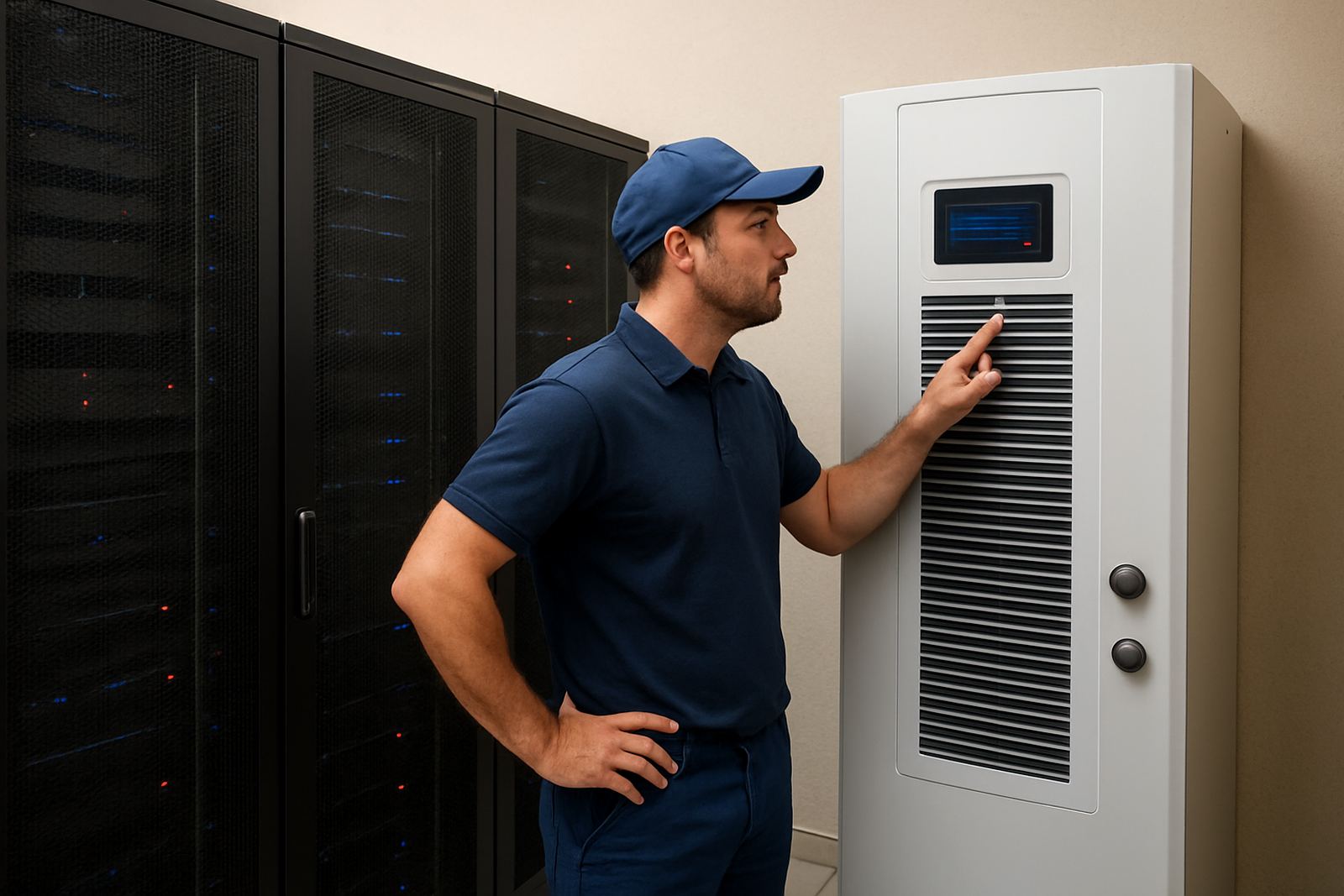
Server rooms and communications spaces run hotter than people expect, especially where the room is small, sealed, or packed with UPS units, switches and routers. In Clairwood and across eThekwini we often find rooms that were fitted like a normal office, then asked to carry 24 hour IT load with no real allowance for heat rejection. That is where trouble starts. Temperatures creep up, condensation forms, and the aircon begins short cycling or running flat out with little effect.
Durban also brings its own problems. Coastal humidity, dusty industrial areas, frequent power interruptions and load-shedding can all upset sensitive equipment. If the aircon trips after power returns, or the indoor unit is undersized, the server room may look fine at 8 am and be struggling by lunch. We see this in small offices, body corporates, warehouses, schools and clinics from Durban Central to West Durban.
Typical cooling equipment for IT rooms and comms spaces
Most server rooms do well with correctly sized split units or ducted systems, depending on the room layout and heat load. The key is not just cooling capacity in kW, but how the system handles constant duty, airflow, redundancy and maintenance access. In some rooms one unit is enough, in others you need duty standby units so that one can carry the load while the other is serviced.
- Wall mounted split systems for smaller server rooms and network cupboards
- Ceiling cassette or ducted units where air distribution must be spread evenly
- Dual units for duty standby operation in critical spaces
- Drain pumps and proper condensate routing where gravity fall is not available
- Temperature controls and time schedules linked to business hours or 24 hour operation
We also check for nearby heat sources such as photocopiers, UPS banks and solar equipment. If these are in the same room, the aircon often needs a bit of extra capacity, not just a standard domestic fitment.
Layout and planning advice before you install
A server room should be planned around airflow, access and clean electrical supply. Cold air must reach the front of the racks, with hot air moving away properly instead of cycling straight back into the intake. In tight rooms, a badly placed indoor unit can create hot spots at the top of the racks and you may not notice until alarms start going off.
We usually advise clients to keep wall space clear around the unit, allow for service access, and avoid blowing air directly onto sensitive cabling or loose paper storage. If the room has no false ceiling, no external wall, or limited drainage fall, that must be considered before installation. It is better to plan the route for the pipework and drain now, rather than drill through later and chase leaks after the fact.
- Measure the room size and heat load, including people and equipment
- Check whether the room is sealed or has unwanted air leaks
- Allow space for maintenance and filter cleaning
- Confirm electrical backup and restart behaviour after load-shedding
- Plan a sensible setpoint, usually not too cold and not too high
What goes wrong when the room is treated like a normal office
The biggest mistake is choosing capacity by floor area alone. A server room with 6 m2 can need more cooling than a large office if it carries enough IT load. Another common issue is installing a unit that works fine during the day but cannot handle after-hours heat rise. By the time somebody returns in the morning, the equipment has already been under stress for hours.
We also see blocked drains, dirty filters, low gas levels and failing fan motors causing repeated breakdowns. In coastal Durban, poor corrosion protection becomes a real issue, especially where the outdoor unit is mounted in open air close to the sea. Controls can also be a weak point. If the thermostat or sensor is in the wrong position, the system may keep switching on and off while the room temperature swings too much.
A small note from experience: if the room has had repeated water on the floor, do not just dry it out and move on. Find out where it came from. That leak could be from the drain, the roof, or a condensate line with a bad fall.
Our server room service work across eThekwini
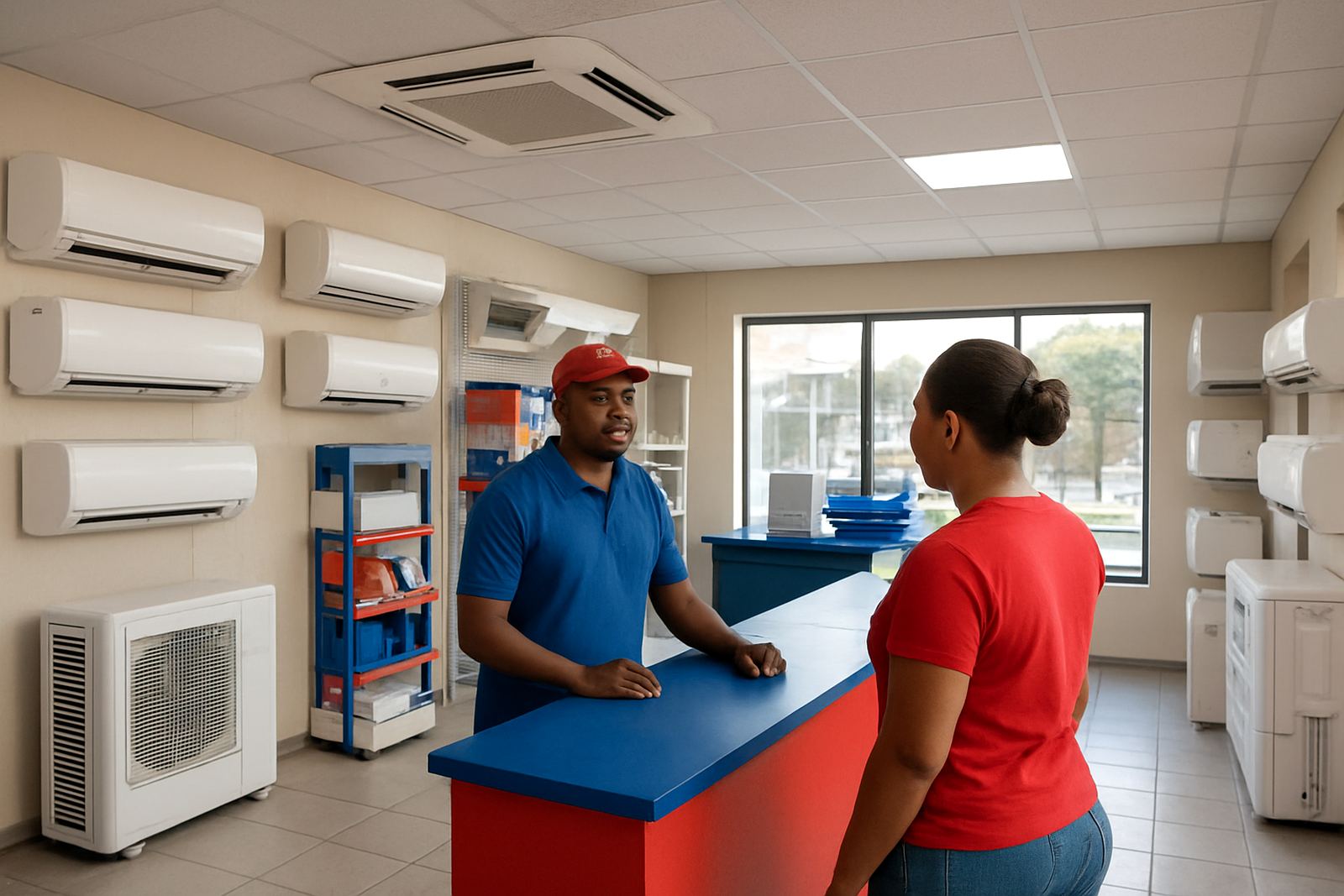
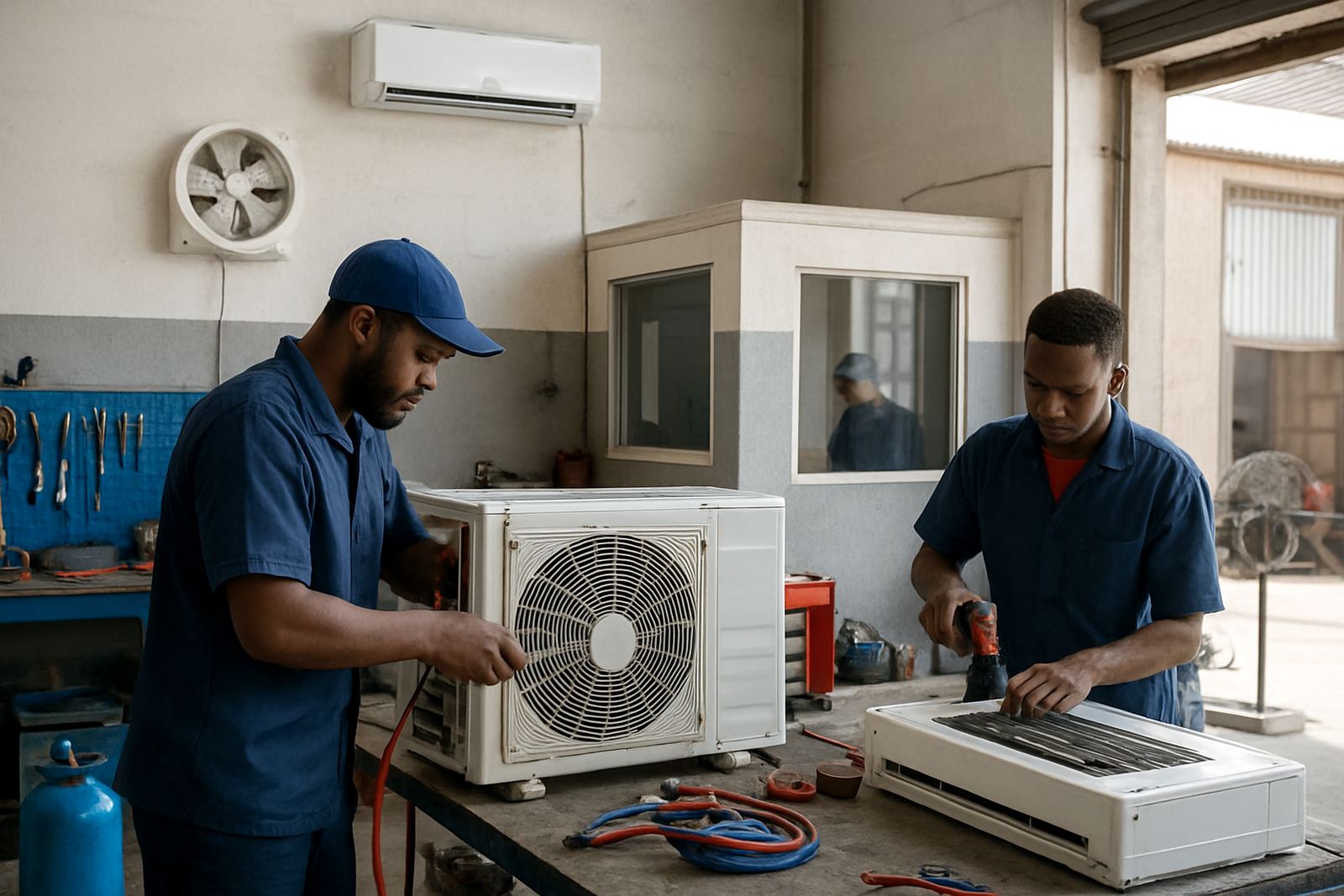
Aircon Depot handles supply, installation, repairs and maintenance for server rooms and related comms spaces across Clairwood, Durban Central, South Durban, North Durban and West Durban. We work on faults big and small, from a noisy fan motor to a full breakdown call-out after a unit stops cooling. Where needed, we can also assist with spares and gas, then confirm the system is holding pressure and cooling properly again.
- Fault finding for weak cooling, alarms and uneven room temperatures
- Regas and leak checks when gas loss is suspected
- Compressor replacement and fan motor repair
- Capacitors and contactors for units that will not start
- Drain blockage clearing and deep clean service
- Planned maintenance for business-critical rooms
For critical sites, regular servicing is often cheaper than waiting for a full shutdown. A simple maintenance visit can catch dirty coils, failing start components and blocked drains before the room becomes a problem.
Budget ranges for Durban server room cooling
Costs depend on room size, heat load, pipe runs, access, electrical work and whether you need one unit or a backup arrangement. As a rough guide, a basic small server room split system may start from about R12 000 to R20 000 fitted, while a stronger commercial setup can move into the R25 000 to R60 000 range or more. If the room needs a standby unit, specialised controls or major electrical changes, the budget will rise accordingly.
For repairs, the range is usually lower but depends on the fault. A simple capacitor, contactor or drain issue may be manageable, while compressor or motor replacement is a bigger spend. The best way to avoid surprise cost is to have the room checked early, before the equipment is running hot and the fault spreads to more than one part.
If you are based in greater eThekwini and need a straight answer on whether your server room is under-sized, we can assess the room and give practical options. Sometimes the fix is a better unit. Sometimes it is airflow, controls, or just proper maintenance. The right choice depends on the room, not guess work.