Why retail shops in Durban need more than a basic unit
A shop floor is not the same as a home lounge. In Durban, the mix of humidity, direct sun, open entrances and people moving through the door means the load changes hour by hour. A small boutique in Durban Central has different needs from a pharmacy in South Durban or a clothing shop in a West Durban centre, but the common point is simple. If the aircon is too small, the space feels stuffy by mid morning. If it is badly placed, the cold air lands on one area and leaves the till point, fitting rooms or stock area warm.
Retail spaces also need quiet equipment. No one wants a noisy indoor unit above the counter or a condenser shaking against a wall shared with tenants. For shops that trade long hours, the best setup is usually one that cools evenly, handles frequent door opening and can be serviced without shutting the whole business down for long. That is where proper planning saves money later.
Typical air-conditioning set-ups for shop floors
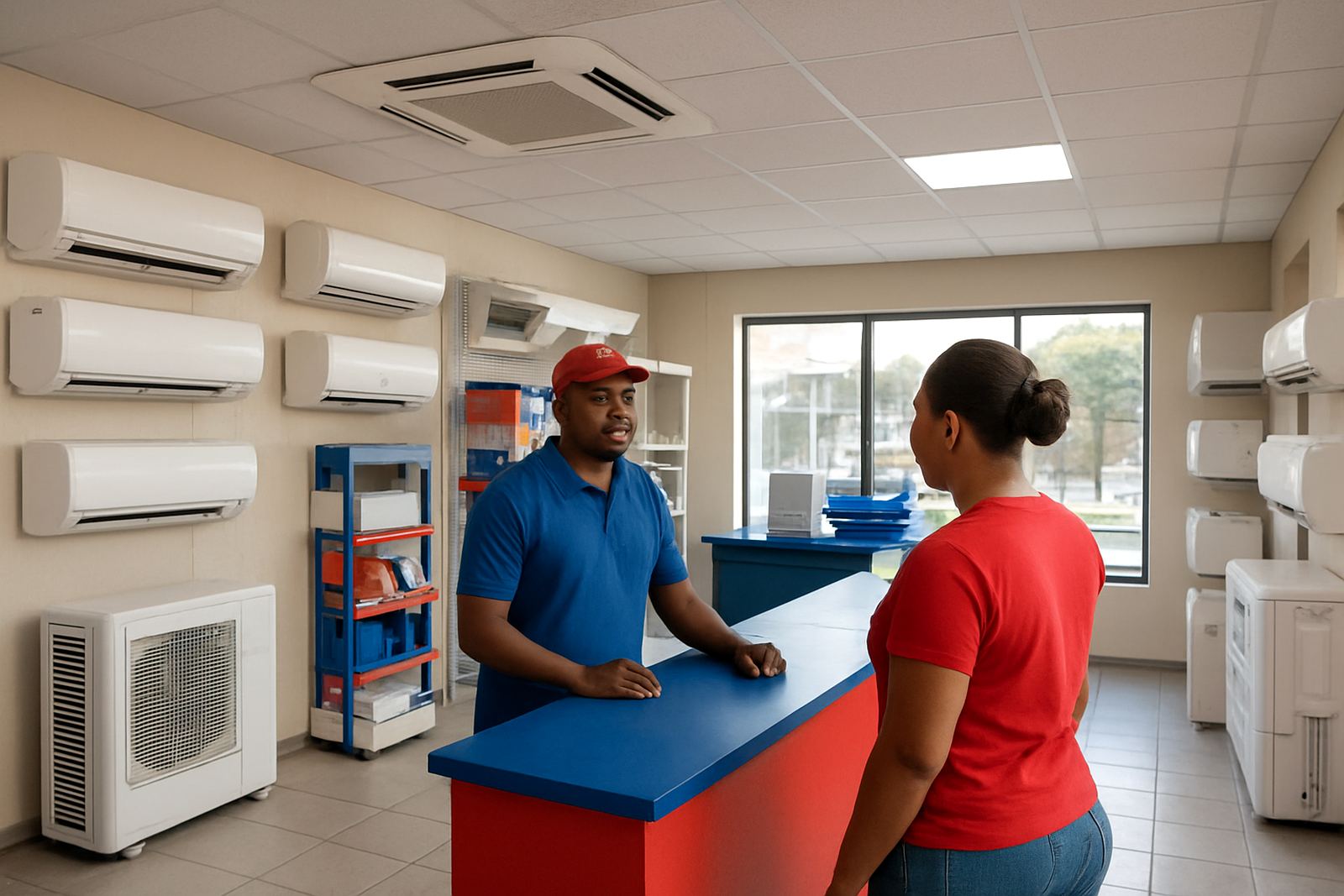
Most retail shops use split systems, cassette units or a combination of both. A small single shop may only need one wall mounted unit for the front area and one for the back of house. Larger spaces often need multiple indoor units linked to one outdoor unit or several separate systems spread across the floor. In centres and strip malls, we also look at where the landlord allows condensers, drain lines and service access, because municipal and building rules can affect the final layout.
- Wall mounted units for smaller front-of-shop areas, offices or till points
- Cassette units for open floor areas where even distribution matters
- Back-of-house cooling for staff rooms, stock prep and admin areas
- Separate circuits or zones so the whole shop is not on one setting
We often recommend keeping the public area and stock room on different systems. Stock can tolerate a different temperature band than customers, and that split helps manage power use too. It also makes fault finding easier if one area starts underperforming.
Layout and planning that make a shop feel cooler
Good planning starts with the shopfront. Glass doors, west facing windows and counters close to the entrance can pull in a lot of heat. In Durban, coastal humidity adds to the discomfort, so it is not only about temperature, it is about moving moist air out and keeping circulation right. We look at ceiling height, floor size, display fridges, lighting heat and how customers move through the space.
Units should not blow straight onto hanging stock, paper goods or point of sale equipment. Cold air should pass across the room and return properly, not bounce off a wall and leave dead spots. If there are changing rooms, a café corner, or a back office, each zone may need its own approach. Planning also includes where the drain will go, because blocked or badly sloped drains cause dripping, staining and complaints from tenants above or below.
For shops in areas like Clairwood, Durban Central and South Durban, dust and traffic grime can build up fast. That makes filter access and service clearance important from day one. A unit that is easy to clean is one that keeps working better for longer.
Common mistakes we see in retail installs
We are often called out after a shop has already opened and the aircon is struggling. The usual issues are predictable. The unit was sized for an empty room and not for real trading conditions. The indoor unit sits too close to the door. The condenser is placed where hot air recirculates back into it. Or the drain line was installed with a poor fall and now the ceiling has a damp patch. Small mistakes cost more once stock is on the shelves and trading has started.
- Choosing capacity only by square metres and not by people, glass and door opening
- Putting the indoor unit where it hits customers directly at the entrance
- Ignoring maintenance access for filters, drainage and electrical parts
- Running one shop off one system with no backup plan
- Leaving gas leaks or dirty coils for too long, which pushes up the power bill
Another common problem is waiting too long before booking a service. A shop can keep trading while the unit slowly weakens, so the issue gets missed untill the day it fails on a hot Saturday. Planned checks are cheaper than breakdown call-outs.
What to budget for supply, install and repair
Budget depends on floor size, number of zones, ceiling access and whether new electrical work is needed. For a small retail shop in Durban, a basic split system supply and install may start from about R12,000 to R20,000 per unit, depending on capacity and site conditions. Mid-size shop setups with more than one indoor unit or cassette units often sit in the R25,000 to R60,000 range. Larger retail spaces, especially those with several zones, can move well beyond that once pipework, brackets, drainage and controls are included.
Repairs vary by fault. A capacitor, contactor or drain blockage is usually far less costly than a compressor replacement. Regas and leak checks need proper diagnosis first, because adding gas without fixing the leak is wasted money. For retailers watching monthly costs, a service plan is often the better spend because it helps avoid stock losses, trading disruption and after-hours emergency work.
If you are comparing options, ask for pricing that separates supply, installation, access equipment, electrical work and maintenance. That makes it easier to see where the money goes and keeps the quote honest.
How Aircon Depot supports shops across eThekwini
Aircon Depot is based in Clairwood and works across greater eThekwini, including Durban Central, South Durban, North Durban and West Durban. We handle domestic and commercial air-conditioning, plus spares and gas, so we can help from first install through to ongoing repair and maintenance. For retail shops, that means we can look at the site, size the system sensibly, install with practical access in mind and return for fault finding or planned maintenance when needed.
Our team works on breakdown call-outs, compressor replacement, fan motor repair, controls repair, deep clean service, drain blockages and regas with leak checks. We also keep shop owners informed on what is worth repairing and what needs replacement. Sometimes a simple fix is enough. Sometimes a tired unit is costing more in electricity and call-outs than it should. The job is to tell it straight and keep your shop comfortable for customers and staff.