Why clinic temperature control matters in Durban
In a clinic, the aircon is not just for comfort. It helps keep patients calmer in waiting areas, protects staff in admin rooms, and makes treatment rooms more workable during Durban heat and humid coastal weather. When a room is too warm, people feel restless, equipment works harder, and medicines or consumables stored in the wrong place can be affected.
Clinics in Clairwood, Durban Central, South Durban and the wider eThekwini area also deal with load-shedding, voltage dips and salt air near the coast. That means the right system should start up reliably, cope with frequent use, and be easy to service when something does go wrong. We work with clinics that need practical control over temperature, not guesswork.
- Waiting rooms need even cooling without direct draughts on patients.
- Treatment rooms need quiet operation and stable temperatures.
- Admin offices often need their own units so staff are not affected by patient traffic.
- Back-up planning matters where power cuts and short outages are common.
Typical clinic aircon setups we fit and service
Most clinics do not need one large system trying to do everything. A better answer is usually a mix of separate units, matched to each room size and how the clinic is used. That makes it easier to manage after-hours use, repairs and future changes when a room gets repurposed.
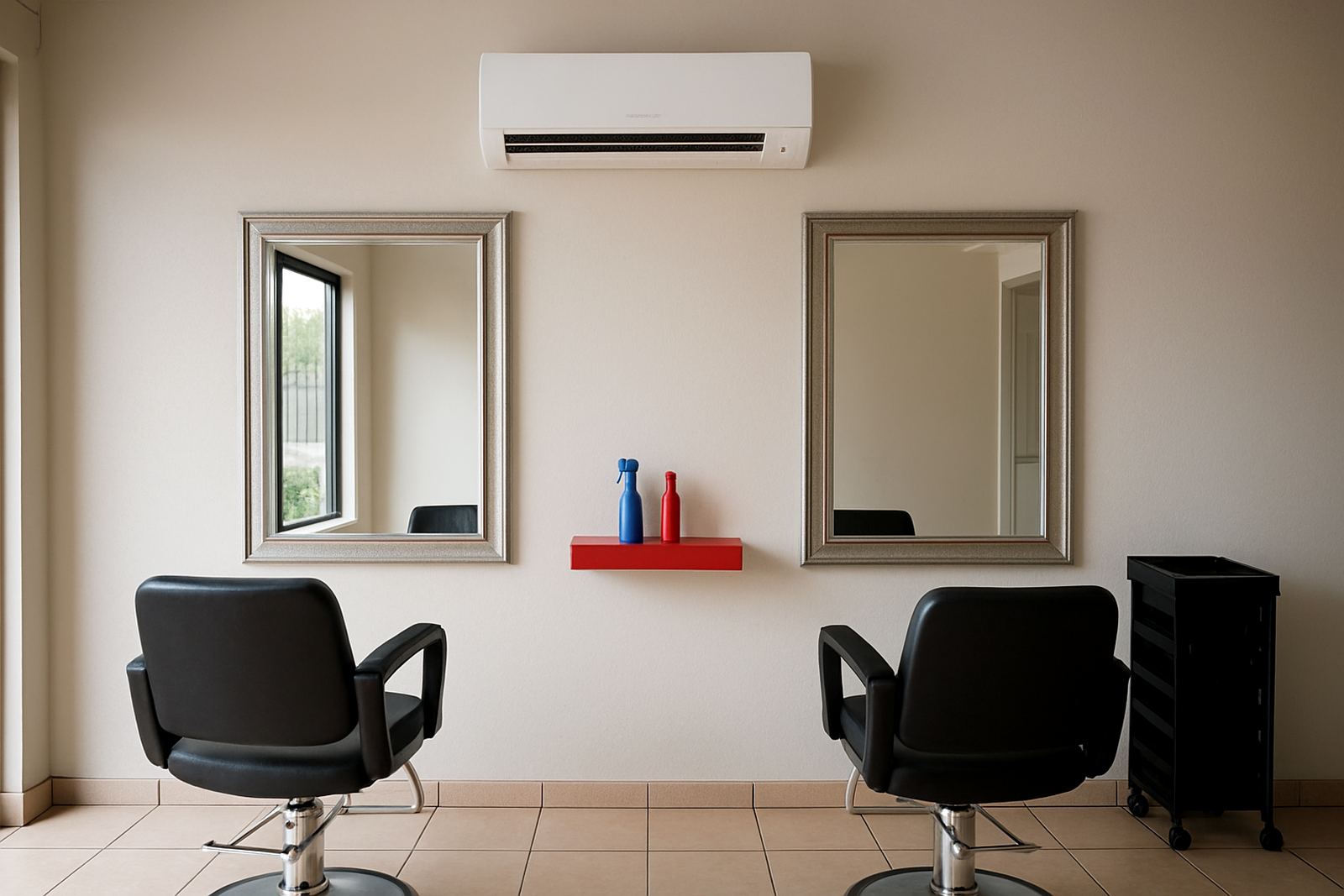
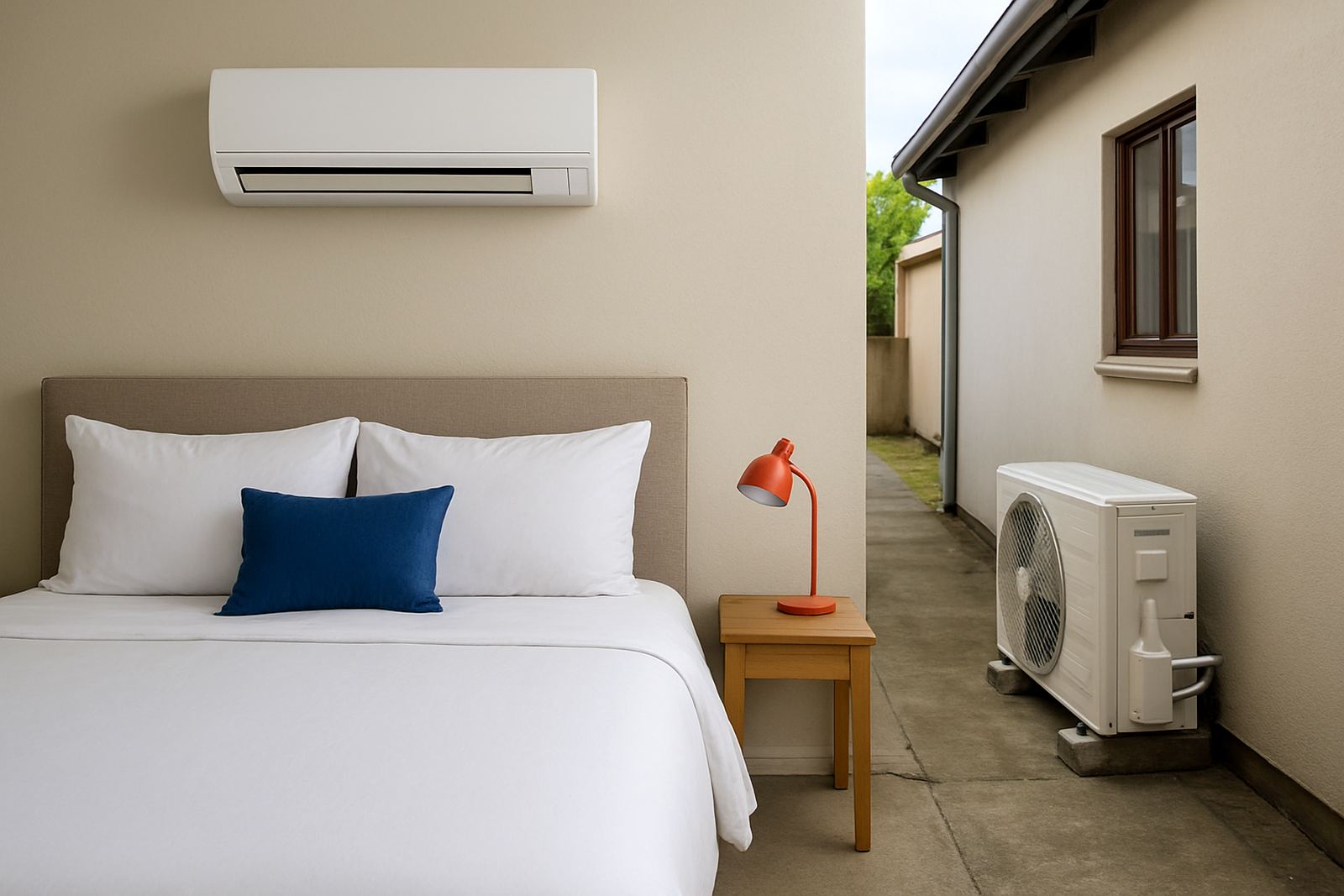
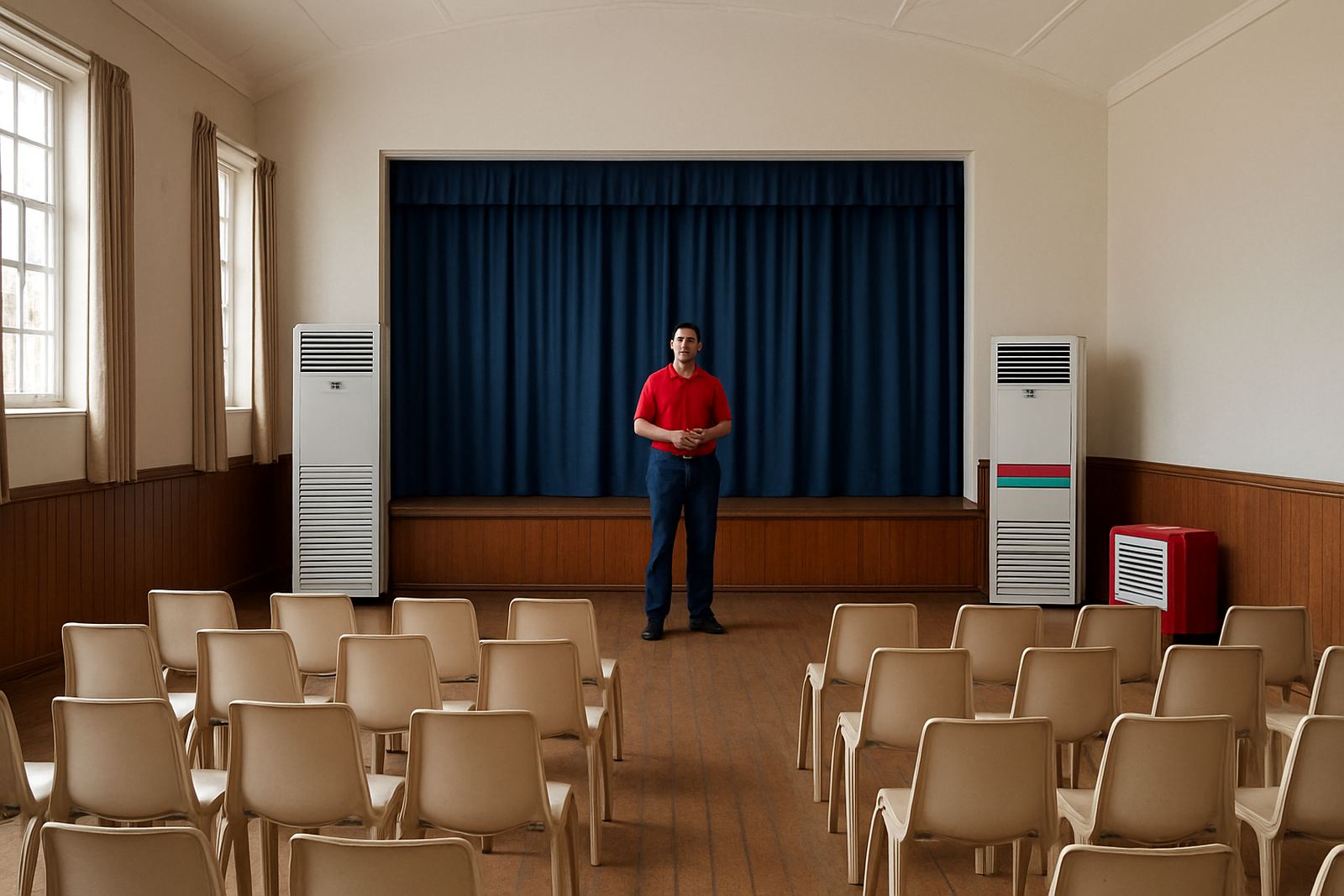
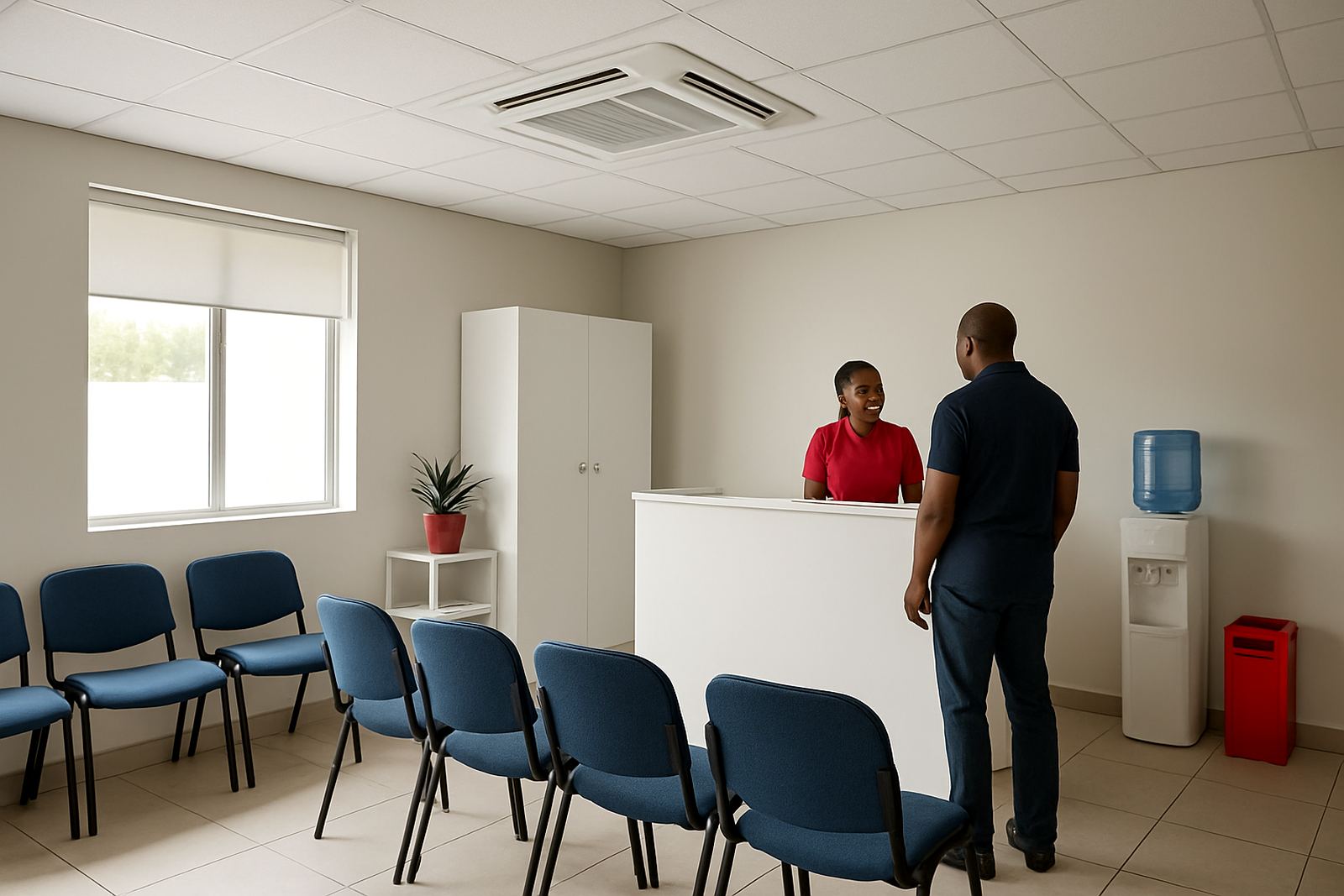
For smaller practices, wall-mounted split units are common in waiting areas, consulting rooms and reception. For larger clinics, cassette units or ducted systems may be used where ceiling space and room layout allow it. In some cases, especially where a clinic has a long reception or multiple treatment rooms, a combination of 9 000 BTU to 24 000 BTU units is fitted across the building, with larger capacities used where there is more heat load or more people moving through the space.
- Wall-mounted split units for consulting rooms and reception.
- Cassette units for open-plan waiting areas and larger treatment spaces.
- Ducted options for clinics wanting quieter airflow across several rooms.
- Dedicated admin room units to avoid overloading the main waiting area system.
Layout planning for waiting rooms, treatment rooms and offices
Good clinic planning starts with the floor plan, not the machine. A waiting room with a glass frontage, a treatment room with limited fresh air, and an admin office with computers all heat up differently. We look at the number of rooms, the daily patient flow, ceiling height, window position, and where people sit for long periods.
In waiting areas, the aim is gentle cooling and proper air movement so patients do not sit in a cold blast. In treatment rooms, the unit must not blow directly over beds, trolleys or clinical work points. In admin spaces, the priority is steady cooling for staff and equipment. Drain routing, service access and outdoor unit positioning are just as important. A badly placed outdoor unit can create noise issues, block maintenance access or collect dust from nearby traffic.
- Keep indoor units away from direct airflow onto chairs, couches and beds.
- Allow enough access for filter cleaning and fault finding.
- Place outdoor units where they can breathe and be reached safely.
- Plan for drainage so water does not drip near entries or walkways.
Common mistakes we see in clinics
The most common mistake is fitting one unit that is too small for the space, then running it flat out all day. That leads to higher bills, faster wear and poor comfort. Another problem is ignoring maintenance until the clinic has a breakdown during a busy week. In a clinic, even a few hours without cooling can affect patient flow and staff focus.
We also see systems installed without thinking about coastal corrosion, dirty filters or blocked drains. In Durban, humidity and dust can build up quickly. If the unit is not serviced, the drip tray can overflow, the airflow drops, and smells start to carry through the room. A clinic cannot afford that kind of disruption. Skipping a proper deep clean or leaving a leak check too long often becomes a bigger repair later on.
- Undersized units that never reach the set temperature.
- Outdoor units placed where they take heat, rain or salt air too directly.
- No maintenance schedule, then emergency call-outs at the worst time.
- Poor drain falls causing water stains, odours or ceiling damage.
Repair, regas and planned maintenance for active practices
When a clinic already has air-conditioning in place, the next need is usually keeping it working day after day. Our team handles fault finding, regas and leak checks, compressor replacement, fan motor repair, capacitors and contactors, drain blockages, deep clean service, planned maintenance, controls repair and breakdown call-outs. That lets the clinic deal with one supplier instead of chasing several small jobs.
For clinics in Durban and the surrounding suburbs, planned maintenance is a practical way to reduce surprise failures. Filters can be cleaned, electrical parts checked, drains cleared and gas levels assessed before a unit starts struggling. Where clinics run long hours or have several rooms in use, we can schedule maintenance around quieter periods so patient care is not interrupted.
Regular servicing also helps when power cuts or voltage changes put stress on the system. If a compressor is overworked, or a contactor starts failing, catching it early is cheaper than waiting for a full breakdown.
Budget ranges for clinic air-conditioning in Rand
Budget depends on room size, number of indoor units, ceiling type, electrical work and how much pipe run is needed. A single split unit for a small consulting room is obviously a different job from a multi-room clinic with reception, treatment spaces and admin offices. As a practical guide, many clinic jobs fall into these ranges:
- Small room supply and install: from about R9 500 to R16 000 per unit.
- Medium room supply and install: from about R13 000 to R24 000 per unit.
- Larger open areas or cassette units: from about R20 000 to R38 000 plus, depending on layout.
- Repairs and maintenance visits: from about R650 for call-outs, with parts quoted after fault finding.
If the clinic needs several rooms done at once, the overall price can improve because pipe runs, labour and access are planned together. We also help clinics choose where to spend money first, for example cooling the waiting room and treatment rooms before the admin area if the budget is tight.