What a VRF Outdoor Module Does in a Multi-Zone System
A VRF outdoor module is the part of the system that moves refrigerant between the outdoor side and the connected indoor units. Instead of running one separate unit per room, the system shares capacity across zones and adjusts output according to demand. That means a boardroom can cool down faster while a passage or storeroom uses less, which helps with running costs and comfort.
In Durban and the wider eThekwini area, this setup is often chosen for offices, retail floors, medical suites, restaurants and light commercial buildings. It also suits developments where roof space is limited and you need a neater plant layout. Coastal humidity and warm summers put strain on equipment, so correct sizing and proper installation matter just as much as the unit itself.
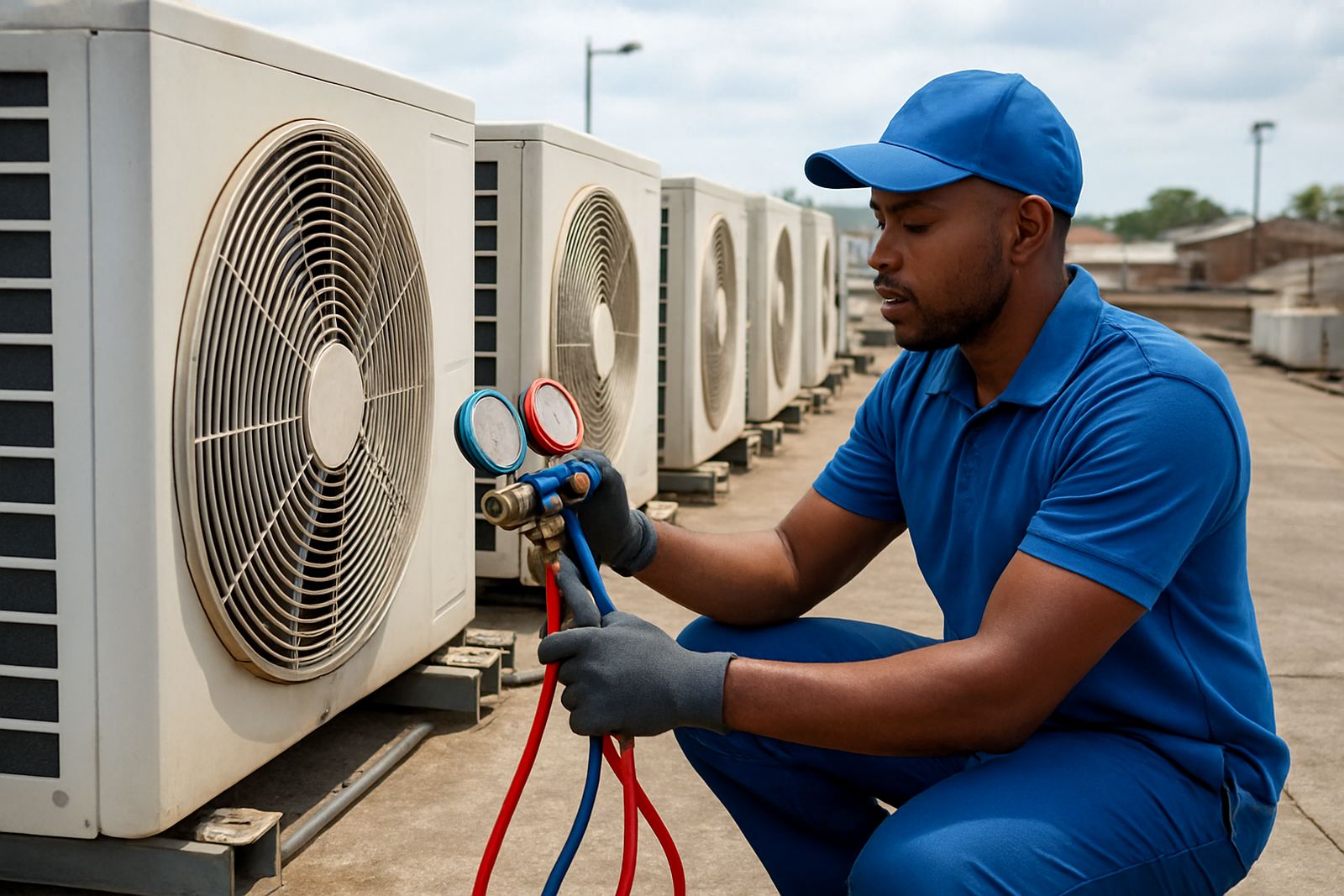
For larger premises, the outdoor module is usually part of a modular bank. That allows more than one outdoor section to be linked for higher capacity. If one section is due for service, the rest of the system can still be managed with less disruption, depending on the design.
Sizes, Capacity Options and Typical Configurations
VRF outdoor modules are available in several capacity ranges, from smaller multi-zone systems for compact commercial spaces to larger modular arrangements for full-floor or multi-storey cooling. The exact size depends on the total indoor load, the number of rooms, pipe lengths and the diversity of use across the building.
Common options include single outdoor modules, twin-module combinations and larger grouped sets for high demand sites. In practice, this gives flexibility for projects in Durban Central, South Durban and North Durban where one building might have hot street-facing offices, cooler internal rooms and occupied areas that change through the day.
- Small commercial: consulting rooms, salons, small offices, 2 to 6 indoor units
- Medium commercial: retail stores, open-plan offices, clinics, 6 to 15 indoor units
- Larger sites: schools, hotels, multi-tenant buildings, modular outdoor banks
- Higher lift or longer pipe runs: projects that need careful refrigerant design and pressure balancing
When selecting the unit, the important figures are total connected capacity, the permitted pipe length, the vertical separation between indoor and outdoor equipment, and the power supply available on site. A unit that is too small will run hard all day. One that is too large may short-cycle and waste power.
Where This Outdoor Module Suits Best in Durban
This type of module suits buildings that need different temperatures in different rooms. It works well where one side of the premises gets strong afternoon sun, where tenants change over time, or where operating hours differ from one zone to the next. It is often used in office parks, medical practices, data rooms with controlled cooling support, hospitality sites and retail stores.
In coastal areas around Clairwood, Durban Central, South Durban and the harbour side, outdoor units need good corrosion protection and sensible positioning. Salt air can damage coils, brackets and fasteners if the installation is exposed. We normally look at airflow, access for cleaning, safe drainage, and whether the unit will be affected by traffic dust, cooking grease, or fumes from nearby industrial activity.
It also helps where municipal rules or landlord conditions limit visible plant on balconies and street-facing walls. The outdoor section can often be placed on a roof, service yard or screened area, provided the base is level, well anchored and easy to reach for maintenance.
- Offices with meeting rooms and private rooms
- Retail and showrooms with uneven sun exposure
- Medical and professional suites that need zone control
- Hospitality and guest areas with changing occupancy
Installation, Power Supply and Refrigerant Requirements
VRF systems must be installed to the correct pipe sizing, cable sizing and refrigerant charge for the actual building layout. The outdoor module is not a plug and play item. It needs a proper base, isolation against vibration, controlled refrigerant piping and correct commissioning so the valves and controls communicate properly with every indoor unit.
Power supply is normally site-specific. Depending on the size of the system, that may be single phase or three phase, and the starting current and protection must be checked before ordering. On Durban sites with load-shedding or unstable supply, the control strategy and restart behaviour should also be considered. Some buildings benefit from standby power integration, while others only need a sensible restart sequence and surge protection.
We also check for suitable drainage at the indoor units, because a blocked drain can look like a gas fault when it is actually a water issue. For coastal or humid sites, we recommend careful sealing of trunking and penetrations so moisture does not get into the lineset or cable runs.
- Confirm supply voltage and phase before ordering
- Allow for pipe length, elevation and branch routing
- Use correct isolation, support brackets and weather protection
- Plan for access during service and future repairs
Care, Servicing and Common Repair Work
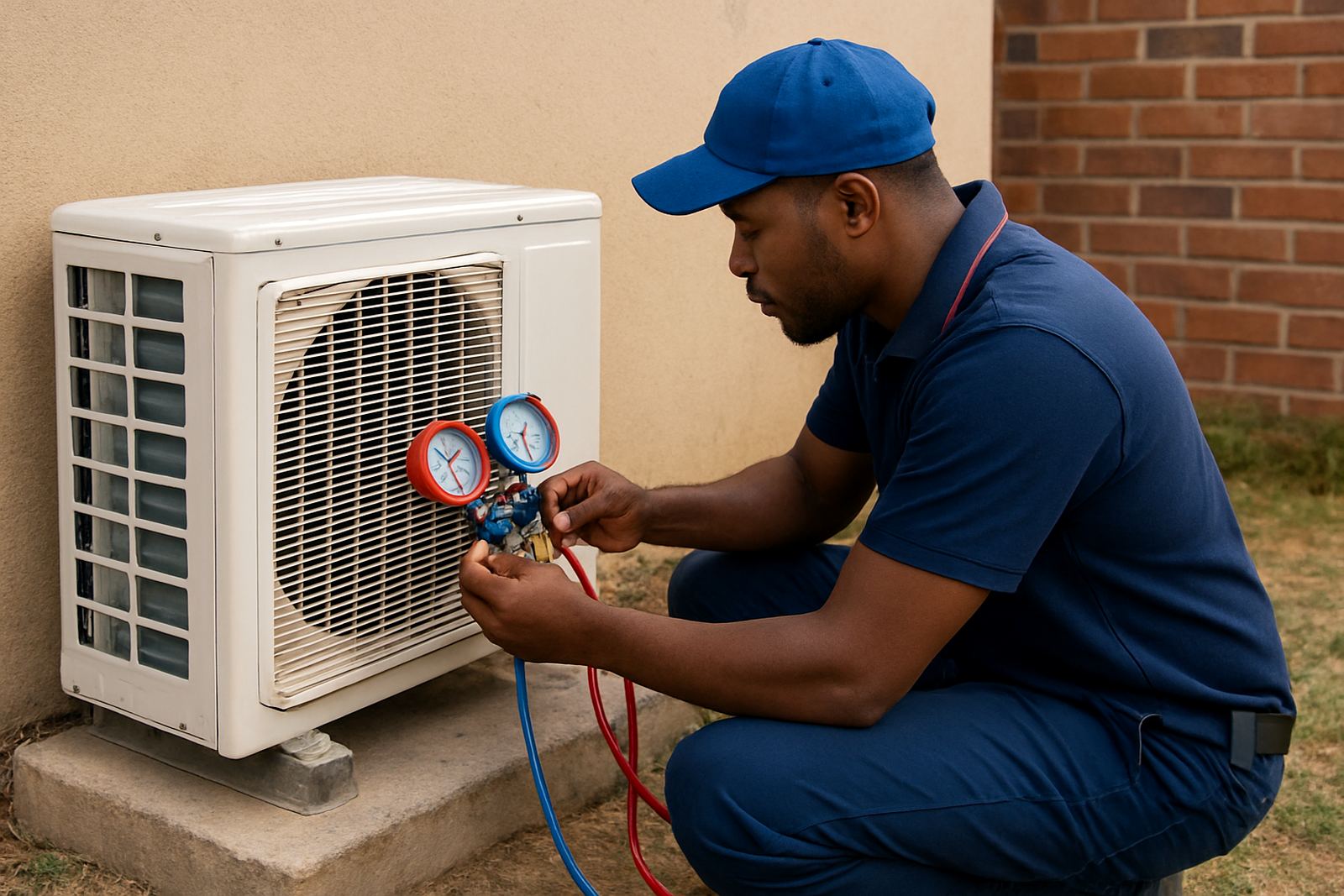
Like any commercial air-conditioning plant, a VRF outdoor module needs regular attention. Dust, salt, leaves and grease build up on the coil and fan section, and that reduces heat transfer. If the unit is left too long without cleaning, pressure rises and the system has to work harder to move the same amount of cooling. That means higher running costs and more nuisance trips.
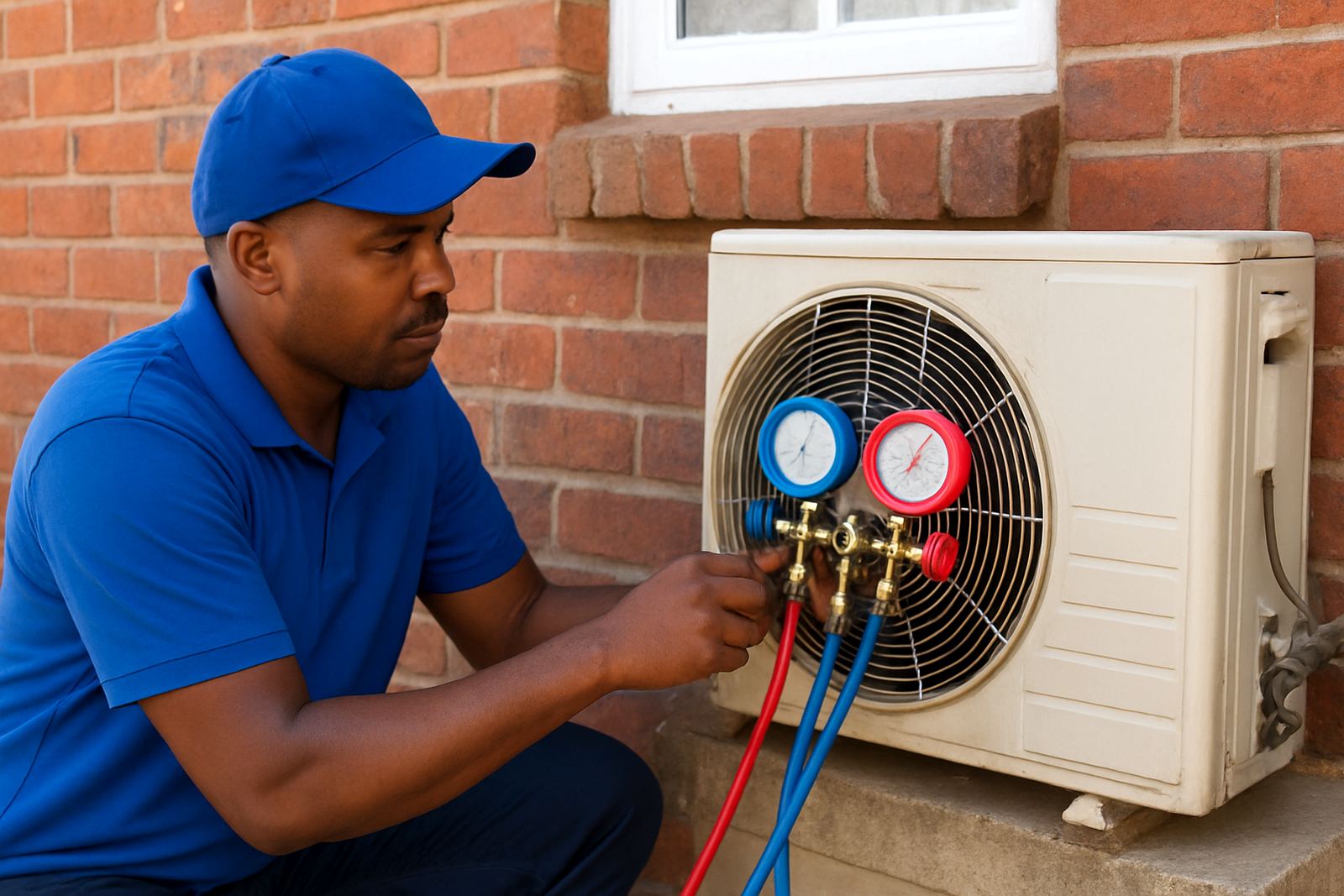
Our servicing work typically covers fault finding, leak checks, regassing where appropriate, compressor replacement, fan motor repair, capacitors and contactors, drain blockages, deep clean service, planned maintenance, controls repair and breakdown call-out. If a system is tripping or not holding temperature, we check refrigerant pressures, electrical load, error history and airflow before recommending parts.
For Durban’s climate, a planned maintenance schedule makes sense. A site near the coast may need more frequent coil cleaning than a dry inland property. A restaurant or workshop may need attention more often because grease or dust collects faster. Keeping the outdoor module clean and the indoor filters in order helps the whole system last longer.
What to Check Before You Order a VRF Outdoor Module
Before ordering, make sure the system is matched to the building and not just to a rough estimate of room size. The right choice depends on how many indoor units will run at the same time, the total cooling load, and whether the site needs future expansion. It is worth checking the roof or yard space early so the outdoor section can be installed without rework.
When you request a quote, have the following ready if possible.
- Building type and address in Durban or the greater eThekwini area
- Number of rooms or zones to be cooled
- Approximate room sizes and ceiling heights
- Power supply available on site, including single phase or three phase
- Preferred outdoor location and access details
- Any known issues such as old refrigerant pipework, water leaks or repeated trips
If you are replacing an older system, we can help assess whether the existing pipe routes, drainage and electrical supply can be reused, or if they need to be changed for the new module. That saves time and avoids surprises during installation.
Aircon Depot Support for Commercial Cooling Projects
Aircon Depot is based in Clairwood, Durban and works across Durban Central, South Durban, North Durban, West Durban and the greater eThekwini area. Founded in 2008, the team handles supply, installation and repair for domestic and commercial air-conditioning, plus spares and gas. For VRF outdoor modules, we focus on correct sizing, practical installation and support that makes sense for local conditions.
If you need help choosing a module for a new project or diagnosing a faulty system, our team can look at the site, assess the load and advise on the next step. That includes checking the outdoor position, gas charge, electrical supply and service access, so the system works properly from day one.
Key facts
| Product type | Modular VRF outdoor condenser for multi-zone commercial cooling |
|---|---|
| Use | Feeds multiple indoor units with variable refrigerant flow control |
| Typical installations | Offices, retail, clinics, restaurants, schools and mixed-use buildings |
| Power supply | Site-specific single phase or three phase, subject to system size |
| Refrigerant | Matched to the selected VRF system and factory specification |
| Service access | Needs clear airflow, maintenance access and a level mounted base |