What a server room unit does for equipment rooms
A server room unit is built to hold a more constant temperature than a standard domestic air conditioner, which matters when computers, switches, storage racks and communication gear must stay online. In Durban’s warm months and sticky coastal air, ordinary cooling can struggle when doors open often or heat builds up after power returns from load-shedding.
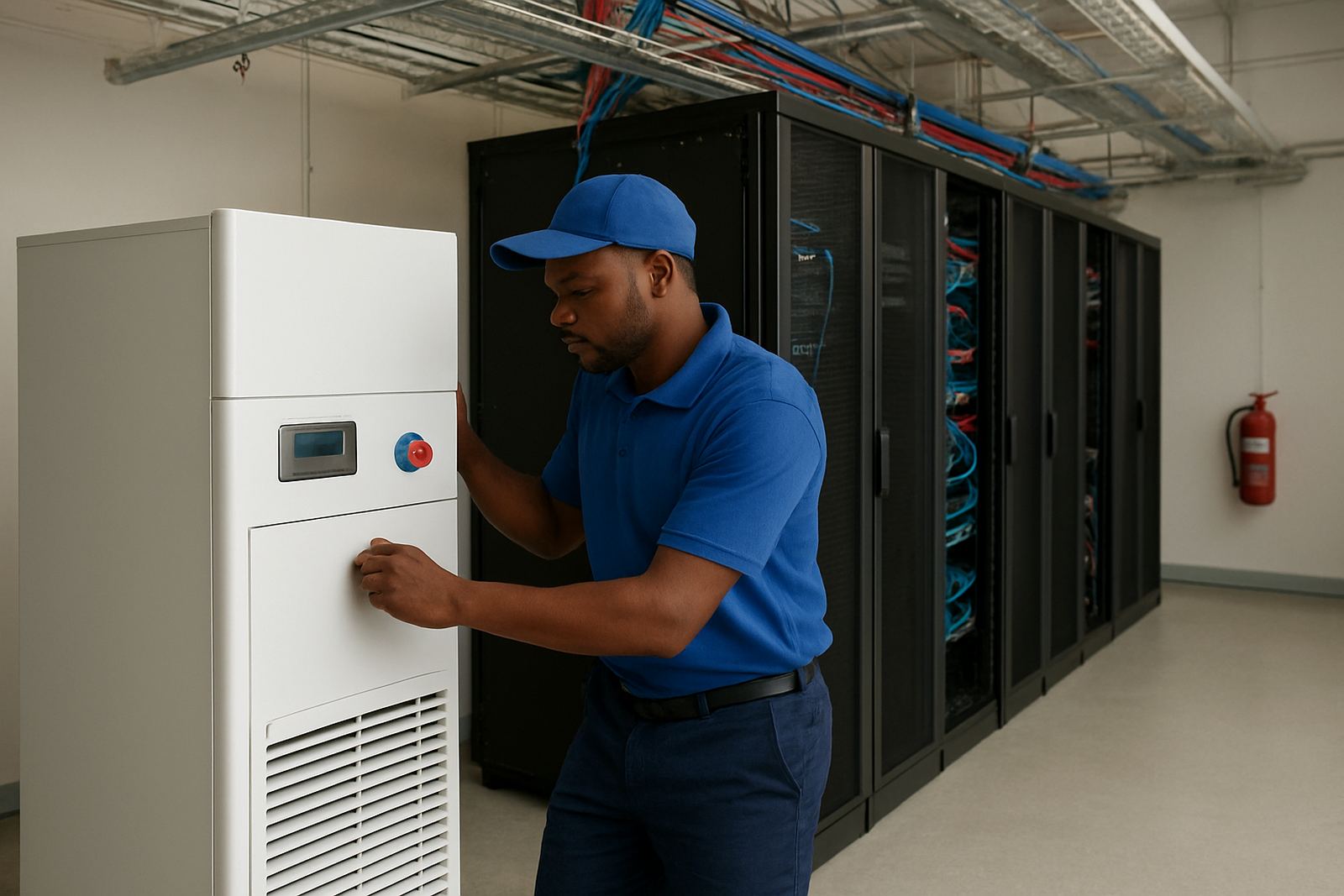
These units are selected to run for longer hours, move air across the room properly, and cope with steady internal heat loads. They are used in small IT rooms, security control rooms, network cupboards and office equipment rooms where shutdowns can cause losses. The aim is simple: keep the room within a safe band, reduce overheating and protect equipment life.
For many clients, the biggest issue is not only heat but inconsistency. A server room needs cooling that starts cleanly after an outage and keeps working without short cycling, icing or nuisance trips. That is where correct sizing and proper installation matter more than just picking a bigger unit.
Sizes and configuration options for different room loads
Server room units are chosen according to room size, equipment load, ventilation and how often the room is entered. A small communications room in Clairwood may need a compact wall mounted unit, while a larger business site in Durban Central might need higher capacity or more than one unit for duty rotation.
Common options include wall mounted split units, ducted indoor units, ceiling cassette units and, in some installations, paired units for redundancy. Where the room must keep running during servicing or if one unit fails, a two-unit arrangement can be the safer choice.
- Small rooms: about 9 000 to 12 000 BTU for light equipment loads
- Medium rooms: about 18 000 to 24 000 BTU for mixed office and network equipment
- Higher loads: 30 000 BTU and above, depending on heat output and occupancy
- Redundancy setups: two matched units for critical rooms
We also look at the room layout, because hot air recirculation behind racks can reduce performance. If the layout is poor, the unit may cool the wall, not the equipment. That is a common mistake when ordering on size alone.
Where this unit suits best in Durban and eThekwini
This product suits equipment rooms in offices, warehouses, schools, medical practices, small data spaces, retail back offices and security control areas. It is also useful where there are frequent temperature spikes from printers, UPS gear or several network devices working in one room.
Across South Durban and the port side, humidity is another factor. Moist air can encourage corrosion on fittings and can also affect electrical components if drainage is poor. A properly fitted server room unit helps keep the room dry enough to protect equipment without making the air too cold and causing condensation.
In West Durban and inland areas, dust and heat are often the bigger problem. In those spaces, regular filter cleaning and coil care become important. We have seen rooms where the cooling plant was fine, but blocked filters and a dirty drain caused water to drip near sensitive gear, which is never a good day for the client.
- Computer and server rooms
- Telecoms and network cupboards
- Security and monitoring rooms
- Back-office equipment spaces
Installation points that affect performance and safety
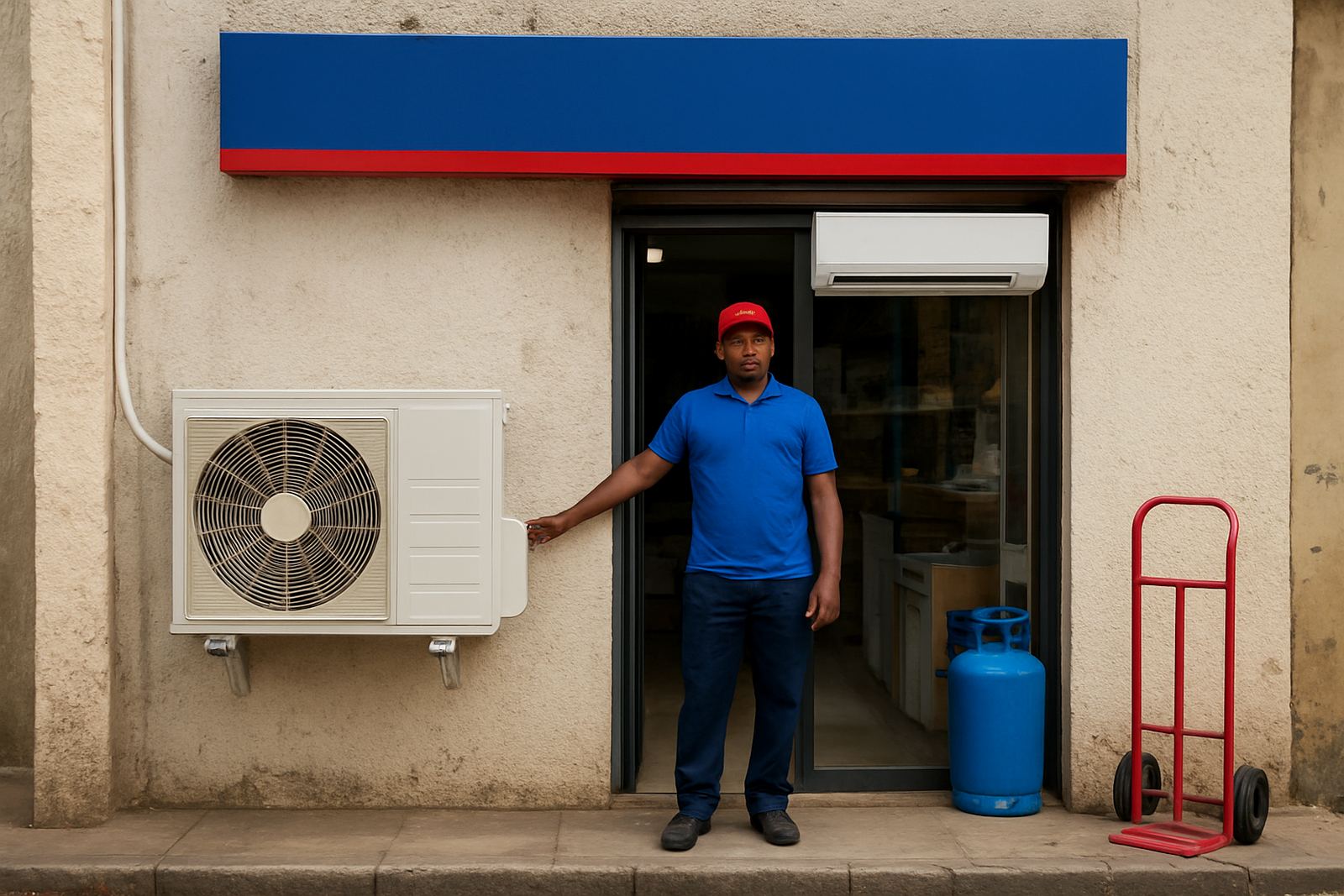
Correct installation makes a major difference. The indoor unit should be positioned to move cool air across the room without blowing directly onto sensitive equipment where condensation may form. The outdoor unit needs a secure base, good airflow and enough clearance for service access. In Durban coastal conditions, a good fix, proper brackets and neat pipework help reduce long-term rust and vibration.
Drain routing must be planned carefully. A blocked drain can overflow into racks, flooring or cable paths. We also check the power supply, isolator placement and cable size so the unit starts and runs correctly. If the room is on backup power, we confirm the unit’s start-up load and how it will behave during generator changeover or after load-shedding.
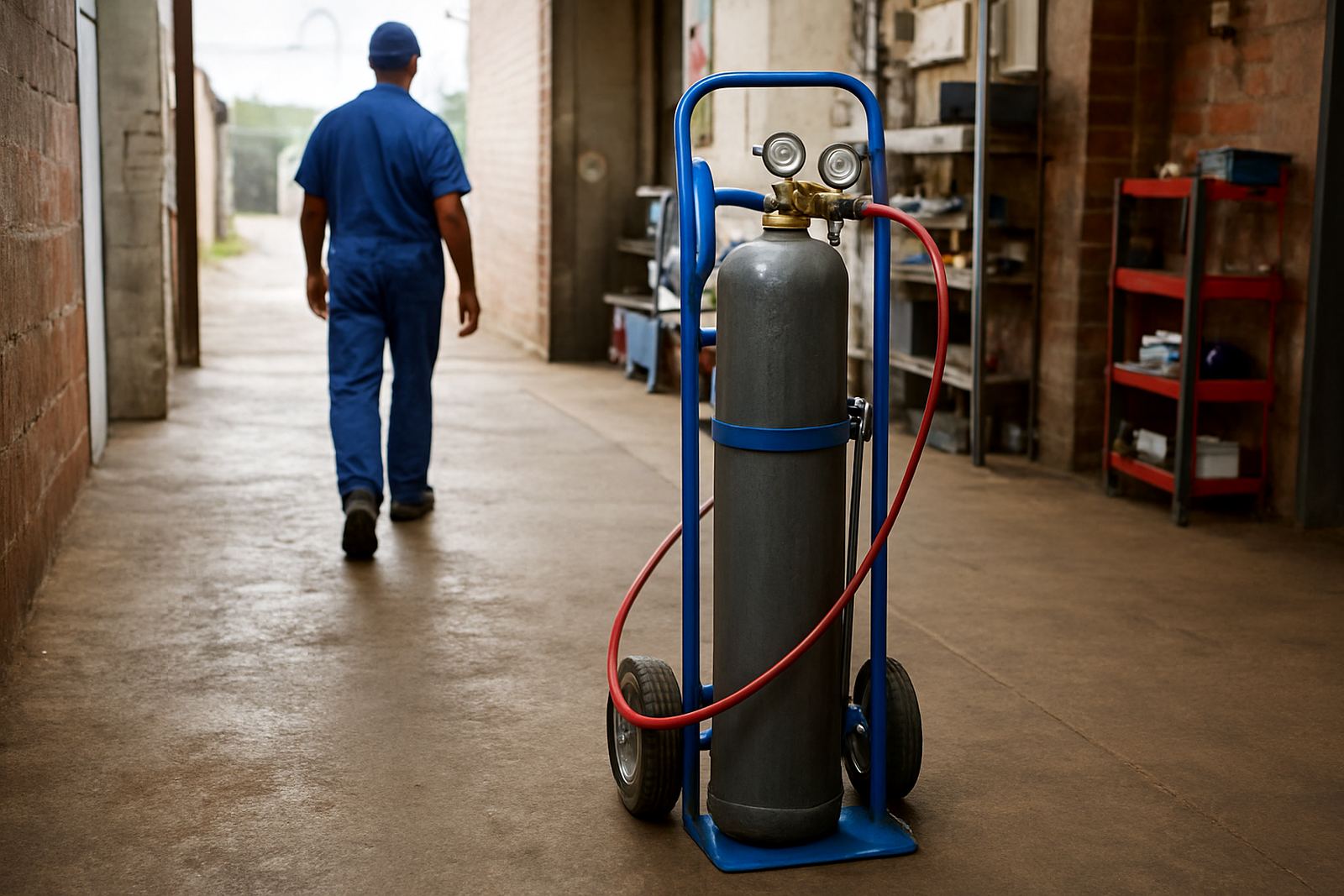
Gas type depends on the unit design and capacity. The refrigerant circuit must be charged to the correct level after pressure testing and vacuuming. Too little gas causes poor cooling. Too much can raise head pressure and shorten compressor life. That is why leak testing and commissioning are not optional.
Power, gas and drainage checks before you order
Before a server room unit is ordered, there are a few practical checks to make sure the system fits the site. These checks avoid delays, rework and surprise costs after delivery.
- Room size in square metres and ceiling height
- Approximate heat load from equipment and staff
- Single phase or three phase power supply
- Generator or inverter backup details
- Distance between indoor and outdoor units
- Drain route and safe discharge point
We also ask about operating hours. A room that runs 24 hours needs different attention from a small office server corner that runs only during business hours. If the unit will serve critical equipment, it may be wise to consider planned maintenance visits and a standby cooling option. That way the room is less exposed if one unit needs a repair.
Care, servicing and fault work after installation
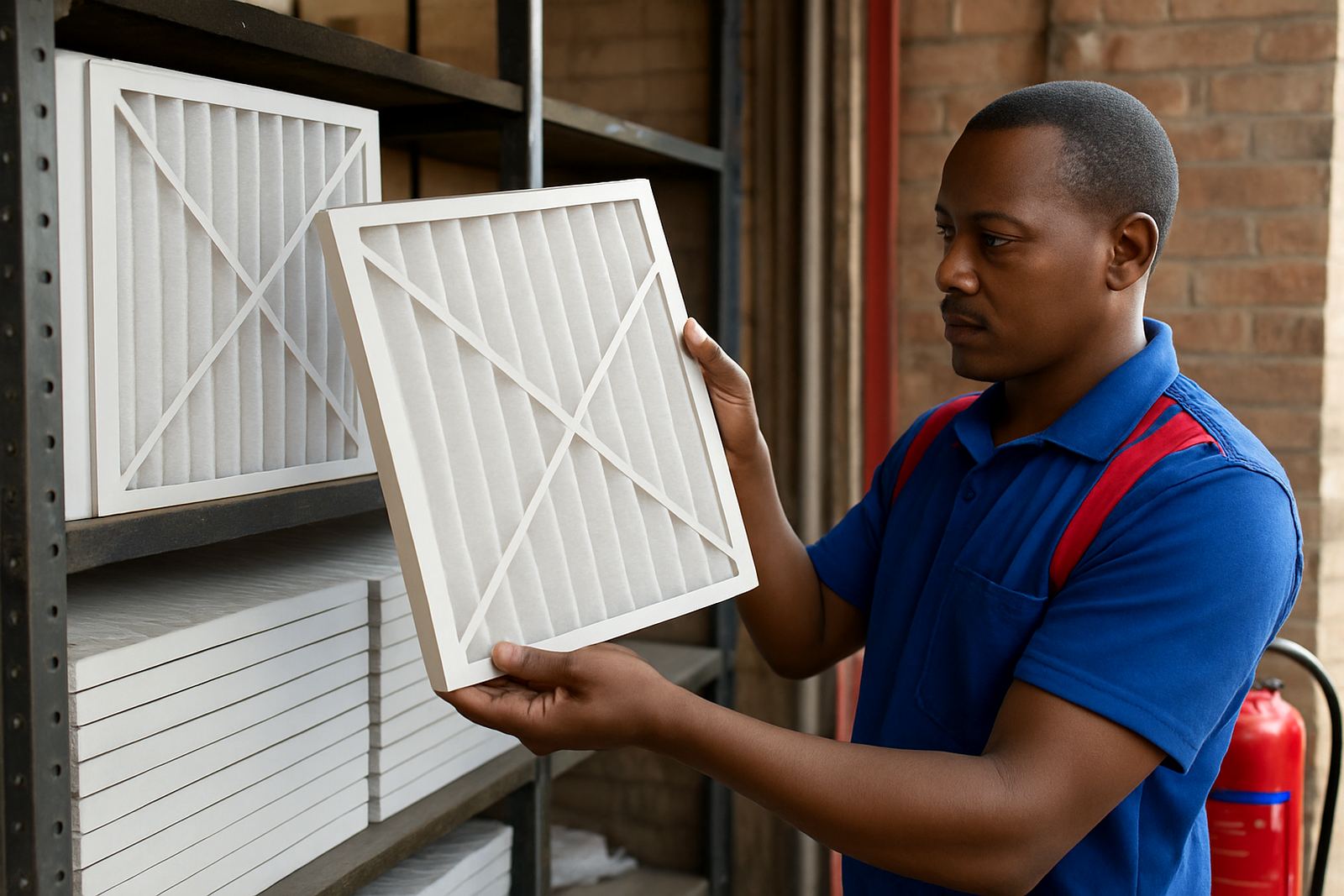
Server room units need regular servicing because fine dust, coastal humidity and continuous running all work against performance. At minimum, filters should be cleaned often, drains checked and the coil inspected. On busier sites, a planned maintenance visit every few months can help catch issues before they turn into an outage.
Our fault finding covers weak cooling, leaking refrigerant, blocked drains, compressor faults, fan motor repair, capacitors and contactors, controls repair and breakdown call-out. If the room starts warming after a power failure, the problem may be electrical rather than refrigerant related. If the unit keeps tripping, the issue might be in the supply, the contactor or the compressor starting load.
For Durban businesses, fast response matters because even a short warm-up can affect equipment. We service across Clairwood, Durban Central, South Durban, North Durban, West Durban and the greater eThekwini area, with spares and gas support from our base in Clairwood.
How to compare options before you place the order
If you are comparing server room units, do not look only at cooling capacity. Ask whether the unit is suitable for continuous duty, whether it can handle your backup power setup, and whether spare parts are available locally for future repairs. A unit that is easy to maintain is usually the better long-term choice.
It also helps to confirm noise levels if staff work nearby, and to check whether the unit needs wall mounting, ceiling space or external pipe runs that may affect the installation budget. In some sites, the best answer is not the largest unit but the one that matches the room load and layout properly. That simple step can save a lot of trouble later on.
Aircon Depot can supply, install and maintain the right server room cooling arrangement for your site, with practical advice based on local conditions, not guesswork.
Key facts
| Product type | Server room cooling unit for equipment rooms and control spaces |
|---|---|
| Typical capacity range | 9 000 BTU to 30 000 BTU and above, subject to room load |
| Supply voltage | 220 to 240V single phase or 380 to 415V three phase, depending on unit |
| Refrigerant | Factory specified refrigerant, charged to correct pressure and tested for leaks |
| Installation needs | Mounting, copper pipework, vacuum, drainage, isolator and commissioning |
| Service support | Fault finding, regas and leak check, compressor replacement, deep clean and planned maintenance |