What a portable aircon does in a Durban home or business
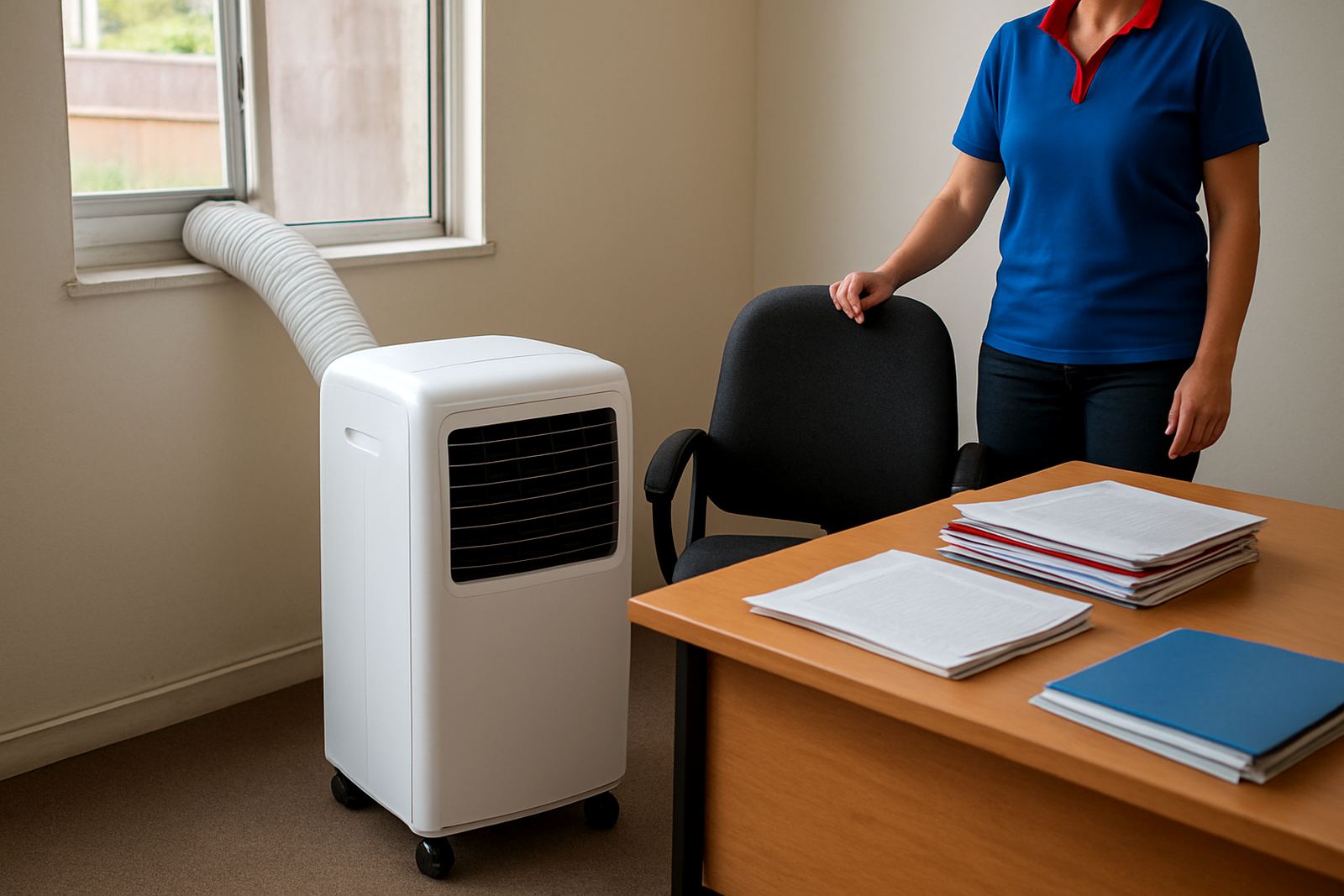
A portable aircon is a floor-standing cooling unit that can be moved from one room to another, usually on castors. It draws warm air from the room, removes heat through a condenser and sends cooler air back into the space through a flexible exhaust hose. Most units also remove some moisture from the air, which helps on humid Durban days when a room can feel sticky even with windows closed.
These units suit short-term cooling needs where a fixed split system is not ideal. Think rented rooms, home offices, server cupboards, tuckshops, small salons, temporary site offices and bedrooms that only need cooling at certain times. They are also useful during load shedding planning, because some customers prefer to cool one occupied room instead of running a whole house system.
Portable units are not a full replacement for a correctly sized split system in every case. They work best as a targeted solution for one space, one person or one activity at a time. If the room has poor sealing, a lot of glass or strong afternoon sun, the capacity must be chosen carefully or the unit will run long and struggle to keep up.
Sizes, capacity ranges and the features that matter
Portable aircons are generally available in compact, medium and larger capacities. The common sizes we deal with are 9 000 BTU, 12 000 BTU and 14 000 to 16 000 BTU, with some commercial-style units going higher. The right size depends on the room size, ceiling height, how many people are inside, and whether the space has direct sun, computers or cooking heat.
When comparing options, do not focus only on the cooling figure. Check the hose length, noise level, water removal method, wheel quality and the type of controls. For some Durban apartments and offices, a unit with a timer, sleep mode and automatic restart after power return is worth asking for. A washable filter also helps in coastal air where dust and salt can build up on filters faster than expected.
- Cooling capacity: commonly 9 000 to 16 000 BTU for most rooms
- Power supply: usually standard 220 to 240 V single-phase
- Air movement: single-hose or dual-hose designs
- Moisture handling: manual drain, continuous drain or self-evaporating system
- Controls: remote control, timer, digital display and fan settings
- Mobility: castors for moving between rooms, but keep the unit upright
Where portable cooling works best in greater eThekwini
Portable units are a sensible option in places where you need flexibility or where permanent installation is not allowed. In Clairwood, Durban Central and South Durban, we often see them used in offices, shops, workshops and back rooms that need relief during the hottest part of the day. In apartments and rental homes, they can be a practical choice if the landlord does not want wall work or if the tenant needs cooling without changing the building.
They are also useful for spot cooling. That means cooling one area rather than the full building. A portable unit can make sense in a reception area, a call room, a study, a medical waiting room or a spare bedroom used by elderly family members. In West Durban and North Durban, where homes may have different sun exposure and room sizes, a portable unit can be moved as needs change through the year.
For businesses, the main benefit is speed. If a room gets too warm, the unit can be set up quickly and put to work without major building changes. That said, the room still needs basic sealing. If the window kit is fitted badly, hot air leaks back in and the unit has to work harder. It is a simple point, but it makes a big difference.
Installation, power and exhaust setup
Portable aircons are easier to set up than fixed systems, but they still need the right placement. The exhaust hose must discharge warm air to the outside through a window, wall panel or approved vent point. If the hose runs too long or bends sharply, the unit loses efficiency. Keep the hose as short and straight as possible, and make sure the room can close properly around the vent kit.
Most portable units run from a normal household socket, but the circuit must be sound and not overloaded with kettles, heaters or extension leads. On older properties, especially where wiring has not been checked in years, it is wise to confirm that the socket and breaker can handle the starting current. If the unit trips when it starts, the issue may be the supply point and not the aircon itself.
- Use a level floor so the compressor oil stays where it should
- Keep at least 30 cm of clear space around intake and outlet areas
- Seal the window kit properly to stop warm air returning
- Do not run the unit through a thin or damaged extension lead
- If the model needs water drainage, route the drain safely and low enough
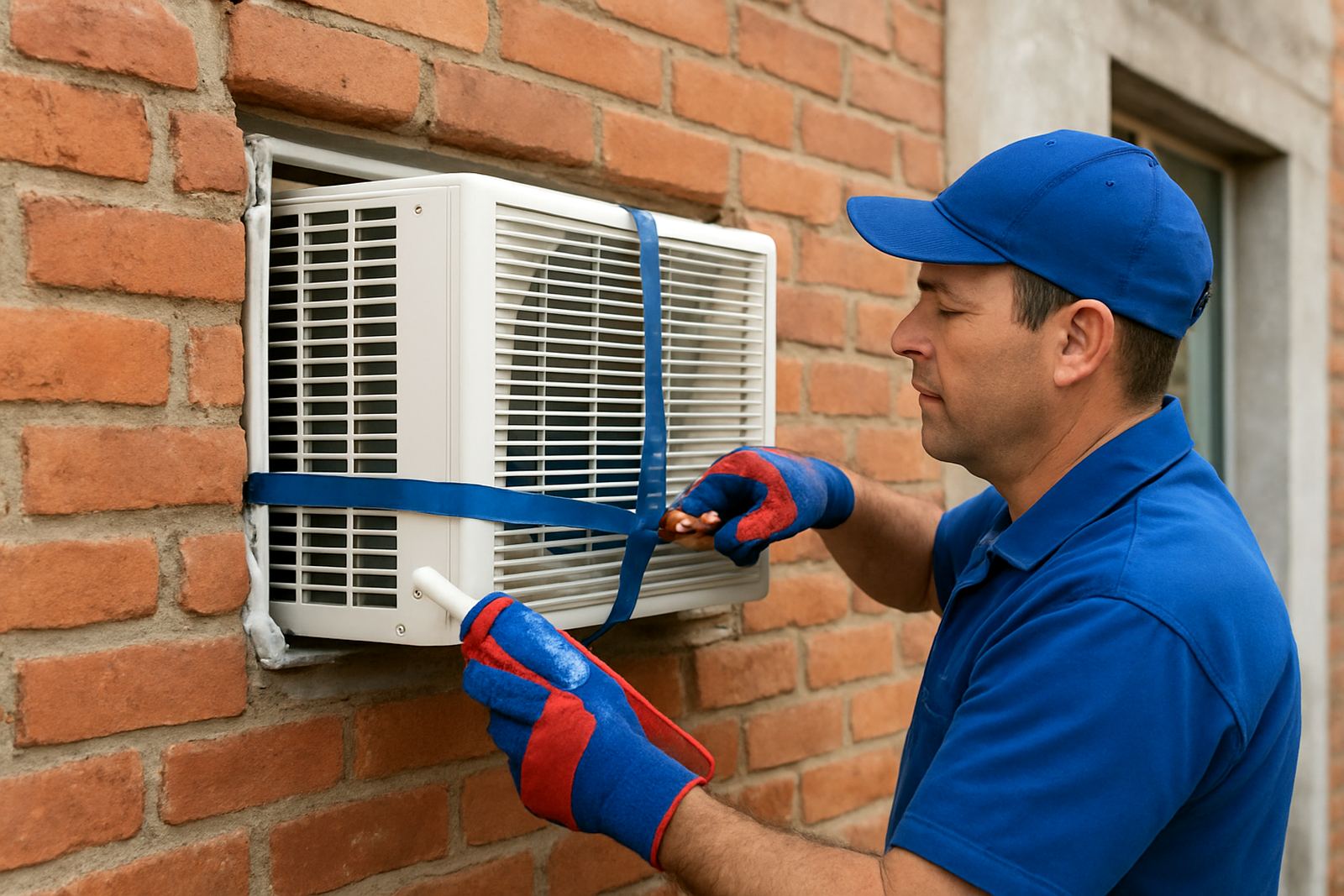
Portable units do not use refrigerant gas the way a split system installation does, but they still need correct handling during servicing. If there is a gas leak in a cooling circuit or a compressor issue, that is a technician job. Our team handles fault finding, leak checks and component replacement when a portable unit is not cooling as it should.
Care, cleaning and when a portable unit needs servicing
Like any cooling equipment, a portable aircon performs better with regular care. The filter should be cleaned often, especially in coastal areas where dust and humidity can combine into a sticky layer. If the filter is blocked, airflow drops and the unit may start icing, cycling badly or blowing weak air. The exhaust hose and seals should also be checked from time to time for cracks, loose fittings or heat leaks.
Watch for warning signs such as unusual noise, water collecting under the unit, weak cooling, a burning smell, repeated trips on power-up or the compressor starting and stopping too often. In many cases the fault is a blocked drain, a dirty coil, a faulty capacitor or a fan motor problem. Those are all issues we deal with in daily breakdown work across Durban.
Planned maintenance helps when a portable unit is used daily in a business setting. A deep clean service, drain blockages check and controls inspection can extend the life of the machine and reduce the chance of a mid-summer failure. If a customer only uses the unit for a few months of the year, we still recommend a pre-season check before the first heatwave arrives.
What to check before you order a portable aircon
The most common mistake is choosing a unit that is too small for the room. Before you order, measure the room in metres, note the ceiling height and think about heat sources. A small bedroom is very different from a glass-fronted office or a room with several people working in it. Also check whether the window style can accept a hose kit and whether the unit will need to move through narrow passages or stairs.
It helps to confirm a few practical details before supply:
- Room size in square metres and ceiling height
- Whether the room faces strong sun during the day
- How many people occupy the room regularly
- What power point is available and how far it is from the unit
- Whether the exhaust hose can vent to a window, door panel or wall opening
- Whether you need a short-term hire style solution or a unit for regular use
If you are not sure which size to choose, we can talk through the room layout and the way the unit will be used. That saves money and avoids buying a machine that runs flat-out but still leaves the room uncomfortable.
Key facts
| Product type | Portable air conditioning unit for temporary or movable cooling |
|---|---|
| Typical capacity range | 9 000 to 16 000 BTU for most domestic and small commercial spaces |
| Power supply | 220 to 240 V single-phase standard socket, subject to load conditions |
| Venting | Flexible exhaust hose with window or panel kit |
| Drainage | Manual drain, continuous drain or self-evaporating option depending on model |
| Best suited to | Bedrooms, rental units, offices, shops, site cabins and spot cooling |