What a floor standing unit does in everyday use
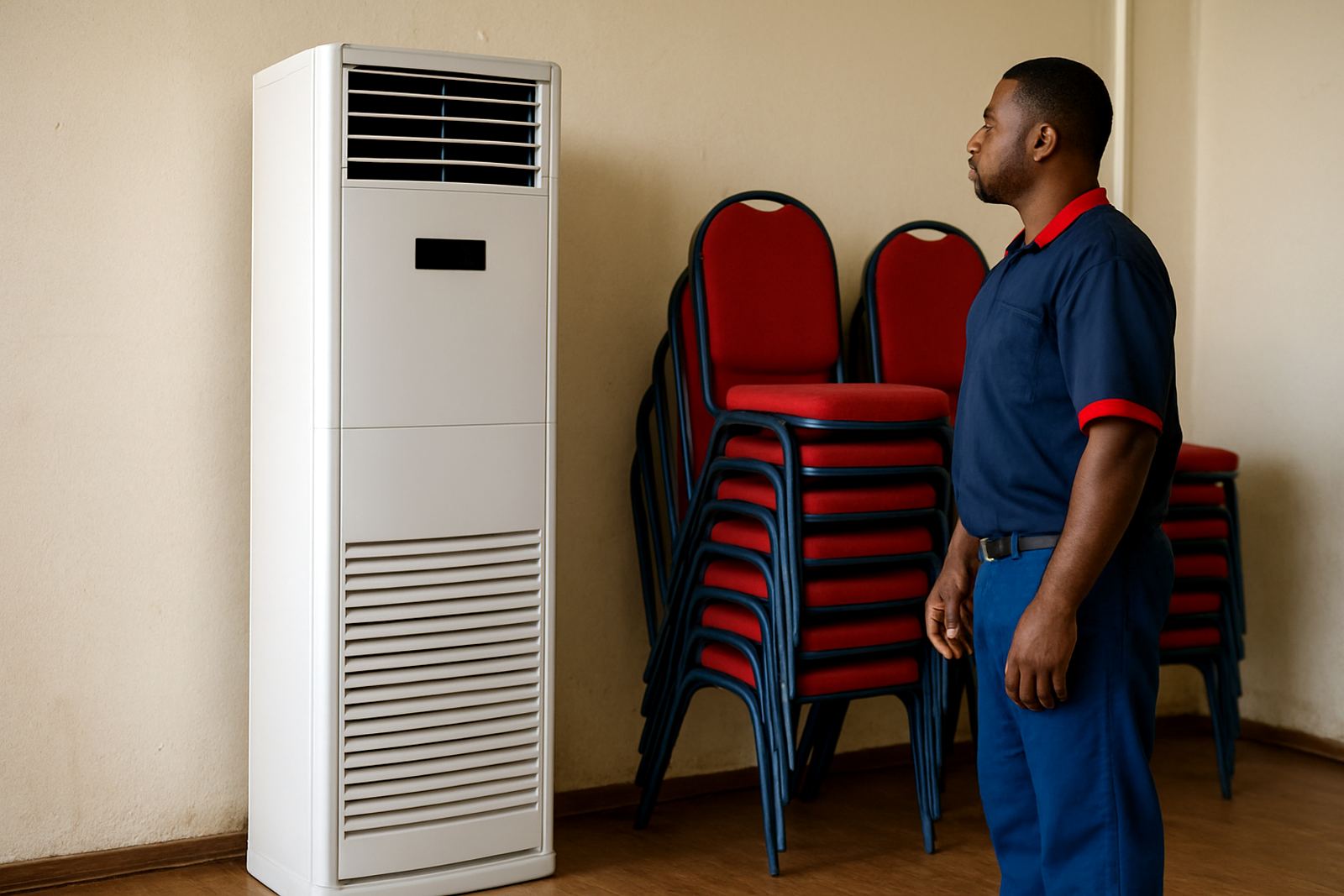
A floor standing air-conditioning unit sits low against a wall and pushes cool air across the room from a higher outlet. It suits places where a wall mounted split unit will not do the job properly, such as halls, meeting rooms, reception areas, classrooms, shops, prayer rooms and server rooms. Because the body is upright and freestanding, it can be fitted where there is not much headroom or where the wall structure is not ideal for heavier indoor equipment.
These units are often chosen for Durban buildings that run hot through the day, especially where doors open often and people move in and out. They give a strong, direct air throw, which helps cover larger open spaces more evenly. In commercial use, that matters when the room has glass fronts, high foot traffic or heat from equipment. In domestic settings, they can be a good answer for converted spaces, upstairs rooms or home offices with awkward walls.
The main idea is simple: if you need cooling but the normal wall mounted option is not practical, a floor standing unit gives you another way to get controlled comfort without changing the room layout too much.
Sizes, capacities and configuration options
Floor standing units are available in different cooling sizes so the unit can match the room rather than work too hard. The right size depends on floor area, ceiling height, insulation, glazing, number of occupants and heat load from computers, fridges or machinery. A small office may only need a lighter capacity, while a hall, server room or retail floor may need a much larger model with stronger output and better air distribution.
Common options include single split systems, duct connected floor standing units for more controlled air delivery, and units with wired wall control for easier temperature adjustment. Some models suit cooling only, while others can offer heating as well. In Durban, many clients prefer a setup that handles humid weather and frequent use without constant adjustment.
- Entry level units for smaller rooms and light office use
- Mid-range units for open plan areas and medium commercial spaces
- Higher capacity units for halls, server rooms and busy public areas
- Cooling only or heat pump options depending on the application
- Wired or remote control setup, depending on access and user preference
When we help with product selection, we look at the room size and the way the space is used during the day. A unit that is too small will run long and struggle. One that is too large may cycle too often and waste power. The aim is correct matching from the start.
Where a floor standing unit suits best
Floor standing units are especially useful where wall mounting is restricted, such as in rooms with windows all around, reinforced walls, glass partitions or fitted cupboards. They also work well where the user wants the indoor unit kept lower for easier access and servicing. In some older Durban buildings, there is not enough clean wall space for a standard high wall unit, so a floor standing option becomes the practical answer.
They are commonly installed in:
- Offices and boardrooms
- Church halls and community centres
- Shops and customer waiting areas
- Computer rooms and server rooms
- Medical consulting rooms
- Homes with large open living areas or enclosed patios
Coastal humidity and salt air can also affect equipment over time, so location matters. If the unit is placed where it receives dust, damp air or repeated splash exposure, maintenance needs increase. We always consider airflow, drainage and service access before recommending the final position. In places like Clairwood, Durban Central, South Durban and the wider eThekwini area, the installation plan should suit both the building and the local climate.
Installation, power supply and gas requirements
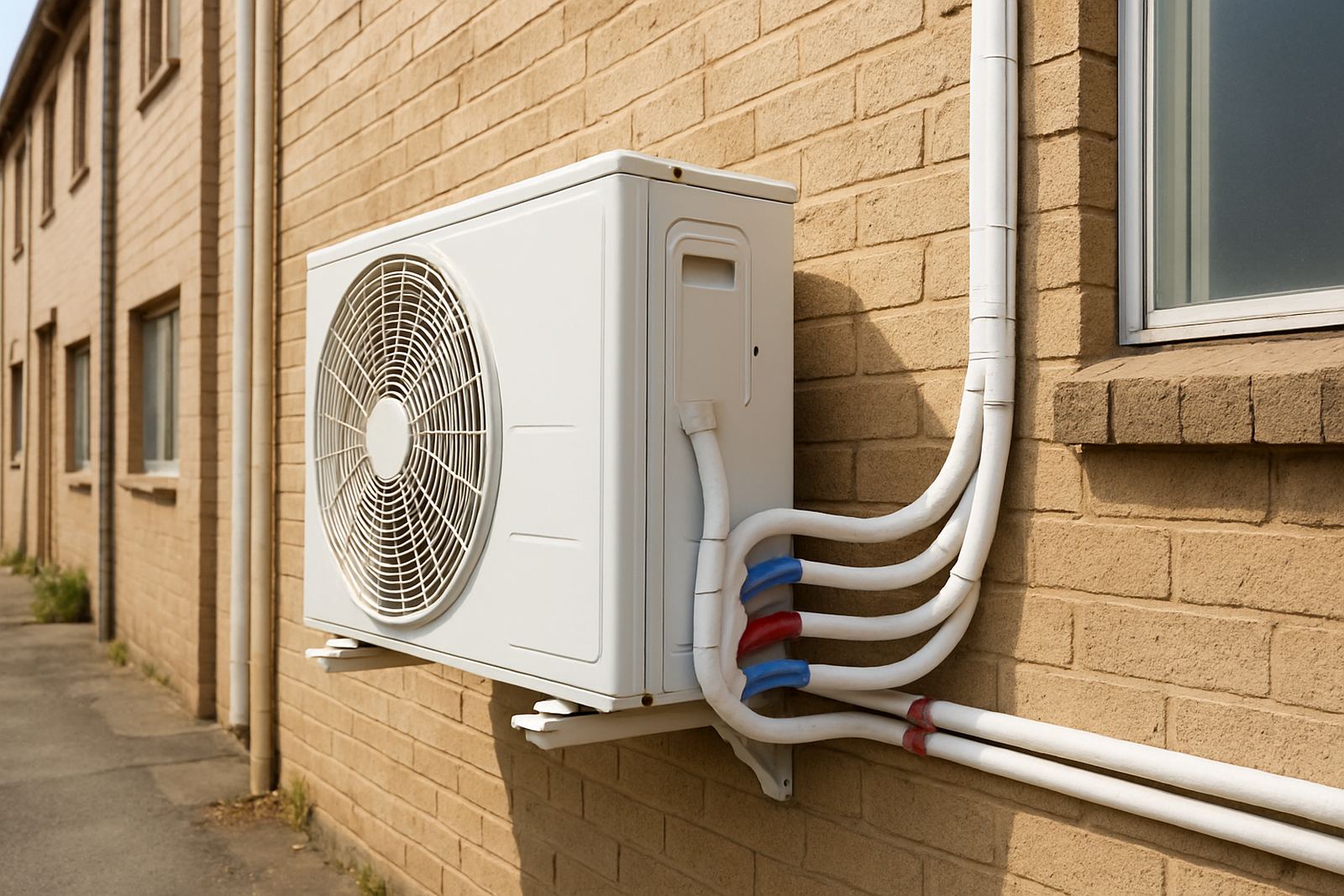
A floor standing unit still needs the same careful installation standards as any other air-conditioning system. It requires a suitable electrical supply, proper drainage, correct refrigerant pipe sizing and safe positioning of the outdoor unit. The installer must check that the circuit can handle the starting load and that the cable run is suitable for the chosen capacity.
Power needs vary by size, and larger units may need their own dedicated isolator and circuit protection. If the supply is unstable, as can happen during load-shedding or after a municipal interruption, the system should be protected properly to reduce damage to boards, contactors and compressors. In some cases, a delayed restart setting is advisable so the unit does not try to start too quickly after power returns.
Gas charge is equally important. The refrigerant circuit must be commissioned to the correct level for the pipe length and system type. Too little gas causes poor cooling and icing. Too much gas can drive up pressures and shorten compressor life. On installation we check for leaks, evacuate the system properly and test operation under normal load.
For commercial premises, placement should also allow enough space for future repair work, filter cleaning and gas checks. A tight installation might save a few minutes on day one but it can make fault finding much harder later on.
Care, servicing and common wear points
Like any air-conditioning equipment, a floor standing unit needs regular care if it is going to run well through summer. Dust build-up on filters and coils reduces air flow, makes the unit work harder and can cause weak cooling. In Durban, where the air can be humid and at times salty, coils and drain pans also need proper cleaning to keep moisture moving out of the unit.
Routine service should cover filter cleaning, coil washing, drain checks, electrical testing and a look at the fan motor, capacitors and contactors. If the unit starts smelling musty, dripping water or switching off unexpectedly, do not leave it too long. Small drainage or control faults can turn into bigger repairs if ignored.
- Clean filters every few weeks in heavy use areas
- Book a deep clean service at least once or twice a year
- Check drain lines for blockages before the rainy season
- Inspect fan motors and capacitors if the fan speed drops
- Keep the outdoor unit clear of leaves, dust and wall obstructions
For businesses, planned maintenance helps avoid breakdowns during busy hours. For homes, regular servicing keeps running costs lower and helps the unit last longer. It also gives us a chance to spot weak gas levels, worn controls or a compressor problem before the room gets uncomfortable.
What to check before you place an order
Before ordering a floor standing unit, it helps to confirm a few practical details. Measure the room properly, including ceiling height and any partitions that affect airflow. Check where the indoor unit will sit, where the outdoor unit can go and how the condensate water will drain away. In some buildings, municipal or body corporate rules affect drilling, external brackets or visible pipe runs, so that should be checked early.
It is also worth considering noise, access and day to day use. A server room may need a more controlled setup with limited noise. A hall may need stronger air distribution and quicker cool-down time. If the unit will be used by staff or the public, the controls should be easy to reach but not easy to tamper with.
- Room size and ceiling height
- Number of people in the space
- Heat from equipment, kitchens or sunlight
- Available electrical supply and isolator position
- Drain route and outdoor unit placement
- Service access for cleaning and repairs
If you are unsure, we can help assess the site and match the unit to the space. That avoids the common mistake of choosing on appearance alone. A good fit is about capacity, installation practicality and long term running cost, not just the unit size on paper.
Key facts
| Unit type | Freestanding indoor air-conditioning unit |
|---|---|
| Typical use | Commercial rooms, halls, server rooms and larger domestic spaces |
| Cooling range | Available in several capacities to suit small to large areas |
| Control options | Remote control or wired wall control, depending on model |
| Installation needs | Dedicated power supply, refrigerant piping, drainage and outdoor unit |
| Service items | Filters, coils, drain line, gas charge, fan motor, capacitors and controls |