What an evaporative cooler does in Durban conditions
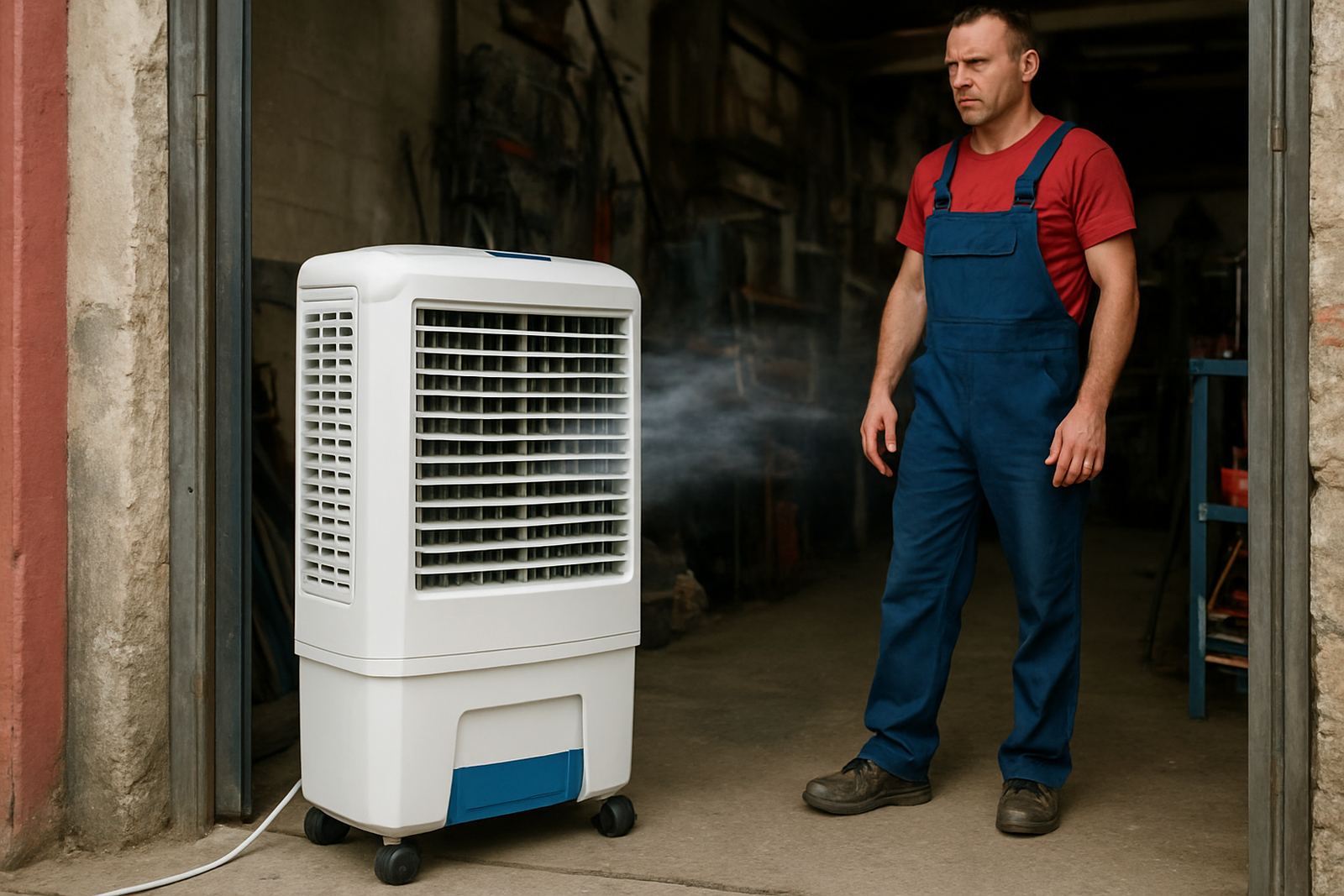
An evaporative cooler cools air by drawing it through wet pads and pushing the cooler air into the space. It is not the same as a standard air-conditioner, and it does not use a refrigerant circuit or a compressor. That makes it a useful choice for certain workshops, patios, small halls, tuck shop areas, open plan trading spaces and warehouses where doors are often open.
In Durban and the greater eThekwini area, this type of cooler can be a practical fit in dry or mixed ventilation settings, but it must have somewhere for warm air to escape. If the room is sealed up, the cooler will struggle. If the air can move through louvres, open windows, roller doors or extractor points, you get much better results.
For coastal humidity, the main point is simple. The more humid the air, the less evaporative cooling you will feel. That is why we look carefully at the space first, instead of guessing. A cooler that suits a covered loading area in Clairwood may not suit a closed meeting room in Durban Central.
Sizes and options we supply for local sites
Evaporative coolers are normally selected by airflow, water tank size and whether the unit is portable or fixed in place. Smaller portable units suit personal comfort, light retail areas and outdoor seating zones. Larger units suit industrial bays, assembly spaces and bigger open plan rooms. We can supply options to suit one room, several bays, or a fixed installation with ducting where needed.
- Portable units for quick relocation and temporary use
- Pedestal or trolley units for staff areas and open serving counters
- Wall mounted or fixed units for more regular operation
- Ducted units for distributing air into larger spaces
- Single phase or three phase electrical options, depending on the model
- Manual fill tanks or plumbed water feed, where site conditions allow
When we specify a unit, we look at floor area, ceiling height, number of people inside, heat load from equipment, and how often doors are opened. A 60 m2 workshop with roof heat and frequent traffic needs a very different unit from a shaded veranda. That is where correct sizing matters more than any sales pitch.
Where an evaporative cooler works best
These units work best in spaces that benefit from fresh air exchange. They are often used in light industry, storerooms, vehicle service areas, canteens, garden centres, outdoor hospitality spaces and sheltered work areas. In South Durban and West Durban, many clients prefer them where they want air movement without the higher power draw of traditional cooling.
They are less suitable for sealed offices, bedrooms, boardrooms and enclosed spaces where humidity needs to stay low. If the space is tightly closed, you can end up with damp air and poor comfort. For that reason we check the room layout, openings, roof type and airflow direction before recommending anything.
For municipal or site compliance, installation must also suit the building setup. That can include safe cable routing, correct isolators, clear access for cleaning, and water connection points that do not cause leaks onto walkways or stock areas. In busy commercial sites, that small planning step avoids trouble later.
- Best for airy spaces with cross ventilation
- Better for open or semi open areas than sealed rooms
- Useful where running cost matters and load-shedding backup is limited
- Works well in places with regular door opening and hot ambient conditions
Installation, power and water requirements
Most evaporative coolers need a suitable electrical supply and a steady water source. Portable units may use a standard plug point, while larger units can require a dedicated circuit and proper isolation. If the unit is fixed or ducted, we confirm the site power first so the installation is safe and neat. There is no gas charge, because these units do not use refrigerant gas in the normal aircon sense.
If you want better performance during load-shedding, we can discuss how the unit fits with your backup supply. Evaporative coolers can be more practical than some other systems when power is limited, but the fan motor still needs reliable current. For some sites, a smaller unit on backup power is the better answer than oversizing the equipment.
Water quality matters too. Hard water, dirt and scale build-up can reduce cooling performance and shorten pad life. In Durban’s humid coastal areas, we often recommend routine flushing and pad cleaning, especially where the unit runs daily. A clean water line and proper drainage also helps prevent smells and mineral deposits.
Care, servicing and spare parts
Like any cooling equipment, an evaporative cooler needs regular attention. Pads should be checked for blockage and wear, the tank needs cleaning, the fan and motor should be inspected, and the pump must be kept free of sediment. If the unit smells stale or starts pushing less air, it is usually telling you something. Catch it early and the repair is often simple.
We handle fault finding, planned maintenance and breakdown call-outs across Clairwood, Durban Central, South Durban, North Durban and greater eThekwini. We also supply spares and gas for air-conditioning work, and we can assist where a site has a mix of cooling systems. For evaporative units, the common service items include pads, pumps, belts on some models, float valves, switches, controls and fan motors.
- Clean the tank and flush out silt before winter storage
- Check pads monthly in heavy-use conditions
- Inspect wiring, switches and controls for heat damage
- Replace worn seals before water starts leaking
- Book a service if airflow drops or the unit starts tripping
What to check before you place an order
Before ordering, decide where the cooler will sit, what area you want to cover, and whether the space has enough ventilation. Measure the room length, width and ceiling height, then tell us how many openings there are and how often people move in and out. It also helps to know whether the site has a water point nearby, single phase power, or three phase supply for larger units.
Think about practical details too. Will the unit need wheels, wall mounting, or ducting? Do you need a top fill tank or a plumbed line? Is the area near the coast where corrosion may be a concern? Are there dust, grease or chemical particles in the air that will affect the pads? The answers guide the right model.
If you are unsure, send us the room size, a few photos and the site suburb. We will help you choose a cooler that suits the space instead of pushing something too small or too big. That saves time, keeps running costs down and gives you better day to day comfort.
Key facts
| Cooling type | Evaporative air cooling with wetted pads and fan driven airflow |
|---|---|
| Typical space fit | Open or semi open rooms, workshops, patios, halls and trading areas |
| Airflow options | Portable, fixed or ducted models depending on site size |
| Power supply | Single phase or three phase, model dependent |
| Water supply | Manual fill tank or plumbed feed where suitable |
| Maintenance points | Pads, pump, fan motor, float valve, controls and drainage |