What a copper pipe kit is and why it matters
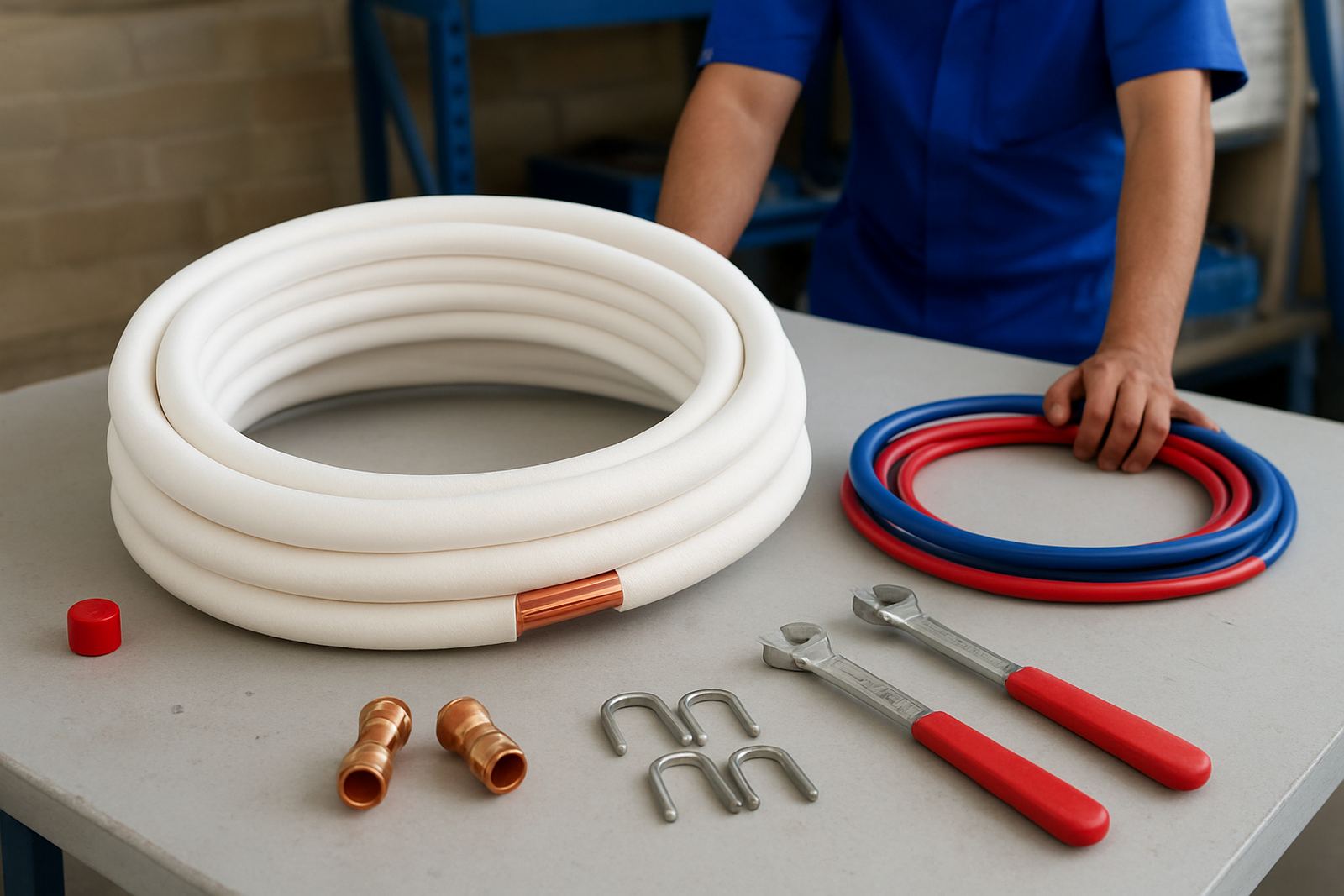
A copper pipe kit is a matched pair of refrigerant pipes supplied in pre-cut lengths, usually with insulation fitted to the larger suction line. It is used to connect the indoor and outdoor units on split system air-conditioning installations, giving you the route for gas to move between the units without unnecessary joints or messy offcuts.
For installers in Durban and greater eThekwini, this matters because the pipe run must suit the building, the wall route and the load on the unit. A tidy run is easier to seal against rain, less likely to rub through, and simpler to service later. In coastal areas like Clairwood, South Durban and Durban Central, good insulation also helps with humidity and reduces sweating on the pipework.
These kits are commonly chosen for domestic rooms, small offices, shops and light commercial sites where the installer wants a ready set of pipes at the correct length. It is the practical choice when the job needs a clean finish and you want to avoid too many onsite cuts or bends.
Available sizes, lengths and what to order
Copper pipe kits are normally supplied in paired sizes, because most split systems use one smaller liquid line and one larger suction line. The exact combination depends on the air conditioner capacity. Ordering the wrong size can affect gas flow and performance, so it is worth checking the unit requirement before you buy.
Common options are based on pipe diameter and length. Typical sizes include 1/4 inch with 3/8 inch for smaller units, 1/4 inch with 1/2 inch for medium units, and 1/4 inch with 5/8 inch or larger for bigger systems. Lengths are selected to suit short wall mounted installs, longer ceiling routes, or runs between floors. If you need extra length for a double-storey home in West Durban or a shop fit-out in Durban Central, choose the nearest match rather than forcing a tight route.
- Check the indoor and outdoor unit connection sizes
- Measure the full route, not just the straight wall distance
- Allow for bends, drops and service loops
- Confirm whether the kit includes insulation on one or both pipes
- Ask if fittings are flare-ready or plain cut ends
Where this kit suits best on site
This product suits any installation where neat routing and standard connection sizes are needed. It is useful for new domestic installs, unit replacements, office cooling and small retail or workshop jobs. In apartments and sectional title properties, a pre-cut kit can also make compliance easier because the route is planned more cleanly and there is less site mess.
It is especially handy in Durban’s coastal belt, where salty air can be hard on exposed parts and poor insulation shows up quickly. If the pipe run passes through roof space, along an external wall or through a hot ceiling void, the insulation quality becomes just as important as the copper itself. For sites with load-shedding, a proper install also helps when the system is restarted after a power cut, because there is less strain from poor pipe routing and vibration.
- Domestic wall split systems
- Small office and consulting rooms
- Shops, salons and reception areas
- Flatlets and backyard units
- Light commercial spaces with standard runs
Installation needs, gas compatibility and power checks
A copper pipe kit is part of the refrigerant circuit, so it must be matched to the unit type and gas specification. The installer needs to confirm that the pipe size and wall thickness suit the refrigerant pressure used by the system. Using the wrong line can lead to poor cooling, higher running costs, noisy operation or repeated call-backs.
The kit itself does not use mains power, but the full aircon install does need correct electrical supply, isolation and protection. On many Durban jobs the issue is not just the piping, it is the power feed, the outdoor isolator position and whether the drain can fall away properly. A good installation also needs a vacuum, pressure test and leak check before the gas is released. If the system is being replaced, the old gas should be recovered and handled correctly.
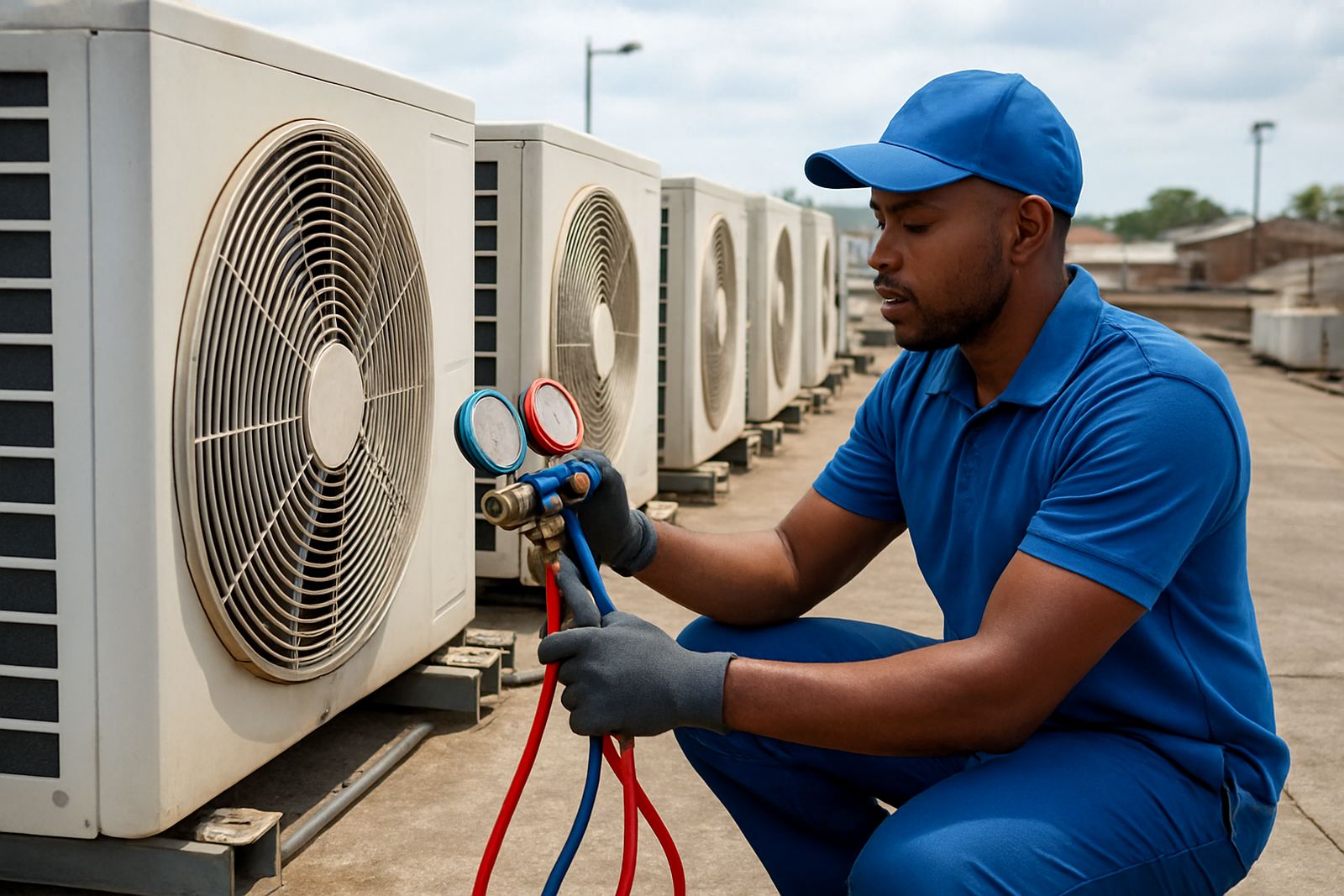
Our team works on domestic and commercial systems across Clairwood, South Durban, North Durban and the wider eThekwini area. If you are unsure about fitment, we can check the pipe route, unit size and gas requirements before the job goes ahead. Small things matter here, like a bend that is too tight or an extra joint in the wrong place.
Care, servicing and what to watch over time
Once fitted, copper pipework needs very little day to day attention, but the installation around it does need regular checks. Insulation can harden, split or pull loose in hot roof spaces. Where pipes pass through walls or brackets, rubbing can wear the copper over time. In humid coastal conditions, condensation can also show up if the insulation is damaged or undersized.
During planned maintenance, look for oil marks, frost on the suction line, weak cooling, unusual hissing, or water dripping near the pipe route. These can point to a gas leak, blocked drain or another fault nearby. A clean pipe run makes fault finding faster, which saves time when a unit is down in a busy office or shop.
- Keep insulation intact along the full run
- Check pipe clips and supports are firm
- Watch for rubbing at wall entries and roof crossings
- Do not paint over damaged insulation and leave it there
- Book leak checks if the unit is losing gas or icing up
What to check before you place an order
Before ordering, confirm the aircon model, capacity, refrigerant type and required pipe sizes. Measure the actual route from indoor to outdoor unit and add a sensible margin for bends and service access. If the install is in a salt-air area, a factory insulated kit with proper wall thickness is usually the safer option than trying to improvise on site.
It is also worth checking whether you need flare nuts, matching insulation tape, wall sleeves, drain hose or extra cable at the same time. Ordering all the parts together keeps the job moving and avoids delays when the technician arrives on site. For commercial work, it helps to have the full scope written out so the installer knows whether the route passes through ceiling voids, above a roof line or along an external facade.
If you are unsure, send through the unit details and the measured route. That gives a better chance of getting the right copper pipe kit first time, with less waste and less rework on the day.
Key facts
| Product type | Pre-cut insulated copper pipe kit for split air-conditioning installs |
|---|---|
| Pipe pairing | Matched liquid and suction lines |
| Common sizes | 1/4 inch x 3/8 inch, 1/4 inch x 1/2 inch, 1/4 inch x 5/8 inch |
| Length options | Selected to suit short, medium and longer installation runs |
| Use area | Domestic, light commercial and replacement aircon jobs |
| Typical supply | Pipe set, insulation and flare-ready ends depending on option |