What the hall needed in Bluff
The church hall serves regular weekend gatherings, smaller meetings and community use during the week, so the brief was not just about making the room cooler. It had to feel comfortable quickly after doors were opened, cope with steady foot traffic, and keep working when the hall was full and doors were being used often.
The building sits close to the Bluff coastal air, so humidity was part of the picture. That means more strain on coils, more condensate, and a higher chance of corrosion if equipment is not set up and maintained properly. The client wanted a solution that would suit a large open hall without creating dead spots, rattling fittings, or a system that ran too hard for too long.
We worked with the site team to plan around service times and hall bookings. The aim was to improve comfort without interrupting the normal schedule or leaving the space out of use for long periods.
Site constraints and practical limits
Like many community buildings in Durban, the hall had a few practical limits that shaped the job. Ceiling height, available wall space, electrical supply and drainage routes all had to be checked before any installation decisions were made. We also had to work around loading periods, since weekend attendance meant the hall could not be closed for long.
There was also the issue of power interruptions. Load-shedding in the area meant the system needed to restart cleanly and not give trouble after repeated shut-downs. We checked controls, protection and start-up behaviour so the client would not be left waiting after every outage.
- Shared hall used for church services, meetings and community functions
- Coastal humidity and salt air exposure near the Bluff
- Limited downtime allowed for the install and final testing
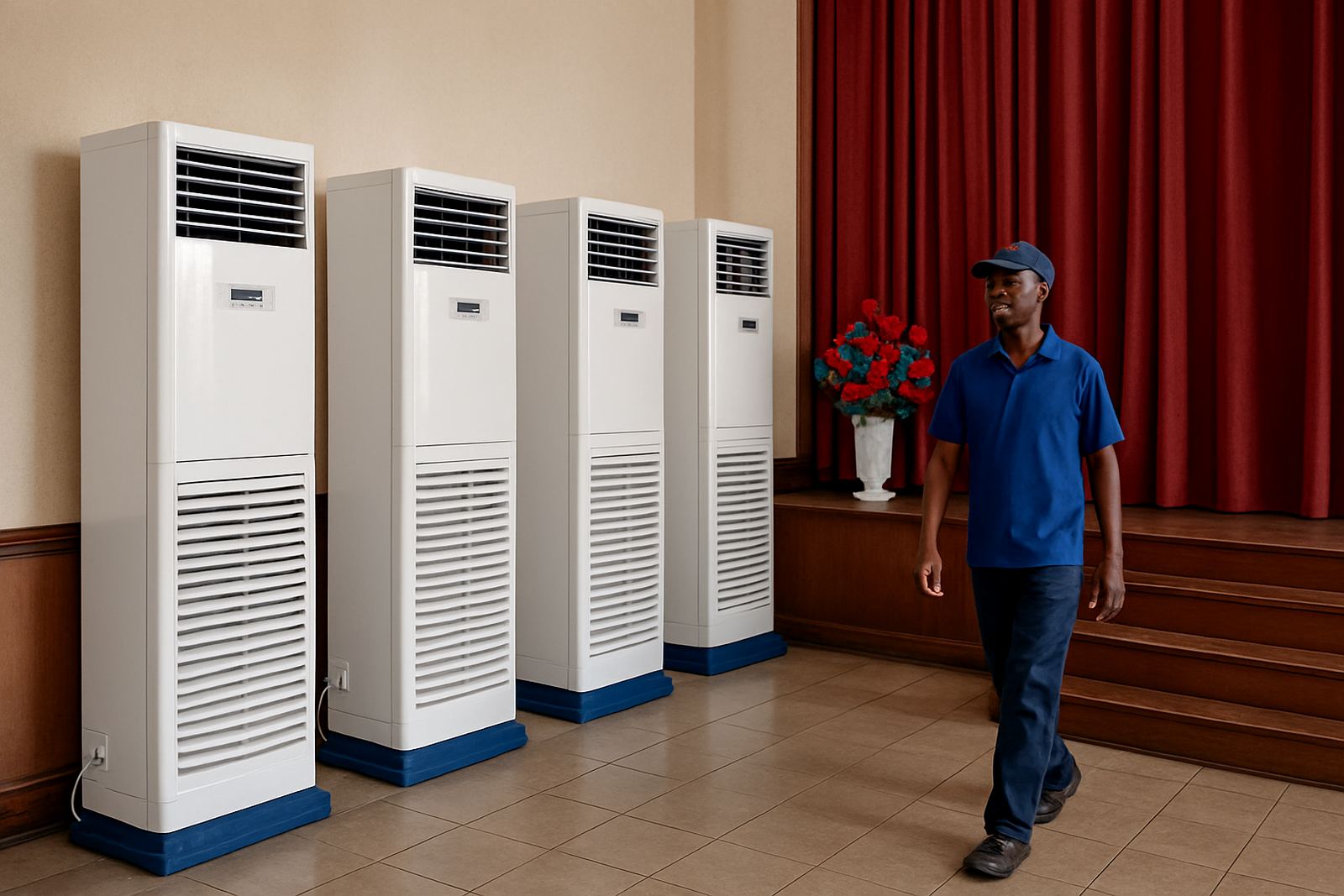
- Need for even cooling across a large open room
What we supplied and installed
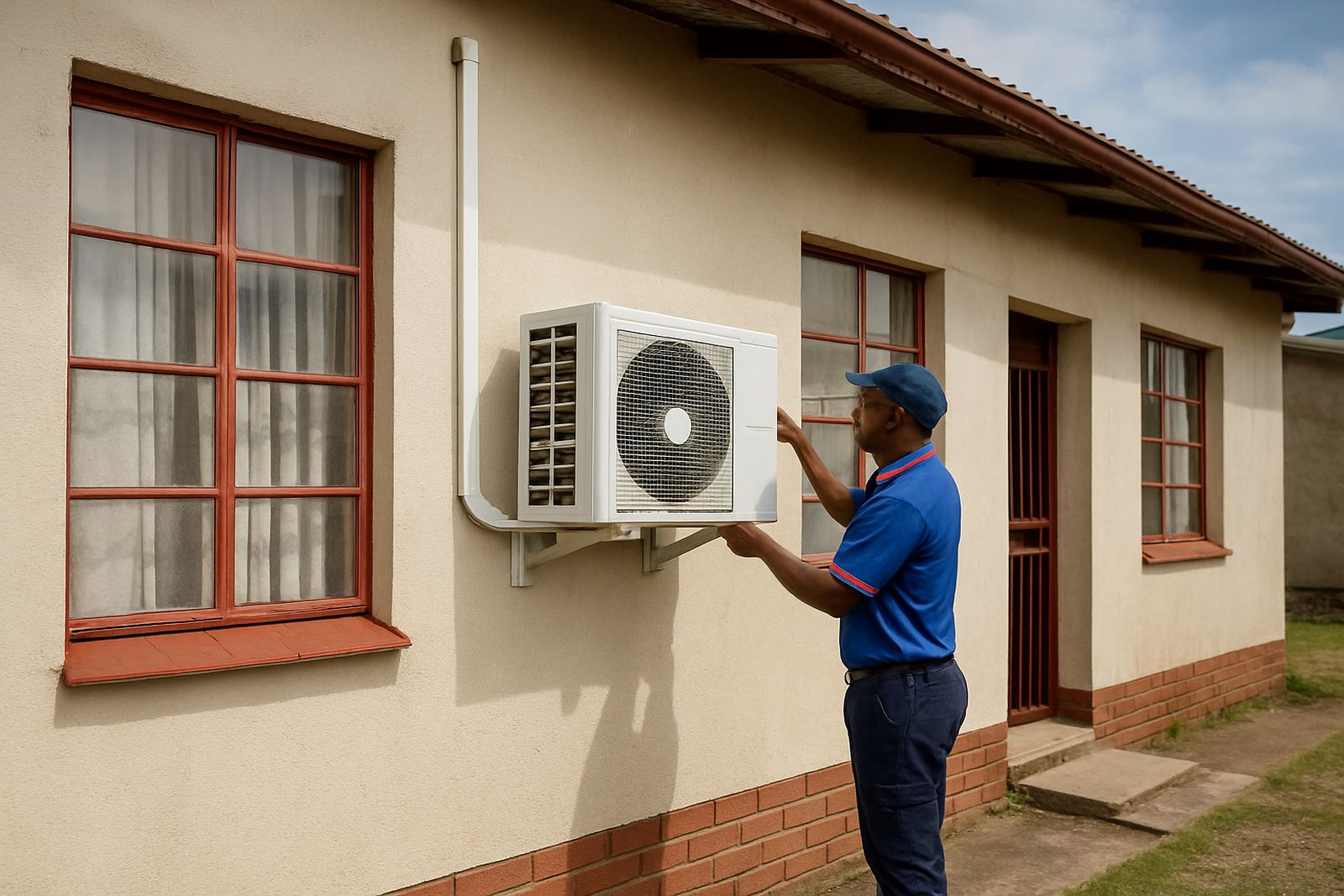
We supplied a cooling arrangement suited to the room size and usage pattern, with indoor units positioned to spread air across the main hall rather than push it into one corner. The installation included the necessary pipework, wiring connections, condensate drainage and final commissioning. We also checked the site for a clean service route so future maintenance would be straightforward.
Where a hall is used for events, the details matter. Mounting height, air throw, access panels and drainage fall all affect how well the system performs over time. We set the installation up to allow for easier cleaning and future gas checks, which is important in a space that sees regular use.
- Cooling support sized for a large hall with repeated weekend use
- Correct drain fall and condensate control for humid conditions
- Controls checked for simple operation by site users
- Commissioning completed with full operating checks
Timeline and handover
The project was completed over a short, planned timeline of two weeks. The first week covered site checks, load assessment and confirming the best positions for the units. The second week covered installation, system start-up, testing and handover.
We kept the process tight because the hall could not afford a long closure. Once the equipment was running, we tested cooling performance during warm daytime conditions and checked that airflow reached the areas where people actually sit and gather. The site team was shown the basic controls, what to watch for, and when to call for a service visit.
We also left guidance on cleaning intervals, because a hall full of people can load filters faster than a normal office or home. That small bit of attention saves money and helps the system last longer.
Results for weekend gatherings and meetings
After the work was completed, the hall was noticeably more comfortable for meetings and full-room gatherings. The main improvement was not only lower temperature, but more even cooling. That meant people near the centre of the room and those along the sides all felt the benefit, rather than one part of the hall being cold and another still warm.
The client also gained better control over operating costs. A properly set up system does not need to fight against poor air distribution or drainage trouble, and that helps keep running times sensible. For a community venue, that matters just as much as comfort. The hall can now be used with less fuss on hot Durban days, and the staff have a straightforward setup to work with.
- More even air distribution across the hall
- Better comfort during busy services and meetings
- Cleaner condensate management in humid weather
- Simple daily operation for hall users
What we would repeat on a similar hall job
If we were doing the same kind of project again, we would follow the same approach: check the room use first, measure the heat load properly, and plan for drainage and maintenance from the start. That keeps surprises down and gives the client a system they can live with, not just one that looks fine on day one.
For large halls in Durban and the greater eThekwini area, the best results usually come from practical planning rather than overcomplicating the job. We would again make sure the site team understands the controls, the cleaning routine and the signs of trouble such as weak airflow, tripping, or water marks near the units. A little prevention goes a long way, especially where weekend use is regular and the weather is hard on equipment.
Aircon Depot continues to handle domestic and commercial air-conditioning across Clairwood, Durban Central, South Durban, North Durban, West Durban and the wider eThekwini area, with install, repair, breakdown call-outs and planned maintenance when needed.
Key facts
| Project | Bluff Church Hall cooling support |
|---|---|
| Location | Bluff, Durban |
| Client type | Community and church hall |
| Timeline | 2 weeks |
| Scope | Supply, install, start-up and handover |
| Key conditions | Large open room, coastal humidity, weekend use, load-shedding readiness |