What the Glenwood venue needed
The client was a busy restaurant in Glenwood, Durban, serving steady foot traffic through the week and fuller trading on weekends. The dining area had become uneven, with one side feeling cool and another side going stale when the room filled up. Staff were also dealing with a clunky control setup that made it hard to keep the temperature steady when doors opened and closed often.
The brief was practical: restore reliable comfort for diners, keep the operating cost sensible, and tidy up the control side so the team could manage the system without guesswork. In a hospitality space that runs long hours, a hot patch near the window or a dead zone near the back table can quickly turn into complaints, so the goal was balance rather than just more cold air.
Site constraints we worked around
Glenwood restaurants have their own set of constraints, and this one was no different. The unit positions had to suit the room layout, the ceiling space was limited in places, and the kitchen side added extra heat and moisture during service. Durban humidity also means drain lines and coils need proper attention, because moisture build-up can turn into smells, drips or poor air movement if it is ignored.
- Limited ceiling voids above the dining area
- Regular door opening from front-of-house traffic
- Heat spill from the kitchen and serving line
- Humidity and condensation risks in Durban conditions
- Work had to be phased around service times
We planned the work so the restaurant could keep operating with minimal disruption. That meant careful timing, clean working areas and no unnecessary tearing around. The venue could not afford a long shutdown, and nor could the staff afford a messy install that would get in the way of service.
What we supplied and upgraded
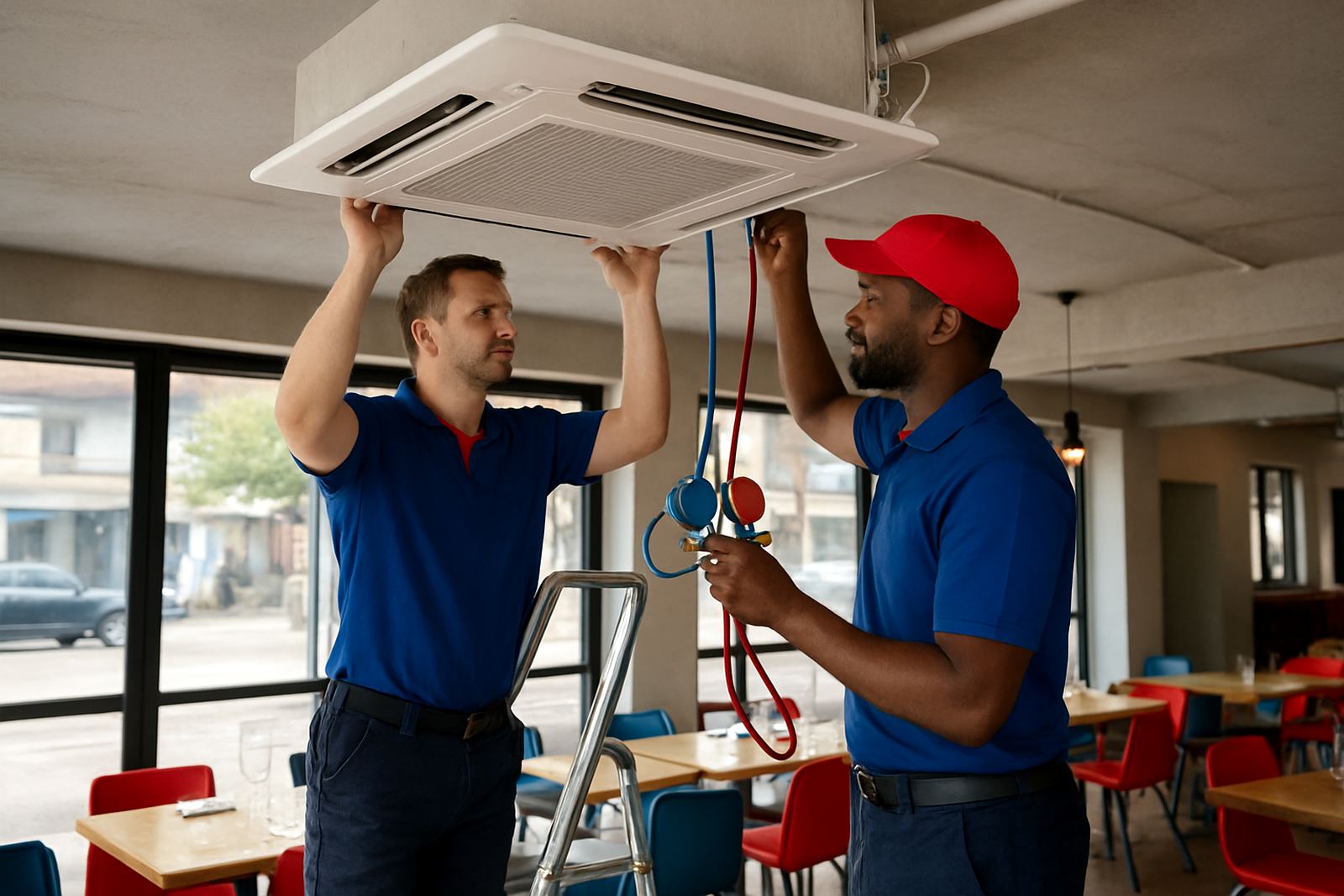
We supplied and installed air-conditioning components that suited the room size and the load from a full dining area. The cooling refresh included stronger airflow delivery, cleaner control components and service work to put the system back into proper working order. Where parts showed wear, we replaced them before they became the next breakdown call out.
The work included cleaning the indoor units, checking the drain route, testing the controls and setting the system for more even room coverage. We also checked the electrical side, because loose contacts, tired capacitors and unreliable switching can make a restaurant system look weaker than it really is. A lot of hospitality cooling problems come down to small faults, not a full system failure.
- Airflow review and rebalancing for the dining area
- Control cleaning and fault checks
- Drain line clearing and leak inspection
- Component testing on start-up and running load
- Final temperature and comfort checks during operation
How the job was carried out
The project ran over two weeks from first inspection to final sign-off. Week one covered assessment, fault finding and parts planning. Week two covered the physical work, testing and handover. That sequencing matters in restaurant work because waiting for parts without checking the rest of the system can waste time and delay the repair too much.
Once on site, our technician team worked through the system methodically. We checked the compressor performance, fan motor condition, capacitors, contactors and drainage, then cleaned the indoor sections and verified the control response. Where we found an issue, we fixed the cause rather than masking the symptom. If a unit is short cycling or dropping performance, there is always a reason somewhere in the chain.
We also kept the team informed as we went along. The front-of-house manager needed to know which area would be affected and when, and the kitchen team needed notice before any test runs. That kind of coordination saves time and keeps service calm, which is important in a room where people expect comfort and quick table turns.
Results in the dining room
After the upgrade, the dining area felt more even from one end to the other. Guests were no longer sitting in a warm pocket near the back, and the unit response was steadier when the restaurant got busy. Controls were cleaner and easier to use, so staff could make small adjustments without overshooting the set temperature.
The result was a more comfortable room and fewer complaints about hot spots or stale air. The system also became easier to maintain because the drain path, control side and service access were all sorted at the same time. That matters for a restaurant in Durban where load-shedding, power recovery and constant door traffic can expose weak equipment very quickly.
- More even air movement across the seating area
- Improved guest comfort during busy service periods
- Cleaner, more dependable temperature control
- Less strain on the equipment during peak trading
- Better access for future servicing and cleaning
What we would do again on a similar site
If we were doing the same type of Glenwood restaurant job again, we would follow the same approach: inspect first, plan the parts properly, then tackle airflow and controls together rather than one at a time. Hospitality spaces are unforgiving, and a half-fix tends to come back as a call-out when the room fills up on a Friday night.
We would also keep the maintenance interval tight. In a restaurant environment, a deep clean and service check every few months helps protect the indoor air quality and stops small drain or control faults from turning into bigger costs. Coastal air, cooking vapours and heavy daily use all shorten service life if the units are left alone too long. A bit of regular attention goes a long way, and it keeps the dining room useable when the weather turns sticky.
For a place like this, the best outcome is not just cold air, it is predictable comfort that the team can rely on. That is what this project delivered, and it is the standard we aim for on every hospitality cooling job in greater eThekwini.
Key facts
| Project location | Glenwood, Durban |
|---|---|
| Client type | Restaurant dining area |
| Timeline | 2 weeks |
| Main work | Airflow refresh, controls repair, cleaning and checks |
| Key issues | Uneven cooling, humidity, drain concerns, worn control parts |
| Outcome | Stronger airflow and cleaner, steadier room comfort |