Clinic replacement work in Merebank, Durban
This project was carried out for a healthcare client in Merebank, south of Durban, where dependable cooling matters every day. In patient waiting areas and consultation spaces, a unit that trips, leaks or struggles in humid weather causes discomfort quickly, especially when rooms are busy and doors are opening all the time. The brief was simple in wording but important in practice: remove the older room units and replace them with a setup that would be easier to maintain and more reliable through summer peaks, load-shedding recovery and coastal conditions.
The site had the usual constraints we see in clinic work. Access had to stay clear for staff and visitors, noise needed to be kept down, and the changeover had to be completed in a short window so normal activity could continue. There was also the matter of wall openings, condensate drainage and checking that the new equipment would suit the room sizes rather than just matching the old footprint. In a healthcare setting, you do not want a quick swap that creates a new problem six months later.
What the client needed and what we checked first
Before any removal started, we inspected the existing installation point by point. That included checking the condition of the indoor brackets, the refrigerant pipe routes, electrical isolators, drainage fall and the external mounting positions. On older clinic sites around Durban, we often find a mix of age, repairs done at different times and outdoor exposure that has already taken a toll on copper lines and fixings. The aim was to avoid a half measure and replace only what would still give trouble.
- Confirm room sizes and cooling load for the patient-facing areas
- Check power supply and isolator positions for each replacement unit
- Review drain routing so condensation would not drip into walkways
- Measure pipe runs and verify whether existing lines could be reused
- Plan the installation around clinic operating hours
The client also wanted a unit that would be easier to service later. In a place where comfort affects both staff and visitors, a clogged filter, weak fan motor or low gas charge cannot be left to drag on for weeks. That is why the replacement specification was chosen with parts availability and maintenance access in mind, not only the initial install.
Equipment supplied and installation approach
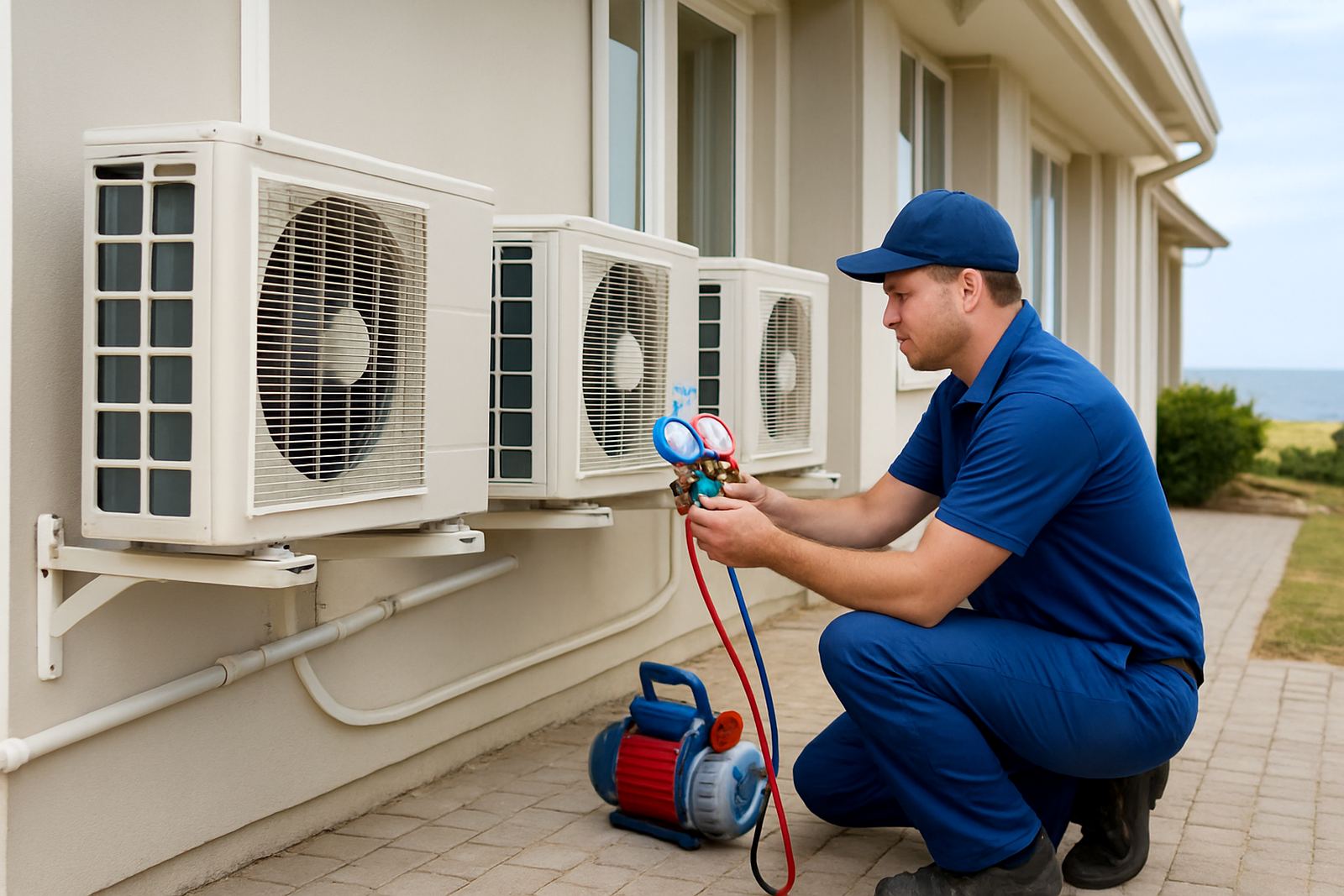
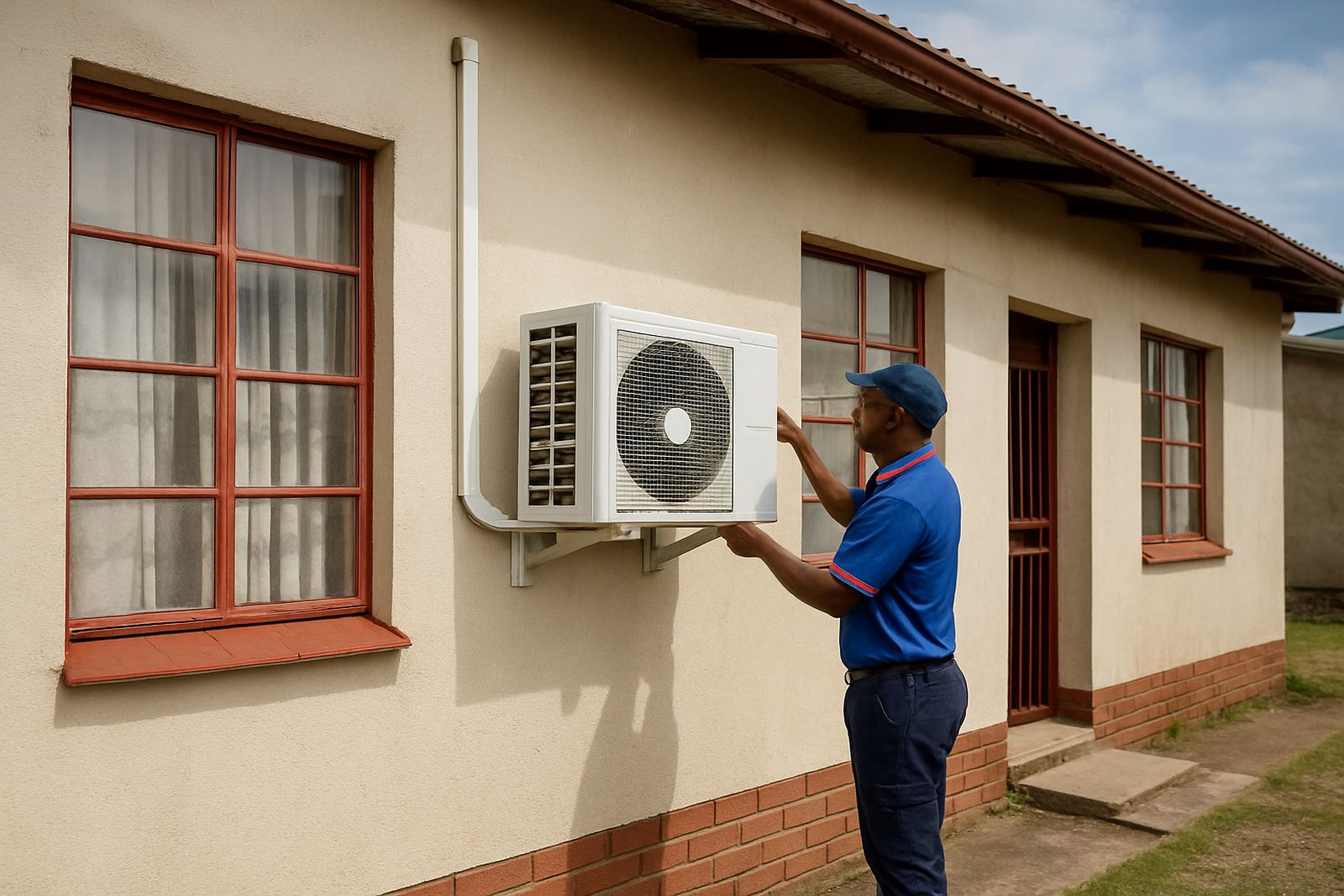
We supplied new room air-conditioning units sized for the rooms on site, with matching indoor and outdoor components, new mounting hardware where needed, fresh pipe insulation and the correct electrical protection for each circuit. The replacement included careful removal of the old units, recovery of refrigerant where applicable, fitment of the new systems, pressure testing, vacuum pulling and commissioning once the installation was complete. We also inspected drainage points and cleaned out trapped dust and residue around the old points before sealing the new work.
Because this was a clinic, finish quality mattered as much as performance. Wall penetrations were sealed neatly, pipework was clipped properly and the final layout was arranged so future technicians could get to filters, isolators and service ports without fighting the installation. That saves time later and it reduces the chances of small faults being ignored. We also allowed for the Durban climate, where warm air and humidity can put extra strain on undersized or poorly maintained systems.
- Removal and safe disposal handling of old room units
- Supply of replacement units matched to the room load
- New copper lines, insulation and mounting materials where needed
- Electrical checks, isolation and start-up testing
- Drain testing and final clean-up around the work area
Timeline, access and keeping the clinic running
The full replacement was completed over two weeks, with the work broken into practical stages so patient care would not be interrupted. One of the main constraints was access, because clinic rooms are not empty for long and there is no room for loose parts, exposed wiring or tools left lying around. We therefore sequenced the removal and installation so each area could be handed back as soon as it was safe to do so.
Our team coordinated the site entry times, material delivery and technician attendance to keep downtime low. The old room units were isolated and removed, the new systems were set in place and then tested before the room was left. Any small adjustment to bracket level, drain slope or pipe routing was done immediately rather than being left for later. That kept the project tidy and reduced return visits. It also meant the clinic could keep functioning without unnecessary noise or disruption, which matters in a patient environment.
Results after commissioning
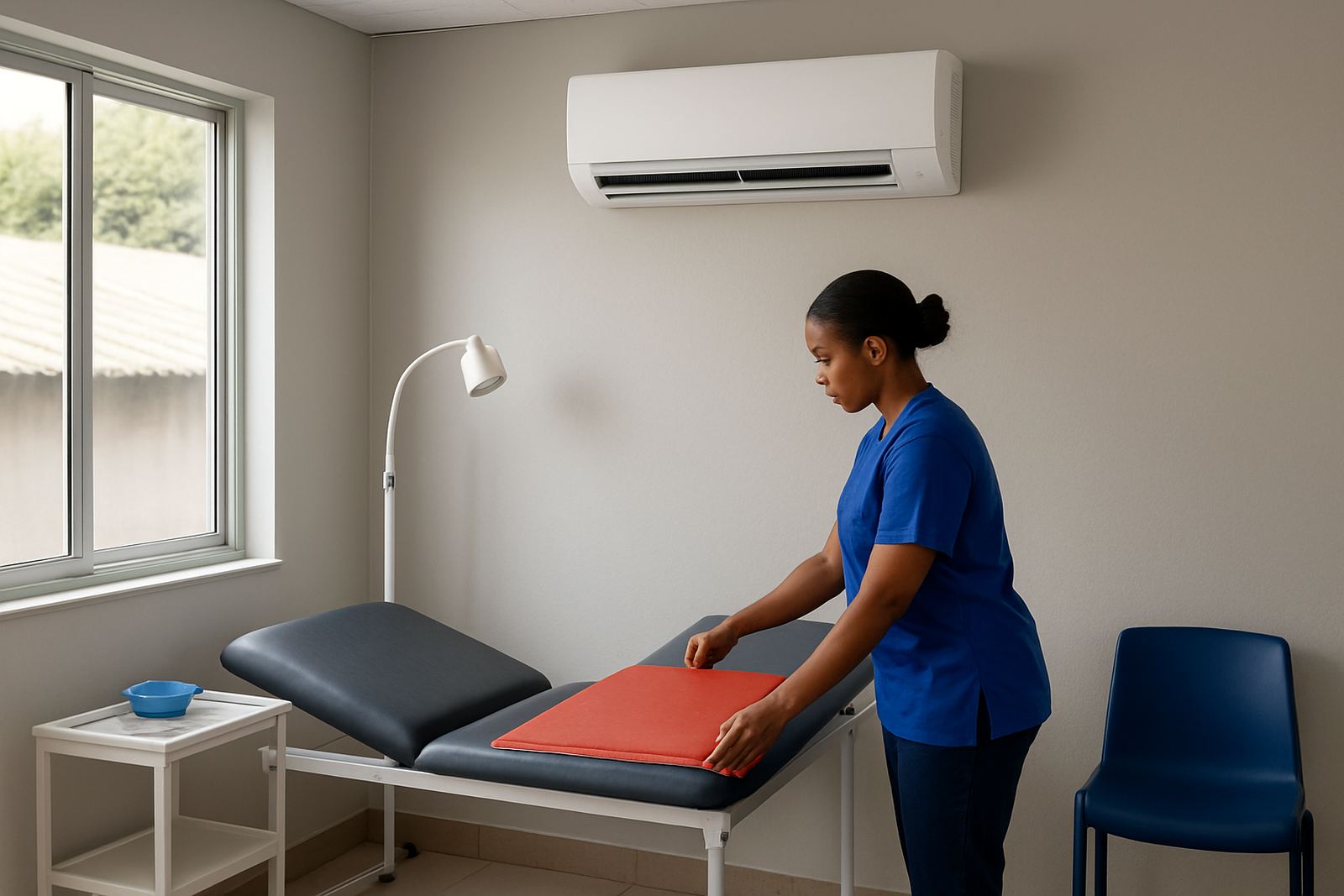
Once the replacement units were commissioned, the difference was clear in the affected rooms. Cooling response improved, start-up was more consistent after power interruptions, and the indoor areas felt more stable during warm afternoons. The client got a setup that was better suited to the room sizes and easier to service going forward. Staff also noted that the new units ran more quietly, which is helpful in spaces where people are waiting or being attended to.
Just as important, the clinic now has a more practical maintenance base. Filters are accessible, the drain points are easier to inspect, and the service access is better organised. That helps with planned maintenance and with the kind of quick response that is sometimes needed in Durban when humidity, dust or power fluctuations start causing trouble. A well-planned replacement reduces the call-outs later, and that is often where the real value shows up.
What we would do again on a similar site
If we were to do another clinic replacement of this type, we would follow the same approach: inspect carefully first, size the equipment to the room, and plan the installation around the client’s operating hours. On healthcare sites, there is no benefit in rushing a changeover if the result is noisy, hard to maintain or awkward to service. A proper replacement should suit the room, the staff and the climate from day one.
For projects in Clairwood, Merebank, Durban Central and the rest of eThekwini, the same principles hold. Check the load, check the drains, check the electrical supply and make sure the spares path is sensible for later service work. That is how you avoid repeat faults, unplanned downtime and the frustration of equipment that looks fine on paper but struggles in use.
Key facts
| Client type | Healthcare clinic |
|---|---|
| Town | Merebank, Durban |
| Project type | Room aircon replacement |
| Timeline | 2 weeks |
| Scope | Remove old room units and install new cooling systems |
| Key focus | Reliability, quieter operation, easier maintenance |